Selling a business shouldn’t mean handing over control to a broker who takes a cut of your deal. At Unbroker, we built platform features for sellers that put you in charge while giving you the professional tools you need to reach qualified buyers.
You get AI-powered matching, transparent pricing, legal templates, and direct buyer communication-all without the traditional broker markup. This is how selling actually works when sellers have the advantage.
How Sellers Reach Qualified Buyers Without Broker Gatekeeping
Getting your business in front of serious buyers means cutting through noise and reaching people who actually have the capital and intent to purchase. Traditional brokers control this access, which is why they charge 10% or more-they claim their network is worth the premium. The real advantage comes from combining AI-driven buyer matching with multi-channel visibility so your listing reaches qualified prospects across multiple platforms simultaneously.
Smart Matching Identifies Actual Buyers
AI-powered buyer matching analyzes search patterns, acquisition history, and stated criteria to surface your business to prospects who fit your profile. Instead of relying on a broker’s rolodex, algorithmic matching identifies buyers across entire networks based on concrete signals: their investment stage, industry focus, geographic preference, and deal size. This approach eliminates the guesswork. A seller listing a software-as-a-service company with $500,000 in annual revenue reaches investors actively searching for exactly that profile, not general inquiries that waste everyone’s time. The system learns from every interaction-which buyers click through, which ones request information, which ones move to serious conversations-and refines the matches over time. This differs fundamentally from a broker manually emailing five contacts and hoping one responds.
Professional Presentations Convert Browsers into Serious Inquiries
Professional listing presentations determine whether a qualified buyer takes the next step or passes. Your presentation should include clean financial summaries, customer concentration analysis, revenue trends, and growth levers. Buyers spend seconds scanning listings before they decide if they want details. A business profile that clearly shows your EBITDA, customer retention rate, and competitive moat converts browsers into serious inquiries. Templates and guidance help you build presentations so your listing stands out. The presentation itself does the heavy lifting-not the broker’s reputation. Buyers evaluate the business fundamentals, not the intermediary. A well-presented acquisition target attracts multiple offers; an identical business presented poorly attracts none.
Multi-Channel Distribution Drives Serious Competition
Single-channel selling limits your pool. Serious acquisitions attract buyers from different sources: strategic acquirers searching industry marketplaces, financial buyers scanning deal aggregators, and competitors monitoring competitive intelligence platforms. Multi-channel distribution means your listing appears where buyers actually look. This creates the competition dynamic that raises offer prices.
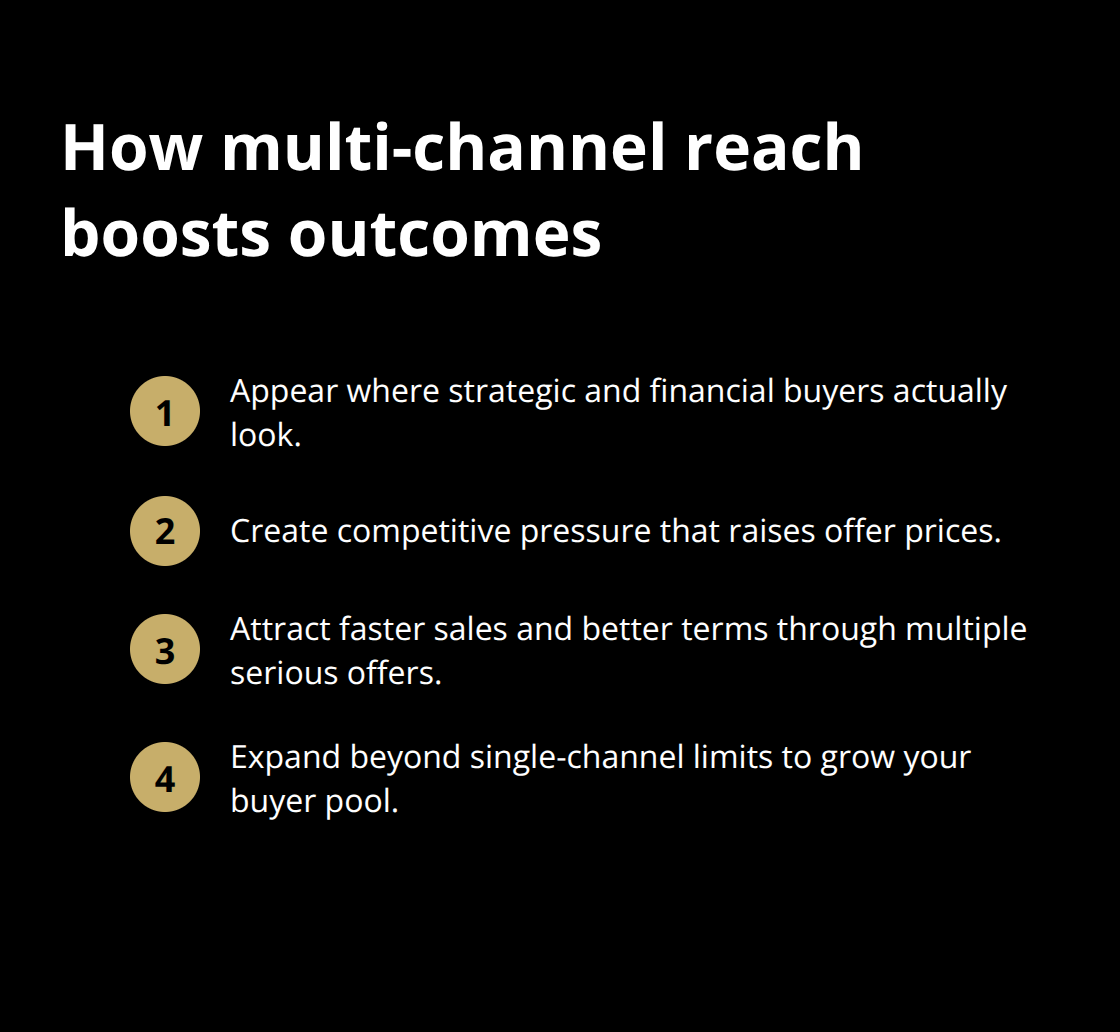
Sellers who distribute across multiple channels see faster sales and better terms because multiple serious offers force buyers to compete on price and terms.
What Happens When Buyers Actually Compete
When multiple qualified buyers see your listing simultaneously, you shift from a single negotiation to an auction dynamic. Buyers know others are interested. They move faster. They improve their offers. This competitive pressure works in your favor-it’s the opposite of what happens when a broker controls access and feeds you one buyer at a time. The visibility you gain from smart matching and multi-channel reach creates the conditions for better deals.
This foundation of reaching the right buyers sets the stage for what comes next: controlling the entire negotiation process and protecting your interests with transparent terms and professional support.
Who Controls Your Deal
Selling without a broker means you decide your price, your timeline, and your terms. The moment you hand off your business to a traditional broker, you lose control. They set asking prices based on what they think will sell fastest, not what maximizes your return. They control buyer access, feeding you information when it suits their timeline. They negotiate on your behalf, sometimes settling early to close deals and collect their commission. A platform built for sellers retains complete authority over every decision while still providing the professional infrastructure that serious buyers expect.
The real power comes from direct access to buyers combined with transparency on costs. When you communicate directly with potential acquirers, you control the narrative around your business. You answer questions immediately instead of waiting for a broker to relay information. You understand exactly what buyers value most and adjust your pitch accordingly. You also know precisely what you’re paying for platform access-no surprise fees, no percentage of the deal disappearing into broker pockets.
Set Price Based on Your Business Value, Not Broker Assumptions
Brokers typically price businesses at 3 to 5 times EBITDA, sometimes lower, because they need to guarantee marketability to their limited buyer network. They discount aggressively to move inventory. When you control pricing, you can defend higher multiples if your business justifies them. Faster revenue growth, recurring revenue contracts, or exclusive customer relationships support premium valuations. You present the data directly to buyers and let them decide if your asking price reflects reality. If qualified buyers see your financials and growth trajectory, they’ll pay fairly without a broker’s artificial floor. This means businesses with strong unit economics or strategic value often sell for 6, 7, or even 8 times EBITDA when priced appropriately and presented to the right audience.
You also set your own terms. Brokers often push all-cash transactions because they’re faster to close. You might accept an earn-out structure that lets you participate in upside, or seller financing that generates ongoing income. You might require a transition period where you stay involved, or negotiate a retention clause protecting key employees. These terms matter enormously to your post-sale situation, and only you should decide them.
Direct Buyer Communication Eliminates Information Loss
Every message a broker relays is an opportunity for misunderstanding or strategic silence. A broker might downplay a buyer’s concern about customer concentration because addressing it takes time. They might not mention a buyer’s question about your supplier relationships because they want to keep the deal moving. Direct communication means you hear exactly what buyers think, what concerns them, and what excites them. You respond in real time instead of waiting for broker translation. Serious buyers appreciate this directness-it accelerates trust and lets you demonstrate expertise about your own business.
You also gather intelligence about competing offers and buyer motivation directly. If three separate buyers ask the same question about your largest customer, you know that’s a critical issue to address. If a buyer mentions they’re evaluating two similar businesses, you understand the competitive pressure and can highlight what makes yours distinctive. This real-time feedback loop lets you adjust your positioning immediately instead of discovering problems weeks into a broker-managed process.
Transparent Fees Protect Your Deal Economics
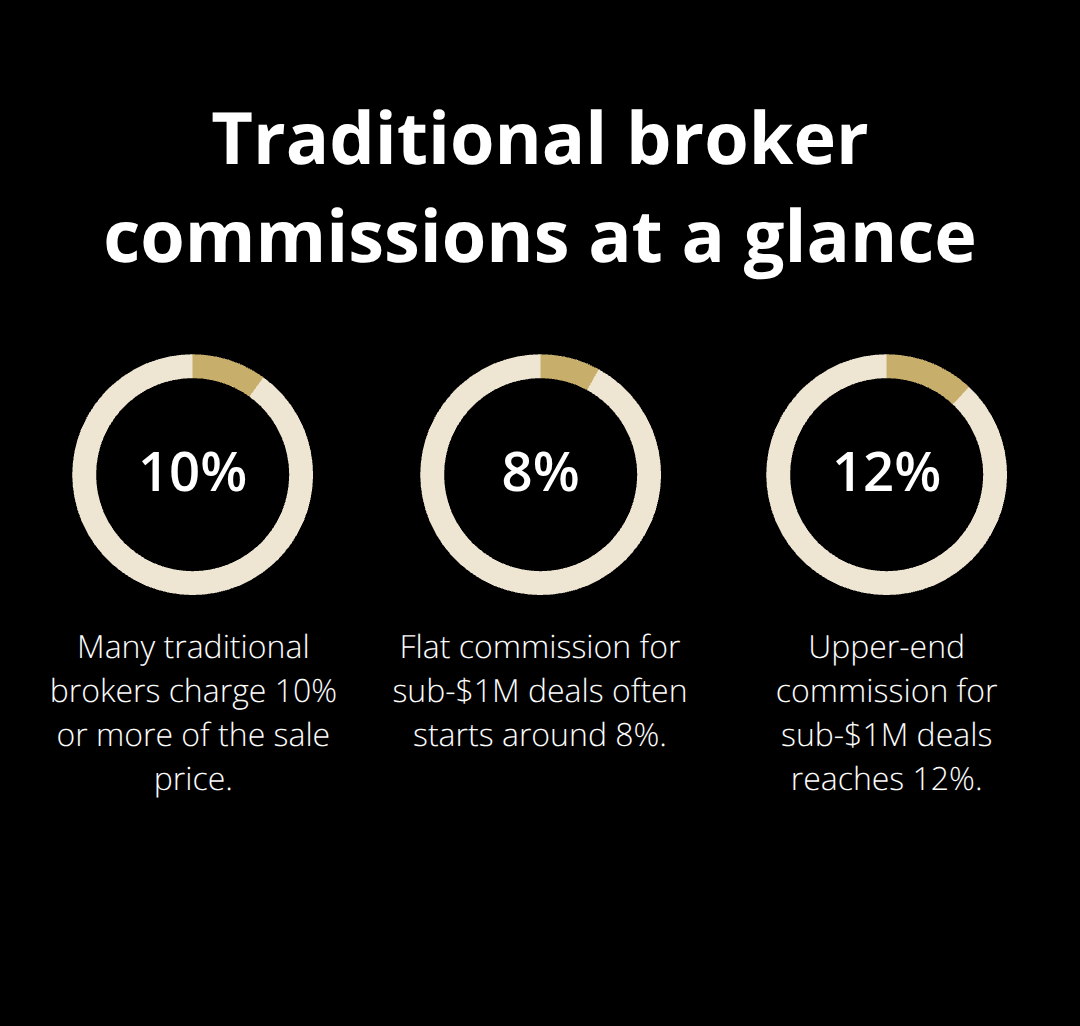
Traditional broker fees destroy deal value. Most brokers charge a flat 8% to 12% commission if the business is under $1 million and charge a lower rate for businesses priced from $1 million to $5 million. That’s significant money that doesn’t go to you, doesn’t reinvest in your business, and doesn’t fund your next venture.
Success-fee pricing changes the equation entirely. With Unbroker’s Full Service option, you pay a simple 6% success fee, due only when your business sells. There are no upfront charges, no percentage of earnouts, no charges for legal review or contract negotiation. This transparency lets you calculate your true net proceeds and plan accordingly.
It also means the platform provider has no incentive to push you toward a higher sale price just to increase commission-the fee stays the same whether your business sells for $1 million or $5 million. That alignment matters. You’re not wondering if the advice you’re getting serves your interests or the broker’s commission targets. With this foundation of control and transparency in place, you’re ready to leverage the professional tools that turn serious buyer interest into actual offers.
Protecting Your Deal with Professional Legal Structure
Negotiating a business sale without legal protection leaves sellers vulnerable to unfavorable terms and post-closing disputes. You need templates that address standard agreements, clear guidance on what terms protect your interests, and confidentiality measures that secure your business information throughout the process. The difference between a seller who achieves a fair deal and one who gets exploited often comes down to proper documentation and understanding what you sign.
Documents That Cover Every Stage of the Sale
Standard offer letters, term sheets, and purchase agreements follow predictable structures. An offer letter specifies purchase price, payment terms, earnout conditions if applicable, and closing timeline. A term sheet outlines deal structure before legal review and typically includes representations and warranties you make about the business. A purchase agreement contains the binding legal terms and is where most disputes originate. Rather than starting from scratch or paying a lawyer $5,000 to $15,000 to draft these from templates, pre-built documents tailored to business acquisitions save time and money while preventing critical gaps. These templates typically include sections on asset transfers, liability allocation, employee retention clauses, non-compete agreements, and indemnification provisions that protect you after closing. A seller who uses a structured template catches gaps that informal negotiations miss. For instance, a template forces you to specify whether you sell assets or equity, which carries massive tax implications. It requires you to list all assumed liabilities explicitly so a buyer cannot later claim surprise about outstanding vendor contracts or employee obligations. Templates also standardize language around earn-outs, which protect you if a buyer later claims the business failed to hit projected revenue targets. Without clear earn-out formulas in writing, you depend on the buyer’s honesty when calculating payments owed to you.
Negotiation Guidance Keeps Terms in Your Favor
Most sellers have never negotiated a business sale before. A buyer’s legal team has completed hundreds. That imbalance favors the buyer unless you understand what terms matter most to your situation. Guidance on price negotiations addresses how to defend your valuation when a buyer pushes back. If you claim 6 times EBITDA and a buyer counters with 4 times, you need concrete reasons rooted in your business fundamentals, not guesswork. Recurring revenue, customer retention rates, and growth trajectory justify premium multiples. A seller who articulates why their business deserves 6 times EBITDA based on specific metrics closes the gap faster than one who simply repeats the asking price. Negotiation support also covers non-price terms that matter enormously. A seller financing component might generate better overall economics than an all-cash deal at a lower multiple. A transition period where you stay involved protects customer relationships and employee retention. Earnout structures should include clear milestones, defined measurement periods, and buyer obligations to actually achieve those targets rather than sabotage results to reduce your payout. Many sellers accept earnout language that lets buyers manipulate numbers downward. Proper guidance prevents this. Support also addresses representation and warranty insurance, which protects you from post-closing disputes. Buyers often demand sellers indemnify them against undisclosed liabilities for 12 to 24 months after closing. This insurance shifts some of that risk to an insurance company instead of leaving you exposed.
Confidentiality Prevents Information Leakage That Damages Your Business
A business sale involves sharing sensitive financial information, customer lists, supplier agreements, and operational details with potential buyers. If that information leaks to competitors or employees before a deal closes, your business value can collapse. Confidentiality agreements establish clear rules about what information stays protected, who can access it, and what happens if someone violates those terms. A solid NDA specifies that buyers cannot share information with employees, board members, or advisors without explicit approval. It restricts how buyers can use information if they do not proceed with the purchase. It includes non-solicitation language preventing buyers from recruiting your employees or approaching your customers before a deal closes. Without confidentiality protections, a buyer can use the information-gathering process to identify your best employees and recruit them, or contact your largest customers to assess their satisfaction and then walk away from the deal. An NDA with teeth includes a liquidated damages clause specifying what the buyer owes you if they breach confidentiality. This creates financial incentive to comply. Many sellers skip this protection because they trust the buyer, then discover mid-process that information has spread. A standardized confidentiality framework prevents this exposure entirely.
Final Thoughts
The traditional broker model extracts enormous value from sellers while delivering minimal advantage. A $2 million business sale costs you $160,000 to $240,000 in commissions, money that funds your next venture or strengthens your personal finances instead. Platform features for sellers fundamentally change this dynamic by connecting you directly to qualified buyers, eliminating information loss through direct communication, and protecting your interests with legal templates and transparent pricing.
We at Unbroker built our platform specifically to give sellers this advantage. You access AI-driven buyer matching, professional marketing tools, legal document templates, and negotiation support without the broker markup. With our Full Service option, you pay just a 6% success fee, charged only when your business sells-either way, you maintain complete control over your asking price, timeline, terms, and buyer selection.
The sellers who win take control of their own sales process. If you’re ready to sell your business on your own terms, explore how Unbroker supports your sale.