Most business owners never plan their exit until it’s too late. We at Unbroker have seen countless companies lose significant value because the owner transition planning process started months before departure instead of years.
The difference between a smooth handoff and a chaotic one comes down to preparation. Starting early gives you control over how your business transitions, who leads it next, and how much it’s worth when you leave.
Why Owner Transition Planning Matters
Without a transition plan, your business becomes vulnerable to catastrophic value loss the moment you announce your departure. The Exit Planning Institute found that nearly 50% of business transitions involve no planning whatsoever, and these unplanned exits typically result in 20-40% lower valuations compared to well-prepared ones. When you wait until the last minute, buyers know you’re desperate, employees sense instability, and key staff often leave before the transition completes. Owners who start planning three to five years ahead command significantly higher prices because they’ve had time to strengthen operations, document processes, and build a management team that functions independently. Your business’s value isn’t just about revenue or profit margins-it’s about whether it can survive without you. If your departure triggers immediate operational collapse, customer loss, or employee exodus, you’re looking at a fire sale, not a strategic exit.
The Real Cost of Waiting
Only 35% of small and midsize businesses have started strategic workforce planning, and just 8% have a complete written plan. This delay directly translates to financial loss. Roughly 80% of an owner’s wealth typically sits tied up in the business, yet most owners never stress-test whether their company can operate without them.
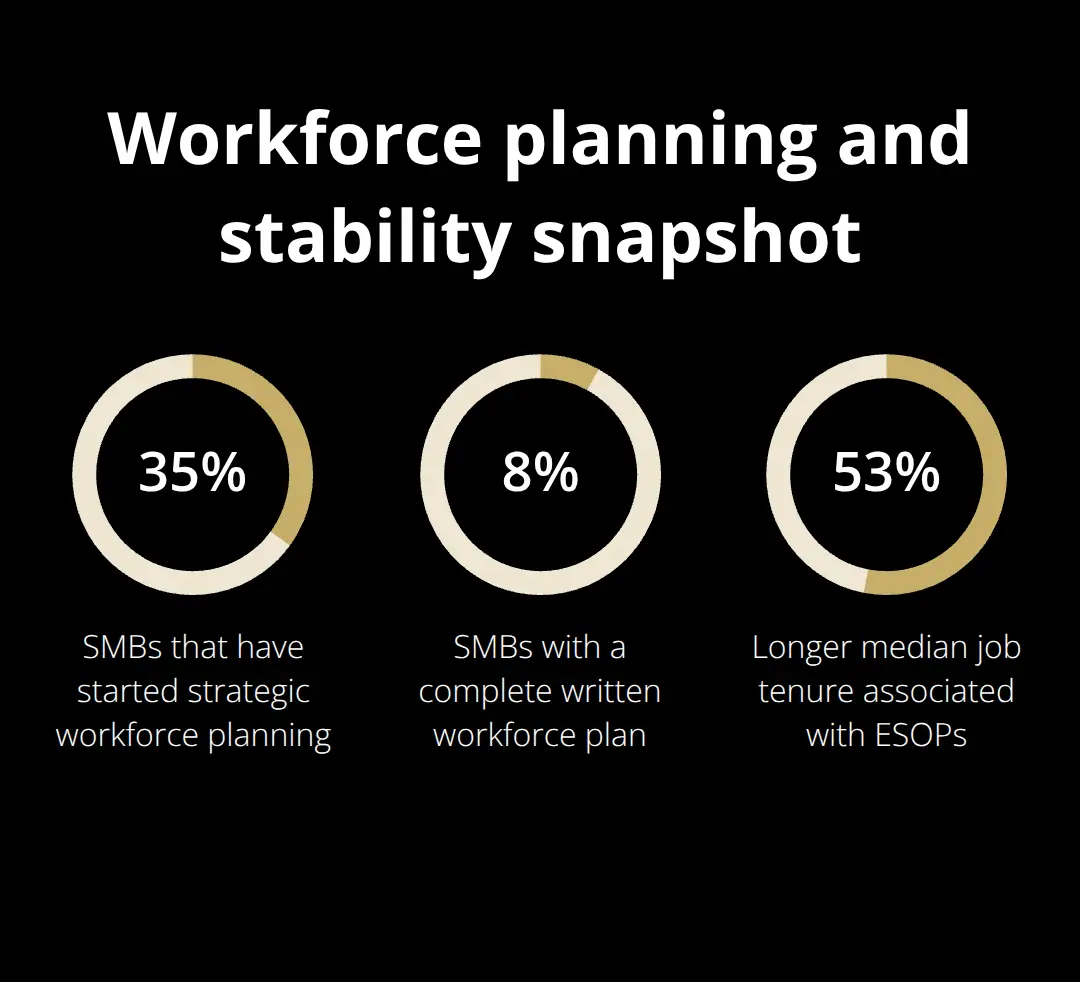
When a key employee leaves unexpectedly during a transition, replacement costs and lost productivity can easily exceed hundreds of thousands of dollars. The National Center for Employee Ownership found that ESOPs, one exit strategy, are associated with 53% longer median job tenure, meaning employee stability directly impacts valuation. Waiting also forces compressed timelines for knowledge transfer-what could have been a 24-month mentoring period becomes a frantic three-month handoff, creating gaps that buyers immediately identify during due diligence and use to negotiate lower offers.
Decentralize Your Operations and Document Everything
Transition planning forces you to decentralize decision-making and document the systems that keep your business operating. This isn’t theoretical-it’s the foundation of buyer confidence. Institutional knowledge loss can cost large firms hundreds of millions in productivity when leaders depart without proper handoff procedures. Start by identifying which roles have the greatest impact on your business and create succession candidates for each one. Have candid conversations with rising stars about their career aspirations and what they need to grow into higher positions. Set clear development plans that include training, exposure to key relationships, and mentorship. This approach simultaneously prepares your successor and increases current employee retention by showing a visible path forward. The earlier you start this process, the more time your team has to build confidence and relationships with the next generation of leadership.
What Happens Next
The specific steps you take depend on your timeline and goals. Whether you plan to sell to an external buyer, transition to a family member, or hand the business to key employees, each path requires different preparation strategies.
Building a Realistic Foundation for Your Transition
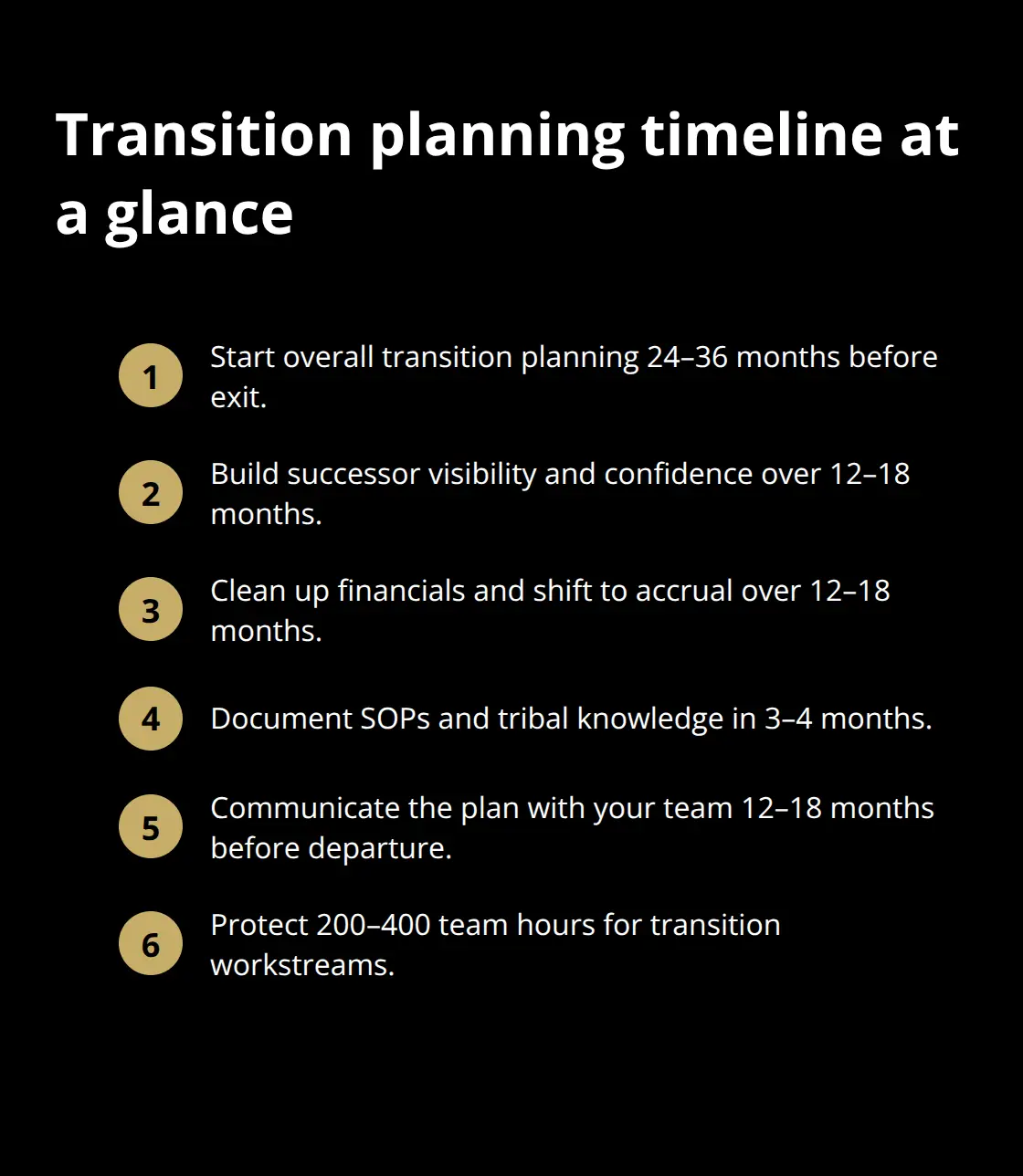
The first step is getting brutally honest about where your business stands today. Most owners overestimate their company’s market value by 20-40% because they conflate revenue with actual business strength. You need a professional business valuation that identifies your true market position, not a hopeful number. This valuation should examine your EBITDA, customer concentration risk, supply chain dependencies, and whether your business can operate without you actively involved. If 80% of your revenue comes from three customers or your operations collapse when you take a week off, that’s not a business ready for transition-it’s a job you happen to own. A formal valuation also reveals which specific areas need improvement before you approach buyers or successors. If your financials are messy, your processes undocumented, or your management team weak, the valuation will show exactly what’s dragging down your value. According to MassMutual’s 2022 research, only 35% of small and midsize businesses have started strategic workforce planning, which means most owners don’t know whether their team can actually run the business. Complete this assessment 18-24 months before your planned departure.
Identify Your Actual Successor Now, Not Later
The successor you develop internally costs far less and moves faster than recruiting externally, but only if you start identifying and training them years ahead. You need to document the specific competencies, industry knowledge, and relationship-building skills required for your role and the critical positions beneath you. Then look at your current team with clear eyes-who has demonstrated the capability and ambition to step into leadership? Have direct conversations with these candidates about their career trajectory and what development they need. Set up a structured mentorship program where your successor shadows you in customer meetings, strategic decisions, and vendor negotiations. This visibility takes 12-18 months minimum to build genuine confidence. If you have no internal candidate with realistic potential, you need to hire one now and give them time to understand your business, customer base, and industry relationships before you leave. External hires parachuted in weeks before your departure fail at alarming rates because they lack the context that makes a business function.
Document Your Operations Like Your Business Depends On It
Standard operating procedures aren’t busywork-they’re the difference between a business that survives your departure and one that collapses. You should write down how you handle your top 20 customer relationships, your core operational processes, your pricing logic, and your vendor management approach. Include the informal knowledge that lives only in your head: which customers need weekly check-ins versus quarterly ones, which suppliers occasionally deliver late and require buffer stock, which employees work best with autonomy versus detailed oversight. This documentation becomes the training manual for your successor and the proof to buyers that your business isn’t dependent on your personality. Buyers specifically look for evidence that processes are documented and transferable during due diligence. If they find nothing but chaos and tribal knowledge, they’ll demand a 25-30% discount on your asking price. Assign one trusted manager to lead this documentation effort and give them dedicated time-this typically takes 3-4 months to complete properly. The documentation also reveals gaps in your current team’s capabilities, which you can address before transition.
Strengthen Your Management Team Before You Leave
Your successor needs a functional team around them, not a collection of individual contributors who report directly to you. Identify the three to five roles that have the greatest impact on your business and develop backup candidates for each one. This redundancy protects against unexpected departures and signals to buyers that your business has depth. Create clear role definitions, decision-making authority, and accountability metrics for each position. When your successor takes over, they inherit a team with established processes and clear expectations, not a power vacuum. Weak management teams are one of the top reasons buyers reduce their offers-they see transition risk and operational fragility. A strong team also increases your current employee retention by showing that advancement opportunities exist beyond the owner level.
Prepare Your Financials for Scrutiny
Buyers and successors will examine your financial records in detail during due diligence. Your books need to be clean, accurate, and presented in accrual-based accounting format, not cash-based. Reconcile your accounts, document all adjustments, and explain any unusual transactions. If your financials are a mess, you’ll either lose deals or accept significantly lower valuations. Spend the 12-18 months before your planned departure cleaning up your financial house. This effort pays immediate dividends because it reveals profitability trends, cost structure issues, and cash flow patterns that you can improve before transition. The cleaner your financials, the faster due diligence moves and the higher your valuation.
Your transition foundation is now solid. The next step is determining which exit path aligns with your goals and timeline.
Where Transition Planning Actually Fails
Most owners fail their transitions not because they lack information but because they systematically underestimate how long everything takes. The Exit Planning Institute found that nearly 50% of business transitions involve zero planning, yet even among owners who do plan, most compress the timeline to 12 months or less when they should allocate 24–36 months minimum. This compression creates cascading problems: successors lack time to build relationships with key customers, processes remain undocumented because documentation requires months, and financial records stay messy because cleanup demands dedicated effort across multiple quarters.
Owners regularly announce their departure and then panic when they realize their business cannot function without them present. The window to fix this closes fast. If you wait until 6–12 months before your target exit date to address operational dependencies, you enter crisis mode. Your successor won’t have credibility with customers yet, your team won’t understand the new structure, and buyers will immediately identify the transition risk and slash their offers by 25–40%.
Family Succession Adds Emotional Complexity
Family business succession introduces another layer of difficulty. Only 16% of family firms maintain a discussed and documented succession plan, according to research on family business transitions. This means emotional dynamics, unspoken expectations, and power struggles often derail plans that looked solid on paper. Waiting too long also creates a secondary problem where the departing owner’s identity becomes so wrapped up in the business that they unconsciously sabotage the successor’s early decisions. Founders second-guess successors on customer pricing, hiring decisions, and vendor relationships because they cannot psychologically release control.
Your Team Needs Clear Communication, Not Silence
The second critical failure point treats your team as bystanders instead of active participants in the transition. Employees sense uncertainty immediately, and if you haven’t communicated clearly about what’s changing, who leads next, and how their roles evolve, they start looking for new jobs. The cost of replacing a mid-level manager runs 50–200% of their annual salary when you factor in recruiting, training, and lost productivity. Key technical staff departing mid-transition can destroy months of preparation because they take institutional knowledge with them.
You need to have explicit conversations with your leadership team about the transition timeline, the new structure, and their roles under new ownership at least 12–18 months before departure. This team communication timeline actually increases retention because people prefer clarity about change over ambiguity. Weak communication also extends due diligence timelines because buyers sense instability and demand deeper investigation.
Resource Allocation Determines Success or Failure
Owners consistently underestimate the resources required to execute transition work. Documentation, financial cleanup, management training, and knowledge transfer don’t happen automatically. You need to assign specific people to lead each workstream and give them protected time away from daily operations.
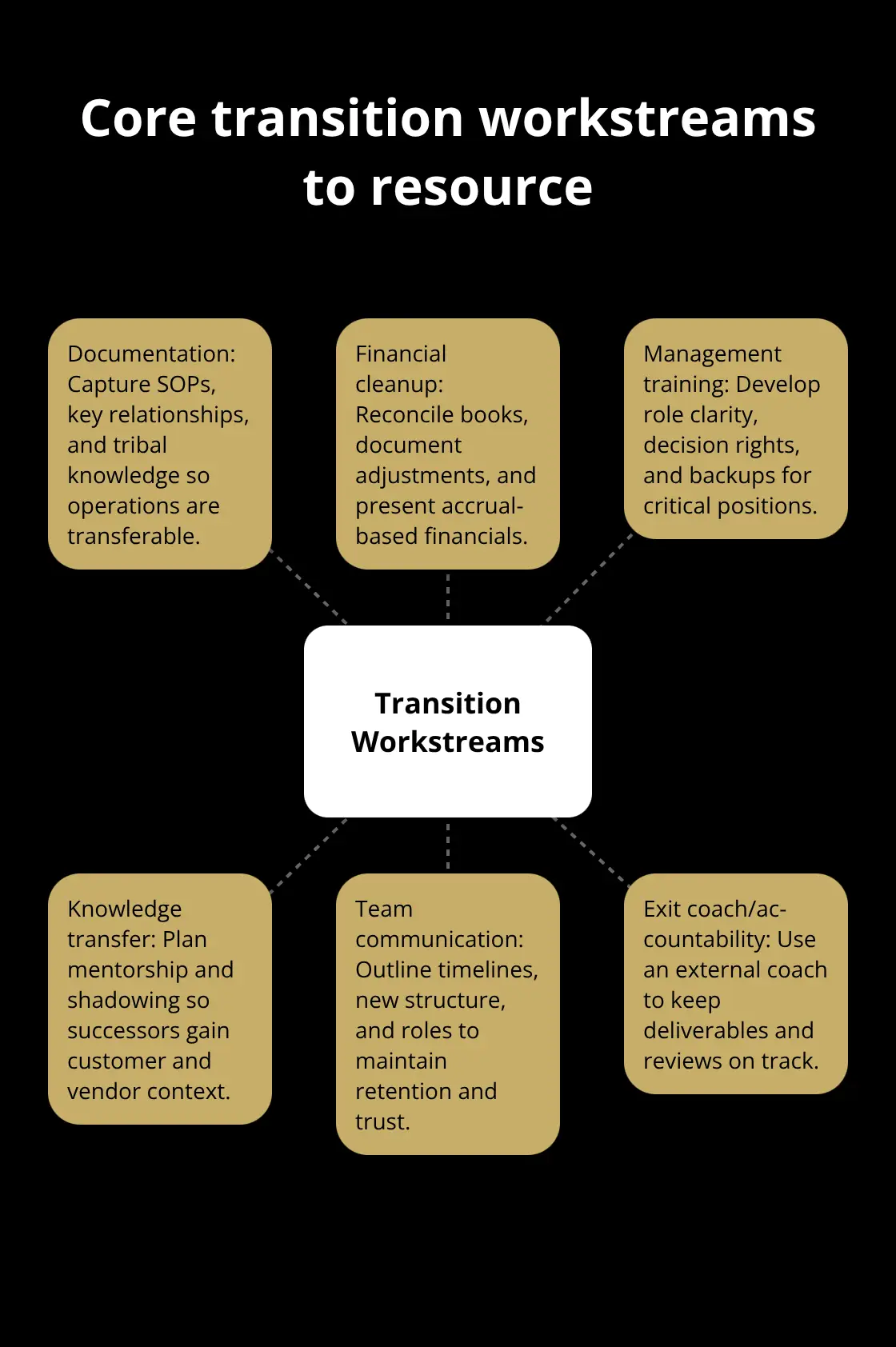
Without dedicated resource allocation, transition work gets pushed aside by urgent customer issues or operational crises.
Try allocating 200–400 hours across your team for a mid-sized business transition, then actually protect that time on calendars. The owners who execute smooth transitions treat it as a project with defined deliverables, assigned owners, and regular progress reviews, not as something that happens in the background while everyone keeps their regular jobs. This structured approach separates successful transitions from chaotic ones. An exit coach can help establish accountability and keep your team focused on the critical path forward.
Final Thoughts
Owner transition planning isn’t optional for business owners who want to preserve value and protect their stakeholders. The data is clear: nearly 50% of business transitions involve zero planning, and those unplanned exits consistently result in 20-40% lower valuations. The owners who command premium prices and execute smooth handoffs share one characteristic-they started years ahead, not months before departure.
Your business’s value sits in your hands right now. The decision to start owner transition planning today determines whether you exit on your terms with maximum financial outcome or whether you face a fire sale when circumstances demand your departure. We at Unbroker work with business owners at every stage of this journey, offering transparent, low-cost options through our modern platform for selling businesses that eliminate the complexity and high fees that slow transitions down.
Start your transition planning now. Assign someone to lead the effort and set a realistic timeline of 24-36 months. Protect the resources required, and your business will reflect its true value when you leave.