Most business leaders avoid thinking about what happens when they leave. At Unbroker, we’ve seen firsthand how the absence of a clear plan creates chaos, costs money, and damages trust.
The succession planning steps you take today determine whether your business thrives or stumbles when leadership changes. This roadmap shows you exactly how to prepare.
Why Succession Planning Prevents Business Collapse
When a key leader leaves without a plan in place, the financial damage strikes immediately and hard. Harvard Business Review found that poorly managed CEO transitions wipe out nearly $1 trillion in market value annually across S&P 1500 companies. That’s not theoretical loss-it’s real money vanishing because organizations failed to prepare. Succession planning isn’t about pessimism; it’s about realism. Your business operates on the expertise, relationships, and decisions made by specific people. When those people depart suddenly due to illness, retirement, or personal circumstances, operations don’t pause gracefully-they fracture. Clients notice the gap, employees scramble without direction, and competitors exploit the vulnerability. Around one third of the UK workforce approaches retirement age, which means this isn’t a distant concern for most businesses. Organizations that survive these transitions are the ones that planned for them months or years in advance.
The Real Cost of Unpreparedness
The financial toll accumulates faster than most leaders expect. When a critical role sits vacant, productivity drops, clients receive poor service, and remaining staff burn out covering the gap. Hiring external replacements takes months and costs significantly more than promoting from within. Only 17% of UK businesses currently take a strategic approach to succession planning, which means your competitors probably haven’t prepared either-but that advantage disappears the moment you do. The financial benefit compounds immediately: faster hiring, reduced downtime, preserved client relationships, and maintained performance.
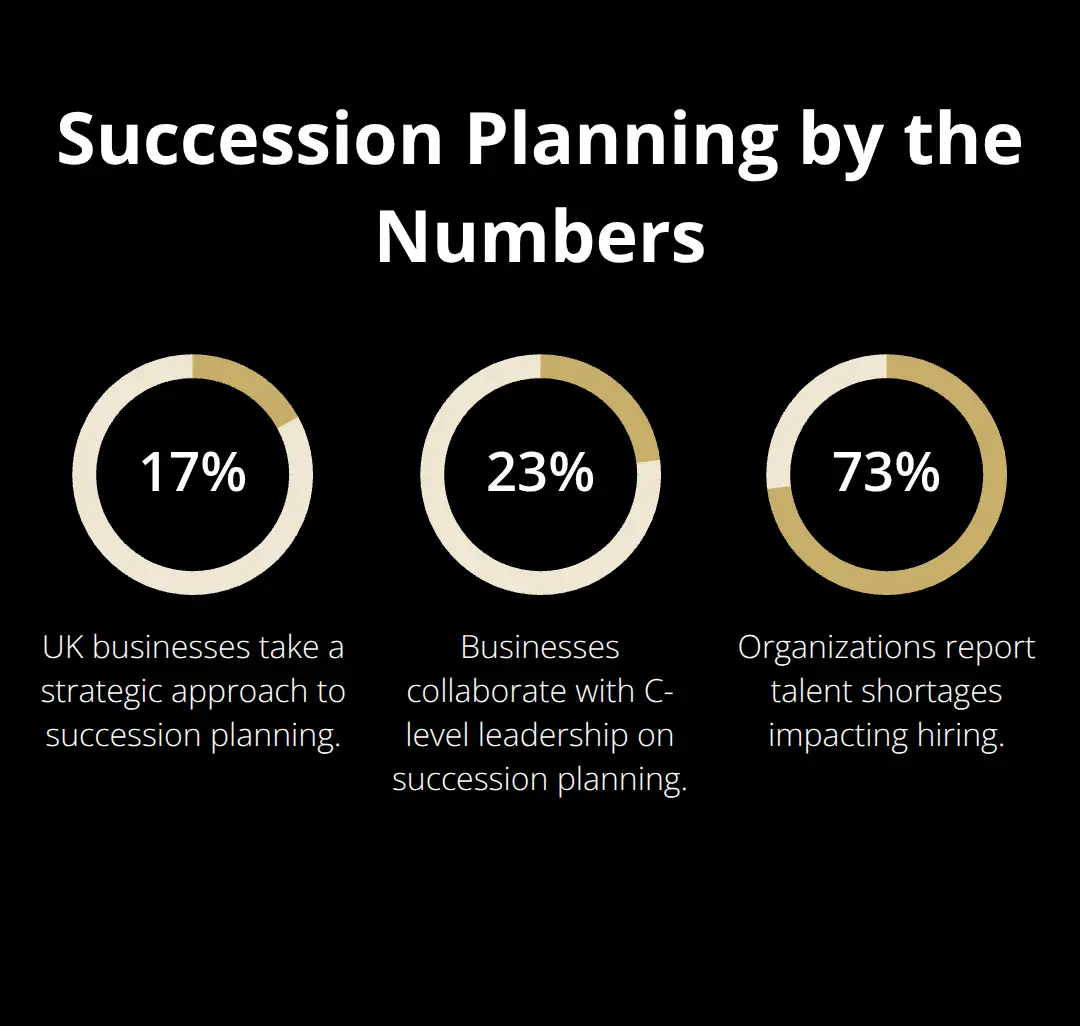
Beyond operations, succession planning protects institutional knowledge. When an experienced accountant, data engineer, or sales leader walks out the door, they take years of problem-solving expertise with them. Documenting processes and identifying successors early means that knowledge stays with your organization. The talent shortage is real-about 73% of organizations report talent shortages-which makes internal candidate identification and development more valuable than ever. External hiring takes longer and costs more, so the ability to promote internally becomes a competitive advantage.
How Silence Damages Employee Confidence
Employees notice when leadership is unstable. A clear succession plan signals that you’ve thought about the future and that ambitious team members have pathways for growth. Only 23% of businesses collaborate with C-level leadership on succession planning, which means most organizations operate in silence on this topic. That silence creates anxiety. Your high performers wonder if there’s room for advancement. Your mid-level managers question whether the business will survive disruptions. Stakeholders and investors lose confidence in your organization’s resilience.
When you communicate a succession plan to your team-even in broad strokes-you shift the conversation. Employees see that you’re serious about continuity. They understand that leadership transitions won’t derail the company. This transparency directly supports retention, because ambitious people want to work for organizations that invest in their growth and have plans in place for the future. The next step is identifying which roles matter most and what skills you need to protect.
Building Your Succession Plan: Where to Start
Identify the Roles That Matter Most
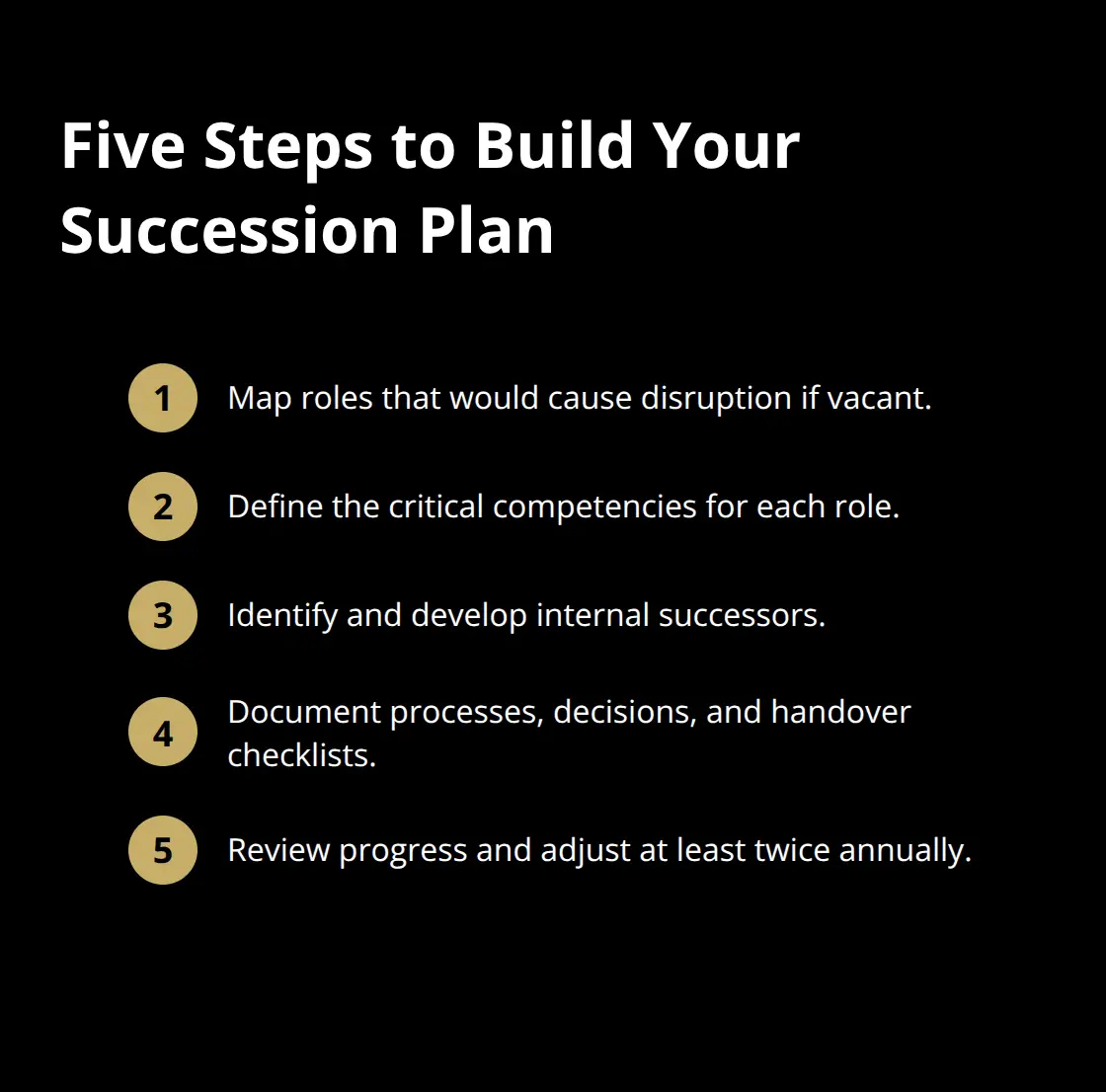
Start by mapping every role that would create operational chaos if the person left tomorrow. This isn’t about titles or salary levels-it’s about impact. A data engineer might be more critical than a department head. An accountant managing financial relationships could be irreplaceable. An operations manager who knows every vendor and process is invaluable. The mistake most organizations make is assuming critical roles always sit at the top. Look at which positions directly affect client service, revenue, decision-making, or institutional knowledge. Ask your managers: if this person resigned today, how quickly could we find a replacement, and what would break in the meantime? Document the answer for each role.
Define the Competencies You Actually Need
Assess competencies before you identify successors. Write down not just what the person currently does, but what skills the role actually requires. A sales director needs deep industry relationships, negotiation ability, and forecasting expertise. A technical lead needs hands-on coding skills, mentoring ability, and architectural thinking. Document these competencies in writing before you start evaluating candidates, because you’ll need them to assess people fairly and objectively.
Find and Develop Your Internal Successors
Identify potential successors from within your organization and create structured development plans for each one. This requires honest conversations with your team about their ambitions and growth potential. Gartner research shows that employers often underestimate how quickly teams want to grow, so don’t assume your high performers are content in their current roles. Assess candidates using concrete methods: performance reviews, 360-degree feedback from colleagues, and the 9-box grid, which plots performance against potential to identify who’s ready now and who needs development.
Invest in their growth through mentoring, cross-functional project exposure, and targeted training. Pair each successor with a senior leader who can model decision-making and share institutional knowledge. This pairing accelerates readiness and builds the relationships that matter during actual transitions.
Document What People Know
Create guides for complex tasks, decision trees for common problems, and checklists for handovers. Document critical processes and standard operating procedures so knowledge doesn’t vanish when someone leaves. This documentation serves two purposes: it accelerates your successor’s readiness and protects your business if an unexpected departure happens before your planned successor is ready.
Review and Adjust Regularly
Schedule regular reviews of your succession plan-at least twice annually-to track progress, adjust development plans based on performance, and update your assessment of which roles remain critical as your business evolves. These reviews keep your plan aligned with reality rather than letting it gather dust in a folder. With your internal pipeline identified and your successors developing, the next step is preparing for the unexpected departures that no amount of planning can fully prevent.
What Stops Succession Plans from Working
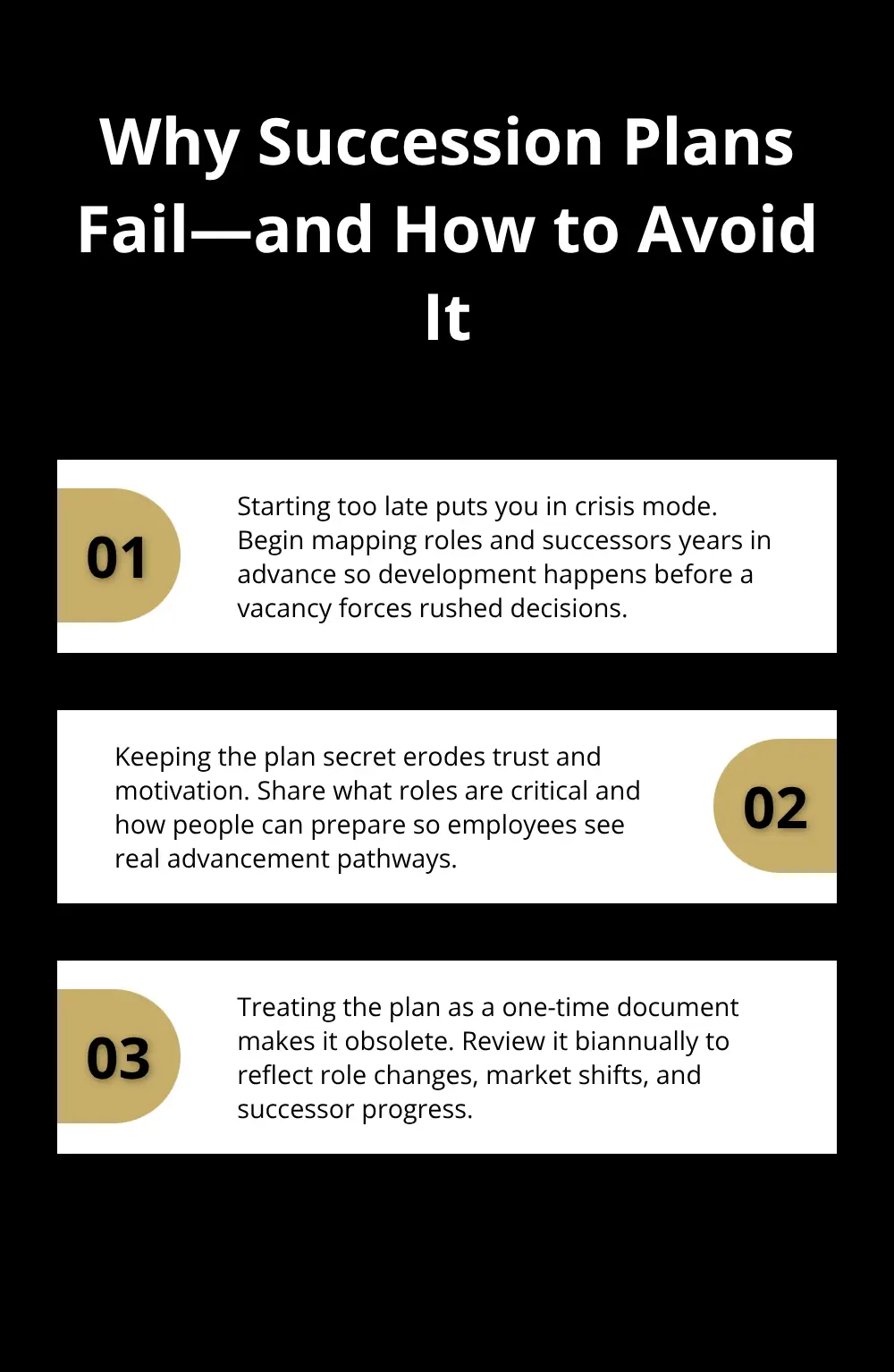
Most succession plans fail not because the concept is flawed, but because leaders start too late and then abandon the process. Starting succession planning when someone announces their retirement is starting too late.
At that point, you’re in crisis mode, not strategy mode. You have weeks or months to find and train a replacement instead of years to develop one internally. PwC’s 2023 US Family Business Survey found that only 34% of family businesses have a robust, documented, and communicated succession plan, and only 13% survive to the third generation. Those numbers exist because most organizations treat succession planning as something to tackle when a problem emerges, not as an ongoing business process.
Start Before You Need To
Map critical roles and identify potential successors now, even if your current leaders plan to stay for five more years. The earlier you begin, the more time your successors have to develop competencies, build relationships with clients, and prove themselves capable of stepping into larger roles. A successor who spends two years shadowing a leader and running projects under their guidance arrives in the new role confident and prepared. A successor who gets three months of notice arrives overwhelmed and unprepared for the responsibility.
Make Your Plan Visible to Your Team
The second mistake organizations make is keeping the plan secret. You’ve identified your successors, documented processes, and created development plans-and then you tell no one. This silence undermines everything you’ve built. Employees don’t know there’s a pathway for advancement. Your identified successors don’t understand they’re being prepared for something bigger. Managers don’t know which roles are critical or why certain people are getting special development opportunities.
This ambiguity breeds resentment and confusion. Make your succession plan transparent within your organization. Share which roles are critical, discuss why, and explain how people can prepare themselves for advancement. This transparency costs nothing and delivers immediate benefits: your high performers understand they have a future with you, your managers align on priorities, and your identified successors feel invested in their development rather than wondering why they’re being given unusual assignments.
Update Your Plan Regularly
The final pitfall is treating your succession plan as a document you create once and then ignore. Business changes. People leave unexpectedly. Market conditions shift. Roles evolve. A structured exit plan that made perfect sense two years ago might be completely outdated today.
Schedule formal reviews at least twice yearly to assess whether your identified successors are progressing as expected, whether your critical roles have changed, and whether your development plans are actually working. Ask yourself: has this person grown into the role we’re preparing them for, or do we need to adjust our approach? Have new critical roles emerged that we haven’t addressed? Have external hires or departures changed our internal pipeline? These reviews keep your plan alive and responsive rather than letting it become a static artifact.
Final Thoughts
Succession planning steps transform uncertainty into strategy, and organizations that survive leadership transitions prepare months or years in advance. The financial cost of unpreparedness reaches into the billions, your employees need to see a clear future, and your business depends on protecting institutional knowledge. Start now by mapping critical roles this week, identifying potential successors next week, and launching structured development conversations immediately after.
The benefits arrive fast and measurable. Faster hiring, reduced downtime, preserved client relationships, and maintained performance start the moment you identify critical roles and develop internal successors. Your high performers stay because they see advancement opportunities, your clients experience continuity because someone prepared already understands their needs, and your business survives disruptions because you documented processes and built redundancy into your leadership structure.
Professional guidance accelerates the process and reduces mistakes when you plan a leadership transition or think about your business’s future. At Unbroker, we help business owners navigate transitions with clarity and confidence, and we support you through every stage of planning and transition.