Selling your business without a broker is possible, and it can save you significant money. Most business owners assume they need professional help, but many don’t.
At Unbroker, we’ve seen owners successfully navigate DIY sales by following a structured approach. This guide walks you through each step, from preparing your financials to closing the deal.
Is DIY Selling Right for Your Business?
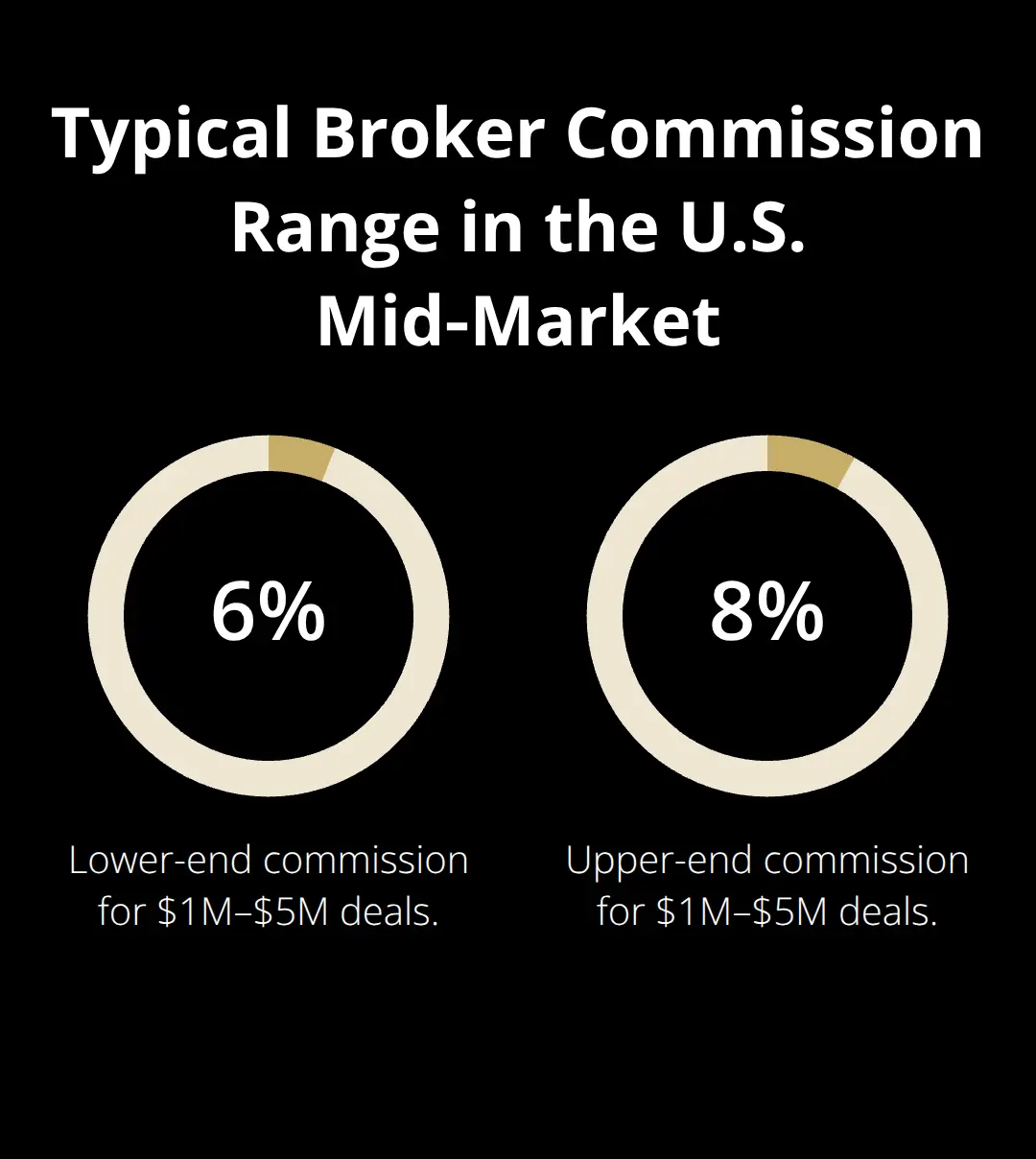
The math on broker fees is straightforward. A business selling for $1 million typically costs the owner commissions at 6% – 8% for sales in the $1 million – $5 million range. For a mid-seven-figure business, that translates to $300,000 to $500,000 going to a broker instead of your pocket.
That’s real money that stays with you when you handle the sale yourself.
The financial case for DIY selling strengthens when your business has clean financials, a clear value story, and existing buyer interest. If a competitor already expressed interest or you know PE firms that might want your space, you’re in a stronger position to manage outreach yourself. Research shows that owners who prepare 1–2 years in advance and organize their financial records upfront significantly improve their chances of success without professional intermediaries.
When straightforward operations work in your favor
Businesses with straightforward revenue models and healthy profit margins sell far more easily independently. A services company with 18 years of operation and consistent cash flow, for example, requires less explanation to buyers than a complex manufacturing operation with seasonal fluctuations. Your ability to articulate why your business makes money matters more than any broker’s network.
If you understand your financials deeply-your cost structure, customer concentration, growth drivers-you can handle preliminary buyer conversations without stumbling. The real challenge emerges when you don’t know what you don’t know. Deal terms like working capital adjustments, earnouts, and reps and warranties insurance trip up many DIY sellers because they negotiate poorly on these points and lose significant value.
What preparation actually requires
Owners should gather three years of financial statements and tax returns early, have a CPA review your numbers for quality of earnings, and understand whether you’re selling assets or stock before talking to any buyer. This groundwork takes weeks, not months, and it’s non-negotiable. You need to know your numbers cold before a single qualified prospect sees them.
When confidentiality becomes your biggest risk
Walk away from DIY selling if your business has legal complexity, pending litigation, messy contracts, or customer concentration above 30% of revenue. If confidentiality terrifies you-and it should, since leaks to employees or customers can derail the entire process-you lack the operational discipline to manage buyer information flow safely. Confidentiality agreements exist for this reason, and mishandling them costs you deals.
Businesses with highly technical operations, proprietary methodologies, or significant IP also benefit from professional guidance because buyers need detailed documentation that proves ownership and defensibility. If you’re exhausted, burnt out, or emotionally attached to the business, professional help isn’t optional-it’s necessary.
The middle ground: expert support without full commissions
The due diligence phase alone can demand 100+ documents from buyers and turns into a negotiation tool to pressure down your price. Without experience, you’ll fold on terms you shouldn’t. A middle ground exists: Unbroker’s 6% success-fee model gives you expert support without the 10% commission hit. That option works if you handle the legwork but need someone checking your assumptions on valuation, deal structure, and negotiation strategy.
With your business profile and financial readiness sorted, the next step focuses on finding the right buyers and keeping your sale confidential while you market it.
Getting Your Numbers and Story Ready to Sell
The difference between a fast sale and a stalled one often comes down to preparation. Owners who gather their financial records early, understand their business valuation, and craft a clear narrative for buyers move through the process months faster than those who scramble.
Organize Your Financial Records
Start by pulling three years of tax returns and profit-and-loss statements, then add year-to-date figures through the current month. A CPA-led Quality of Earnings review identifies which expenses are truly business-related and which are personal add-backs that inflate your actual earning power. This step typically costs $2,000 to $5,000 but prevents buyers from questioning your numbers later, which costs far more in negotiation friction.
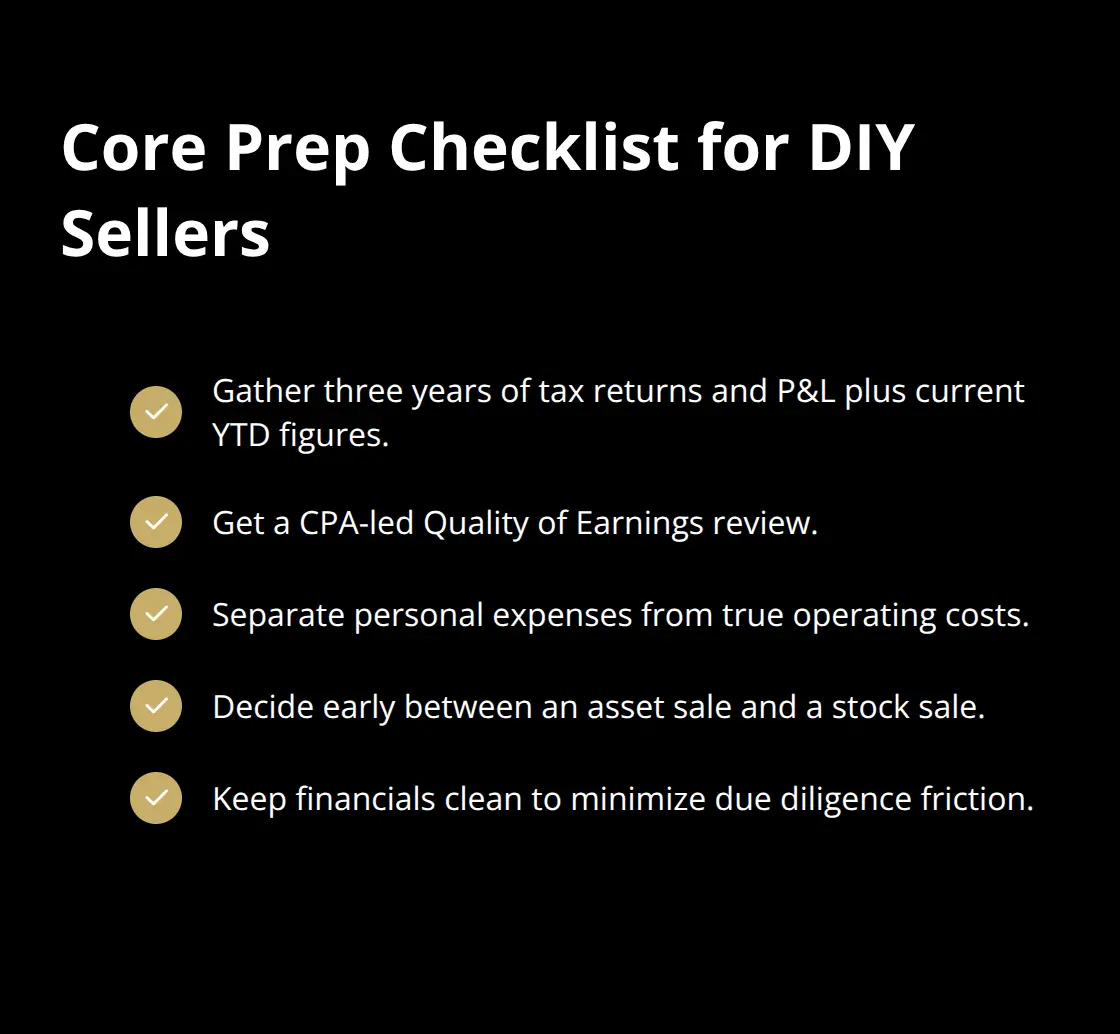
Separate personal expenses such as vehicle costs, meals, or travel that wouldn’t continue under new ownership. Buyers focus on what the business actually generates in cash, not on perks you’ve built into operations. Clean financials signal a mature business to potential buyers and reduce friction during due diligence.
Calculate Your Valuation with Confidence
Valuation is where many DIY sellers undercut themselves. The three approaches that matter are income-based, asset-based, and market-based methods. For a services business with consistent cash flow, income-based valuation using Capitalization of Seller’s Discretionary Earnings works best.
Take your normalized earnings and apply a reasonable cap rate between 20% and 35% depending on industry risk. A services company earning $400,000 in normalized cash flow at a 25% cap rate values around $1.6 million. An independent valuation from someone with ASA or CBA credentials costs $1,500 to $3,000 and gives you credibility that no self-assessment can match. Buyers trust third-party appraisals far more than owner projections.
Build a Compelling Business Profile
Once you know your valuation range, create a one-page business profile that answers the question buyers actually ask: why is this business worth the asking price? Include revenue and profit trends over three years, customer concentration metrics, employee stability, and the specific reason the business generates its margins.
Avoid hype. Instead, state facts such as 15 years of revenue growth at 8% annually or a customer base where the top three clients represent only 22% of revenue. These specifics signal a mature, stable business rather than a risky one. Many DIY sellers fail here because they write too much and confuse buyers rather than convince them. Your profile should be four paragraphs maximum, each focused on a single strength that directly supports your valuation.
With your financials cleaned up and your valuation story locked in, you’re ready to identify and reach out to qualified buyers while protecting your confidentiality throughout the process.
Finding Buyers Without Blowing Your Cover
The gap between identifying interested buyers and actually reaching them without tipping off your employees or customers is where DIY sales derail fastest. You need a systematic approach that builds a prospect pipeline while keeping your sale confidential.
Build Your Target Prospect List
Start by making a list of who would logically want your business. For a services company, that means PE firms actively investing in your sector, strategic buyers in adjacent industries, and competitors who’ve already sniffed around. Search SEC filings and press releases to find PE firms that have acquired similar businesses in the past three years. LinkedIn Sales Navigator lets you identify decision-makers at those firms for around $100 monthly and makes it simple to track who handles add-on acquisitions.
You know your business better than anyone, so you know which acquirers make strategic sense. Use that knowledge to build a targeted list first, then expand to broader channels only if your initial prospects stall.
Protect Your Sale with a Solid NDA
Approach prospects directly with a non-disclosure agreement already drafted. Don’t use generic templates; spend $500 with a business attorney to customize your NDA to Texas law if you’re in San Antonio, making it ironclad enough that breach carries real consequences. When a prospect signs the NDA, you can then share your one-page business profile and basic financials without fear. Most serious buyers expect this step and move through it in days.
Lead with Hard Numbers, Not Hype
The mistake DIY sellers make is using vague language like “we manage a great team” or “our customers love us.” Buyers ignore fluff.
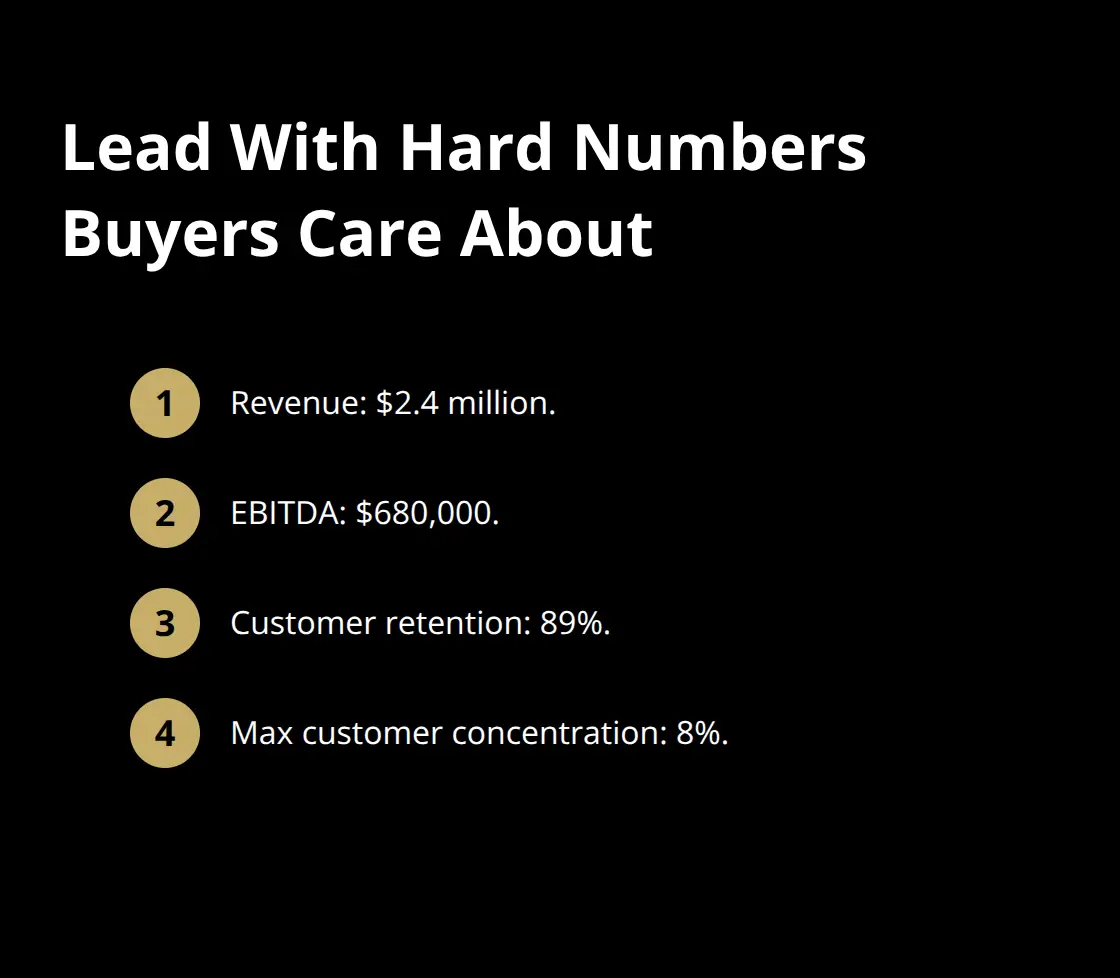
Instead, lead with hard facts: $2.4 million revenue, $680,000 EBITDA, 89% customer retention over five years, and zero customer concentration above 8 percent of total revenue. These numbers tell a buyer whether your business fits their acquisition criteria before either party wastes time.
Focus on Direct Outreach Over Broad Platforms
Online platforms matter less than direct outreach for mid-market sales. BizBuySell and Flippa generate tire-kickers, not qualified buyers with capital ready to close. Industry forums, LinkedIn groups focused on business acquisitions, and trade association membership directories yield better prospects because they target people already thinking about growth through acquisition.
Attend one or two industry conferences and spend time in conversations with potential acquirers without mentioning your business is for sale. These relationships pay off later when you’re ready to market formally. Once you have 5–8 serious prospects signed to NDAs and actively reviewing your materials, you can launch broader marketing through your website or a simple landing page explaining that your business is available to qualified buyers.
Control Your Narrative Through Confidentiality
The landing page should have a form collecting contact info and asking prospects to sign your NDA before receiving more details. This filters out curiosity seekers and keeps confidentiality intact. Many DIY sellers panic about online exposure, but confidentiality actually strengthens when you control the narrative through direct outreach rather than hoping a broker’s network finds the right buyer.
Final Thoughts
Deal structure determines your financial outcome far more than most DIY sellers realize. You must choose between an Asset Purchase Agreement (where the buyer acquires specific assets and assumes certain liabilities) and a Stock Purchase Agreement (where they buy the company’s stock and inherit all liabilities), as each structure carries different tax and liability implications. Working capital adjustments, earnouts, and reps and warranties insurance represent standard terms that trip up unprepared sellers, so a business attorney should draft your purchase agreement and disclosure schedules listing all contracts, pending litigation, debt, and employee agreements before you sign anything.
Negotiations succeed when you know your walk-away price and refuse to compromise on it. Buyers will pressure you on valuation, terms, and timeline, but don’t fold on working capital pegging or earnout percentages just to close faster. The DIY approach to selling a business saves you $300,000 to $500,000 in broker commissions, but only if you execute properly through clean financials, a clear valuation story, and disciplined buyer outreach.
Your biggest advantages in a DIY sale include control over the narrative, direct relationships with buyers, and the ability to move quickly when the right prospect emerges. If you want expert support without full broker fees, Unbroker charges just a 6% success fee, paid only when your business sells, for navigating negotiations and legal documents. Whether you go fully independent or seek targeted help, preparation makes the difference between a successful exit and a stalled process.