Selling a business without the right marketing tools is like leaving money on the table. Most sellers list their businesses and hope qualified buyers find them-but visibility gaps mean you’re missing serious prospects.
At Unbroker, we’ve seen firsthand how strategic marketing tools can increase your sale price and accelerate the timeline. The difference between a slow sale and a competitive bidding war often comes down to how effectively you reach potential buyers.
Why Visibility Gaps Destroy Business Sale Value
When a business sits on a platform without strategic marketing, it becomes invisible to qualified buyers actively searching for acquisition opportunities. Most sellers list their businesses and hope the right prospects find them, but the reality is brutal: passive listings generate significantly fewer inquiries and lower final sale prices. Hundreds of business sales reveal an unmistakable pattern-targeted marketing strategies attract 40-60% more buyer inquiries than those relying on organic discovery alone. The gap between a listed business and a business actively marketed to qualified prospects isn’t small; it’s the difference between a single offer and a competitive bidding environment that drives up valuation. Without proper visibility, you’re competing against every other business sale happening simultaneously, and most buyers never see your listing because they don’t know it exists. Strategic marketing tools solve this problem by placing your business directly in front of decision-makers who are already in acquisition mode. The cost of invisibility isn’t just lost time-it’s lost money. A business that should sell for $500,000 might close at $350,000 simply because the right buyers never encountered it, and that $150,000 gap represents the true cost of inadequate marketing.
Reaching the Right Buyers at the Right Time
Business acquisitions follow predictable patterns. Buyers actively searching for acquisition targets use specific research methods: they search industry databases, monitor marketplace listings, read industry publications, and network within their sectors. If your business isn’t visible across these channels, you miss the buyer segment most likely to move quickly and pay premium prices. Marketing tools that aggregate your listing across multiple platforms-industry-specific marketplaces, business broker networks, and buyer databases-dramatically increase the probability of reaching qualified prospects. Analytics tools become essential here because they show you exactly which channels drive serious inquiries versus casual browsers. Tracking where your most qualified leads originate allows you to focus resources on effective channels and abandon those wasting your time. Tools that segment potential buyers by industry, company size, and acquisition history let you craft messaging that resonates with each audience rather than broadcasting generic information. The difference between a generalized listing and one precisely targeted to strategic buyers often determines whether you attract tire-kickers or serious acquirers ready to negotiate.
The Financial Reality of Strategic Marketing Investment
Investing in marketing tools for a business sale delivers measurable ROI that most sellers underestimate. A $2,000-3,000 investment in comprehensive marketing-professional photography, copywriting, targeted advertising, and multi-channel distribution-typically adds $50,000-150,000 to your final sale price through increased buyer competition and perceived value. That’s a return multiple of 20-75x, making it one of the highest-ROI investments you can make during the sales process. Strategic marketing also compresses your timeline significantly. B2B sales cycles vary significantly by deal size: SMB transactions typically close in 1-3 months, mid-market deals extend 3-6 months, and enterprise agreements take longer. That acceleration has massive financial value because it frees up your capital, reduces carrying costs, and lets you move forward with whatever comes next. The longer a business sits on the market, the more questions buyers ask about why it hasn’t sold, and that skepticism tanks valuations. Conversely, businesses that attract multiple inquiries early create urgency-even if those inquiries don’t immediately convert, the appearance of competitive interest pushes other prospects to move faster and offer more aggressively.
What Separates Winners From Slow Sales
The businesses that sell fastest and at the highest valuations share one characteristic: they treat the sale like a marketing campaign, not a passive listing. These sellers invest in professional presentation, multi-channel visibility, and targeted outreach rather than hoping qualified buyers stumble across their listing. They understand that every day a business remains unsold costs money in lost opportunity and reduced buyer confidence. The tools you select determine whether you reach serious acquirers or waste time fielding low-ball offers from unqualified prospects. This distinction matters enormously because it shapes not just your final price, but your entire sales experience.
Essential Marketing Tools Every Business Seller Should Use
Professional Listing Creation and Optimization Tools
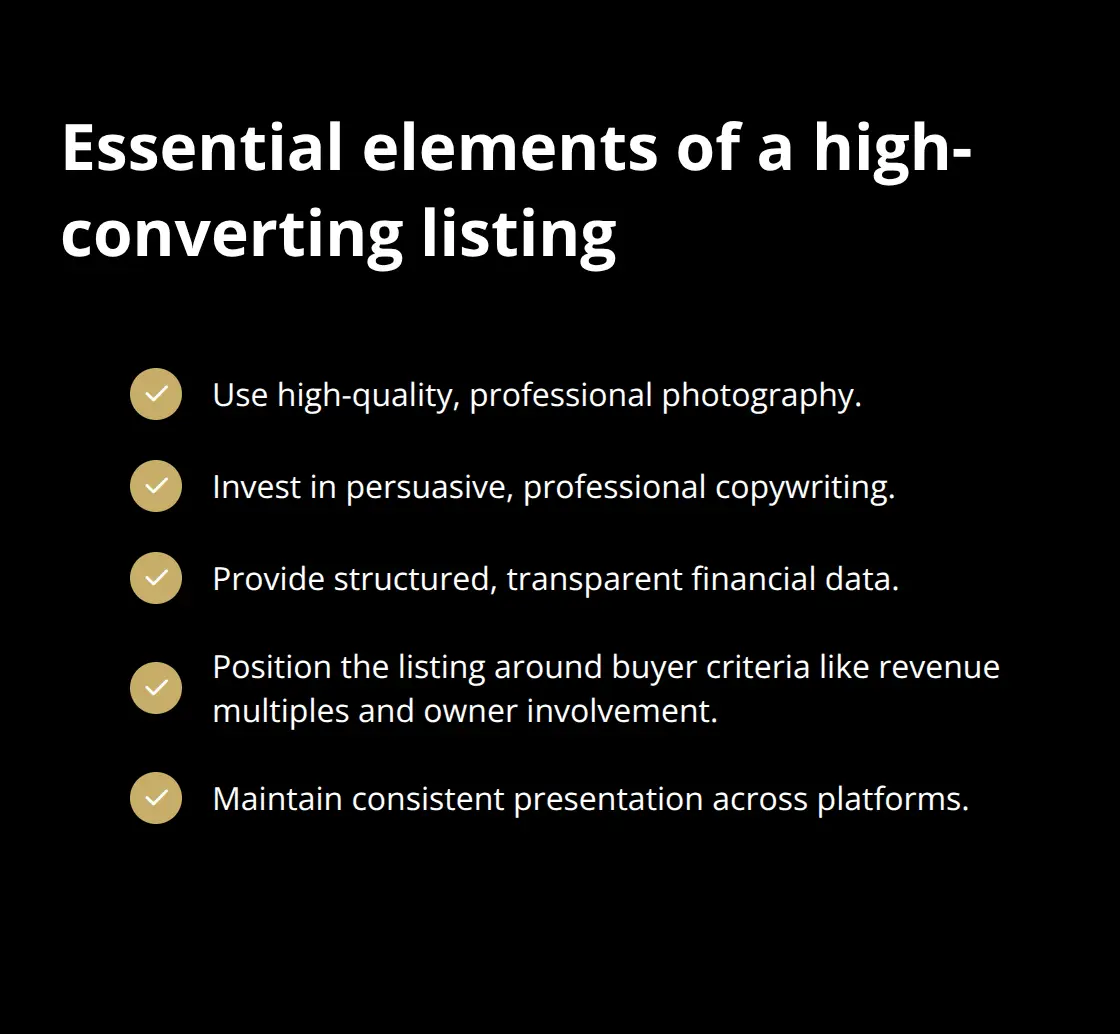
Professional presentation separates businesses that attract multiple offers from those that languish on marketplaces. When you list a business for sale, most potential buyers form their first impression within seconds, and that initial perception determines whether they request more information or move to the next listing. High-quality photography, professional copywriting, and structured financial data aren’t optional extras-they’re prerequisites for reaching serious acquirers.
Tools that optimize your listing across multiple platforms ensure consistent presentation and maximum visibility. Beyond aesthetics, your listing needs strategic positioning. Buyers search for specific criteria: revenue multiples, industry growth rates, and owner involvement levels. Your marketing materials must address these factors directly rather than burying them in generic descriptions.
Analytics tools reveal exactly which listing elements drive inquiries versus which ones repel qualified prospects. Tracking click-through rates on different sections, measuring time spent on revenue documentation, and monitoring which buyers request financial details tells you whether your presentation resonates with serious acquirers or attracts tire-kickers. This data-driven approach to presentation refinement typically increases qualified inquiry volume by 30-50% compared to static listings that never adapt.
Buyer Targeting and Outreach Platforms
Reaching qualified buyers requires targeting precision that passive marketplaces cannot provide. Buyers searching for acquisitions in specific industries, revenue ranges, or geographic markets have distinct characteristics, and generic broadcast marketing wastes resources on unqualified prospects. Segmentation tools that identify buyer profiles by industry, company size, acquisition history, and geographic preference let you concentrate outreach on decision-makers most likely to move quickly.
Analytics platforms that track which channels generate serious inquiries versus casual browsers eliminate guesswork from your marketing allocation. A business attracting 100 inquiries monthly might discover that 80 come from industry-specific databases, 15 from general marketplaces, and 5 from cold outreach-but only the database inquiries convert to serious negotiations. That insight justifies concentrating resources on the channels driving qualified leads rather than spreading effort equally across all channels.
Analytics and Performance Tracking Tools
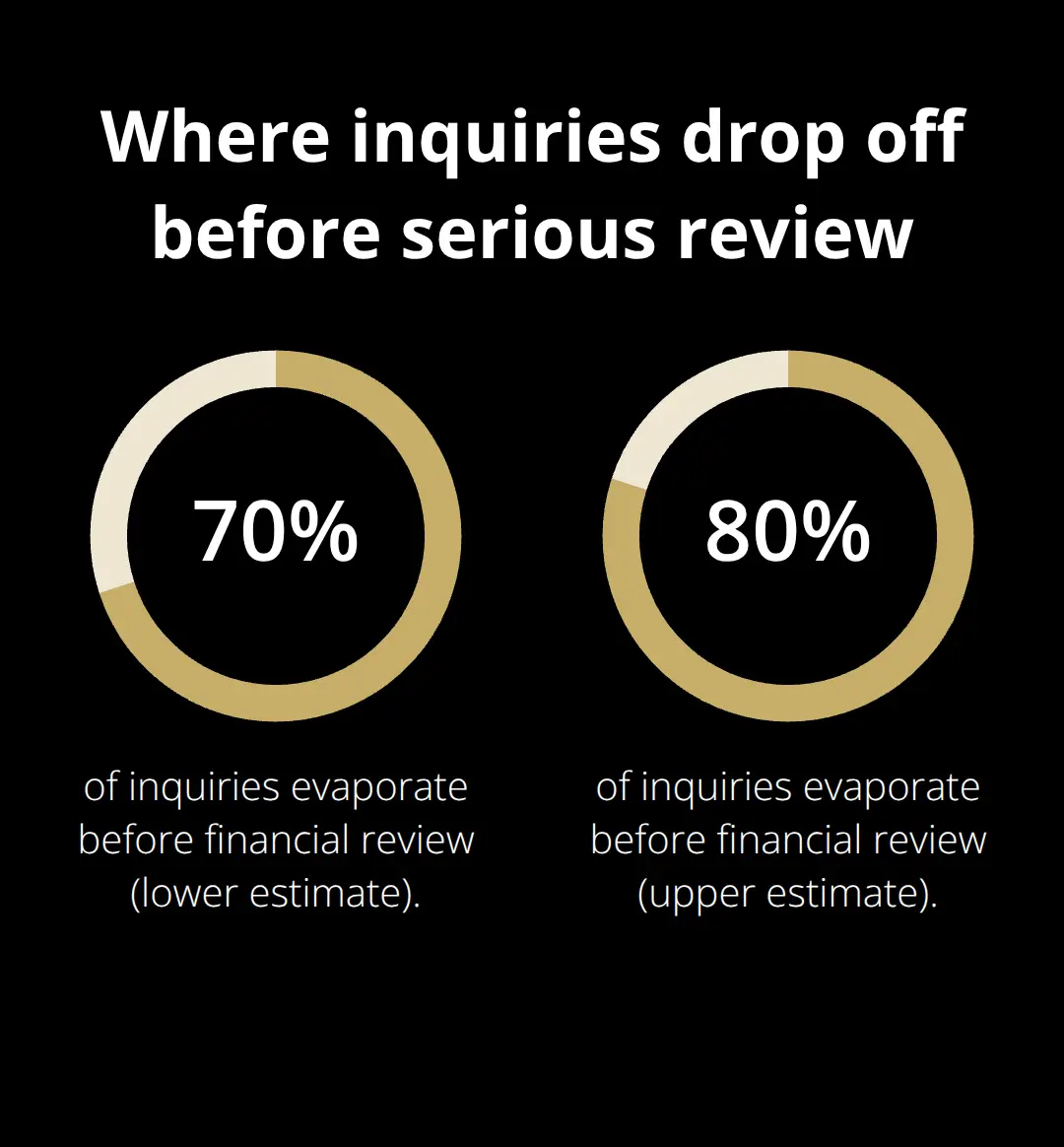
Performance tracking tools measure conversion rates at each stage: from initial inquiry to financial documentation request to serious negotiation. Most sellers discover that 70-80% of inquiries evaporate before reaching financial review, indicating that your listing presentation or initial outreach messaging needs refinement. Tools that identify where prospects drop off enable targeted improvements that dramatically increase the percentage moving forward.
The combination of precise targeting, channel optimization, and conversion tracking transforms your marketing from a hope-based strategy into a measurable system that consistently delivers qualified buyers. These insights prepare you to understand which marketing investments actually work-and which ones drain your resources without generating serious interest.
Reach Buyers Where They Actually Look
Distribute Your Listing Across Multiple Channels
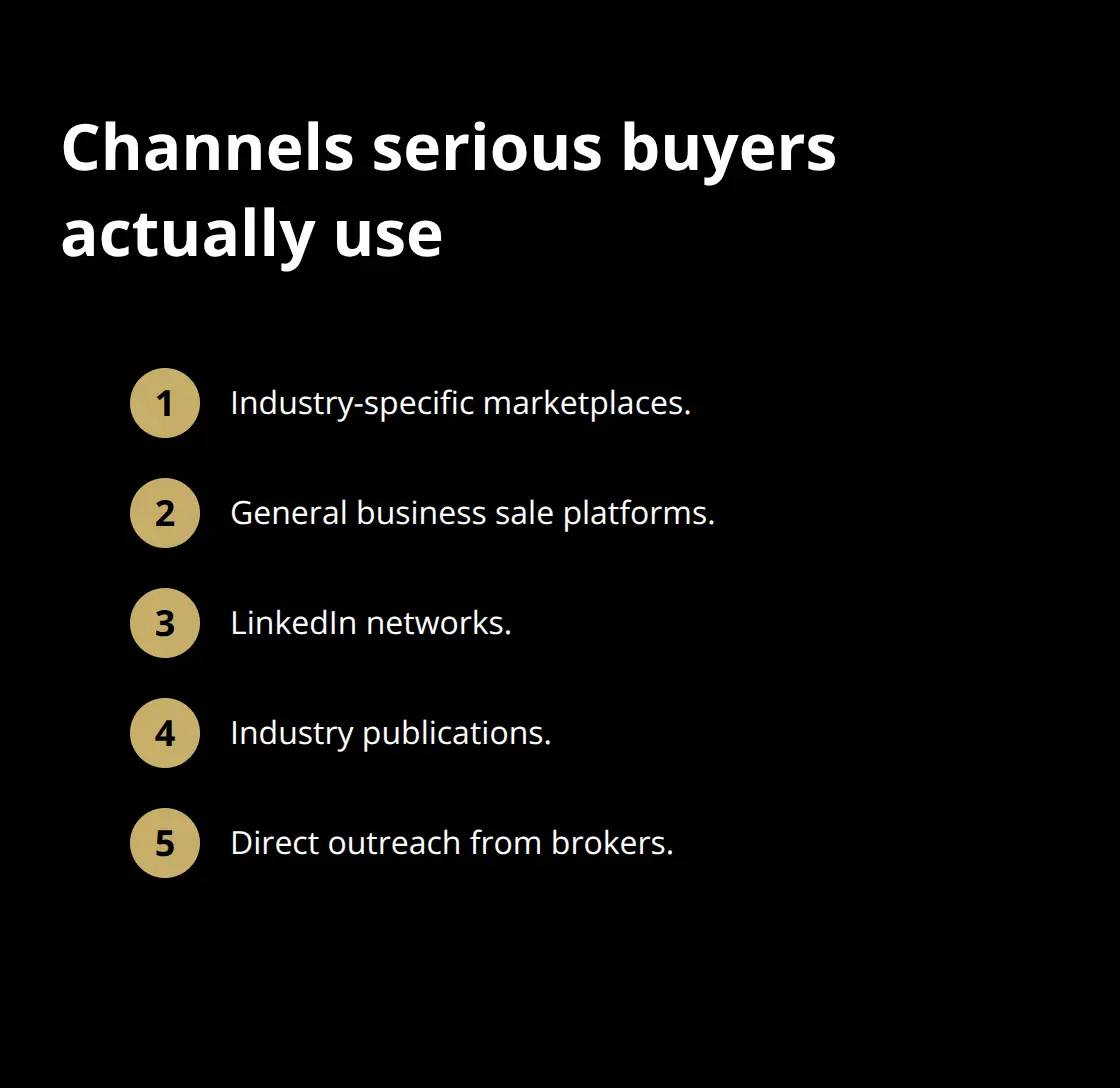
Most sellers concentrate their marketing on a single platform and wonder why qualified buyers never materialize. The reality is that serious acquirers search across multiple channels simultaneously: industry-specific marketplaces, general business sale platforms, LinkedIn networks, industry publications, and direct outreach from brokers. Your listing appears on one platform while your ideal buyer searches on three others, and that disconnect costs you serious offers.
Multi-channel distribution isn’t optional-it’s the foundation of reaching decision-makers actively hunting for acquisitions.
When you list across industry databases, general marketplaces, and targeted buyer networks, you intercept prospects at the exact moment they’re searching for businesses matching your profile. Each channel attracts different buyer segments: strategic buyers in your industry monitor specialized databases, financial investors scan general marketplaces, and competitors often discover opportunities through LinkedIn and industry publications. The businesses that sell fastest command premium prices because they appear everywhere qualified buyers look, creating the impression of high demand and limited availability.
Tools that automatically distribute your listing across multiple platforms eliminate manual work and ensure consistent information across channels. Analytics tracking which channels generate the highest-quality inquiries lets you focus resources on effective platforms while abandoning those attracting unqualified tire-kickers wasting your time.
Identify and Target Your Ideal Buyer Segments
Data reveals exactly who buys businesses in your industry and why they buy them. Analyze your incoming inquiries by buyer profile: Are they strategic competitors seeking market consolidation? Financial investors hunting cash-flowing assets? Employees attempting buyouts? Each segment has distinct motivations, decision timelines, and price expectations.
Strategic buyers view acquisitions as investments in staying competitive and move faster but negotiate harder on valuation. Financial investors focus intensely on cash flow multiples and owner involvement requirements. This segmentation transforms your messaging from generic marketing into precision communication addressing each buyer’s specific concerns. When a strategic buyer asks about market position, emphasize competitive advantages and growth runway. When a financial investor inquires, lead with EBITDA margins and recurring revenue.
Tools that track which questions different buyer segments ask reveal what actually matters to decision-makers in your industry. Most sellers discover that 40-60% of inquiries come from one buyer category, justifying concentrated outreach toward that segment rather than equal effort across all potential buyers. Timing your outreach to when buyers actively search for acquisitions in your industry dramatically improves response rates compared to random cold contact. Industry events, earnings season for public companies in your sector, and seasonal business cycles all influence when acquisition activity peaks.
Generate Competitive Interest Through Strategic Marketing
Creating genuine competitive interest accelerates your sale and increases your final price. When multiple serious buyers negotiate simultaneously, each one knows others are interested and moves faster to avoid losing the opportunity. Competitive interest in business sales increases the price you can get and gives you more options and negotiating power.
The psychological shift from buyer desperation to seller scarcity transforms negotiations from defensive to offensive. Aggressive multi-channel marketing that generates visible inquiry volume and strategic communication revealing that multiple parties are interested creates this environment naturally. Don’t lie about offers or fabricate interest, but do allow qualified buyers to see evidence that others are actively evaluating your business. Transparency about multiple inquiries under review creates urgency without manipulation.
Scarcity works because it’s real: you have one business to sell and multiple buyers competing for it. Consistent marketing activity across channels, rapid response to qualified inquiries, and professional presentation convince serious buyers your business deserves their attention and capital.
Final Thoughts
Selling a business without strategic marketing tools leaves money on the table. The businesses that sell fastest and command premium prices treat the sale as a marketing campaign, not a passive listing. Marketing tools for sellers aren’t luxuries-they’re investments that consistently deliver 20-75x returns through increased buyer competition and accelerated timelines.
Your implementation strategy should start with honest assessment of your current visibility. Are you reaching strategic buyers in your industry, financial investors hunting cash-flowing assets, or both? Which channels generate your highest-quality inquiries, and where do prospects drop off before reaching serious negotiation? A $2,000-3,000 investment in professional presentation, targeted distribution, and analytics tracking typically adds $50,000-150,000 to your final sale price-making it one of the highest-ROI decisions you’ll make during the sales process.
We at Unbroker understand that selling a business requires more than hope. Our platform combines transparent pricing with premium marketing tools, legal templates, and access to a vast buyer network enhanced by AI-driven processes. Start your business sale with Unbroker and see how strategic marketing transforms your outcome.