Business brokers go through formal training programs that teach them valuation, sales tactics, and contract law. But here’s what most people don’t realize: that traditional broker education comes with hidden costs that get passed directly to sellers.
At Unbroker, we’ve seen firsthand how outdated training models lead to inflated commissions and opaque fee structures. This post breaks down what brokers actually learn-and why modern sellers deserve better options.
What Brokers Must Know Before They Can Sell
State Regulations Create a Fragmented Landscape
Becoming a business broker requires navigating a complex web of state regulations, industry certifications, and ongoing education requirements. Most states do not regulate business brokers the way they regulate real estate agents, which means requirements vary dramatically depending on where you operate. Some states treat business brokerage as a subset of business opportunity sales and require specific licensing, while others have virtually no formal requirements at all. This regulatory patchwork creates a significant problem: brokers who operate across state lines must understand multiple compliance frameworks simultaneously.
Industry Certifications: The Standard That Isn’t Required
The International Business Brokers Association offers the Certified Business Intermediary credential, which has become the industry standard despite not being legally required in most states. Earning the CBI involves meeting educational requirements, attending an IBBA Conference, providing evidence as lead seller broker on 3 business transactions, and passing the CBI exam. Beyond the CBI, brokers pursue credentials like the M&A Master Intermediary from M&A Source or the Certified Business Broker from the California Association of Lenders. These certifications cost between $500 and $2,000 in exam and membership fees, and brokers market them aggressively to sellers as proof of competence.
What Training Actually Teaches Brokers
The reality is that these credentials teach brokers how to conduct transactions, not how to serve sellers’ interests. Training programs focus heavily on financial analysis and valuation methods, teaching brokers to calculate EBITDA, apply earnings multiples, and perform discounted cash flow valuations. Brokers learn negotiation tactics designed to close deals quickly rather than maximize seller proceeds. They study contract law and due diligence procedures to protect themselves from liability, not to streamline the process for sellers.
The Misalignment Between Training and Seller Needs
Continuing education requirements for business brokers ensure ongoing professional development, but often cover topics like technology updates and regulatory changes rather than whether the traditional broker model itself serves sellers effectively. The problem isn’t that brokers are poorly trained; it’s that their training prioritizes transaction completion and commission protection over transparency and cost efficiency. A broker earning 10 percent commission on a $2 million sale pockets $200,000, and their training teaches them to justify that fee through expertise and access. What training does not teach is that sellers now have access to alternative platforms offering comprehensive support at a fraction of traditional costs, with transparent fee structures and buyer networks that rival traditional broker databases. This gap between what brokers learn and what sellers actually need sets the stage for understanding the hidden costs embedded in traditional brokerage models.
What Brokers Actually Train to Do
Valuation Training: Teaching Brokers to Justify High Fees
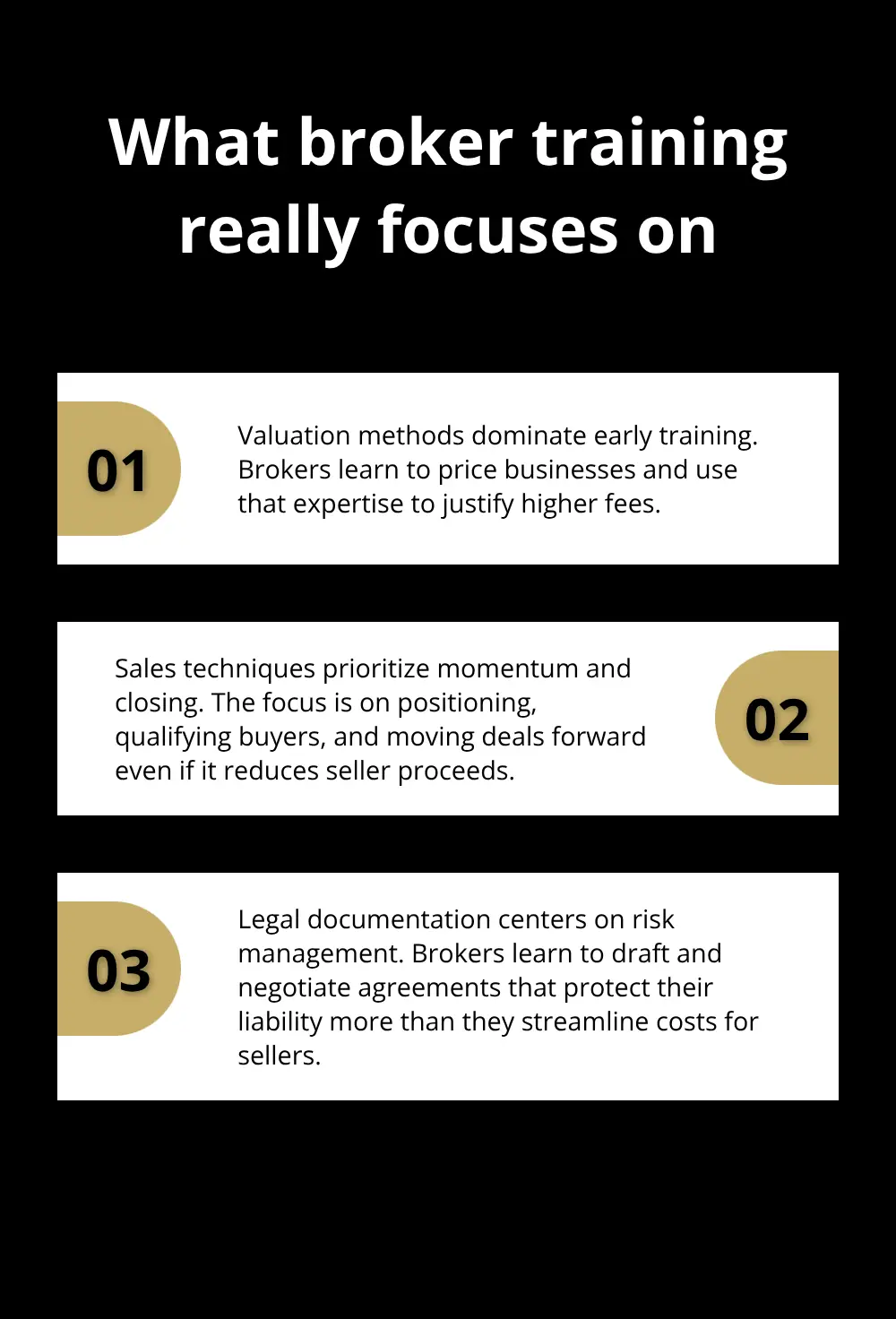
Broker training programs teach three core competencies, and understanding what they actually cover reveals why traditional brokerage models extract such high fees. First, brokers spend significant time learning valuation methods. They master EBITDA calculations, earnings multiples, and discounted cash flow analysis to price businesses. Training teaches them to normalize financial statements by adjusting for owner compensation, discretionary expenses, and one-time items. The logic sounds reasonable: a broker with valuation expertise commands higher fees.
But here’s the problem-most small to mid-market business sales use earnings multiples ranging from 2 to 3.3 across popular sectors. A broker doesn’t need months of training to apply a standard multiple.
The real value in valuation training goes to the broker, not the seller. A broker who understands valuation can justify inflated asking prices to eager sellers, then collect a commission based on that inflated number. This dynamic creates a misalignment: brokers profit when they convince sellers to list high, regardless of whether buyers will pay those prices.
Sales Techniques: Closing Deals, Not Maximizing Returns
Second, brokers learn sales techniques and relationship management. Training covers how to position a business attractively, create compelling marketing materials, qualify buyers, and close deals quickly. They study negotiation tactics focused on moving transactions forward rather than maximizing seller proceeds. A broker trained to close deals in 6 to 12 months learns to accept lower offers if it means securing the commission. This training directly benefits the broker’s timeline and cash flow, not the seller’s financial outcome.
Brokers also learn to leverage their buyer networks and proprietary deal flow as justification for premium fees. Yet modern platforms now aggregate buyer networks through technology rather than personal relationships, delivering comparable or superior buyer access without the commission markup.
Legal Documentation: Protecting Brokers, Not Sellers
Third, brokers study legal documentation and contract negotiation. They learn to draft purchase agreements, understand representations and warranties, manage escrow arrangements, and handle post-closing disputes. This training protects brokers from liability and ensures transactions complete without legal complications for them. Sellers benefit only indirectly-brokers learn these skills partly to reduce their own risk, not to streamline the process for sellers or reduce costs.
The Real Problem: Misaligned Incentives
The disconnect is stark. Brokers invest time and money earning certifications that teach them to conduct transactions efficiently from their perspective, not from the seller’s. A Certified Business Intermediary learns to apply industry-standard practices that have existed for decades, yet those practices include broker commissions between 8% and 12% of the final sale price and opaque fee structures. Training programs never address whether the traditional broker model itself serves sellers fairly-they simply teach brokers how to execute it profitably. This gap explains why sellers increasingly seek alternatives that provide the same core services: valuation assistance, marketing support, buyer connection, and legal guidance. These alternatives deliver comparable results without the inflated fees built into traditional broker training and compensation models, setting the stage for understanding what sellers actually need from a business sale process.
What Brokers’ Training Actually Costs Sellers
Commission Structures That Drain Seller Proceeds
The commission structure brokers learn to defend reveals whose interests their training serves. Traditional brokers operate on 8-12% commissions, meaning a $2 million sale generates $160,000-$240,000 in fees. That’s not a service fee; it’s a tax on ownership transfer that most sellers accept without questioning alternatives. Broker training teaches justification for these rates through expertise and buyer access, but the numbers tell a different story. According to data from BizBuySell, the median small business sale price hovers around $250,000-$350,000, which means the average seller pays $20,000-$42,000 to a broker. For mid-market businesses selling at $1-5 million, commissions typically run $80,000-$600,000. These are not small numbers, yet broker training never questions whether sellers receive proportional value.
Hidden Fees Beyond Commission Quotes
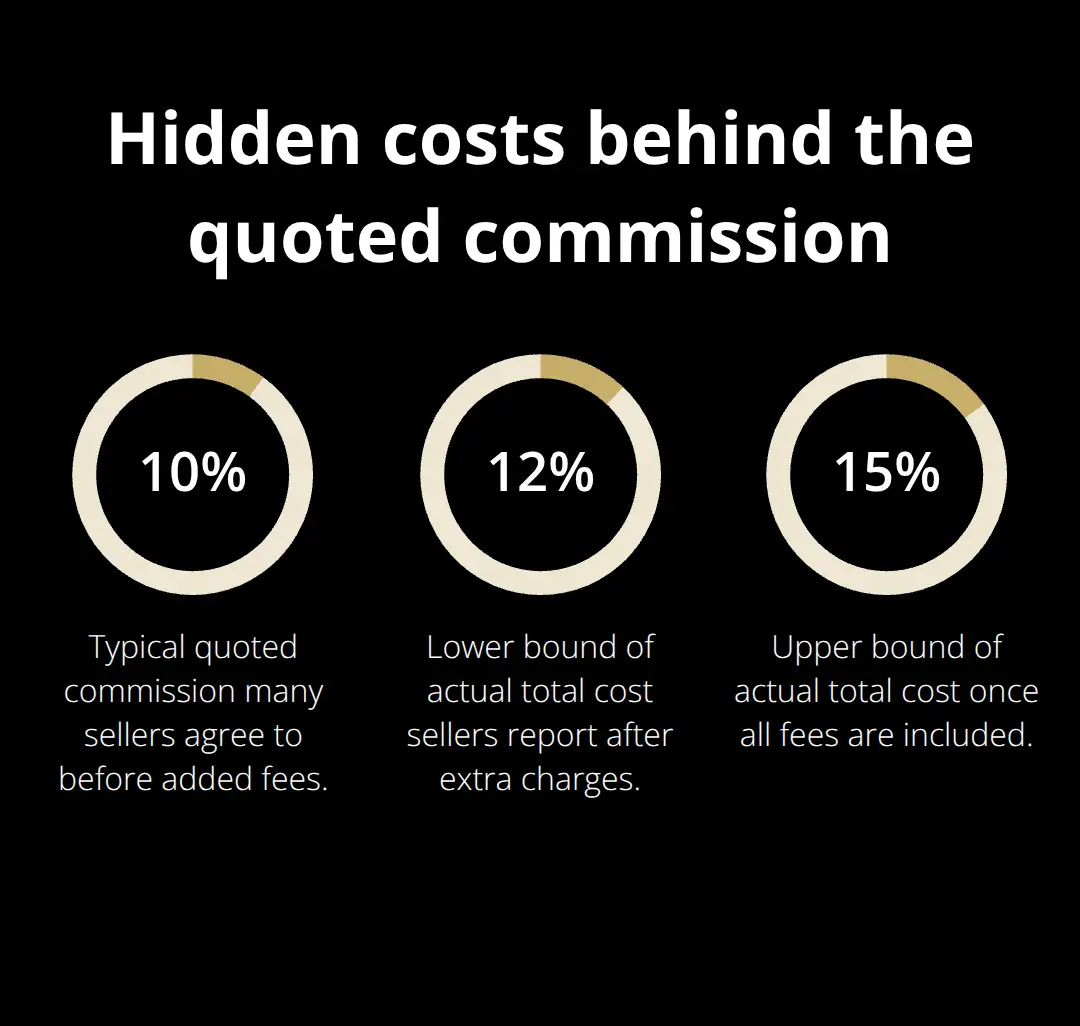
Fee opacity compounds the problem because brokers learn to bury costs throughout the transaction. Broker training teaches fee structures through retainers and success fees, along with ancillary charges that don’t appear in initial commission quotes. A seller might agree to a 10% commission, then discover the broker charges additional fees for marketing materials, transaction management, or legal coordination. Sellers often find their actual total cost exceeded 12-15% once all charges were calculated. This happens because broker training emphasizes protecting broker income through multiple revenue streams, not transparent pricing.
The Opportunity Cost of Extended Timelines
The real cost to sellers isn’t just commissions-it’s opportunity cost. A 6-12 month sales timeline that broker training normalizes means sellers lose potential revenue, delay retirement, or remain tied to a business they want to exit. Faster alternatives exist but rarely appear in broker training curricula because speed doesn’t benefit brokers financially. The longer a sale takes, the more the broker profits from success fees and extended engagement. This misalignment means sellers who follow traditional broker paths often spend more money, take longer, and receive less guidance on maximizing their actual proceeds.
Why Broker Training Ignores Seller Economics
Certification programs teach brokers to position themselves as gatekeepers to buyer networks and valuation expertise, but modern technology has democratized both. Online platforms now aggregate thousands of qualified buyers without requiring brokers as intermediaries, and financial analysis tools that once justified premium fees are now accessible to anyone. Broker training never addresses this shift because it would undermine the traditional model that generates broker income. Instead, training reinforces outdated justifications for high fees and extended timelines, leaving sellers to absorb costs that no longer reflect actual value delivered.
Final Thoughts
Broker education teaches a system designed to benefit brokers, not sellers. The training programs, certifications, and continuing education requirements create professionals skilled at justifying high fees and extended timelines, not at maximizing what sellers actually receive. A broker trained by the International Business Brokers Association learns to apply industry standards that have remained largely unchanged for decades-standards that include 8-12% commissions and opaque fee structures that extract maximum value from sellers while positioning brokers as indispensable gatekeepers.
Technology has dismantled the information asymmetry that once justified premium broker fees. Valuation methods no longer remain proprietary knowledge, buyer networks can be aggregated through platforms rather than personal relationships, and legal templates plus negotiation frameworks are now accessible to anyone. Broker education hasn’t adapted to this reality because doing so would require acknowledging that traditional commissions no longer reflect actual value delivered, so the system continues to teach outdated justifications for high fees.
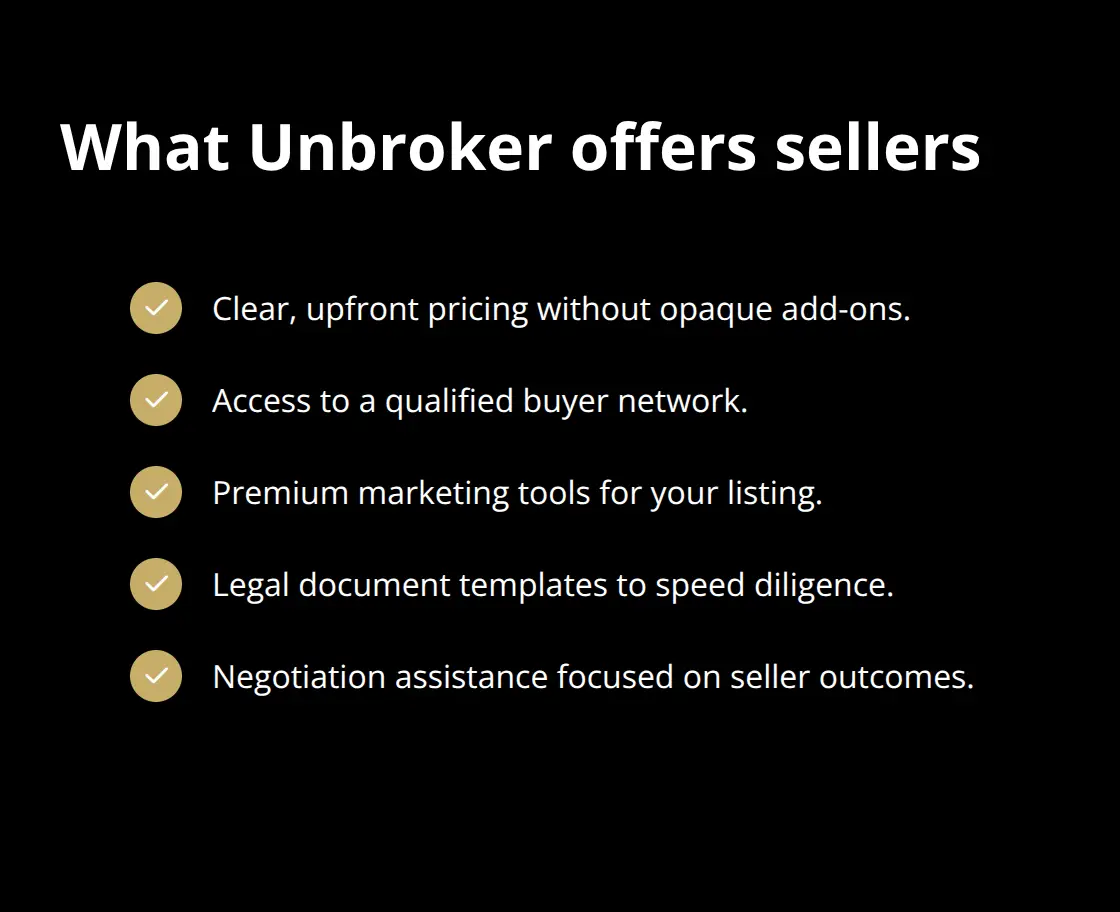
Modern sellers now have alternatives that traditional broker education never anticipated. We at Unbroker built our platform on the principle that sellers deserve control over their sale process and transparency about costs, offering Full Service Business Sale options and Assisted Business Sale plans with clear pricing, access to our buyer network, premium marketing tools, legal document templates, and negotiation assistance.
Explore how transparent business sales work and take control of your financial outcome instead of accepting the commission structure that broker education teaches brokers to defend.