You’re probably paying more than you think when you sell your business. Most platforms hide fees until after the deal closes, leaving sellers shocked at how much they actually lost.
At Unbroker, we believe platform transparency should come before low advertised rates. When you know every cost upfront, you make better decisions and keep more money in your pocket.
What Fees Actually Cost You When Selling
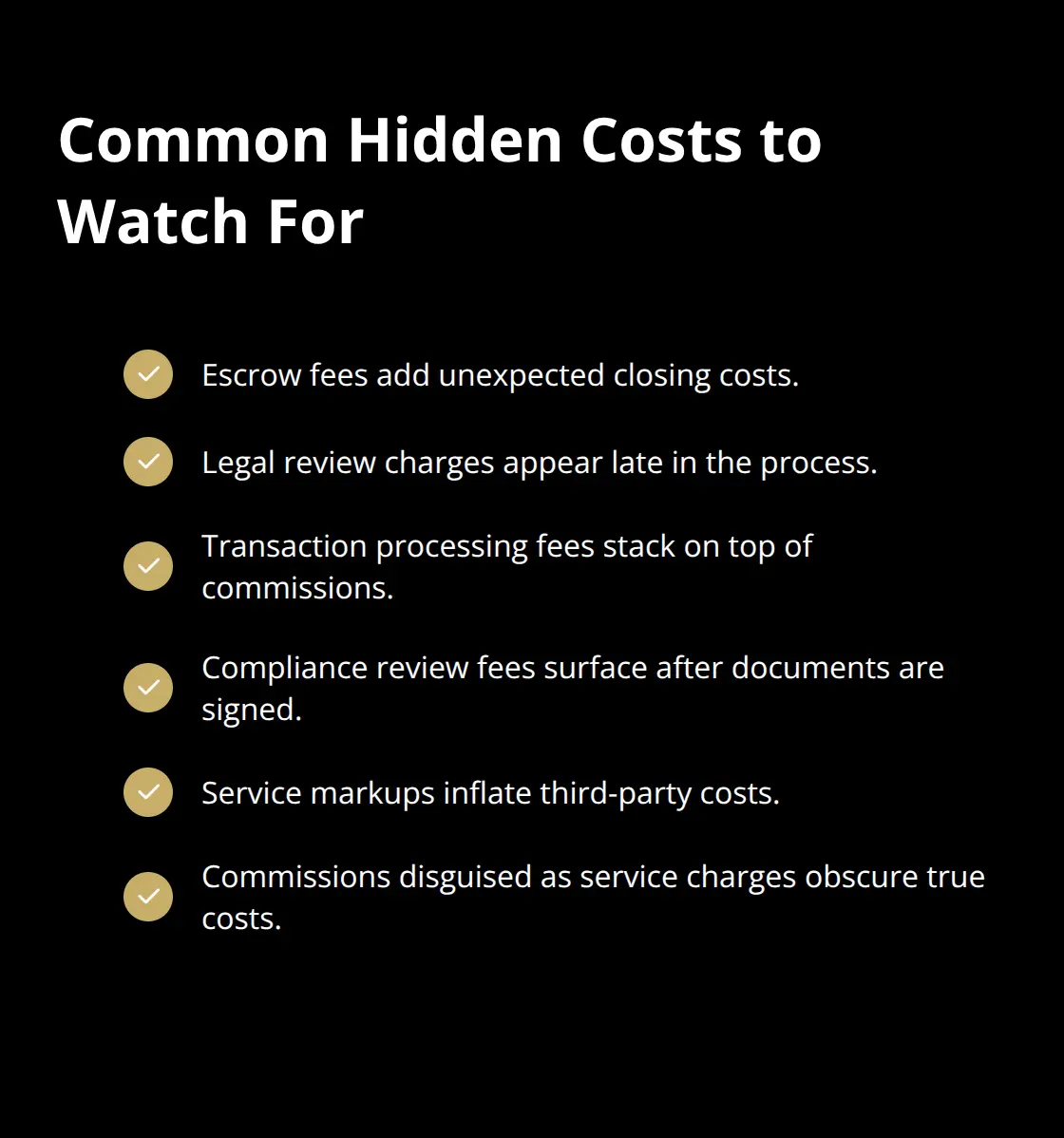
The math on business sale fees is brutal once you stop looking at percentages and start counting dollars. Traditional brokers charge between 8% to 12% in fees, which means a $500,000 business sale costs you between $40,000 and $60,000 in fees alone. That’s not counting the escrow fees, legal review charges, transaction processing costs, and miscellaneous service markups that quietly stack on top. A Morning Consult survey for the Financial Technology Association found that 68% of small business owners rank no hidden fees as their top factor when evaluating service providers, yet most platforms still bury costs in fine print or reveal them only after you’ve committed to the process.

Hidden Costs Appear When You Can’t Back Out
The problem intensifies because sellers often don’t see the full cost breakdown until days before closing, leaving no time to negotiate or walk away. Some platforms charge commissions disguised as service charges, making it impossible to compare what you’re actually paying across providers. Fee transparency separates ethical brokers from predatory operators who hide costs until the deal closes. One seller discovered a $3,200 charge labeled as a compliance review fee only after signing preliminary documents, but by then backing out felt impossible. These hidden costs aren’t accidents; they’re built into fee structures specifically because most sellers don’t ask the right questions before committing.
Why Timing Changes Everything
Transparency matters because timing matters. When you see all costs before you agree to anything, you can actually compare your options and make a decision based on facts rather than pressure. Some platforms add fees for services you never requested, like buyer qualification reviews or marketing upgrades, automatically charging them unless you explicitly opt out. Others charge markups on third-party services without disclosing the markup percentage upfront, pocketing the difference without explanation.
What Transparent Pricing Actually Looks Like
Platforms that operate with full transparency show you every cost upfront and let you calculate your net proceeds from day one. This approach eliminates the shock that sellers experience at closing tables across the industry. You know exactly what you’re paying, which services that fee covers, and what happens if you need additional support. This clarity transforms the entire selling process from a financial guessing game into a straightforward transaction where you control the outcome.
The difference this makes is substantial: instead of losing tens of thousands in undisclosed fees, you understand your actual costs before you commit. This knowledge allows you to compare platforms fairly and choose the option that truly fits your situation and budget. When you move forward with a platform that operates this way, you’re not just saving money on fees-you’re gaining the ability to make informed decisions about your business sale.
Does Transparent Pricing Speed Up Your Sale?
Sellers Close Faster When Costs Are Clear
Sellers who know their costs upfront close deals faster because they spend less time negotiating fees and more time focused on finding the right buyer. When a platform shows you every charge before you commit, you eliminate the back-and-forth that typically happens at closing when unexpected fees surface. This matters because business sales already take months to complete. Clarity on pricing reduces decision fatigue and allows sellers to move forward with confidence rather than second-guessing their choice of platform. You can compare two platforms side by side and see exactly what each one costs, which means you make a decision based on facts instead of guessing what hidden charges might appear later. This straightforward comparison removes friction from the entire process.
How Transparent Pricing Attracts Quality Buyers
Transparent platforms attract better-qualified buyers because serious purchasers want to work with sellers and brokers who operate honestly. When a platform doesn’t hide fees, it signals that the entire operation runs on trust rather than manipulation, which appeals to legitimate buyers conducting due diligence. Buyers know that if a platform is honest about seller costs, it’s likely honest about everything else too. This reputation matters because business acquisitions involve significant capital and legal scrutiny; buyers want partners they can trust completely. Platforms that operate with full transparency build credibility faster, which means they attract higher-quality buyer networks over time.
What Happens When Both Sides Know the Real Numbers
The result is that your business gets presented to serious, vetted purchasers rather than tire-kickers looking for deals. You also spend less time managing difficult conversations about unexpected costs, which frees up mental energy for the actual negotiation process. When both seller and buyer know the real numbers upfront, the conversation shifts from suspicion about hidden charges to substantive discussion about business value, terms, and fit. This shift transforms how deals progress-instead of stalling over fee disputes, negotiations focus on what actually matters: whether the buyer and seller are aligned on price, terms, and timeline. Financial transparency directly impacts how quickly you move from initial interest to signed agreement. Buyers who understand the full cost structure can make faster decisions because they’re not worried about discovering additional charges later. This confidence accelerates the entire transaction cycle and reduces the likelihood that deals fall apart over financial surprises.
What Transparent Platforms Actually Show You
Transparent platforms stop hiding numbers and start showing data that matters. Instead of revealing fees only after you commit, they display every cost before you create an account. You see the upfront fee, the post-sale cost, what services each fee covers, and exactly what you’ll net after all charges are deducted. This approach eliminates the financial surprises that plague most business sales. The difference between a platform that hides costs and one that doesn’t is the difference between guessing your net proceeds and knowing them with certainty.
How Clear Pricing Works in Practice
Platforms that operate transparently show you every charge upfront so you can calculate your exact take-home amount from day one. This means you can evaluate whether selling makes financial sense before you invest time and energy. You know the upfront fee structure, understand what happens after the sale closes, and see no additional charges appear later. This straightforward approach transforms the selling process from a financial guessing game into a transaction where you control the outcome.
Real Data Reveals What Platforms Actually Deliver
Platforms that operate transparently also share real data about their buyer networks and sale success rates, not vague promises about reaching serious purchasers. You want to know how many qualified buyers they’ve connected with sellers, what percentage of listed businesses actually sell, and what the average time-to-sale looks like. Some platforms refuse to share these metrics, which should raise red flags about what they’re hiding. A platform willing to publish its success rates demonstrates confidence in its operation and gives you concrete information to compare against competitors.
What Success Metrics Tell You
You can then ask specific questions: Did 60% of businesses listed last year sell, or 30%? What was the average time from listing to closing? Did buyers who came through this platform complete purchases, or did they just browse and disappear? These numbers matter because they reveal whether a platform attracts serious buyers or just traffic. When a platform won’t share success metrics, assume they’re not impressive enough to publish. Platforms with strong buyer networks and high sale completion rates have no reason to stay silent about it (and every reason to advertise those results prominently).
Why Data Access Matters for Your Decision
Access to real metrics lets you compare platforms fairly and choose the one that actually fits your situation. You stop relying on marketing claims and start evaluating actual performance. This information advantage shifts power back to you as a seller, allowing you to make decisions based on facts rather than promises. Platforms that hide their numbers are betting you won’t ask the right questions before committing.
Final Thoughts
The choice between low fees and platform transparency isn’t actually a choice at all. Low advertised rates mean nothing when hidden charges appear at closing and erase your savings. Platform transparency gives you the information you need to make decisions that actually protect your money.
Real cost savings come from knowing every expense upfront. When you see the full breakdown before you commit, you calculate your exact net proceeds and compare platforms fairly. You don’t guess what you’ll take home or hope no surprise charges appear later-you know, and this certainty matters far more than chasing the lowest advertised fee (since the lowest fee often comes with the most hidden costs).
Transparent platforms show their buyer networks, success rates, and pricing without forcing you to ask. They don’t hide metrics or bury costs in fine print. At Unbroker, our Full Service Business Sale charges a 6% success fee, paid only when the business sells, with no hidden fees and no surprises at closing. Visit Unbroker to see how transparent pricing works in practice.