Most business owners know they should plan their exit. Yet many delay it anyway, hoping the right moment will arrive on its own.
Exit procrastination costs real money. Every year you wait, you lose compound growth on the proceeds you could have already invested, miss opportunities to improve your business valuation, and risk selling into a weaker market. At Unbroker, we’ve seen owners leave hundreds of thousands on the table simply because they postponed what they could have started today.
What Really Happens When You Delay Your Exit
The Compound Growth You Forfeit
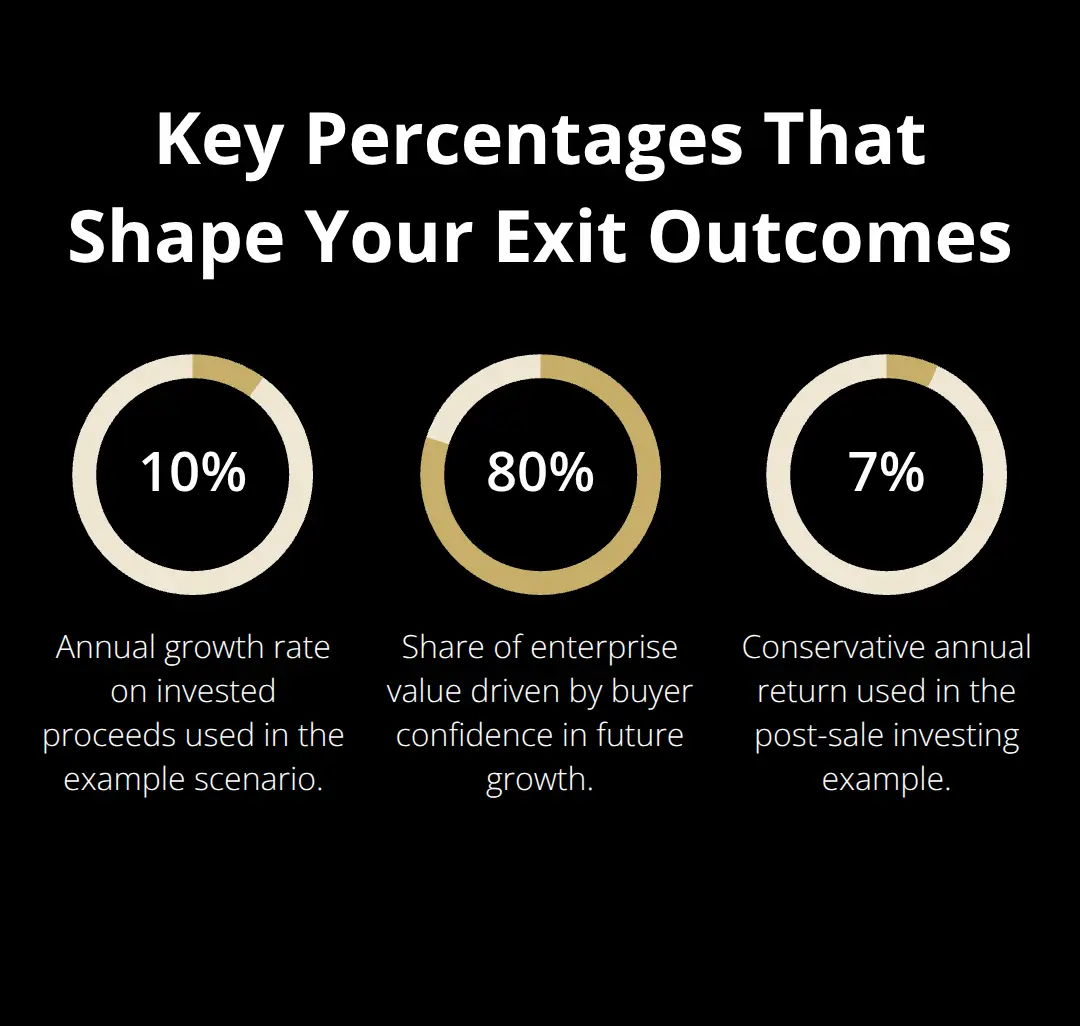
The math of delay is brutal. A business owner who waits seven years to execute an exit plan, even with a modest 10% annual growth rate on invested proceeds, ends up with roughly half the nest egg they would have built by starting today. That’s not theoretical-it’s the cost of procrastination compounded over time. If you sold your business today for $1 million and invested those proceeds at 10% annually, you’d have $2.59 million in ten years. Wait seven years to sell, and you’ve already sacrificed $1.07 million in potential growth before you even begin investing.
Investment fees can quietly eat away at your portfolio’s growth over time, making the opportunity cost even more significant. Yet most owners focus only on the sale price itself, ignoring the years of wealth-building that follow.
How Unprepared Sellers Lose Leverage
Business value also declines when you postpone preparation. Accurate, certified valuations and organized financials speed business sales, while overpricing and outdated records create delays and financing risks. Jonathan Jay, who completed 48 acquisitions during the pandemic, observed that unprepared sellers face extended negotiations, deal fatigue, and pressure to accept lower offers. Roughly 80% of enterprise value depends on the buyer’s confidence in your business’s future growth potential. When you fail to build that narrative-when your operations lack the documentation and strategic positioning that commands premium valuations-you hand leverage to buyers. They sense hesitation, spot gaps in your preparation, and negotiate accordingly.
Market Cycles and Timing Risk
The owner who waits also risks selling into an unfavorable market cycle. Economic conditions such as inflation, interest rates, market growth, and economic cycles can directly influence the financial health and perceived value of your business. A business that might fetch $5 million in a strong market could sell for $3.5 million when credit tightens or buyer confidence drops. Timing matters, yet procrastination removes your ability to time strategically. This reality sets the stage for understanding how proper preparation actually protects your financial future-and how strategic improvements to your business can command the premium valuations that fund your retirement security.
How Preparation Commands Premium Valuations
Owners who sell for top dollar share one trait: they treat their exit as a project requiring deliberate work months or years before signing. Documentation separates premium valuations from fire-sale prices. Buyers evaluate businesses on what they can verify, not what owners claim. A seller with three years of audited financial statements, organized tax returns, clean contracts with major customers, and documented standard operating procedures signals stability and reduces perceived risk. That reduced risk translates directly into higher multiples. A business with spotty records or unclear revenue streams might sell at five times EBITDA, while a well-documented competitor in the same industry commands seven or eight times. The difference between a $2 million and $3.2 million sale price stems largely from preparation, not market luck.
Building Documentation That Buyers Trust
Start collecting your financial records now-not six months before you list. Organize customer contracts, employee agreements, and vendor relationships into a centralized data room. Buyers move faster and bid higher when they spend less time hunting for basic information.
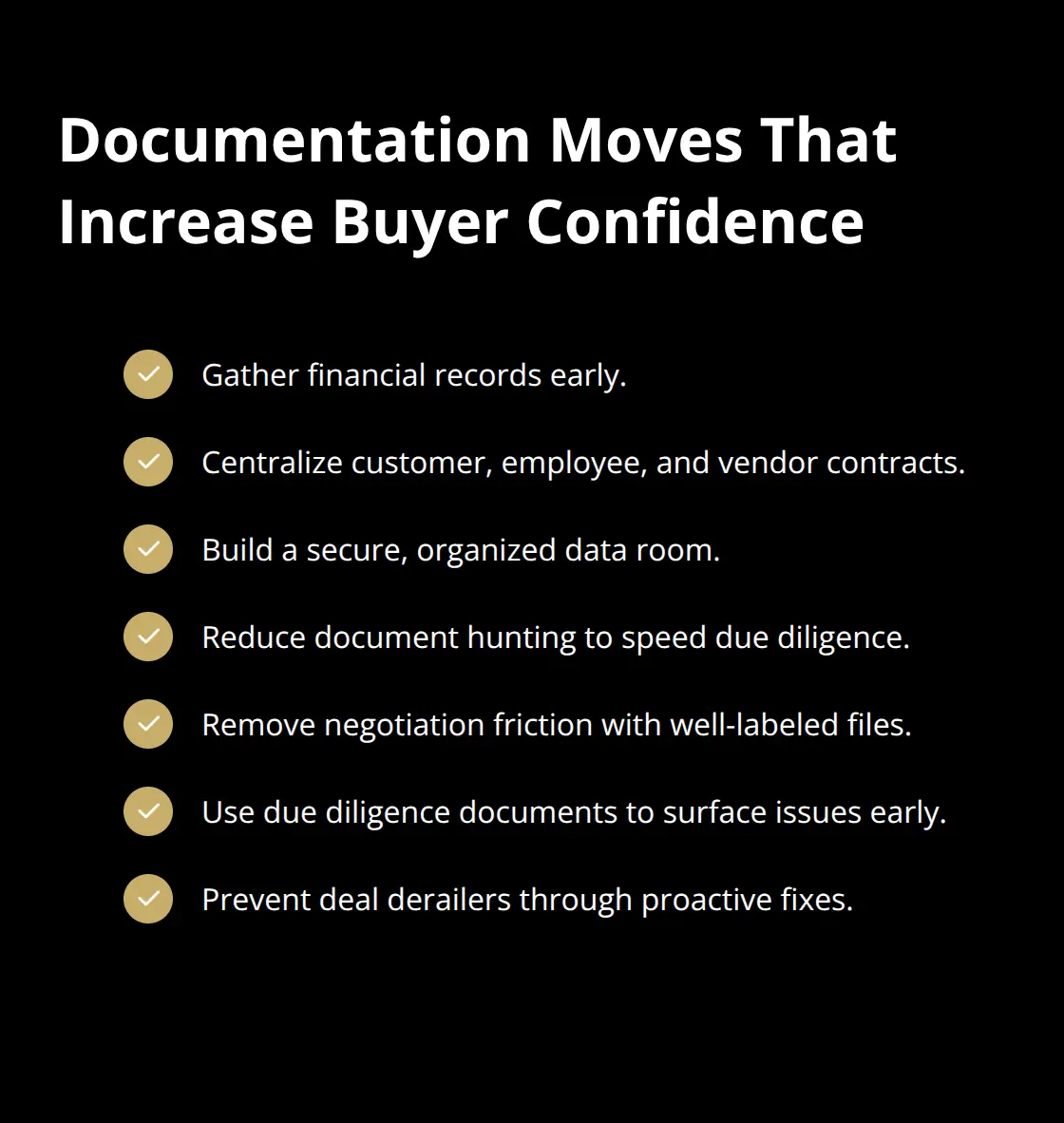
Centralized documentation accelerates due diligence and removes friction from negotiations. Financial due diligence documents help you identify and address financial discrepancies, legal issues, and compliance gaps before buyers spot them. This proactive approach prevents skeletons in the closet from derailing your deal.
What Truly Drives Buyer Confidence
Narrative matters more than most owners realize. Roughly 80% of enterprise value depends on the buyer’s belief in your business’s future, not its historical performance. That future story rests on strategic improvements you implement before sale. If your business relies on one or two major clients, diversify your customer base now-showing a buyer that revenue is stable across multiple accounts dramatically reduces their perception of risk. If your operations depend heavily on you, document processes and transition key responsibilities to capable team members. If your margins are thin, identify cost reductions or pricing power before you enter negotiations.
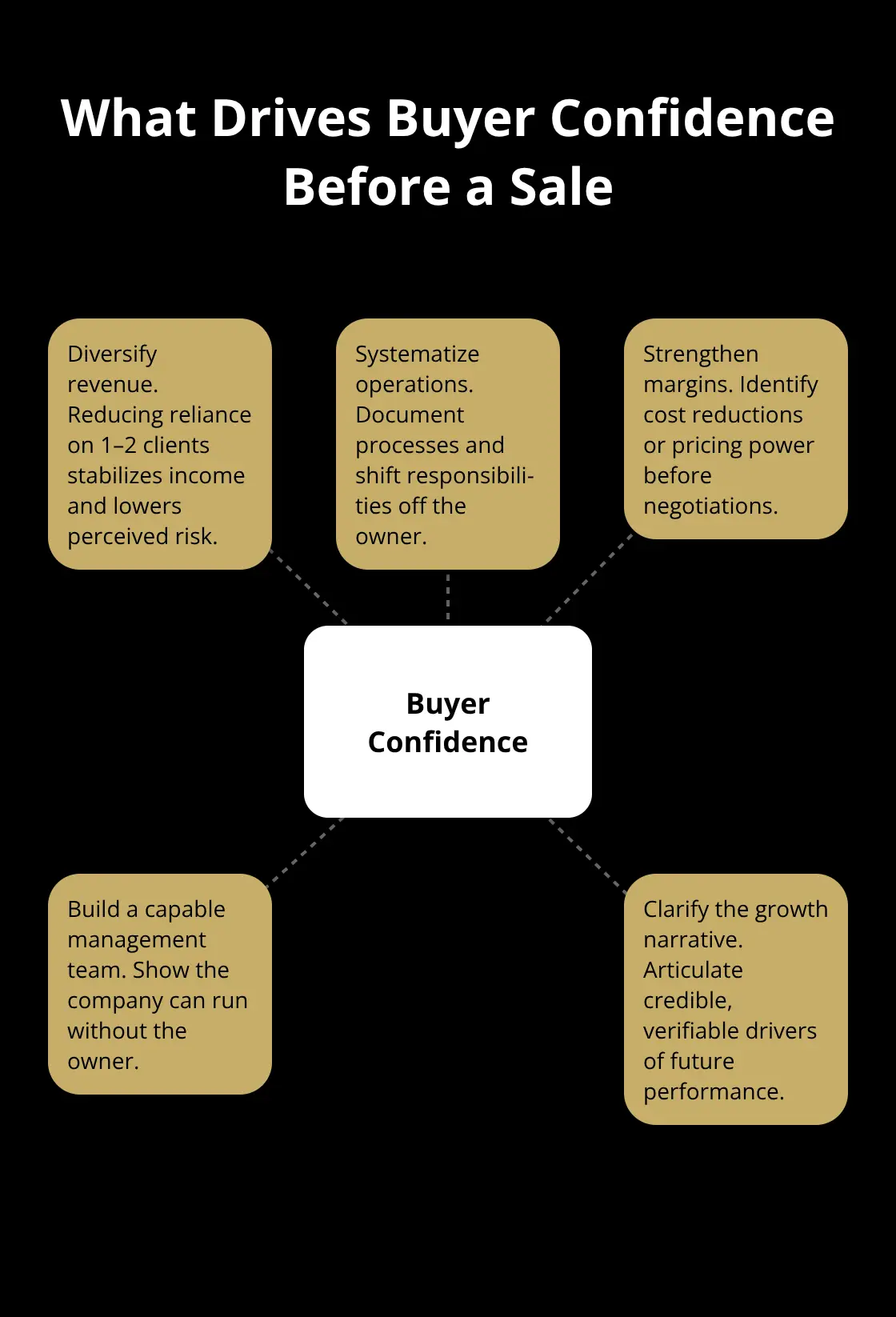
These improvements compound your sale value. A business that reduced customer concentration from 60% to 40% of revenue, stabilized margins at 35%, and built a management team capable of running without the owner commands 20 to 40 percent higher valuations than an identical business lacking these improvements.
Investing Your Proceeds Strategically
The moment you receive sale proceeds, your wealth-building acceleration begins-or stalls, depending on how you deploy capital. Many owners sit on cash after selling, uncertain about their next move and losing years to indecision. The owner who sold for $1 million and invested those proceeds at a conservative 7% annual return would accumulate roughly $1.97 million over ten years. Delay investing for two years while deciding what to do, and that figure drops to $1.69 million-a $280,000 penalty for hesitation. Work with a tax professional and financial advisor before you sell to plan your post-sale investment strategy. Understand whether you need growth assets to outpace inflation over a 30-plus year retirement or whether bonds and dividend stocks align with your goals. Determine how much you’ll need annually and structure withdrawals to minimize taxes. Some owners create multiple revenue streams post-sale through real estate, dividend-paying index funds, or small acquisitions-diversifying income and reducing reliance on a single lump sum. Others prefer simplicity and stability, moving proceeds into a balanced portfolio and living off structured withdrawals.
The Preparation Timeline That Protects Your Wealth
The owners who avoid deal fatigue and rushed decisions start their exit preparation years in advance, not months. Jonathan Jay, who completed 48 acquisitions during the pandemic, observed that unprepared sellers face extended negotiations, mounting pressure, and offers well below market value. Prepared sellers maintain leverage throughout the process. They control the narrative, set deal points and no-fly zones, and shorten time in market-reducing exposure to economic shifts and buyer hesitation. Your legacy and reputation depend on how you manage this final chapter. Mismanaged exits harm employees, customers, and suppliers; a well-planned process protects these relationships while maximizing your financial outcome. The work you do today to strengthen your business, organize your records, and build your exit narrative directly determines whether you retire with security or regret.
Why Most Owners Delay Their Exit
Most business owners understand that exit planning requires work, yet they postpone it anyway. The reasons feel legitimate in the moment: emotional attachment to what they built, fear of the unknown, or underestimating how much time the process actually demands. The reality is harsher. Financial stress influences retirement timing significantly; roughly half of those working in retirement felt they needed to work for financial reasons. These numbers reveal a pattern: owners who haven’t prepared their business sale feel trapped, unable to retire because their largest asset remains illiquid and undervalued.
Emotional Attachment Masks Preparation Gaps
The owner who claims emotional attachment to their business is often the same owner who hasn’t quantified what their business is actually worth or what it could be worth with proper preparation. Emotional attachment dissolves quickly once an owner sees concrete numbers. A business that generates $500,000 in annual EBITDA might be worth $2.5 million to $4 million depending on market conditions and buyer confidence, yet the owner who hasn’t prepared documentation typically receives offers at the lower end of that range. The difference between a $2.5 million sale and a $4 million sale is not sentiment; it’s preparation. That $1.5 million gap translates directly into retirement security or financial stress.
Fear of the Unknown Stems From Lack of Clarity
The owner who fears the unknown hasn’t gathered the documentation that would transform uncertainty into clarity. Fear of the unknown stems from never having engaged with the process before, yet the process itself is predictable once you understand it. Due diligence takes several months with organized records; it stretches longer when financial statements are scattered, customer contracts are missing, or tax returns lack supporting documentation. The owner who spends three months organizing their data room before listing their business accelerates their path to sale and strengthens their negotiating position. The owner who waits until buyers request documents scrambles reactively and concedes leverage.
Underestimating Preparation Time Leads to Rushed Decisions
The owner who underestimates preparation time hasn’t researched what a competitive sale process actually involves. Time required for preparation should begin well in advance, yet most owners allocate only 3 to 6 months once they decide to sell. That compressed timeline forces rushed decisions, incomplete documentation, and acceptance of suboptimal offers. The owner who starts preparation today-strengthening customer relationships, documenting processes, cleaning up financial records, and diversifying revenue streams-enters the market from a position of strength. The owner who waits until retirement feels imminent enters the market desperate, and buyers sense that desperation immediately. The cost of delay compounds in ways that extend far beyond lost investment returns on sale proceeds.
Final Thoughts
The math is unforgiving. A seven-year delay in executing your exit plan costs you roughly half the wealth you could have built through compound growth alone. Add in the lost leverage, missed valuation improvements, and the risk of selling into a weaker market, and exit procrastination becomes far more expensive than most owners realize. Yet the financial cost pales beside the personal one: owners trapped by unprepared businesses often work years longer than they planned, sacrificing time with family and the freedom they spent decades building toward.
The owners who retire with security treat their exit as a deliberate project, not something to handle later. They organize their financial records today, strengthen customer relationships now, and document their processes before buyers request them. These actions compound over time, just like investment returns-a business that improves its customer concentration, stabilizes margins, and builds a capable management team sells for more money, sells faster, and keeps the owner in control throughout negotiations.
Your path forward starts with a single decision: start your exit preparation today, not when retirement feels imminent. The owner who starts now enters the market from strength; the owner who waits enters desperate, and buyers know it immediately. We at Unbroker help business owners move from procrastination to action through transparent, low-cost options and access to a vast buyer network, so your retirement security depends on the decision you make today.