Selling a business is one of the biggest financial decisions you’ll make. The right platform features can mean the difference between a smooth transaction and months of frustration.
At Unbroker, we’ve seen firsthand how the wrong choice costs sellers time, money, and peace of mind. This guide breaks down what actually matters when picking a business sale platform in 2025.
What Should You Actually Pay for a Business Sale Platform
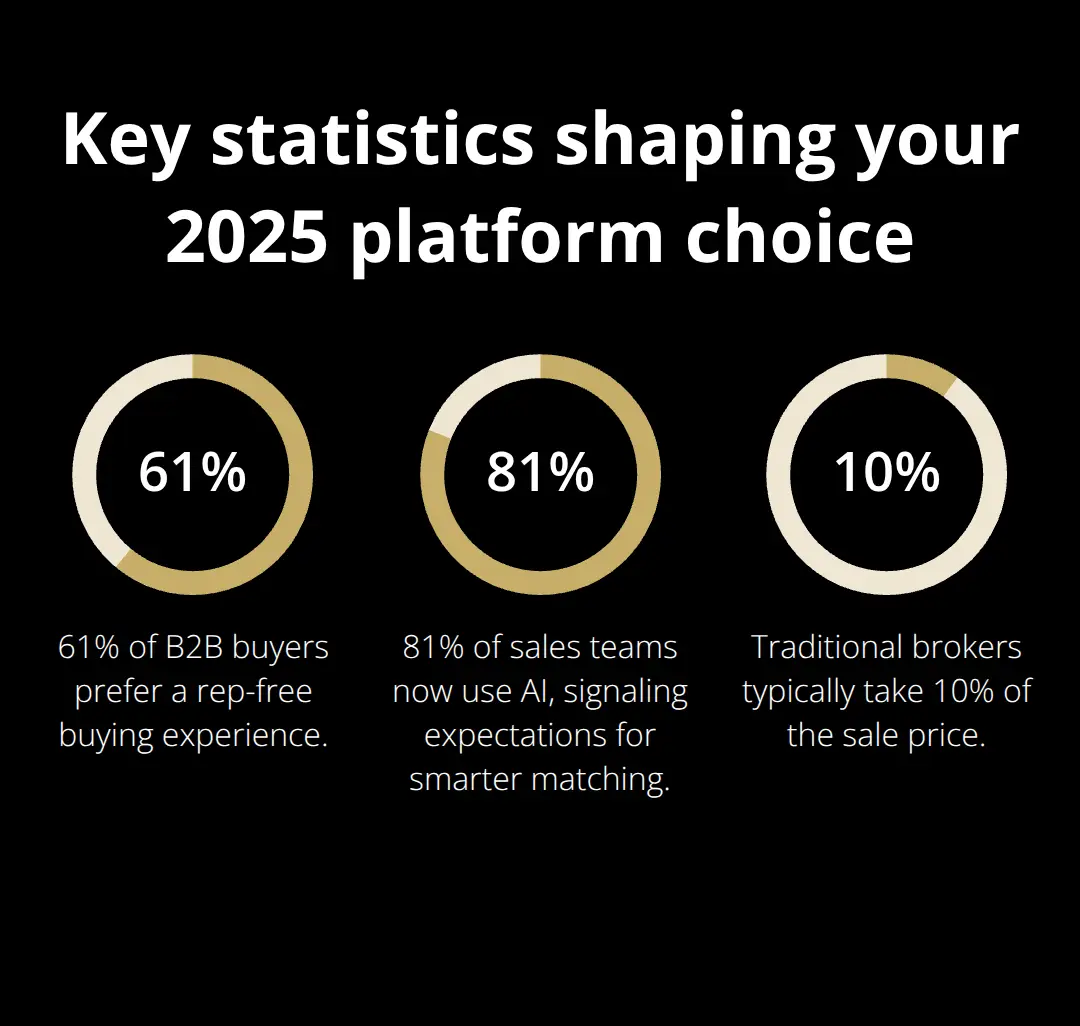
Pricing opacity kills deals. Most business brokers bury their real costs in vague service agreements, leaving sellers shocked at closing when unexpected charges appear. You need a platform that states exactly what you’ll pay upfront and what happens after the sale closes. The difference between transparent and opaque pricing can easily cost you thousands in surprise fees. Traditional brokers typically take 10% of the sale price-a $500,000 business sale means $50,000 in broker fees alone. The key is understanding whether you’re paying flat fees, performance-based costs, or some hybrid model before you sign anything.
Know the Cost Structure Before You Commit
Success-fee pricing works best when you want your platform invested in your outcome. You pay nothing upfront, and the platform only gets paid a percentage of the final sale price once your business actually sells-for example, Unbroker’s 6% success fee. That structure aligns incentives: the platform only wins when you do, and it wins bigger the better it sells your business, which is good for you too. Flat fees or monthly charges, by contrast, get paid whether or not your business ever sells, so the platform has less reason to work hard on your behalf.
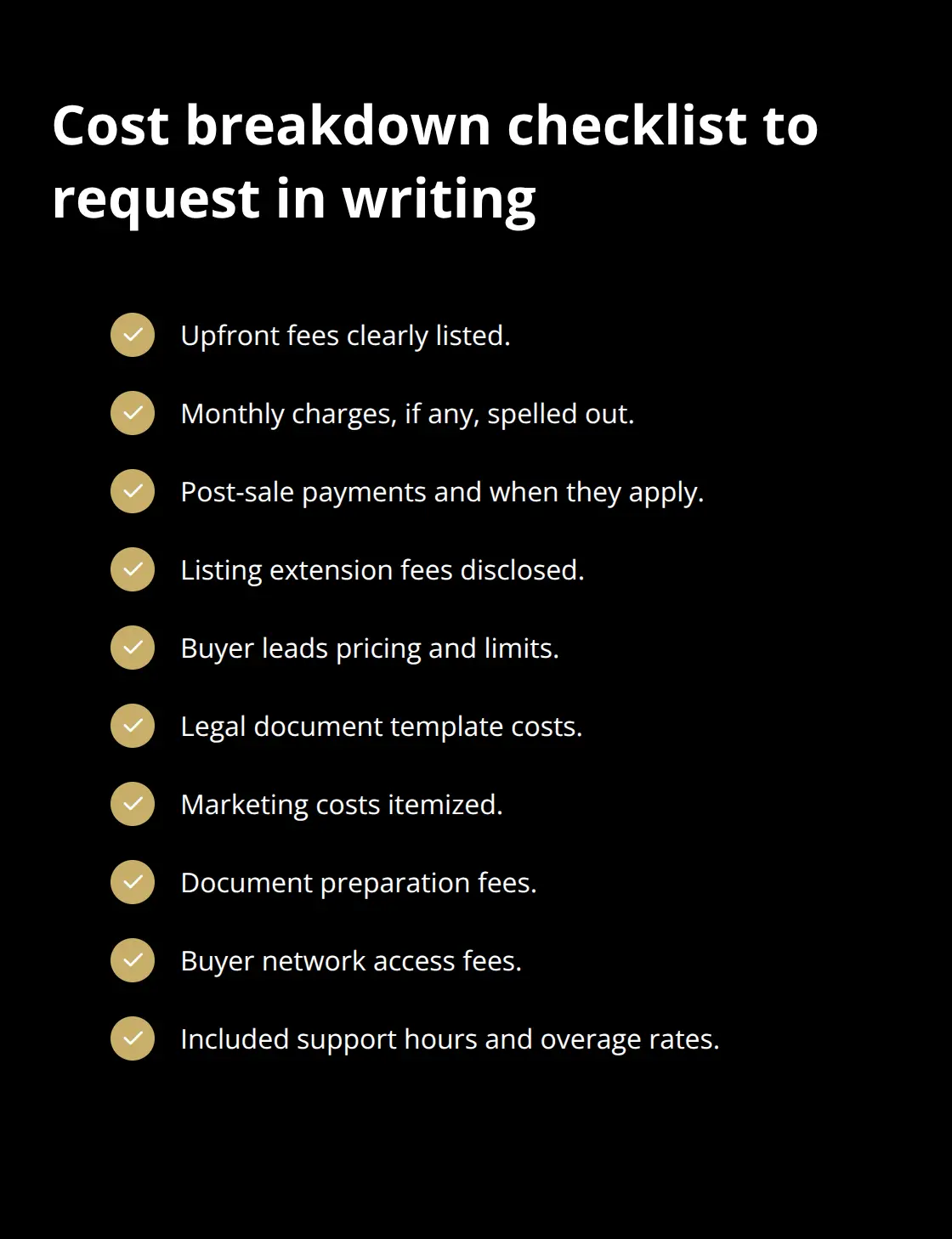
Request a detailed cost breakdown in writing before committing: upfront fees, monthly charges if any, post-sale payments, and whether listing extensions, buyer leads, or legal document templates cost extra. Platforms should itemize everything-marketing costs, document preparation, buyer network access, and support hours. If a platform hesitates to provide this breakdown, walk away.
Verify What’s Included and What Costs More
Many platforms advertise low entry prices but charge separately for essential services. Legal document templates might cost $500 to $2,000 extra. Buyer network access could sit behind a premium tier. Negotiation support sometimes means hourly consulting fees on top of your base cost.
Before selecting a platform, ask directly: does your base fee include legal templates, buyer matching, confidentiality protection, and marketing materials? Or do you pay separately for each? Write down every service you need, then compare total costs across platforms rather than just headline prices. A platform charging $199 monthly might cost more than one with a $1,500 upfront fee once you factor in add-ons.
Also clarify refund policies-if the deal falls through, do you get your money back or lose it entirely? Platforms offering satisfaction guarantees or money-back promises signal confidence in their service and reduce your risk. This protection matters because you’re investing time and resources before you see any return.
What Legitimate Platforms Reveal About Their Fees
Legitimate platforms have nothing to hide about their cost structure. They provide written breakdowns, answer questions without pressure, and explain why each fee exists. You’ll find platforms that charge upfront fees for marketing and support, then collect post-sale fees only when you actually close a deal. Others charge monthly subscriptions for ongoing access to buyer networks and tools. The worst platforms obscure their true cost until you’re deep in the selling process, making it impossible to compare fairly.
When you evaluate platforms, try requesting a sample invoice or cost estimate for a business at your price point. This reveals whether a platform’s advertised price matches what you’ll actually pay. Platforms that refuse this request or provide vague estimates are signaling that their real costs don’t match their marketing claims.
Your next step involves checking whether a platform’s buyer network and track record justify its fees-because the cheapest option isn’t always the best value.
Tools That Actually Help You Sell
AI-Powered Buyer Matching Cuts Through the Noise
AI-powered buyer matching has moved from novelty to necessity. Salesforce reports that 81% of sales teams now use AI, and the same principle applies to business sales. Platforms that use AI to identify qualified buyers from their network save you months of waiting for random inquiries. The system analyzes your business profile-revenue, industry, location, growth rate-then automatically surfaces buyers whose acquisition strategy or geographic expansion aligns with what you’re selling. AI looks at your best customers to find what they have in common, then finds “lookalike” accounts with matching traits.
When a platform claims it has AI buyer matching, ask specifically how it works. Does it analyze buyer profiles against your business, or does it just send your listing to everyone? Real AI matching reduces noise and connects you with serious buyers, not tire-kickers. Without this capability, you waste time fielding inquiries from buyers who were never a fit.
Legal Documents and Negotiation Support Protect Your Deal
Legal document templates and negotiation support separate platforms that actually help from those that just host listings. Most sellers lack experience with LOIs, purchase agreements, and earn-out structures-documents that determine whether you keep money after closing or lose it to poorly written terms. A platform should provide templates specific to your deal structure, whether it’s a stock sale, asset sale, or earnout arrangement.
Negotiation assistance matters enormously beyond templates. Some platforms offer access to advisors who’ve completed hundreds of deals and understand common buyer tactics. When a buyer proposes unfavorable contingencies or tries to reduce the purchase price at the last minute, expert guidance prevents costly mistakes. This support transforms you from a vulnerable seller into someone who negotiates from a position of knowledge.
Confidentiality and Data Security Protect Your Competitive Edge
Data encryption and confidentiality agreements complete the essentials. Your business financials, customer lists, and operational details are worth protecting-a data breach or loose lips from a buyer’s team can tank your sale price or alert competitors. Encryption transforms sales data into a code, shielding it from unauthorized eyes, and platforms should require confidentiality agreements from all buyers before they view sensitive details.
Ask potential platforms how they handle data access. Who can see your information? How long do they retain it after a sale closes? What happens if a buyer violates confidentiality? Platforms that answer these questions clearly demonstrate they take your protection seriously. Those that brush off security questions signal they don’t prioritize what matters most to you.
The right platform combines these three elements-AI buyer matching, legal support, and confidentiality-into one streamlined experience. This integration matters because it means you’re not juggling multiple vendors or wondering whether your data moves securely between disconnected systems. Your next step involves evaluating how platforms actually perform in practice, which means checking their buyer network and track record.

How to Evaluate a Business Sale Platform
Request hard data on network quality and outcomes
Evaluating a business sale platform requires moving beyond marketing claims to hard evidence about network quality, actual outcomes, and total spending. Start by requesting concrete data: how many qualified buyers does the platform actively maintain, and what percentage of listings actually close? Platforms should answer these questions directly without evasion. A platform claiming 10,000 buyers means nothing if only 50 are active searchers in your industry and location. Ask for anonymized case studies showing sale prices, timelines, and final costs for businesses similar to yours. Real platforms have nothing to hide because their track records speak clearly. If a platform refuses to share this information or provides only vague percentages, that silence tells you everything.
Check Published Transparency and Track Records
The best platforms publish transparency reports or case studies showing median sale prices, average time-to-close, and buyer satisfaction scores. 61% of B2B buyers prefer a rep-free buying experience, meaning your platform’s ability to connect you with digitally-engaged buyers matters enormously. A platform with a large buyer network but poor matching technology wastes your time fielding irrelevant inquiries.
Conversely, a smaller network with AI-powered qualification filters might surface more serious buyers faster. Customer satisfaction ratings reveal how platforms actually perform once you’re selling. Check independent review sites, not just testimonials on the platform’s own website, and look specifically for complaints about hidden fees, slow timelines, or poor buyer quality. If multiple reviews mention surprise charges appearing at closing or buyers who weren’t properly vetted, that pattern indicates systemic problems.
Calculate Total Cost of Ownership at Your Valuation
Calculate total cost of ownership across platforms by pricing a business at your specific valuation, then adding all fees through closing. A platform charging a 6% success fee only when your business sells can cost significantly less than one taking 10% of your sale price, but only if it delivers comparable results. Compare platforms on two final metrics: average days-to-close and percentage of listings that actually sell. A platform boasting low fees but closing only 40% of listings costs more in lost opportunity than one with higher fees and 85% close rates.
Measure Success by Close Rates and Timeline
Ask directly how many sellers use the platform annually and what percentage reach a successful sale. These numbers separate platforms that genuinely facilitate transactions from those that simply collect listing fees regardless of outcomes. The platforms worth your time demonstrate strong close rates, reasonable timelines, and transparent pricing that matches what you actually pay at the end.
Final Thoughts
Selling your business demands a platform that combines transparent pricing, practical tools, and proven results. The platform features that matter most in 2025 are straightforward: AI-powered buyer matching surfaces qualified prospects, legal templates and negotiation support protect your interests, and confidentiality safeguards keep your competitive edge intact. Platforms that hide fees or stay vague about their buyer networks waste your time and money, while the ones worth your attention publish costs upfront, explain what’s included, and demonstrate strong close rates with real data.
Choosing the right platform depends on your situation and risk tolerance. If you want hands-off selling with expert guidance throughout the process, look for platforms offering comprehensive support with transparent post-sale fees tied to actual closing. If you prefer controlling the process yourself while accessing professional tools and buyer networks, seek platforms charging monthly subscriptions without percentage-based fees. Either way, calculate total cost of ownership at your specific valuation rather than comparing headline prices-a platform charging a 6% success fee at close costs far less than traditional brokers taking 10% of your sale price, especially when you factor in faster timelines and higher close rates.
We at Unbroker built our platform around this exact principle, offering Full Service Business Sale for a 6% success fee, paid only when your business sells. It includes AI-driven buyer matching, legal templates, negotiation assistance, and confidentiality protection without hidden fees. Request detailed cost breakdowns from platforms you’re considering, then compare their buyer network size, close rates, and customer satisfaction ratings.