Selling a business is one of the biggest financial decisions you’ll make. Getting the timing right for your valuation can mean the difference between walking away with fair value and leaving money on the table.
At Unbroker, we’ve seen too many business owners skip this step or wait too long. The right valuation timing gives you leverage, clarity, and confidence when negotiating with buyers.
Why Your Business Valuation Needs to Happen Now
Skip the Guesswork and Get Real Numbers
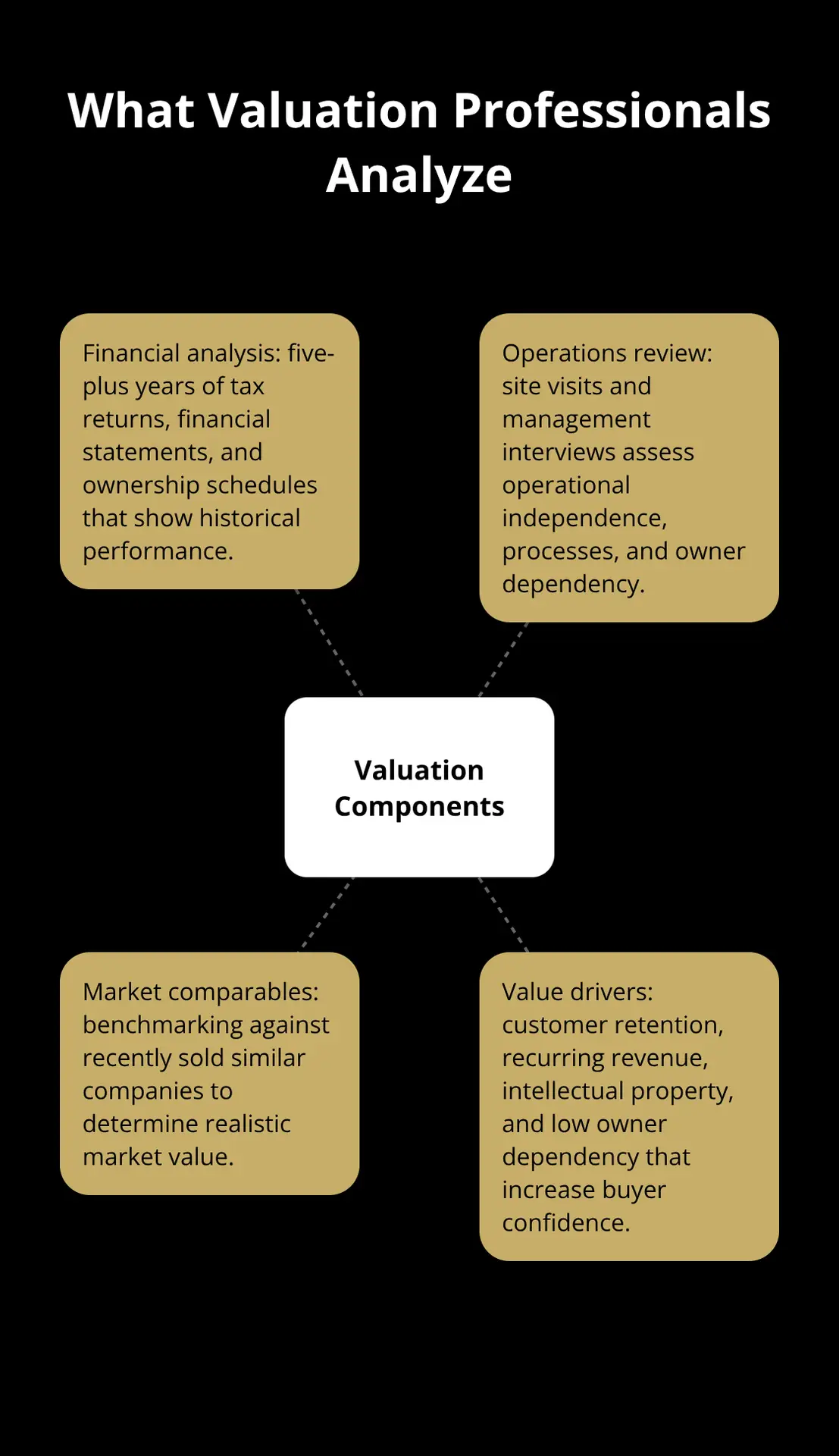
A professional valuation isn’t a formality or a box to check before listing your business. It’s your financial foundation for the entire sale process, and getting one done early gives you a concrete number to work from instead of guessing. Too many owners either overestimate their business value based on emotional attachment or underestimate it because they don’t understand what buyers actually look for. A qualified valuation professional will analyze your financial statements, examine your operational efficiency, assess your customer concentration, and benchmark your business against recently sold comparable companies in your industry.
Why Timing Matters More Than You Think
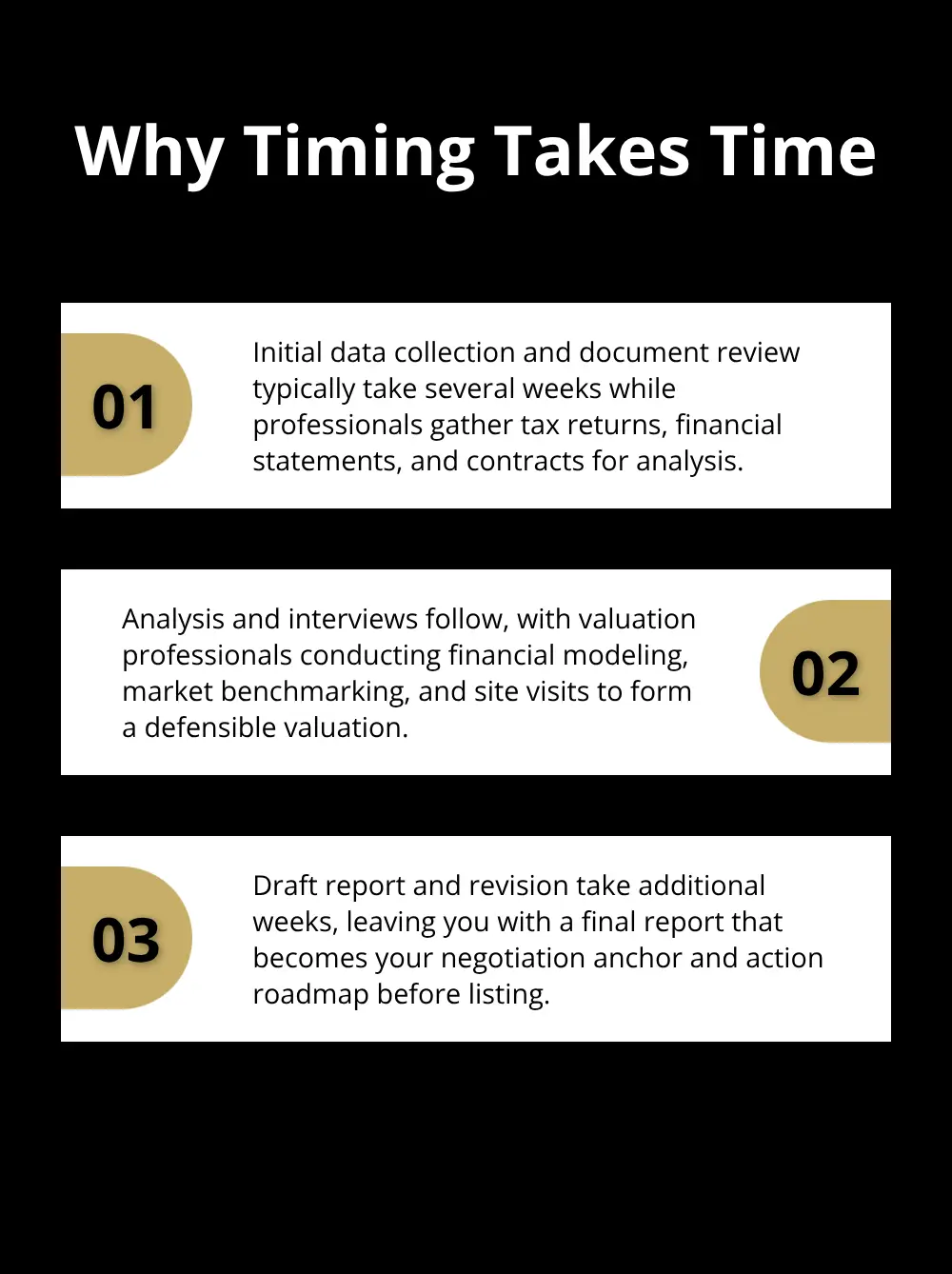
This process typically takes 60 to 90 days from initial data submission to final report, which is why waiting until you’ve already found a buyer puts you at a disadvantage. You’ll have less time to address weaknesses the valuation uncovers, and you’ll negotiate under pressure instead of from a position of knowledge. The numbers matter far more than your gut feeling. If your valuation shows your business is worth $2 million, that becomes your anchor point for asking price, financing negotiations, and buyer discussions.
How Buyers Evaluate Your Credibility
Buyers expect sellers to know their own business value with precision; vague pricing or inflated expectations signal inexperience and kill serious negotiations quickly. A formal valuation report also provides credibility during due diligence because it shows you’ve done professional work upfront, reducing buyer skepticism about hidden problems. Beyond the price itself, the valuation report identifies specific value drivers in your business-things like recurring revenue contracts, intellectual property, customer retention rates, and low owner dependency-that you can highlight to justify your asking price.
Turn Weaknesses Into Strengths Before You Sell
If the valuation reveals gaps, you have months to strengthen those areas before listing. For example, if your customer base is too concentrated with one or two major clients, you can work to diversify before the sale. If your financial records are disorganized, you can clean them up. These improvements directly increase your final sale price and make the entire process smoother. The valuation doesn’t just tell you what your business is worth today-it shows you exactly what moves will increase that value before you hand over the keys.
Timing Your Valuation for Maximum Advantage
Start Early to Build Your Negotiating Position
Start your valuation process 3-5 years before you plan to list your business. This timeline gives you the breathing room to address weaknesses without rushing and to implement improvements that actually increase value. You enter negotiations from a position of strength rather than desperation. If you wait until interested buyers appear, you’ve already lost your leverage. Buyers recognize when sellers operate under time pressure, and they exploit that advantage to negotiate harder. The valuation professional will spend 60 to 90 days gathering your financial data, conducting interviews, and analyzing your operations. That means if you start early, you have months after receiving the report to act on the findings.
Turn Valuation Insights Into Concrete Improvements
The valuation report identifies specific gaps in your business that you can fix before listing. If your customer concentration is too high, you can work to diversify your client base. If your financial records are messy, you can organize them properly. If your team relies too heavily on you as the owner, you can document processes and delegate responsibilities. Each of these improvements directly translates to a higher sale price when you finally list. You don’t scramble to fix problems while buyers are already evaluating your company.
Understand Your Industry’s Current Market Position
Market conditions matter significantly, though not in the way most owners think. You don’t need to time the perfect economic moment-you need to understand where your specific industry stands right now. Some sectors attract active buyer interest; others are cooling. Interest rates affect how aggressively buyers can bid. Comparable sales in your industry show what similar businesses actually sold for, not what owners hoped to get. A valuation professional will benchmark your business against these real transactions, giving you an accurate picture of current market appetite for companies like yours.
Know Your Number Before Negotiations Begin
Before you meet with any potential buyer, you should already know your valuation number with confidence. This prevents you from accepting the first offer that comes along or pricing yourself out of the market entirely. Buyers often ask sellers what they want before revealing their own expectations-answering that question without a professional valuation behind you costs money. Your valuation report becomes your reference point throughout all negotiations, keeping discussions grounded in facts rather than emotion or guesswork. With this foundation in place, you’re ready to explore what happens next in the selling process.
What a Professional Valuation Actually Includes
The Data You’ll Need to Provide
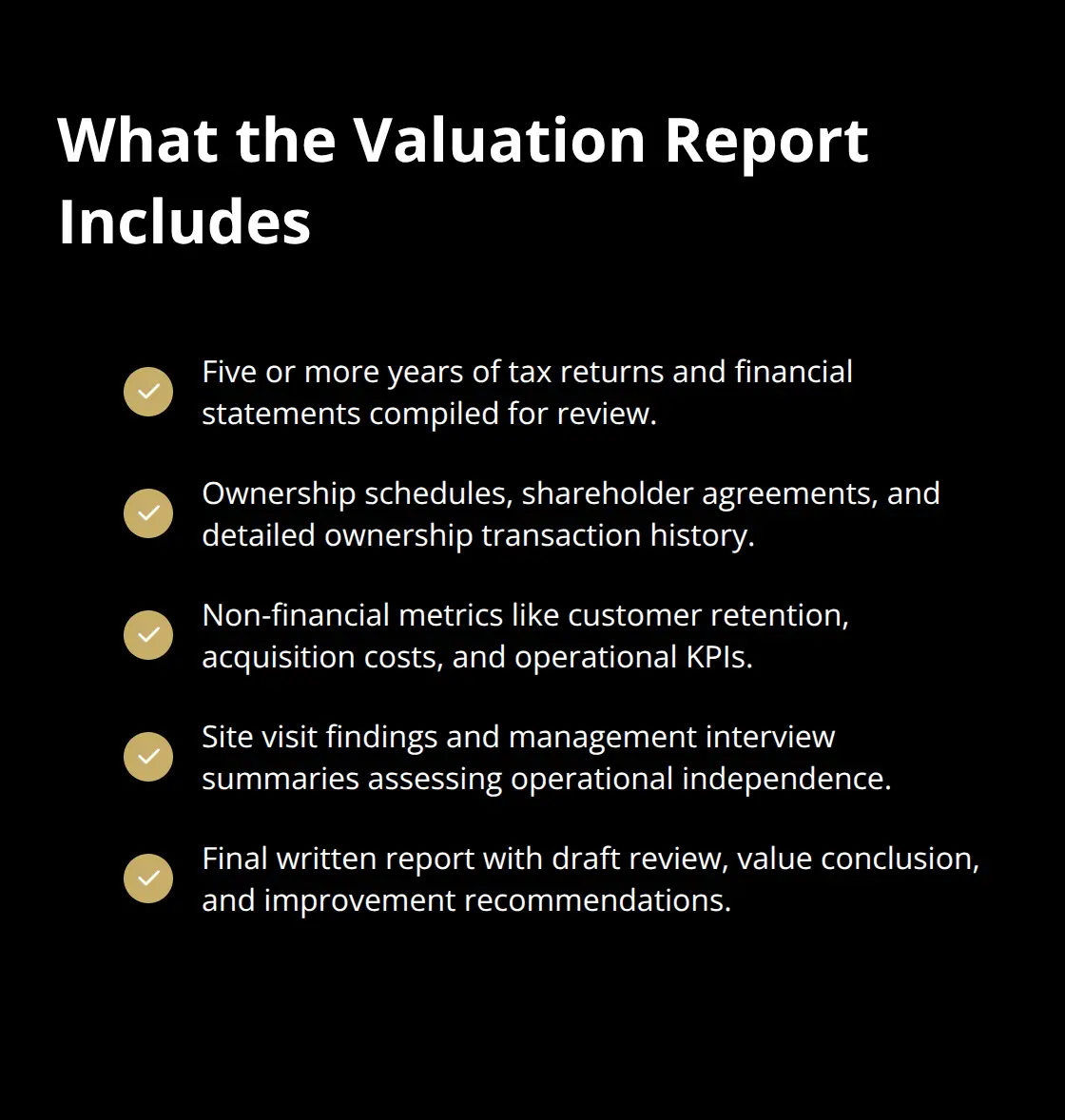
A professional valuation requires far more information than most business owners expect. The valuation professional will request five or more years of tax returns, financial statements, ownership schedules, shareholder agreements, and details of every ownership transaction. They’ll also ask for non-financial metrics that drive real value: customer retention rates, customer acquisition costs, gallons produced, products sold, number of new customers, fixed asset depreciation schedules, lease agreements, vendor and customer contracts, and relevant trade benchmarks. This comprehensive data collection takes days for simple businesses or months for larger, more complex operations. The scope of information needed reflects how seriously professionals approach the valuation process-they’re building a complete picture of your business, not just skimming surface numbers.
How Professionals Assess Your Operations
Valuation professionals conduct site visits and management interviews to assess cash-flow drivers, your operational systems, product or service mix, customer base composition, your market area, and supply chain vulnerabilities. They evaluate whether your business can function without you personally running it every day. This assessment directly impacts your final valuation because buyer confidence depends on operational independence. The professional isn’t just auditing numbers; they’re examining the real mechanics of how your company operates and whether those systems will survive a change in ownership.
The Three Valuation Methods Explained
The actual valuation uses three primary approaches. Income-based methods apply earnings multiples to your EBITDA or seller’s discretionary earnings, working best for stable, profitable businesses with predictable cash flow. Asset-based valuation methods calculate net asset value by subtracting liabilities from total asset value, suiting capital-intensive industries. Market comparison benchmarks your business against recently sold comparable companies in your industry, requiring access to actual sales data from similar transactions in your sector. A qualified valuation professional selects the most appropriate method based on your business’s strengths and weaknesses. Professionals maintain industry networks and databases to access real transaction data that informs accurate market comparisons.
What You Receive and How Long It Takes
The final deliverable is a written report, usually provided as a draft first for your fact-checking before the final conclusion of value. This report identifies high-level opportunities to improve value, and many professionals offer follow-on advisory services to help implement those improvements. The entire process from data receipt to final report typically takes 60 to 90 days, which is why starting early matters so much. A credible third-party valuation gives you and future buyers an objective foundation for discussions, eliminating vague assumptions and replacing them with defensible numbers.
Final Thoughts
Your valuation timing decision shapes everything that follows: your asking price, your negotiating position, and ultimately, how much money lands in your account at closing. The valuation report identifies exactly which improvements will move the needle on your sale price-whether that’s diversifying your customer base, formalizing your operational processes, or cleaning up your financial records. You now have a roadmap instead of guessing what matters to buyers, and each improvement you implement directly translates to a higher valuation when you eventually list.
The valuation also gives you clarity on market conditions in your specific industry. You’ll understand what comparable businesses actually sold for, not what owners hoped to get, and this knowledge prevents you from pricing yourself out of the market or accepting the first lowball offer that arrives. Your valuation number becomes your anchor throughout all buyer conversations, keeping discussions grounded in facts rather than emotion.
Once you have your valuation in hand and have implemented improvements, you’re ready to move forward with confidence. We at Unbroker help business owners like you navigate the selling process with transparent pricing and expert support, and Unbroker offers flexible options designed to eliminate high brokerage fees and connect you with serious buyers. Your valuation report becomes a powerful tool in that process, backing up your asking price and demonstrating that you’ve done the professional work upfront.