Signing the purchase agreement marks just the beginning of your business acquisition journey. The real work starts now, with weeks of detailed preparations ahead.
We at Unbroker guide buyers through every post sale step, from due diligence investigations to final closing preparations. This comprehensive process typically spans 30-90 days and requires careful coordination across multiple areas.
What Does Due Diligence Actually Involve?
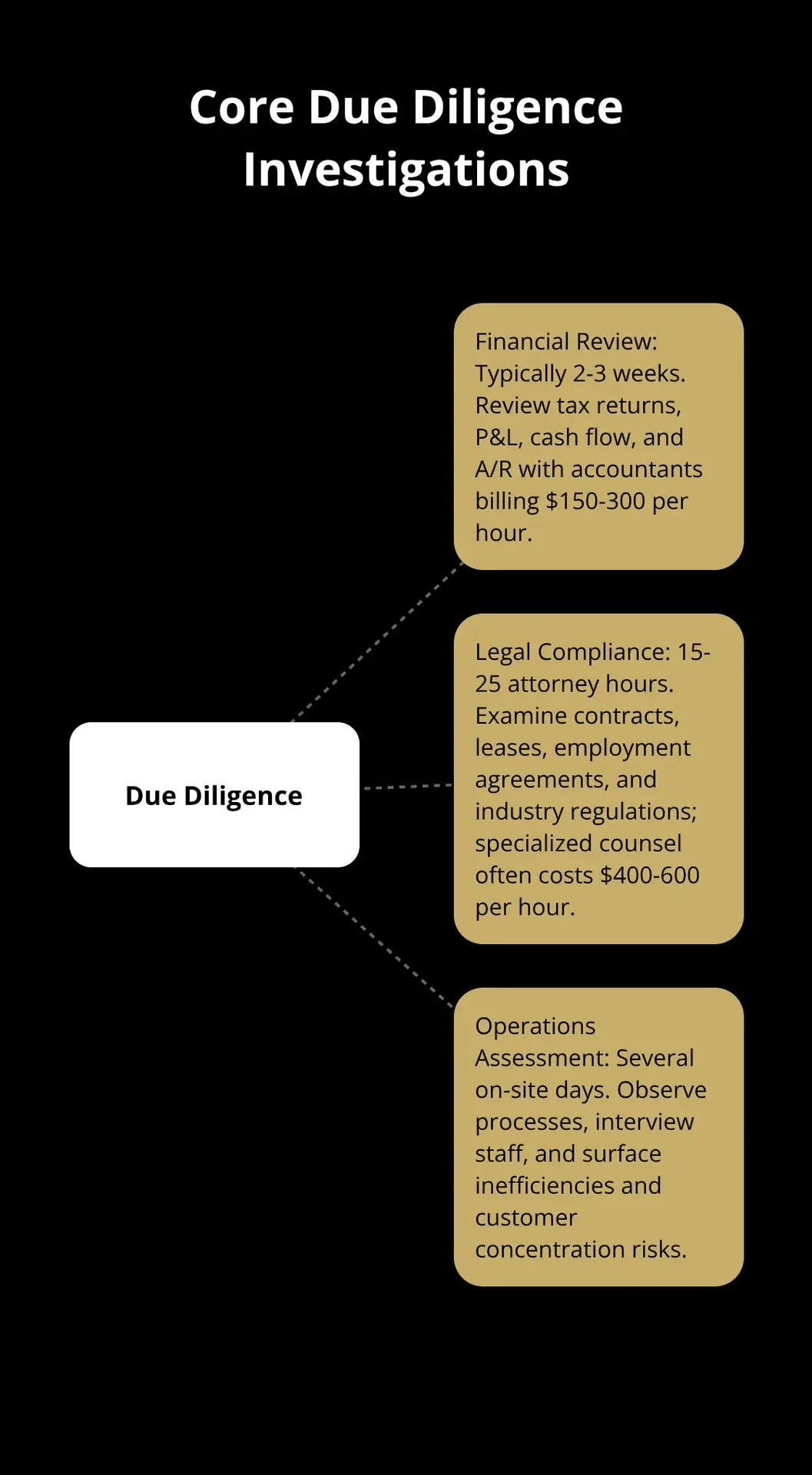
The due diligence period begins immediately after you sign and typically lasts 30-60 days depending on business complexity. This phase involves three critical investigations that can make or break your acquisition. Financial audits consume the most time and require 2-3 weeks for comprehensive review of tax returns, profit and loss statements, cash flow records, and accounts receivable reports. Professional accountants charge $150-300 per hour for this work, but you face costly surprises later when you skip thorough financial verification.
Financial Records Reveal the Real Story
Tax returns from the past three years reveal inconsistencies between reported income and actual cash flow. Bank statements show seasonal fluctuations, customer concentration risks, and expenses not reflected in basic financials. Accounts receivable reports expose collection problems that directly impact working capital needs.
Financial due diligence reports are essential for identifying potential issues during this phase. You should request daily sales reports, vendor payment histories, and loan documentation to build a complete financial picture.
Legal Compliance Demands Expert Review
Business attorneys spend 15-25 hours reviewing contracts, leases, employment agreements, and regulatory compliance records. Commercial leases contain transfer restrictions that can delay or derail acquisitions when not identified early. Employment contracts may include change-of-control provisions that trigger additional compensation costs (often substantial). Regulatory compliance varies dramatically across industries, with healthcare and financial services requiring specialized legal expertise at $400-600 per hour. Inadequate legal review causes significant acquisition challenges that require proper attention.
Operations Assessment Through Direct Observation
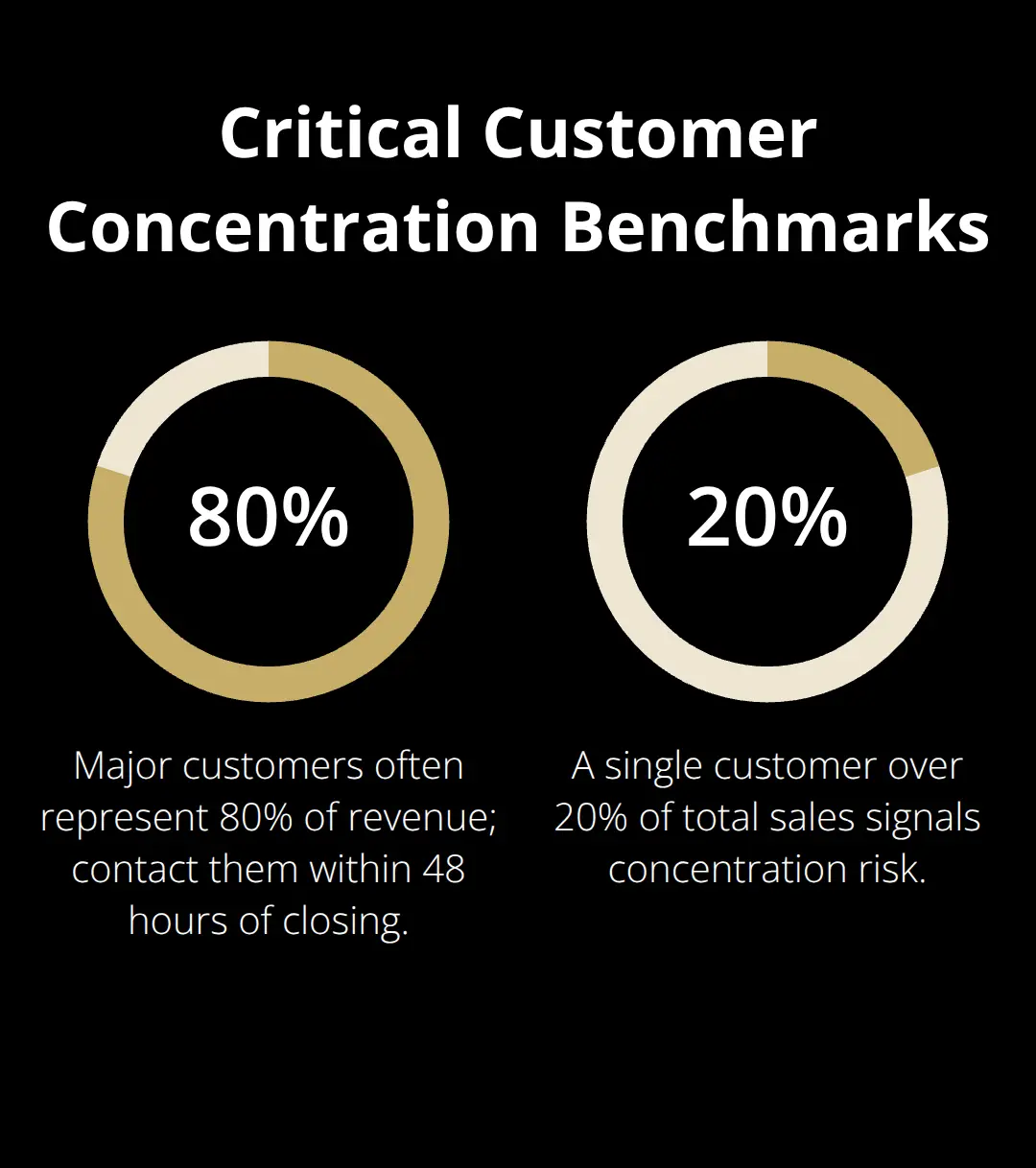
You must spend multiple days on-site observing daily operations, interviewing key employees, and reviewing standard procedures. Employee retention becomes critical as acquired businesses often face personnel challenges during transitions. Customer concentration analysis identifies revenue risks when single customers represent over 20% of total sales. Operational inefficiencies often surface during direct observation that financial records cannot reveal, providing negotiation leverage or exit opportunities before you close.
With due diligence complete, you can move forward to the final preparations that will seal your acquisition deal.
How Do You Finalize Your Acquisition Deal?
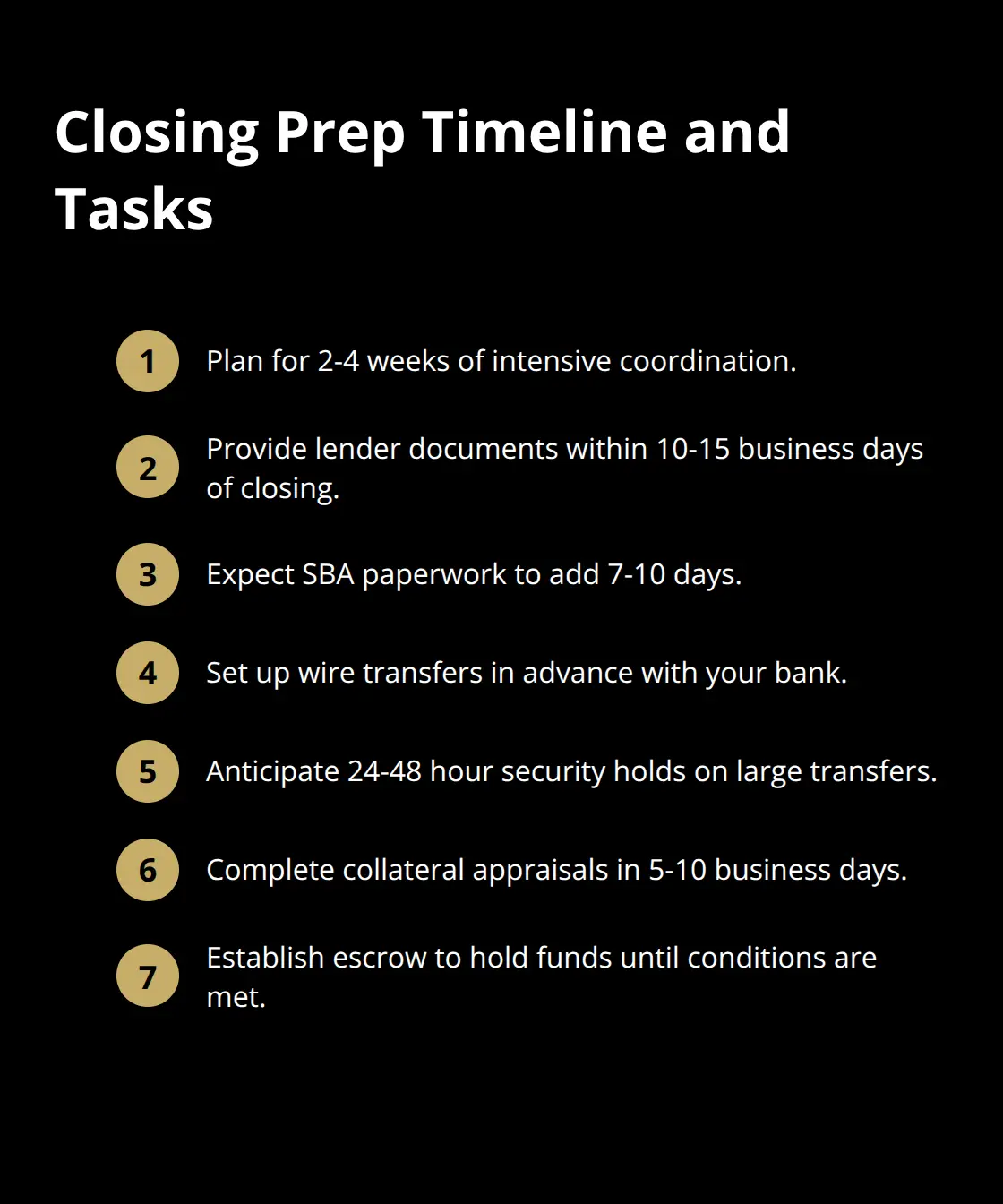
Closing preparations demand 2-4 weeks of intensive coordination across financing, legal transfers, and documentation. Your lender requires final loan approval documentation including updated financial statements, personal guarantees, and collateral verification within 10-15 business days of closing. SBA loans add complexity with additional paperwork requirements that extend timelines by 7-10 days compared to conventional financing. Wire transfer arrangements need advance setup with your bank, as same-day large transfers often face security holds that can delay closing by 24-48 hours.
Final Financing Approval Process
Banks conduct last-minute credit checks and asset verification that can uncover issues not present during pre-approval. Personal financial statements must reflect current net worth within 90 days of closing, and any significant changes trigger additional underwriting reviews. Collateral appraisals for equipment or real estate require 5-10 business days and cost $2,000-5,000 depending on asset complexity. Your attorney coordinates with the seller’s legal team to establish escrow accounts that hold purchase funds until all transfer conditions are met.
Payment Structure Documentation
Payment structures that involve seller financing require promissory note preparation and UCC filing documentation (adding $500-1,500 in legal fees). Banks often require additional security measures for complex payment arrangements. Cash buyers face fewer documentation requirements but still need proof of funds verification through bank statements or investment account records.
License and Permit Transfer Requirements
Business licenses and permits rarely transfer automatically and require separate applications that take 2-6 weeks for approval. Professional licenses in regulated industries like healthcare or finance demand individual applications with state boards that can extend closing timelines significantly. Customer contracts need consent-to-assign clauses reviewed individually, as major clients can terminate agreements during ownership changes.
Contract and Vendor Relationship Management
Vendor agreements often contain change-of-control provisions that allow suppliers to modify terms or exit relationships entirely. Equipment leases require lessor approval for transfers, and buyers without established credit histories with leasing companies may face challenges. Key supplier relationships may need renegotiation to maintain favorable terms under new ownership.
The complexity of these closing preparations sets the stage for the final phase: managing the actual transition and integration of your newly acquired business.
How Do You Successfully Integrate Your New Business
Your first 90 days after closing determine whether your acquisition succeeds or fails, with 70-90 percent of acquisitions failing primarily due to poor post-acquisition integration plans. Almost one-third of survey respondents call combining and developing the sales functions of the merging companies their greatest integration challenge. You must act decisively during this period to retain employees, maintain customer relationships, and preserve operational momentum.
Secure Employee Commitment From Day One
Announce the ownership change to all employees within 24 hours of closing, as rumors and uncertainty drive talent away faster than any other factor. Schedule individual meetings with key personnel within the first week and offer retention bonuses of 10-25% of annual salary to prevent departures. The cost of replacing top performers makes retention investments financially smart, as turnover costs can be substantial. Document all employee conversations and commitments in written form to avoid misunderstandings later. Implement new payroll systems gradually over 30-60 days rather than make immediate switches that create confusion and payment delays.
Preserve Customer Relationships Through Direct Communication
Contact major customers who represent 80% of revenue within 48 hours of closing, reassure them about service continuity, and introduce yourself personally. Send formal letters to all customers within one week that explain the transition benefits and maintain existing service agreements without changes. Customer defection rates spike 15-30% during ownership transitions when communication is delayed or inadequate.
Maintain existing customer service staff and processes for at least 60 days while you learn the business relationships and service expectations. Wait 6-12 months before you implement price increases or service changes until customer confidence stabilizes under new ownership.
Integrate Systems Without Business Disruption
Keep existing operational systems unchanged for the first 30 days while you assess their effectiveness and employee familiarity. Technology changes require 90-120 days minimum for proper implementation and staff training (rushed transitions create costly errors and productivity losses). Integrate financial reporting systems first, as cash flow monitoring becomes essential during transition periods when unexpected expenses often arise. Plan system upgrades in phases to minimize operational disruption and employee resistance to change. Post-acquisition success hinges on client retention and seamless integration through clear communication and consistent service delivery.
Final Thoughts
The complete business acquisition process spans 60-120 days from the moment you sign your purchase agreement to successful integration. Due diligence consumes 30-60 days, final preparations require 2-4 weeks, and post-sale integration demands your full attention for the first 90 days. The biggest challenges you face include employee retention, customer relationship maintenance, and complex finance requirements.
Address these challenges by communicating transparently with all stakeholders and offering retention incentives to key personnel. Work with experienced professionals who understand acquisition timelines and can guide you through complex processes. Your post sale success depends on patience and resistance to dramatic operational changes too quickly (focus on preserving existing relationships while you learn the business thoroughly).
We at Unbroker provide comprehensive support throughout your acquisition journey. Our modern platform connects buyers with sellers through transparent processes that eliminate traditional brokerage complications. This approach makes business transitions smoother for everyone involved in the acquisition process.