Business owners lose millions every year because of toxic terms buried in their sale agreements. These clauses can destroy deals, drain bank accounts, and create years of legal nightmares.
At Unbroker, we’ve seen too many sellers sign contracts that seemed fair but contained devastating fine print. The wrong language can turn your business exit into a financial disaster.
Which Deal-Killing Terms Should You Never Accept?
Non-Compete Restrictions That Go Too Far
Non-compete clauses kill deals when they stretch beyond reasonable limits. Sellers agree to five-year restrictions that cover entire industries or geographic regions spanning multiple states. The Federal Trade Commission found that overly broad non-competes keep wages low and suppress new ideas across the American economy. Smart sellers cap non-compete periods at two years maximum and limit scope to direct competitors within a 50-mile radius of their business location.
Personal Guarantees That Never End
Personal guarantees that extend beyond the sale create permanent financial risk for sellers. Banks and buyers demand guarantees on leases, loans, and contracts that can last decades after the transaction closes. The Small Business Administration tracks loan performance data, showing the significant risks when guarantees remain active after business sales.
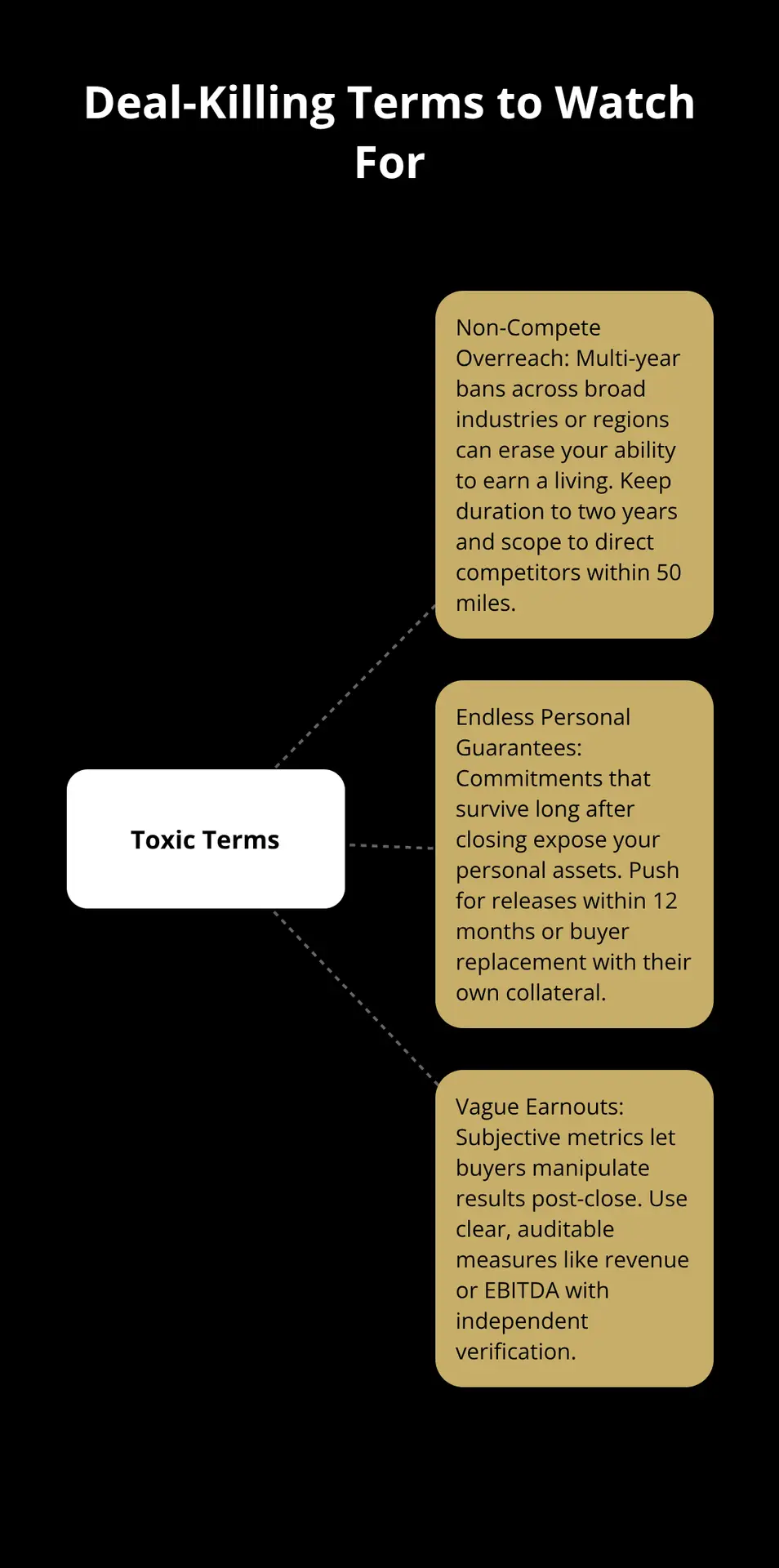
Sellers must negotiate guarantee releases within 12 months of the sale or require buyers to replace guarantees with their own assets. Any guarantee that exceeds 18 months post-sale should trigger immediate contract rejection.
Earnout Provisions With Moving Targets
Vague earnout metrics destroy seller payouts through manipulation and disputes. Buyers control financial reports after the sale closes, which makes subjective metrics like customer satisfaction or market share dangerous for sellers. M&A transaction data reveals significant challenges with earnout structures when measurement criteria lack clarity. Successful earnouts require specific, auditable metrics like gross revenue or EBITDA with third-party verification. Sellers should demand monthly reports and penalty clauses for buyers who fail to maintain business operations at agreed levels.
These toxic terms represent just the tip of the iceberg when it comes to dangerous contract language that can destroy your financial future.
What Contract Clauses Signal Immediate Deal Danger
Unlimited Liability Exposure
Sellers face financial ruin when agreements contain unlimited liability exposure that extends years beyond the transaction close. Traditional business sale contracts often include indemnification clauses with no caps or time limits. These clauses leave sellers responsible for every potential issue that emerges after the deal closes.
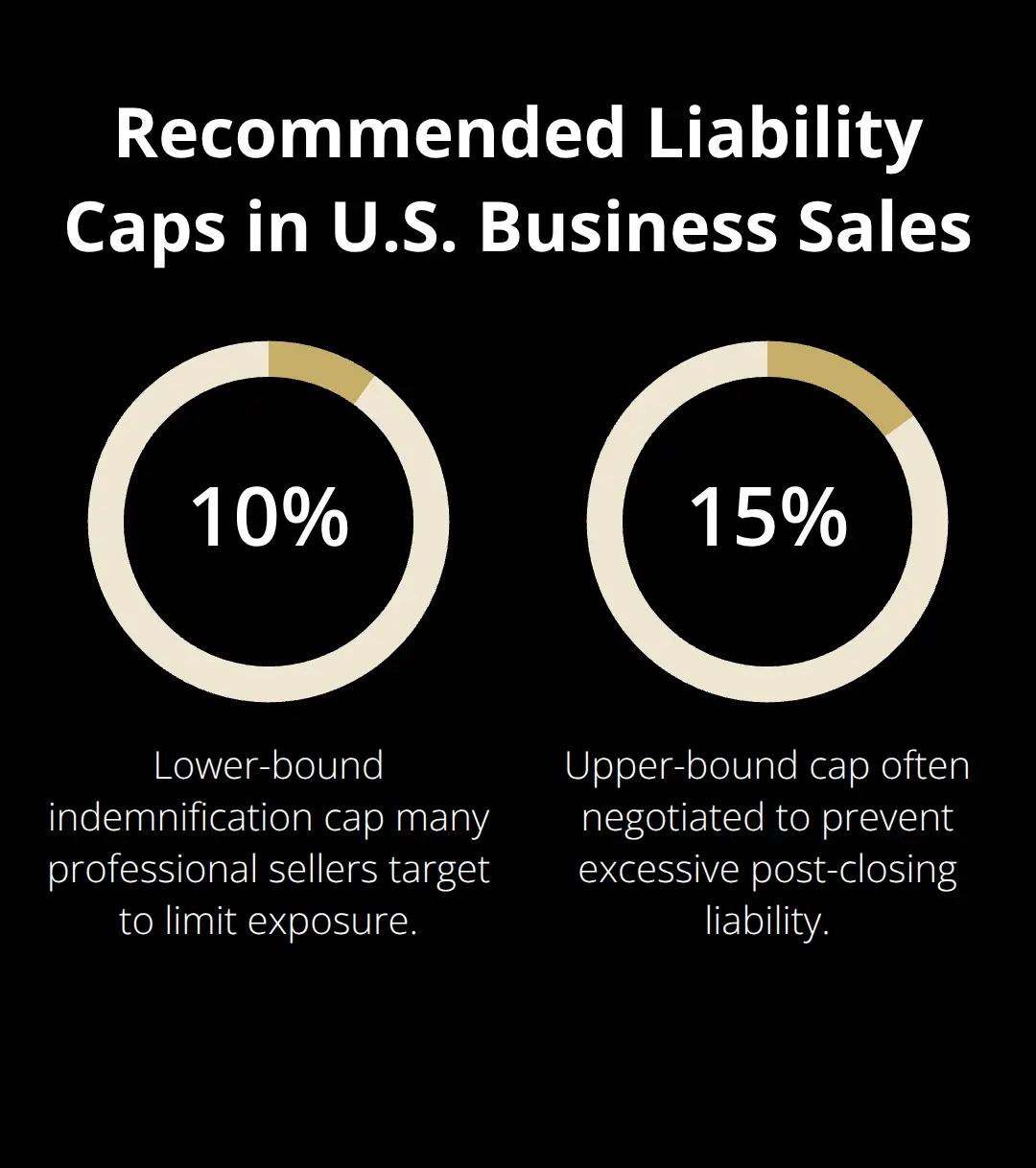
Business sale disputes involving liability claims can result in significant financial exposure for sellers. Professional sellers demand liability caps at 10-15% of the purchase price and time limits of 18-24 months maximum. Any contract without these protections should trigger immediate rejection and renegotiation.
Post-Closing Price Reduction Rights
Purchase price adjustment mechanisms that favor buyers create devastating financial exposure for sellers after deals close. Buyers negotiate clauses that allow them to reduce payments based on working capital shortfalls, customer defections, or revenue declines that occur months after the sale.
Transaction disputes frequently involve post-closing adjustments that sellers never anticipated. Smart sellers require escrow accounts with specific release triggers rather than open-ended adjustment rights.
Vague Material Adverse Change Definitions
Material adverse change definitions must specify dollar thresholds and exclude normal business fluctuations (like seasonal revenue changes or temporary customer delays). Sellers who accept vague language around adverse changes face years of payment disputes and legal battles that drain their transaction proceeds.
Buyers often draft these clauses broadly to capture any negative business development. This approach gives them excessive power to reduce purchase prices or walk away from deals. Sellers need precise language that defines what constitutes a material change and sets minimum impact thresholds.
The next section reveals how sellers can protect themselves through strategic negotiation tactics that level the playing field.
How Can Sellers Protect Themselves During Negotiations
Cap Your Financial Exposure Before You Sign
Successful sellers demand indemnification caps that limit their total liability exposure to buyers after the deal closes. These caps represent the upper dollar limit of the seller’s indemnification obligations and protect against excessive post-closing claims. Professional negotiators set survival periods at 12 months for general representations and 24 months for tax and environmental issues only. Sellers who accept unlimited exposure or indefinite time periods face significant financial risks that can impact their retirement plans and family wealth.
Negotiate Known Issue Carve-Outs Upfront
Smart sellers identify every known problem before negotiations begin and demand specific carve-outs that prevent future liability claims. These carve-outs must include active litigation, tax disputes, employee issues, and regulatory compliance matters that existed before the sale. Post-closing disputes frequently involve issues the seller knew about but failed to disclose properly. Sellers should create detailed disclosure schedules that document every potential problem and require buyers to acknowledge these issues explicitly. Any buyer who refuses specific carve-outs for disclosed problems should trigger immediate deal termination.
Force Buyer Due Diligence Acknowledgment
Buyers who complete extensive due diligence reviews cannot claim ignorance about business conditions after the deal closes. Sellers must include buyer acknowledgment clauses that confirm the buyer reviewed all financial records, customer contracts, employee agreements, and operational procedures before the transaction finalizes. These clauses prevent buyers from demanding purchase price reductions or pursuing indemnification claims for issues they discovered during their investigation process (which often spans several months). Professional sellers require buyers to sign detailed acknowledgment statements that list every document reviewed and every management presentation attended during the due diligence period.
Structure Escrow Accounts With Clear Release Terms
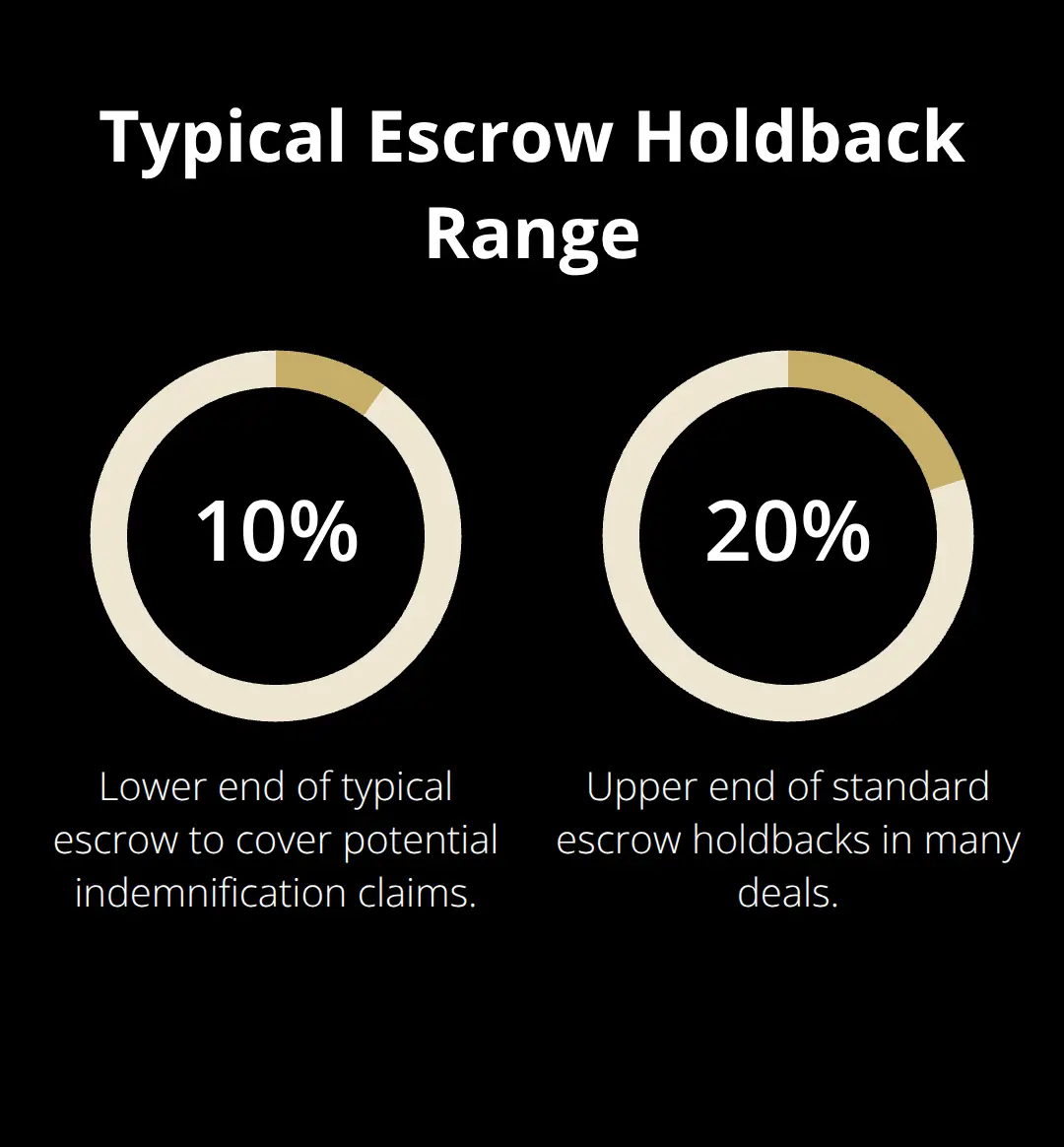
Escrow accounts protect both parties but sellers must negotiate specific release triggers rather than vague holdback periods. Standard escrow arrangements hold 10-20% of the purchase price for 12-18 months to cover potential indemnification claims. Sellers should demand automatic releases for unused escrow funds and penalty clauses for frivolous claims that buyers cannot substantiate with evidence. The escrow agreement must specify exact procedures for claim resolution and require third-party arbitration for disputed amounts above predetermined thresholds.
Final Thoughts
Business owners must reject unlimited liability exposure, vague earnout metrics, and excessive non-compete restrictions when they review any sale agreement. These toxic terms create financial disasters that destroy retirement plans and family wealth for years after transactions close. Professional legal review represents the most important investment sellers make during the exit process.
Experienced M&A attorneys identify dangerous clauses that business owners miss and negotiate protective language that prevents post-closing disputes. The cost of legal review pales compared to potential losses from poorly drafted contracts. Sellers who discover problematic terms in existing agreements should demand immediate amendments or consider termination of negotiations entirely.
We at Unbroker help business owners navigate complex sale negotiations through our transparent platform that eliminates high brokerage fees while providing expert support. Our Full Service and Assisted Business Sale options include negotiation assistance and premium marketing tools that protect seller interests throughout the transaction process (without the traditional broker markup). Smart sellers prioritize contract protection over deal speed because the wrong terms can turn successful exits into financial nightmares.