Most business owners leave money on the table when selling because their financial statements don’t show the company’s true earning potential. Recasting earnings removes personal expenses and one-time costs that mask profitability.
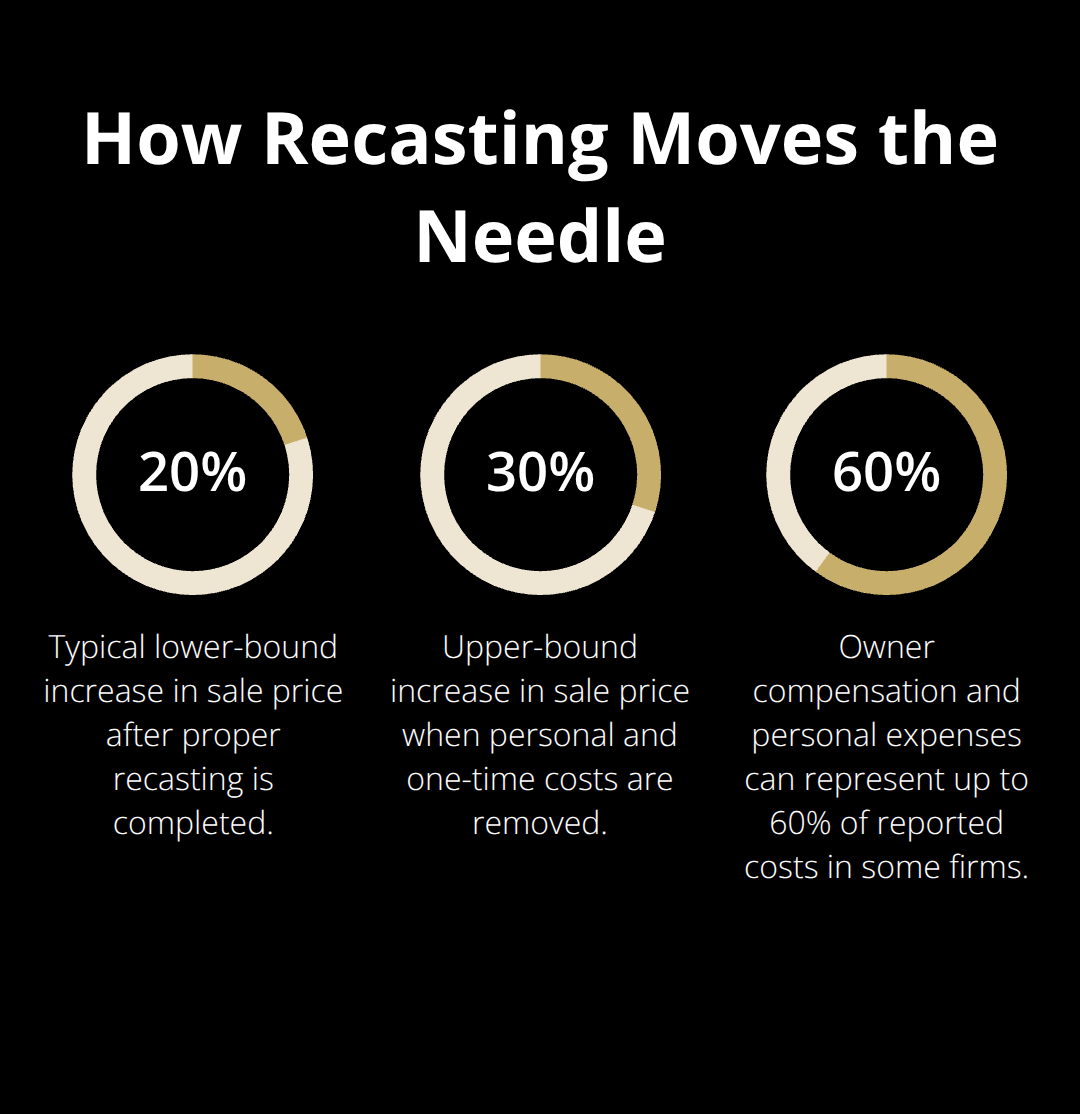
We at Unbroker see this mistake repeatedly – sellers who could have commanded 20-30% higher valuations if they had properly presented their financials to buyers.
What Is Financial Statement Recasting
Financial statement recasting transforms your standard profit and loss statements into buyer-focused documents that reveal actual earning potential. This process systematically removes owner-specific expenses, personal benefits, and one-time costs that distort your company’s true profitability. Standard accounting practices require businesses to report all legitimate expenses, but these same expenses often mislead potential buyers about operational cash flow.
The Four Primary Adjustment Areas
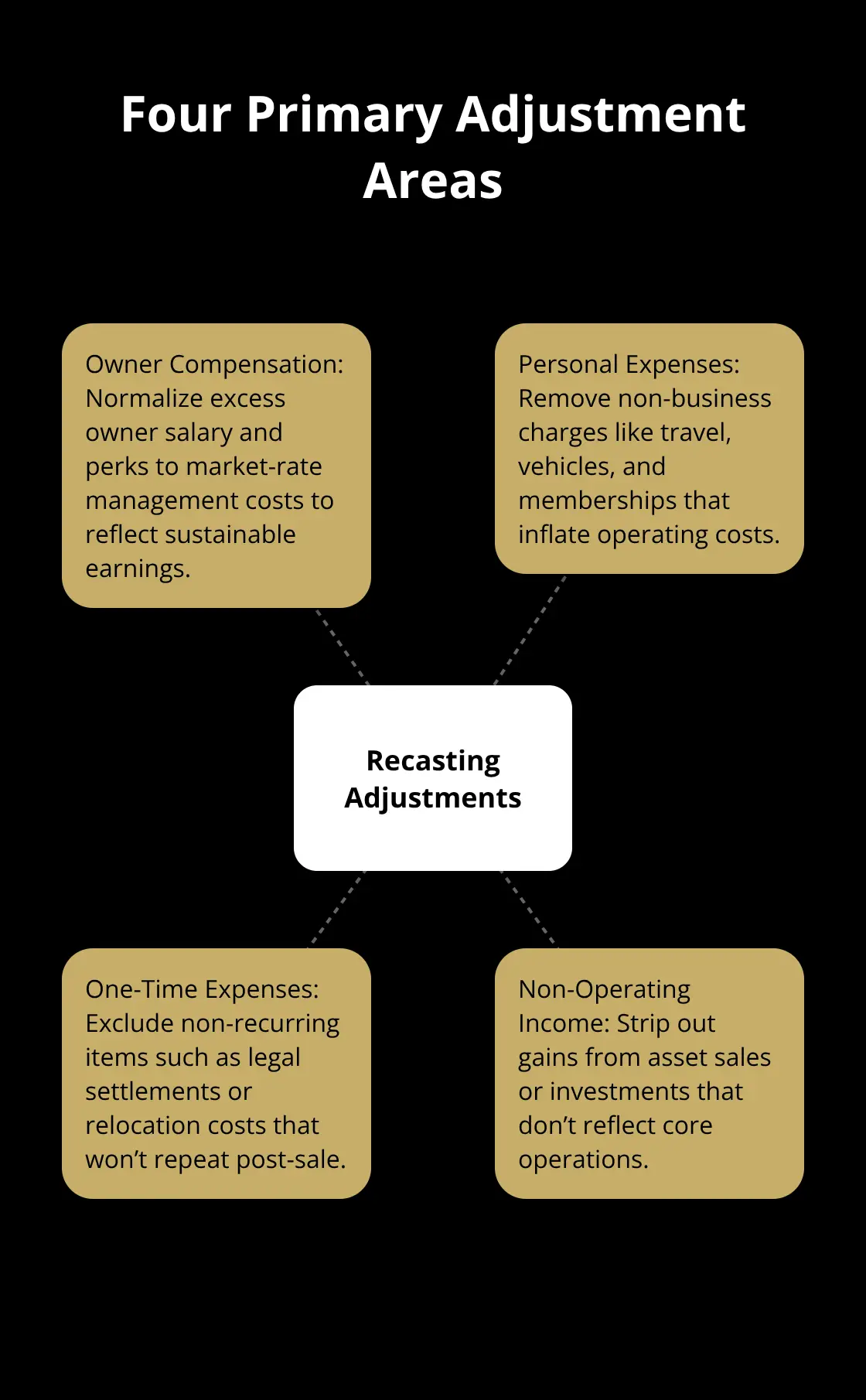
Most recasting focuses on four primary areas that dramatically impact valuation. Owner compensation adjustments are a standard part of the valuation process that adjusts your financials to better reflect the sustainable, transferable earnings of your company. Personal expenses like family travel, luxury vehicles, and country club memberships routinely inflate operating costs in small businesses. One-time expenses such as equipment purchases, legal settlements, or facility moves can reduce apparent profitability by hundreds of thousands of dollars. Non-operating income from asset sales or investment gains creates false revenue spikes that buyers discount heavily during valuation.
How Recasting Differs From Tax-Focused Reporting
Standard financial reporting prioritizes tax minimization and regulatory compliance, while recasting prioritizes buyer appeal and accurate valuation metrics. Your CPA structures financials to reduce tax liability, often understating true profitability through accelerated depreciation and expense timing. Recasting reverses these strategies to show sustainable cash generation. In the private company M&A landscape, most business owners leave 30-50% of their enterprise value on the table because buyers pay multiples of adjusted earnings (not reported net income). Professional M&A advisors complete most recasting projects in 2-3 weeks, significantly faster than full audits while providing similar credibility with potential acquirers.
The Documentation Process
Proper recasting requires detailed documentation for every adjustment made to your financial statements. Each modification needs clear justification that potential buyers can verify during due diligence. This documentation process becomes the foundation for demonstrating how recasting translates into higher business valuations and more attractive sale terms.
How Recasting Transforms Your Business Valuation
Recasting transforms modest-looking businesses into acquisition targets when it reveals hidden profitability that standard accounting masks. Manufacturing company owner Sarah Johnson increased her sale price from $2.8 million to $4.1 million after recasting revealed $180,000 in annual personal expenses and $95,000 in one-time legal costs that buyers initially counted against operations. Professional services firms see the most dramatic improvements because owner salaries often represent 40-60% of reported expenses, yet buyers plan to replace this with market-rate management that costs 15-25% less.
Personal Benefits Create Immediate Value Gains
Personal vehicle leases, family health insurance, and home office expenses routinely inflate small business costs by $50,000-150,000 annually. Restaurant owners frequently run personal meals, travel, and entertainment through business accounts, which reduces apparent cash flow by 20-35%. Technology companies often carry excessive owner salaries that reflect lifestyle choices rather than market compensation rates. When you adjust a $300,000 owner salary to the $180,000 market rate for hired management, you instantly add $120,000 to annual cash flow (this translates to $360,000-600,000 in additional sale value at typical 3-5x EBITDA multiples).
Financial Metrics That Drive Premium Valuations
Buyers focus on three key metrics that recasting directly improves: EBITDA margins, working capital efficiency, and cash conversion cycles. Software companies with recasted EBITDA margins command valuations based on company size, profitability, growth prospects, and industry factors. Working capital adjustments often reveal $200,000-500,000 in trapped cash from inflated inventory or excessive accounts receivable that buyers can immediately access post-acquisition.
Clean Statements Accelerate Deal Completion
Clean financial statements reduce due diligence time because buyers spend less effort to identify and verify adjustments. This leads to faster closes and fewer deal complications. Professional buyers appreciate transparent recasting because it demonstrates seller sophistication and reduces negotiation friction during the sale process.
The next step involves the systematic identification and documentation of these adjustments to maximize their impact on your valuation.
How Do You Execute a Professional Recast
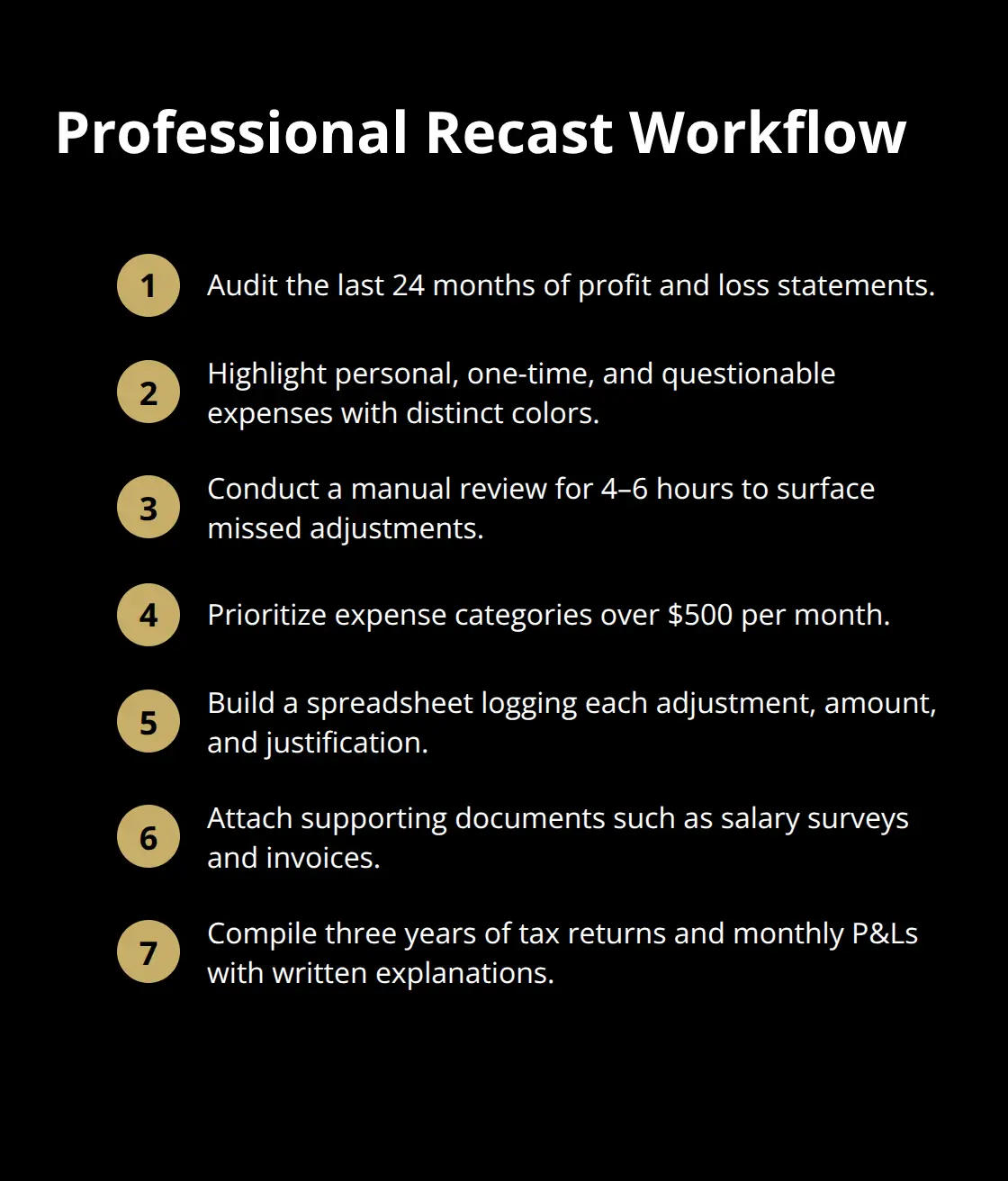
The most effective recasting starts with a systematic expense audit that uses your last 24 months of profit and loss statements. Print out each monthly P&L and use three colored highlighters: yellow for personal expenses, red for one-time costs, and blue for questionable business expenses that exceed market rates. This manual process takes 4-6 hours but reveals adjustment opportunities that software-based reviews miss. Focus on expense categories above $500 monthly because smaller adjustments rarely impact valuations significantly.
Target the High-Impact Categories First
Owner compensation represents the largest adjustment opportunity in most small businesses. Vehicle expenses, travel costs, and family benefits typically add significant annual adjustments for companies under $10 million in revenue. Professional fees for non-recurring legal work, accounting system implementations, or one-time consulting projects often represent substantial amounts that buyers should not expect to continue.
Build Bulletproof Documentation
Create a detailed Excel spreadsheet that lists each adjustment with the original expense amount, adjustment amount, and business justification. Include supporting documents like market salary surveys for owner compensation adjustments or invoices that prove one-time nature of expenses. Your documentation package should include three years of tax returns, monthly P&Ls, and a written explanation for each adjustment that totals more than $10,000 annually (this level of detail prevents buyers from questioning your credibility and reduces the risk of purchase price reductions during due diligence).
Work with Professional Advisors
Professional M&A advisors complete most recasting projects in 2-3 weeks and provide credibility that buyers respect. CPAs who specialize in business sales understand which adjustments buyers accept and which ones create negotiation problems. Quality of earnings reports from reputable accounting firms validate your adjustments and reduce buyer skepticism during due diligence reviews.
Final Thoughts
Recasting earnings transforms your financial statements from tax-minimized reports into buyer-focused documents that reveal true profitability. The process typically adds 20-30% to your sale price when you remove personal expenses, one-time costs, and owner-specific benefits that mask operational cash flow. Manufacturing companies, professional services firms, and restaurants see the most dramatic improvements because owner compensation and personal expenses often represent 40-60% of reported costs.
Professional guidance proves essential for credible recasting that buyers respect during due diligence. M&A advisors and specialized CPAs complete most projects in 2-3 weeks while they provide documentation that reduces negotiation friction and accelerates deal completion. Quality of earnings reports from reputable accounting firms validate your adjustments and prevent purchase price reductions (this validation becomes critical when buyers scrutinize your financial claims).
Start preparation for your business sale with a systematic expense audit that uses the last 24 months of profit and loss statements. Focus on owner compensation, vehicle expenses, travel costs, and one-time professional fees that exceed $10,000 annually. When you’re ready to sell, Unbroker offers transparent, low-cost business sale services with AI-driven buyer matching and premium marketing tools that eliminate traditional brokerage fees while maximizing your sale proceeds.