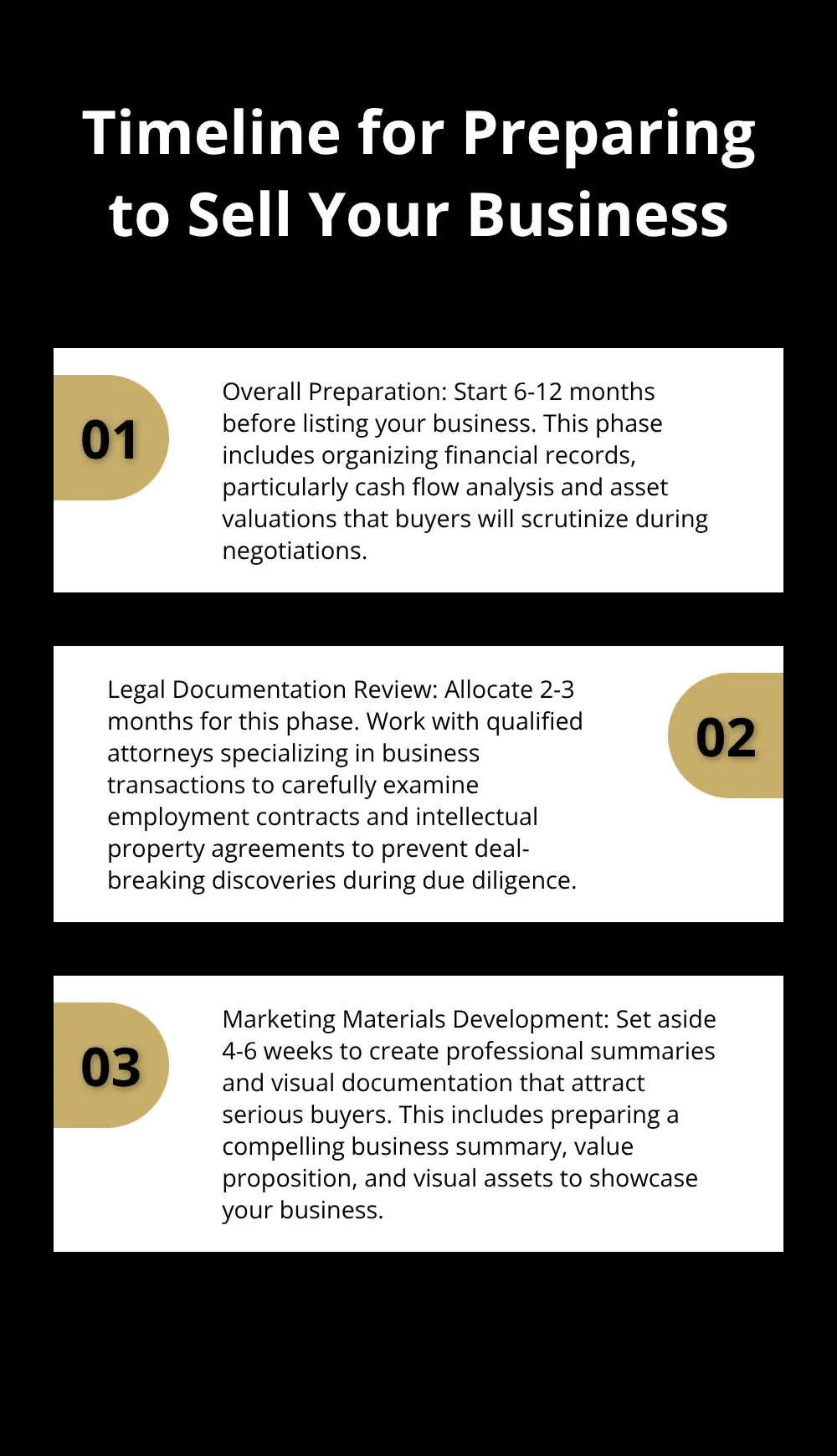
Selling your business requires meticulous preparation across financial, legal, and marketing fronts. Most business owners underestimate the complexity of DIY sale preparation.
We at Unbroker have seen countless sellers struggle with incomplete documentation that derails negotiations. This comprehensive toolkit covers every essential element you need to organize before listing your business for sale.
What Financial Documents Do Buyers Actually Need?
Tax Returns Tell the Real Story
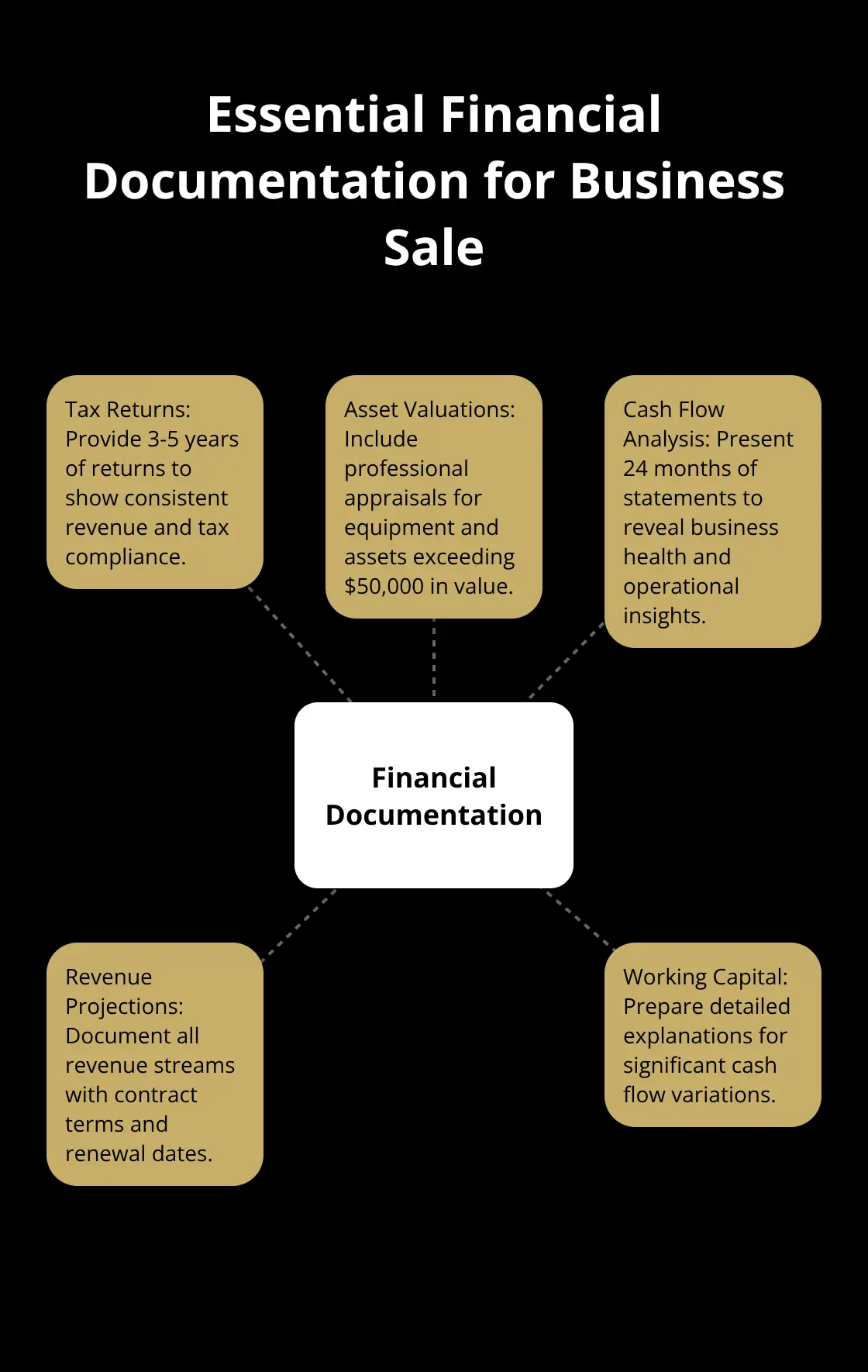
Your tax returns from the past three years represent the foundation of any serious business sale. Buyers want to see consistent revenue patterns and tax compliance, not your optimistic projections. Corporate tax returns reveal the actual profitability that personal financial statements often obscure.
Small businesses that file Schedule C should prepare both personal and business returns, as buyers need complete income visibility. The IRS requires businesses to maintain records for three years, but successful sellers provide five years of documentation to demonstrate long-term stability. Clean tax records without amendments or audit flags significantly accelerate buyer confidence and reduce due diligence delays.
Asset Valuation Drives Price Negotiations
Professional equipment appraisals become non-negotiable for businesses with assets that exceed $50,000 in value. Manufacturing companies typically see equipment values decline based on depreciation calculations, while technology assets depreciate even faster according to industry depreciation schedules.
Create detailed asset inventories that include purchase dates, current condition assessments, and replacement costs. Buyers will hire their own appraisers anyway, so professional valuations upfront prevent price disputes later. Include maintenance records and warranty information for all major equipment, as this documentation directly impacts perceived asset value and operational continuity for new owners.
Cash Flow Analysis Reveals Business Health
Monthly cash flow statements for the past 24 months provide buyers with operational insights that annual summaries cannot match. Seasonal businesses must show cash flow patterns across complete cycles to justify their asking prices. Revenue projections based on contracts carry more weight than growth assumptions, so document all revenue streams with contract terms and renewal dates.
Working capital requirements often surprise new business owners. Prepare detailed explanations for any significant cash flow variations, as unexplained fluctuations raise red flags during buyer evaluations.
These financial documents form the backbone of your sale preparation, but buyers also scrutinize your legal and operational records to assess business risks and compliance issues.
Which Legal Documents Make or Break Your Sale?
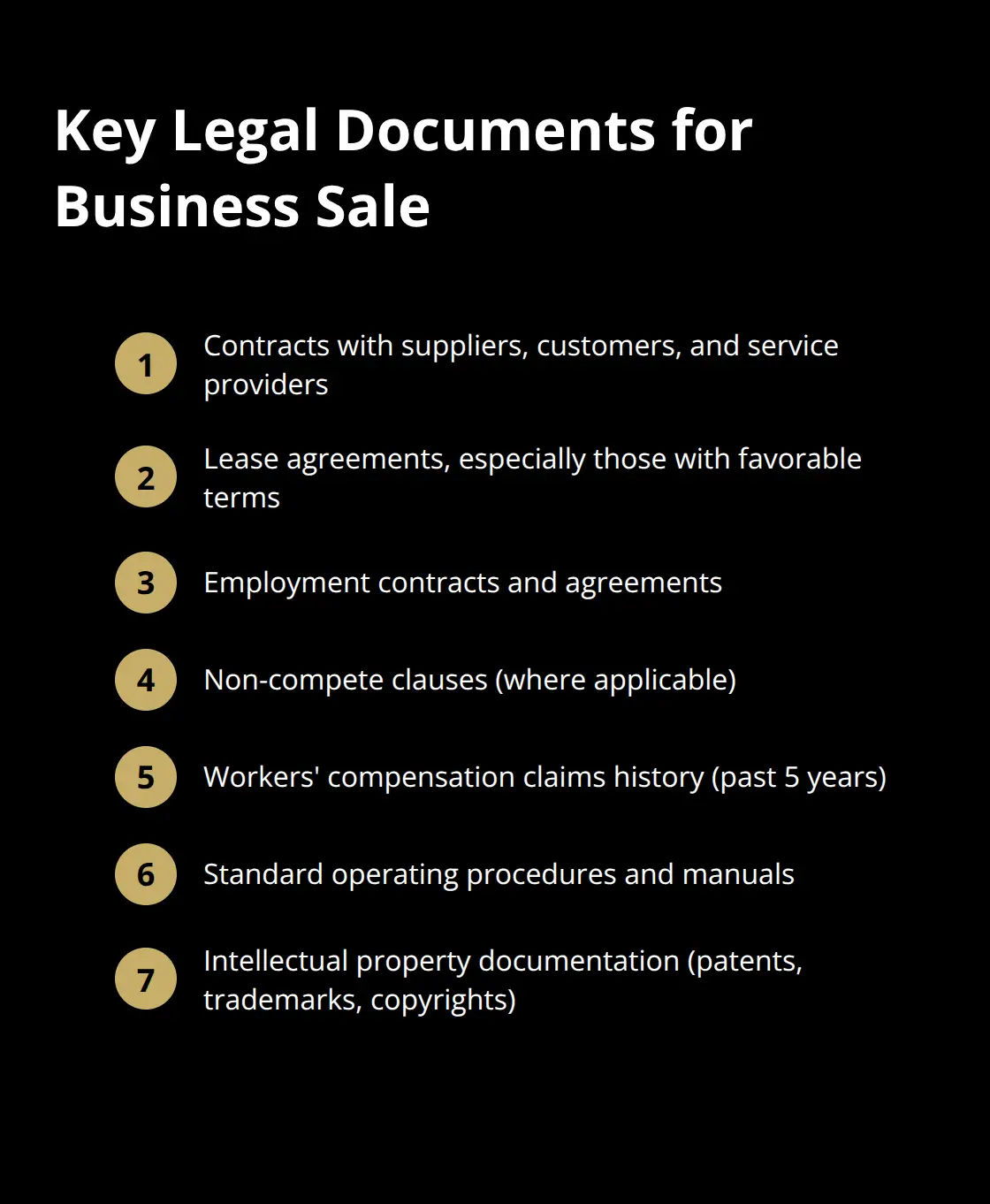
Your legal documentation directly determines whether buyers perceive your business as a professional operation or a risky investment. Contracts with suppliers, customers, and service providers must show clear terms, renewal dates, and termination clauses. Buyers specifically examine lease agreements, as location stability affects business continuity. Commercial leases with less than two years remaining create immediate red flags, while long-term leases with favorable terms add significant value to your asking price.
Employment Contracts Reveal Hidden Liabilities
Employee documentation exposes potential legal risks that can derail negotiations within days. Employment agreements, non-compete clauses, and commission structures must align with current labor laws in your jurisdiction. Different states have varying non-compete restrictions, with some fully banning such agreements while others allow broader enforcement.
Compile workers’ compensation claims history for the past five years, as insurance companies require this data for premium calculations. Document any pending employment disputes, OSHA violations, or wage and hour issues upfront. Buyers will find these problems during due diligence anyway, so transparency prevents deal collapse after weeks of negotiations.
Standard Operating Procedures Demonstrate Business Maturity
Written procedures for core business functions prove your company can operate without constant owner involvement. Manufacturing businesses need quality control protocols, safety procedures, and equipment maintenance schedules. Service companies require client onboarding processes, project management workflows, and customer service standards.
Document supplier relationships, vendor payment terms, and backup supplier arrangements. Include passwords, software licenses, and system access protocols that new owners need for operational continuity. Businesses with comprehensive procedure manuals typically command higher multiples because buyers see reduced operational risk and smoother ownership transitions.
Intellectual Property Documentation Protects Value
Patents, trademarks, and copyrights represent significant assets that buyers evaluate separately from physical equipment. Technology companies must provide patent filings, trademark registrations, and licensing agreements (including revenue streams from intellectual property). Document any pending IP disputes or infringement claims, as these issues can significantly impact IP valuation in litigation and business transactions.
Trade secrets and proprietary processes require non-disclosure agreements with all employees who access sensitive information. Compile all IP-related contracts, including licensing deals with third parties and any restrictions on IP usage that transfer with ownership.
Strong legal documentation sets the foundation for your sale, but buyers also need compelling marketing materials that showcase your business opportunity and growth potential.
How Do You Present Your Business to Serious Buyers?
Professional Business Summary Commands Attention
Your business summary determines whether buyers request additional information or move to the next opportunity. A compelling summary spans exactly two pages and follows a specific structure: company overview, market position, financial highlights, growth opportunities, and management team. Include your monthly recurring revenue, customer retention rates, and profit margins from the past 12 months rather than projections.
Buyers evaluate dozens of opportunities weekly, so your summary must communicate value within the first paragraph. Manufacturing businesses should highlight capacity utilization rates and contract backlog, while service companies need to emphasize client diversity and average contract values. Document your competitive advantages with specific metrics, such as optimized customer acquisition costs or proprietary technology that reduces production time by 25%.
Value Proposition Drives Buyer Interest
Your value proposition must address specific buyer pain points and demonstrate clear return on investment potential. Focus on measurable business advantages: exclusive supplier relationships, proprietary processes, or established customer bases that competitors cannot easily replicate. Technology companies should emphasize scalable systems and recurring revenue streams (particularly software-as-a-service models with predictable monthly income).
Service businesses need to highlight client contracts with automatic renewal clauses and average customer lifetime values. Retail operations should document foot traffic patterns, seasonal sales data, and inventory turnover rates that exceed industry benchmarks. Present growth opportunities with concrete market data rather than optimistic assumptions about future expansion.
Visual Documentation Validates Your Claims
Professional photography of your facilities, equipment, and operations carries more weight than lengthy descriptions. Buyers want to see actual workspace conditions, not staged marketing photos. Include floor plans with square footage measurements, equipment layouts, and expansion possibilities.
Technology companies need screenshots of software interfaces, user dashboards, and system architecture diagrams. Retail businesses require photos of inventory systems, point-of-sale setups, and customer areas. Create a visual inventory that shows major assets with serial numbers, installation dates, and current condition assessments.
Property Documentation Supports Valuation
Property documentation must include lease agreements, building permits, zoning compliance certificates, and any environmental assessments. Businesses with multiple locations need comprehensive documentation for each site, including utility costs, local market conditions, and lease terms that transfer with ownership. Commercial property appraisals become essential for businesses that own their facilities, as real estate often represents significant asset value in the total sale price. A professional valuation sets realistic expectations and attracts serious buyers by establishing credible market value.
Final Thoughts
DIY sale preparation requires systematic organization across financial, legal, and marketing documentation. You must start your preparation process 6-12 months before you list your business to avoid rushed decisions that reduce sale value. Financial records require the most time investment, particularly cash flow analysis and asset valuations that buyers scrutinize during negotiations.
Legal documentation review takes 2-3 months when you work with qualified attorneys who specialize in business transactions. Employment contracts and intellectual property agreements need careful examination to prevent deal-breaking discoveries during due diligence. Marketing materials development requires 4-6 weeks to create professional summaries and visual documentation that attract serious buyers.
Most business owners underestimate the complexity of managing buyer inquiries, negotiations, and closing procedures without professional support (especially during their first sale). We at Unbroker provide transparent business sale services that combine DIY flexibility with expert guidance throughout your transaction. Our platform helps your preparation efforts translate into successful sale outcomes.