Choosing the right small business marketing services can make or break your company’s growth. At Unbroker, we’ve seen firsthand how effective marketing strategies can transform small businesses.
But with so many options available, how do you pick the best services for your needs? This guide will help you navigate the complex world of marketing services and make informed decisions for your business.
What Are Your Marketing Needs?
Know Your Audience Inside Out
Effective marketing starts with a clear understanding of your business needs. Before you select specific services, take a step back and assess your current position and future goals.
First, identify your target audience. Who are your ideal customers? What problems do they face? Where do they spend time online and offline? Use tools like Google Analytics or social media insights to collect data on your existing customers. Create detailed buyer personas to guide your marketing efforts.
For instance, if you run a local bakery, your target audience might consist of health-conscious millennials in your area. This knowledge helps you tailor your message and select the most appropriate marketing channels.
Set a Realistic Marketing Budget
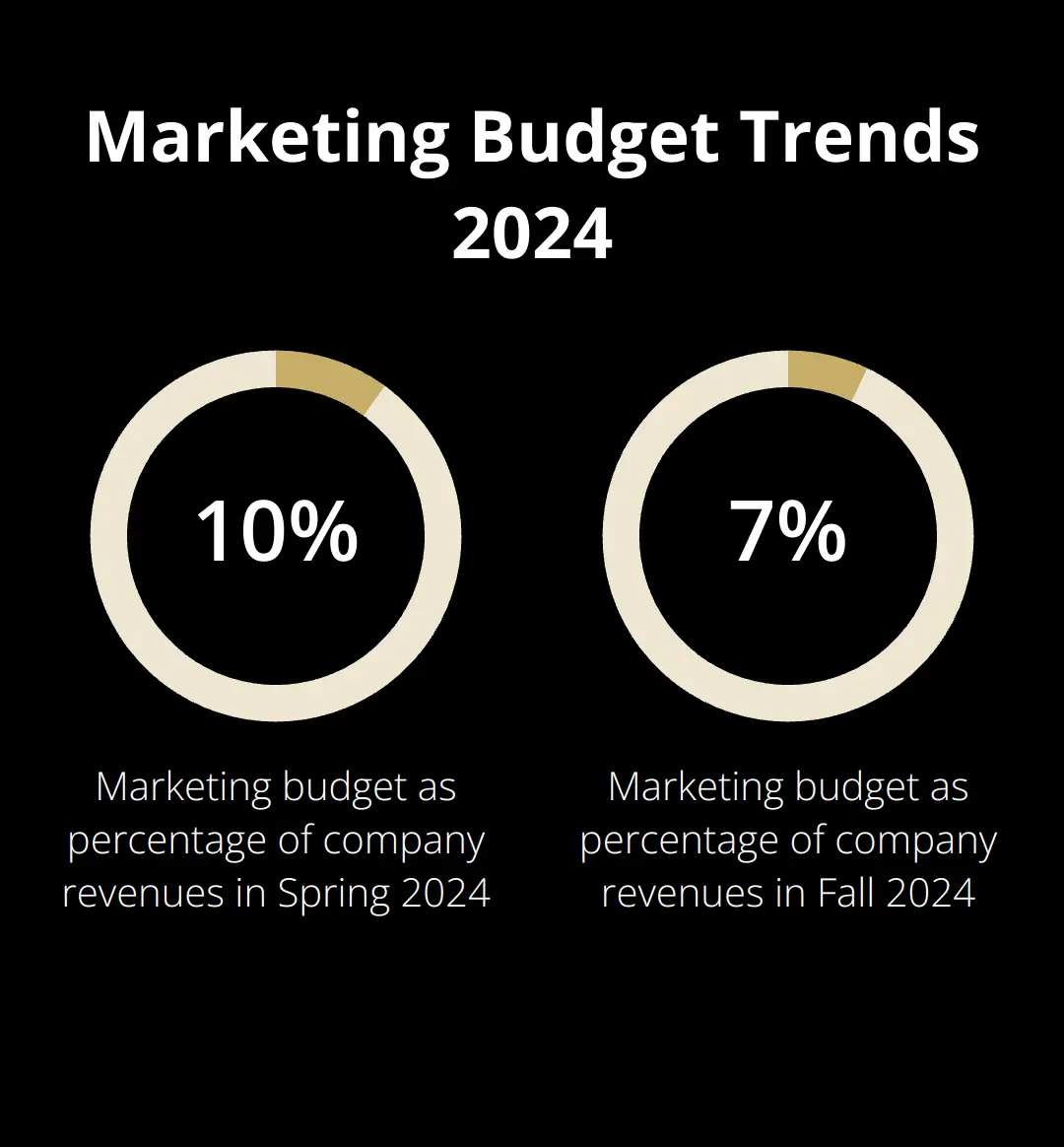
Your budget determines which services you can afford. Marketing budgets as a percentage of company revenues dropped from 10.1% in Spring 2024 to 7.7% in Fall 2024, its lowest level in recent years. Don’t pick a number arbitrarily. Examine your revenue, growth goals, and industry benchmarks to establish a realistic budget.
Marketing is an investment, not an expense. If you’re just starting out, you might need to allocate more funds to build brand awareness. Established businesses might focus on customer retention strategies.
Define Clear, Measurable Objectives
Specify what you want to achieve with your marketing efforts. Instead of a vague goal like “increase sales,” set a specific target such as “increase online sales by 20% in the next quarter.” This precision helps you choose the right services and measure success.
When identifying specific marketing objectives to support your long-term goals, it is common practice to apply the widely used SMART mnemonic.
Common objectives for small businesses include:
- Increase website traffic
- Boost social media engagement
- Generate more qualified leads
- Improve conversion rates
Audit Your Current Marketing Efforts
Evaluate your existing marketing activities before adding new services. What works? What doesn’t? Use tools like Google Analytics to track website performance. Check your social media metrics. Analyze your email open and click-through rates.
A marketing audit is an assessment that is performed to analyze your current marketing strategy from top to bottom. This audit will help you identify gaps in your current strategy. Perhaps your website attracts traffic, but visitors don’t convert. In this case, you might need conversion rate optimization services rather than additional SEO.
Choose the Right Marketing Mix
After you’ve assessed your needs, budget, goals, and current efforts, you’ll be better equipped to select the right marketing services for your small business. This groundwork ensures that every dollar you spend on marketing drives real results.
Consider a mix of digital and traditional marketing methods (depending on your audience and industry). For example, a local restaurant might benefit from a combination of social media marketing, local SEO, and targeted print ads in community publications.
As you move forward in your marketing journey, you’ll need to understand the various types of small business marketing services available. Let’s explore these options in the next section to help you make an informed decision.
What Marketing Services Drive Small Business Growth?
At Unbroker, we’ve witnessed the transformative power of the right marketing mix for small businesses. Let’s explore the most effective options to boost your visibility and drive growth.
Digital Marketing: Your Online Growth Engine
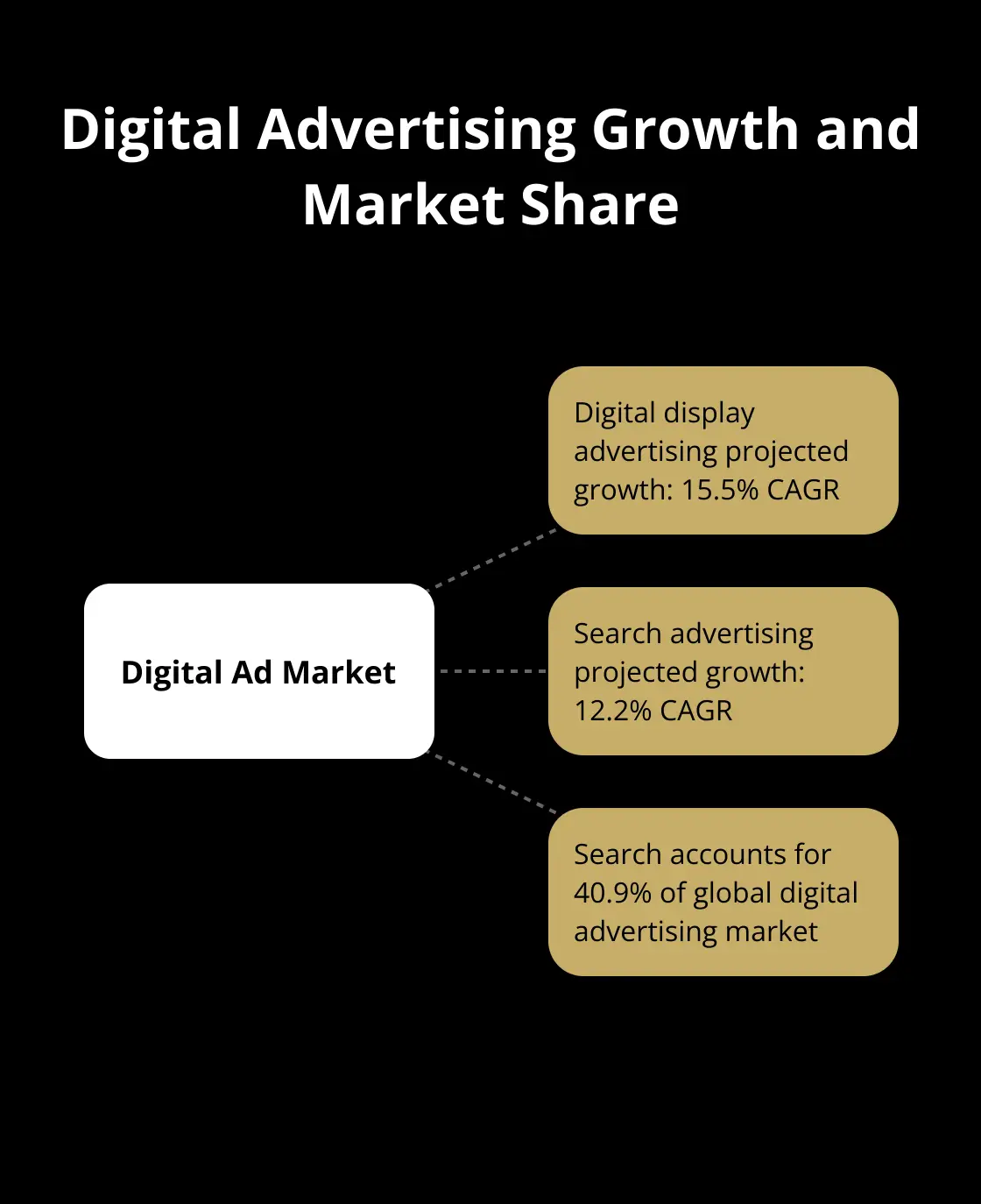
Digital display advertising is projected to grow at a 15.5% CAGR, while search is projected to grow at 12.2%. Search accounts for 40.9% of the global digital advertising market. This includes Search Engine Optimization (SEO), Pay-Per-Click advertising (PPC), and social media marketing.
SEO optimizes your website to rank higher in search results, essential for long-term visibility. BrightEdge reports that 53% of all website traffic originates from organic search, representing a significant pool of potential customers.
PPC offers immediate visibility with a pay-per-click model. Google Ads, the leading PPC platform, delivers an average return on investment of $8 for every $1 spent.
Social media marketing builds brand awareness and fosters audience engagement. With 4.48 billion social media users worldwide, these platforms offer unparalleled reach for small businesses.
Content Marketing: Your Brand Story Amplified
Content marketing involves the creation and distribution of valuable content to attract and retain customers. It shifts focus from direct selling to providing value.
According to the Content Marketing Institute, their annual B2B Content Marketing Benchmarks, Budgets, and Trends: Outlook for 2025, conducted with MarketingProfs and sponsored by various organizations, provides insights into content marketing trends. Blog posts, videos, infographics, and podcasts showcase your expertise and build trust with potential customers.
Email Marketing: Direct Connection to Your Audience
Email marketing provides a direct line to your customers. It’s personal, targeted, and cost-effective.
Campaign Monitor data shows that for every $1 spent on email marketing, the average return is $44 (an ROI of 4,400%). Use email to nurture leads, share valuable content, and promote special offers.
Automation tools enhance email marketing effectiveness. They enable personalized messages based on customer behavior, increasing efficiency and impact.
Integrated Approach: The Key to Success
The most effective marketing strategies integrate multiple services. This cohesive approach addresses your business needs and resonates with your target audience. As you consider these options, you’ll need to evaluate potential marketing service providers carefully. Let’s explore how to assess these providers in the next section.
How to Evaluate Marketing Service Providers
Selecting the right marketing service provider can propel your small business to new heights. We at Unbroker understand the impact of a strong marketing partnership. This guide will help you identify the best providers for your needs.
Examine Their Experience and Results
Look beyond years in business. Focus on providers with a proven track record in your specific industry. Request detailed case studies relevant to your business size and sector. For example, a local restaurant should seek a provider who has successfully marketed similar establishments.
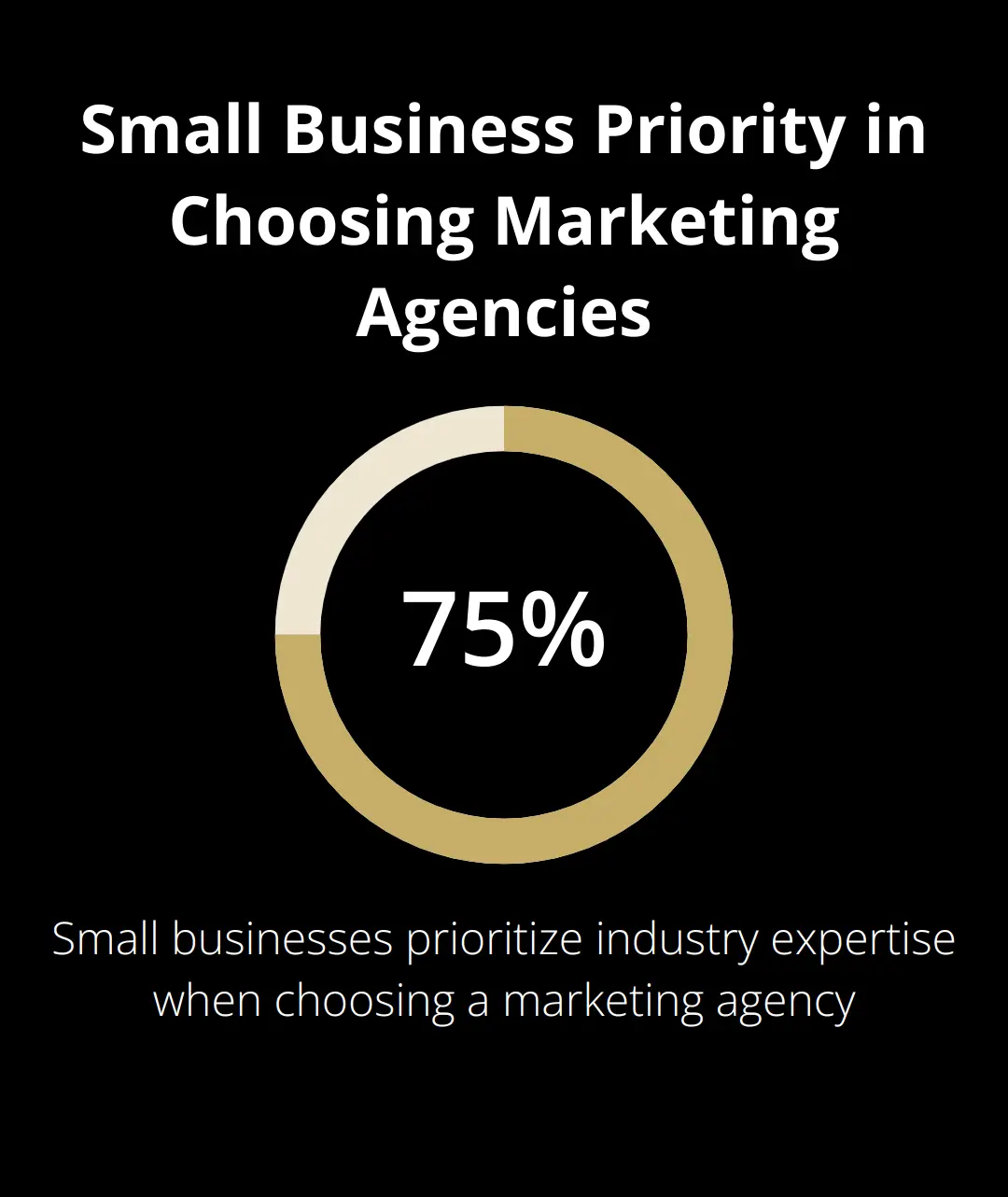
A survey by Clutch reveals that 75% of small businesses prioritize industry expertise when choosing a marketing agency. Don’t shy away from asking for references and contacting their past clients. These firsthand accounts will offer valuable insights into the provider’s strengths and weaknesses.
Analyze Their Communication Approach
Effective communication forms the foundation of any successful marketing partnership. During initial consultations, observe how well they listen to your needs and goals. Do they ask insightful questions about your business? How quickly do they respond to your inquiries?
A Salesforce study found that 84% of customers value being treated as a person, not a number (this applies to B2B relationships too). Choose a provider who tailors their communication to your preferences, whether through regular video calls, email updates, or in-person meetings.
Review Their Reporting Methods
Demand transparency in reporting. Ask potential providers about their reporting frequency and the metrics they track. A competent marketing service should offer clear, actionable insights, not just raw data.
HubSpot reports that 39% of marketers struggle to prove the ROI of their marketing activities. Your chosen provider should demonstrate how their efforts directly impact your bottom line. Seek reports that focus on key performance indicators (KPIs) aligned with your business goals, rather than vanity metrics.
Assess Their Technology Stack
In today’s digital landscape, a provider’s tools can significantly influence their effectiveness. Inquire about their technology stack. Do they use advanced marketing automation tools? What are their data analytics capabilities?
A Forrester report indicates that insights-driven companies grow at an average of more than 30% annually. Your marketing partner should leverage data and technology to drive results. However, be cautious of providers who rely too heavily on automation at the expense of personalization and creativity.
Consider Their Pricing Structure
Understand the provider’s pricing model and ensure it aligns with your budget and expected return on investment. Some agencies offer fixed-price packages, while others work on a retainer or performance-based model. Try to find a balance between cost-effectiveness and quality of service.
A survey by Promethean Research found that 42% of marketing agencies increased their prices in 2024. Make sure you have a clear understanding of what services are included in the quoted price and if there are any additional fees or long-term commitments.
Final Thoughts
Selecting the right small business marketing services will significantly impact your company’s growth trajectory. You must tailor your approach to align with your unique business goals, target audience, and budget constraints. The digital marketing landscape evolves constantly, so you should partner with a provider who stays ahead of industry trends and adapts strategies accordingly.
Your marketing plan should remain flexible. You need to adjust your strategies based on performance data and changing market conditions. Regular evaluation of your marketing efforts will help you identify what works and what needs improvement (this allows you to optimize your investment over time).
We at Unbroker offer transparent, low-cost options for selling businesses. We eliminate high brokerage fees and provide access to premium marketing tools. Our approach combines efficiency with social impact, supporting non-profit programs while helping businesses thrive.