Most business owners have no idea when to get their company valued. The timing of a valuation can shift your negotiating power by thousands of dollars and determine whether you’re ready to sell.
At Unbroker, we’ve seen owners miss out on better deals simply because they valued their business at the wrong moment. This valuation timing guide walks you through exactly when to get valued and how to avoid costly mistakes.
When to Value Your Business Before Selling
Timing a business valuation is not about following a calendar-it’s about positioning yourself for maximum leverage. Most business owners wait until they’re ready to list, which is precisely when they’ve already lost negotiating power. The market doesn’t care about your timeline; it cares about what buyers will pay right now. If you value your business too close to your sale date, you operate with incomplete information about what improvements could have boosted your price.
Start Valuation 12 to 18 Months Before Your Exit
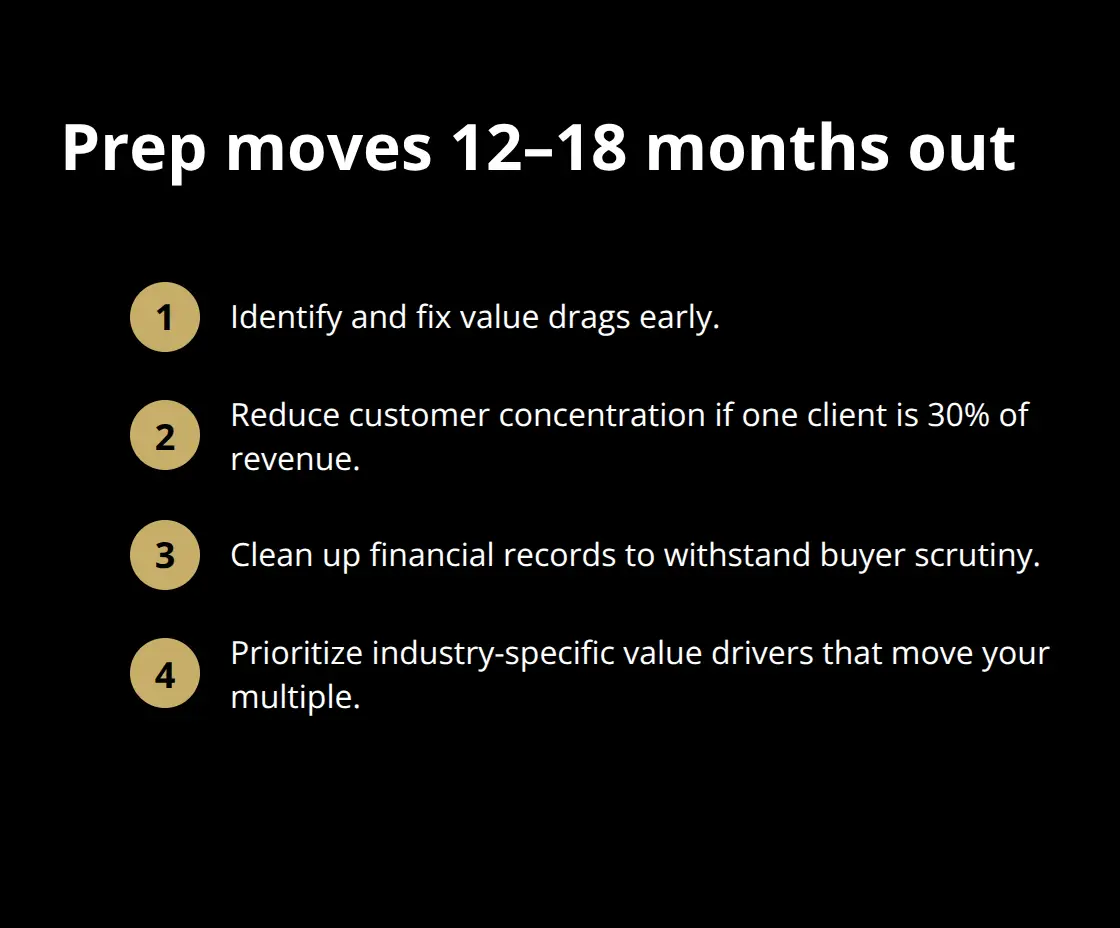
The sweet spot for an initial valuation sits between 12 and 18 months before your planned exit. This window allows you to identify what’s dragging down your value and fix it. If your valuation reveals that customer concentration is hurting your multiple-say, one customer represents 30% of revenue-you have genuine time to diversify. Businesses with more than 20% revenue from a single customer typically face price discounts of 20% to 40% compared to diversified peers.
That’s not a minor adjustment; that’s real money on the table.
An early valuation also surfaces whether your clean financial records matter for buyer scrutiny. Messy accounting, personal expenses buried in the business, and inconsistent revenue recognition can all lower your final sale price. A professional appraiser will flag these issues early, when you can still correct them.
You’ll also understand which value drivers matter most in your industry. Businesses with predictable, recurring revenue streams typically command higher multiples, while other sectors may prioritize different metrics. Knowing this helps you prioritize improvements that actually move the needle.
Update Your Valuation Within Six Months of Marketing
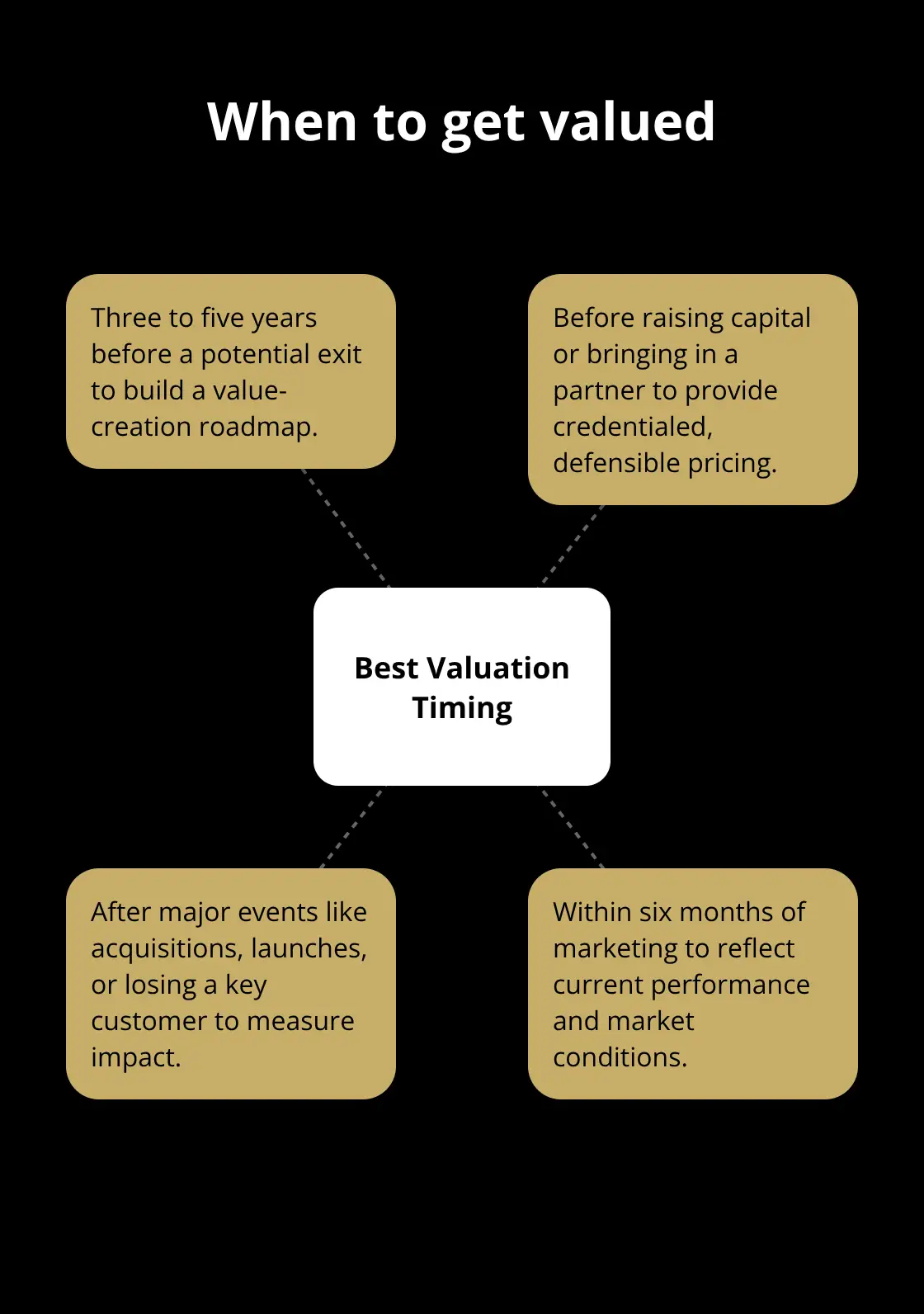
Once you’ve completed the groundwork and prepare to market your business, obtain a fresh valuation within six months of launching your sale process. Economic conditions shift, interest rates move, and your own performance data becomes more current. A valuation from 18 months ago is stale by the time buyers show up.
This second valuation also gives you defensible pricing for your marketing materials and asking price. Buyers expect to see how you arrived at your number. A professional valuation from a credentialed appraiser with ABV or ASA credentials carries weight that a spreadsheet never will. It signals to institutional buyers and serious investors that you’ve done your homework.
The cost typically runs between $5,000 and $20,000 depending on complexity, but that investment pays back instantly if it prevents you from underpricing your business or overpricing it so badly that no one makes an offer. With this solid foundation in place, you’re ready to explore what specific improvements actually move your valuation higher.
When to Get Your Business Valued
Valuation isn’t a one-time event tied to a sale. Smart business owners use valuations as checkpoints throughout their company’s lifecycle. Each moment reveals different information and creates different advantages. A valuation at the wrong moment means you miss opportunities to strengthen your position, fix problems, or capitalize on favorable market conditions. The key is recognizing when valuation serves your actual business goals, not just your exit timeline.
Valuation Before You Even Think About Selling
Most owners wait until they’re serious about selling to get valued. This approach is backward. A valuation three to five years before any potential exit gives you a realistic roadmap for value creation. You learn what your business is actually worth today and what specific improvements would move that number higher. If your valuation shows that weak management depth is holding back your multiple, you have years to build that strength. If customer concentration is the problem, you have genuine time to diversify.
Businesses with more than 20% revenue from a single customer face price discounts of 20% to 40%, but that discount disappears when you fix the problem early. An early valuation also clarifies which industry trends work for or against you. Service businesses typically trade at lower revenue multiples but higher earnings multiples, while technology companies with recurring revenue command premium valuations. Knowing this shapes your strategic decisions long before you list.
The investment runs $5,000 to $20,000 and pays dividends for years through smarter decision-making. You operate without the pressure of an imminent sale, which means you can absorb hard truths about what’s holding back your value and actually address them.
Valuation When Capital or Investment Enters the Picture
Investors and lenders demand current valuations before they commit money. If you’re raising capital, seeking venture funding, or bringing in a partner, a professional valuation becomes non-negotiable. Venture capitalists and angel investors use discounted cash flow analysis to assess potential returns, and they expect to see credentialed work. A valuation from an appraiser with ABV or ASA credentials carries institutional weight that internal estimates never achieve. Without it, investors assume you’re either hiding problems or overestimating worth.
The valuation also protects you in writing. When a partner or investor later disputes the deal terms, a documented professional valuation becomes your defense. Disputes over equity splits, buyout prices, or contribution valuations turn expensive fast. A $10,000 valuation upfront prevents $100,000 in legal fees later. Timing matters here too. You should obtain your valuation before you enter serious negotiations, not after you’ve already agreed on rough terms. Investors respect founders who walk in with clear numbers and move faster when the valuation is already done. If you’re considering bringing in outside capital, commission a fresh valuation at least three months before you approach potential investors or lenders.
Valuation During Structural Changes and Growth Milestones
Major business events shift what your company is worth. A significant acquisition, major product launch, entry into a new market, or loss of a key customer all change your valuation profile. You obtain a fresh valuation after these events to gain concrete data on whether the change helped or hurt. If you acquired a competitor and your valuation jumped 35%, that’s real validation that the integration worked. If your valuation dropped because customer retention fell after a product change, you receive early warning that something needs fixing.
Diversifying the customer base and strengthening brand identity significantly boost valuation. A valuation after you’ve executed these improvements proves the value increase to future buyers. You also use the valuation to set realistic expectations internally. If your business went through rapid growth but your valuation barely moved, something in your cost structure or market position isn’t working. A fresh valuation after major milestones gives you the data to course-correct before it’s too late.
These strategic moments reveal whether your business is actually moving in the right direction. The next section explores how to avoid the most common mistakes that owners make when they finally do decide to value their business.
Valuation Mistakes That Cost You Money
The gap between a well-timed valuation and a poorly executed one often comes down to avoiding five specific traps that destroy negotiating power and leave thousands on the table.
Waiting Until You’ve Already Decided to Sell
The first and most expensive mistake is postponing your valuation until you’ve already committed to selling. At that point, you operate on a compressed timeline with no room to fix the problems your valuation uncovers. If a professional appraiser identifies that your management team lacks depth or that your customer base is too concentrated, you cannot fix either issue in the weeks before you list. You’re stuck selling at a discount because you ran out of time.
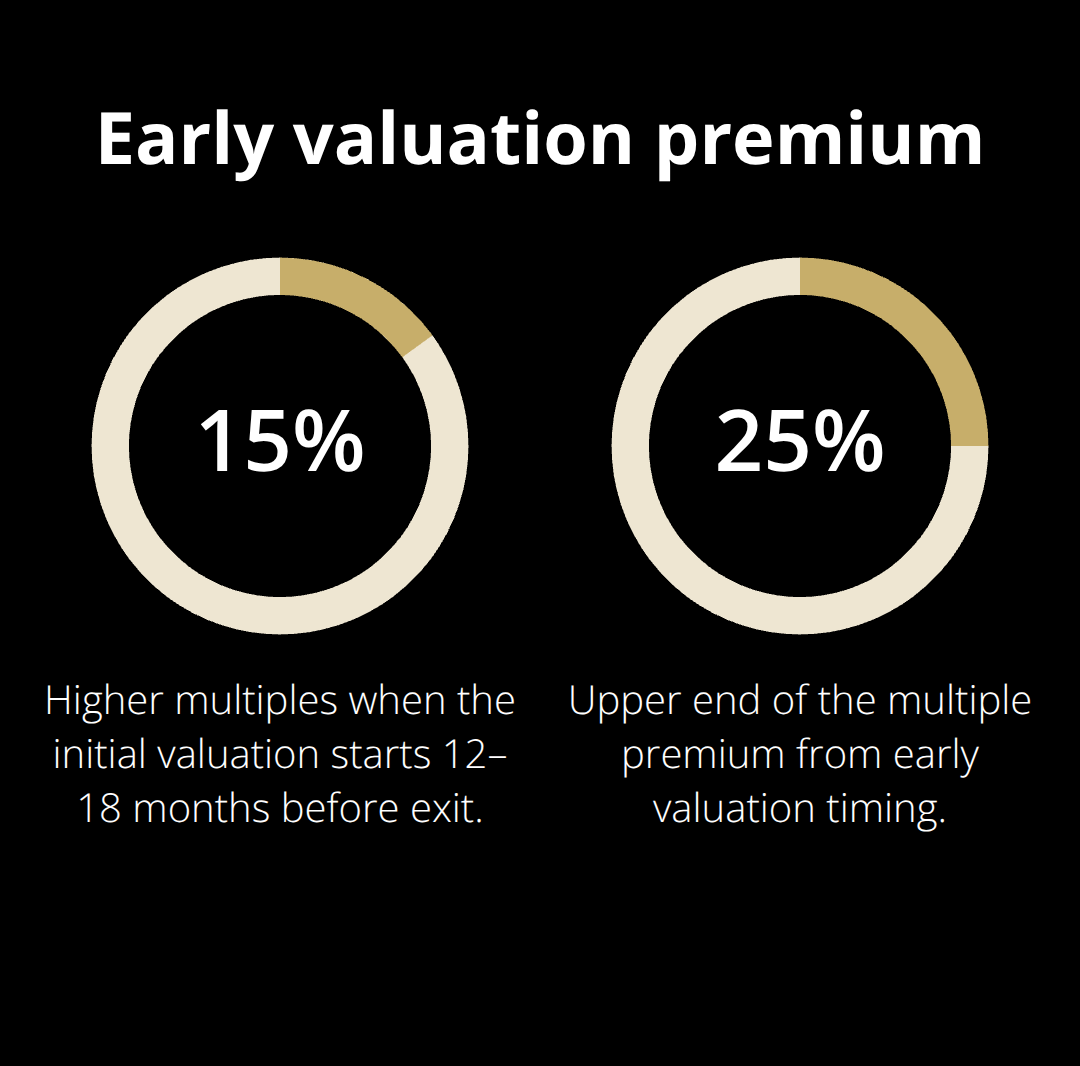
The data backs this up: businesses that receive an initial valuation 12 to 18 months before exit typically command 15% to 25% higher multiples than those valued within three months of listing. That premium exists because early valuation creates space for actual improvements. A customer concentration problem (more than 20% revenue from a single customer) costs you 20% to 40% in lost value, but you can fix it if you start early.
Without that head start, you accept the discount and move on.
Ignoring What Buyers Actually Want Right Now
The second critical mistake is ignoring what buyers actually want in the current market. Market conditions shift constantly. When interest rates spike, financial buyers have less leverage to pay premium multiples. When your industry experiences consolidation, strategic buyers may pay more because synergies justify higher prices. A valuation from two years ago tells you nothing about what today’s market will pay.
You need a fresh valuation within six months of marketing your business to price accurately. Outdated valuations lead to either overpricing your business so badly that no serious offers arrive, or underpricing it and leaving equity on the table. Many owners discover too late that their asking price was off by 30% or more simply because they relied on stale numbers. The cost of a fresh valuation ($5,000 to $20,000) is trivial compared to the cost of pricing wrong.
Using Messy or Incomplete Financial Data
The third mistake compounds the first two: relying on financial data that’s messy, incomplete, or unreliable. Buyers and their accountants will scrutinize your numbers during due diligence. If your books show inconsistent revenue recognition, personal expenses mixed into business expenses, or missing documentation, appraisers must normalize your earnings downward. That adjustment directly reduces your valuation.
A business that claims $500,000 in earnings but has $80,000 in personal expenses run through the books gets valued on $420,000 in actual earnings. That’s a $200,000 to $400,000 difference in sale price depending on your industry multiple. Getting three years of clean financial statements, tax returns, and supporting documentation ready before valuation prevents this penalty. Professional appraisers expect to see normalized earnings that reflect what a buyer would actually earn, not what you earned as an owner-operator.
Underestimating Intangible Assets
The fourth mistake is undervaluing intangible assets that buyers actually care about. Many owners focus only on tangible assets and recent earnings when they think about value, but recurring revenue, customer retention rates, proprietary systems, and brand strength often drive the real multiple. Technology companies with recurring revenue typically command 8 to 12x earnings multiples, while service businesses without recurring revenue might trade at 3 to 5x. That gap exists because recurring revenue is worth more.
If your valuation doesn’t account for the fact that 70% of your customers renew annually, you’re leaving value on the table. Professional appraisers dig into these details and quantify them. A DIY valuation almost always misses them entirely. The quality of your earnings matters far more than the raw number. A business with stable, predictable revenue streams commands a higher multiple than one with volatile, one-time sales, even if both report the same annual earnings.
Final Thoughts
Timing your valuation correctly transforms it from a snapshot into a roadmap for real value creation. The owners who achieve the best deals aren’t those who wait until they’re ready to list-they’re the ones who valued their business 12 to 18 months before any potential exit, identified what held back their multiple, and fixed it. That head start gives you genuine time to diversify customers, strengthen management, and clean up financial records before buyers scrutinize them.
A professional valuation costs $5,000 to $20,000 and typically takes 4 to 8 weeks, but that investment prevents you from pricing your business wrong or accepting discounts you could have avoided. Your valuation timing guide should center on your actual business goals, not an arbitrary calendar date. If you’re thinking about selling within the next few years, commission a valuation now; if you’re raising capital or bringing in a partner, get valued before negotiations begin; if your business just went through a major change, a fresh valuation tells you whether that change actually moved the needle.
We at Unbroker offer transparent options that eliminate high brokerage fees and give you control over the process. Whether you choose full-service support or assisted selling, you’ll have access to a vast buyer network and premium marketing tools without the traditional broker markup. The combination of a solid valuation and the right sales platform positions you to achieve the price your business deserves.