Most business owners spend decades building something valuable, then hesitate when it’s time to plan their exit. Fear, uncertainty, and worry about what comes next often paralyze the decision-making process.
A strategic business transition doesn’t happen by accident. At Unbroker, we’ve seen firsthand that owners who plan ahead protect their legacy, maximize their company’s value, and achieve the outcomes they actually want.
Why Business Owners Delay Exit Planning
Fear of Losing Control and Identity
Most owners tie their identity to their business. After 20, 30, or even 40 years of building something from scratch, the thought of stepping away triggers a real sense of loss. This isn’t just about money-it’s about purpose, daily routine, and the relationships that defined your professional life.
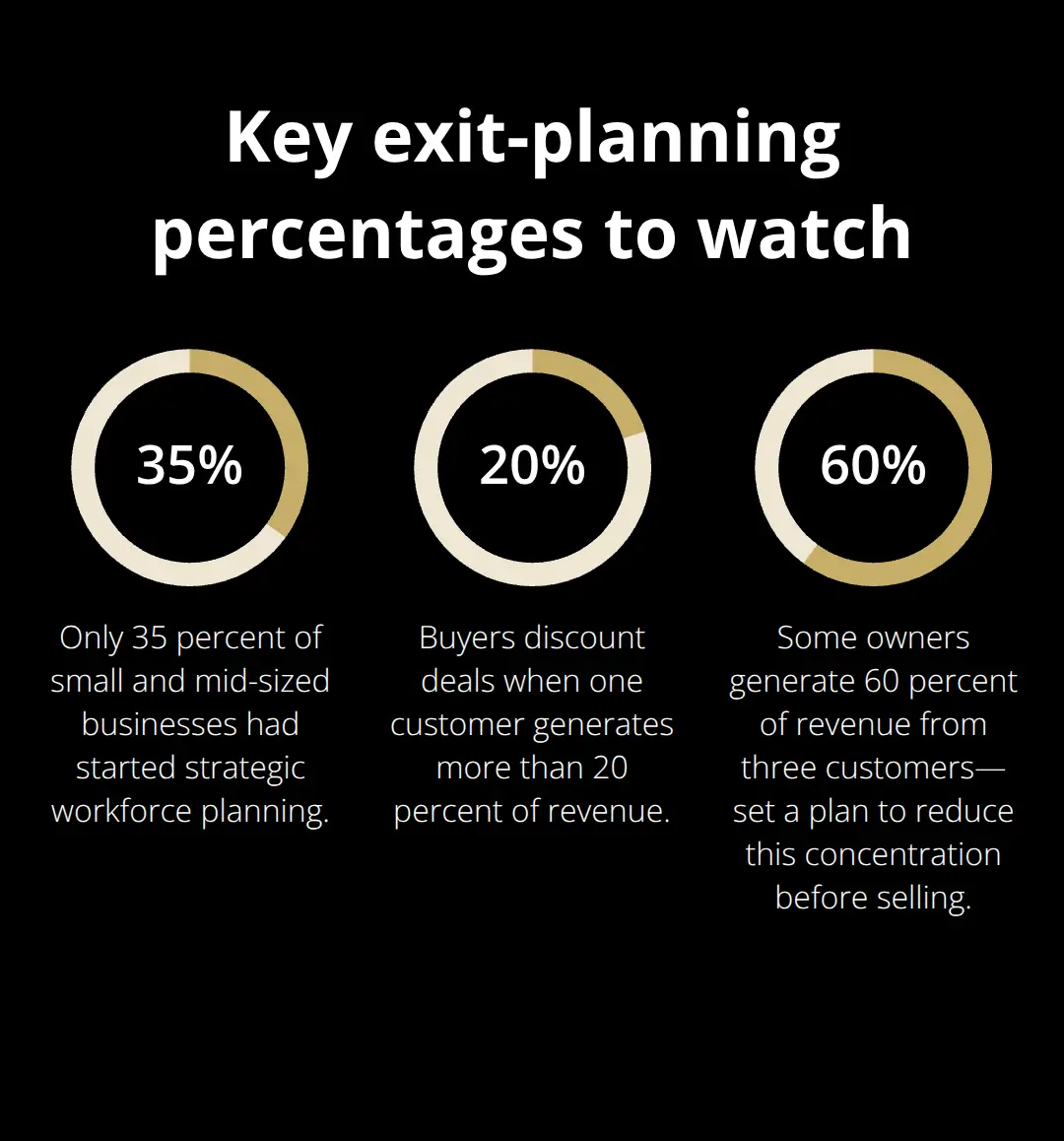
That fear of losing control runs deeper than most people admit. You’ve made every major decision, shaped the culture, and steered the ship through crises. Handing that over to someone else means accepting that your way of doing things might change. Research revealed the scope of this avoidance: only 35 percent of small and mid-sized businesses had started strategic workforce planning. This gap reflects the reality-many owners avoid planning because it forces them to confront the end of their era.
Uncertainty About Valuation and Timing
Valuation uncertainty paralyzes owners. You don’t know if now is the right time to sell, what your business is actually worth, or whether you’ll receive fair value. The market shifts, buyer interest fluctuates, and without professional guidance, the numbers feel like guesswork.
Timing matters tremendously. Owners who begin planning at least 3 to 5 years before their intended exit maximize value significantly, while those who rush face buyer skepticism and lower valuations. The stakes feel impossibly high when you lack clarity on what drives your company’s value and how external factors influence the sale price.
Concerns About Employee and Customer Welfare
Owners also worry about what happens to employees and customers after they’re gone. You’ve invested in your team, built customer loyalty, and created something that serves a real need. The fear that new ownership will dismantle that legacy, cut corners, or abandon the values you embedded in the business keeps many owners stuck in limbo.
These concerns are valid, but they’re also the exact reasons planning can protect employee and customer welfare. Strategic planning addresses each of these fears directly by giving you control over the process, clarity on valuation, and a way to protect what matters most about your business. The next step involves building a clear roadmap that transforms these anxieties into actionable decisions.
Build Your Exit Strategy With Clarity
Pull together your last three years of tax returns, profit-and-loss statements, and balance sheets to assess where you stand. Look at revenue trends, profit margins, and cash flow patterns. Identify which products or services generate the highest margins and which customer segments are most profitable. This isn’t about perfection-it’s about understanding what makes your business tick from a buyer’s perspective. Most buyers will request this data anyway, so gathering it now positions you ahead of the process.
Map your market position honestly. Are you losing market share to competitors? Is your industry consolidating? Are new technologies disrupting your sector? A buyer will assess these factors, so you should too. This assessment typically takes two to four weeks if you work with a financial advisor, and it clarifies whether now is genuinely the right time to sell or whether you need to strengthen operations first.
Define What You Actually Want From This Exit
Your exit strategy must align with your personal goals, not just financial targets. Do you want to retire completely or stay involved as an advisor? Do you need ongoing income through an earn-out, or do you want all cash upfront? Are you hoping to see your business continue under new leadership, or are you indifferent to what happens after you leave? These questions shape every decision that follows.
Some owners discover they don’t want to exit at all-they want to bring in a co-owner or restructure the business. Others realize they need significantly more liquid capital than they thought to fund their next chapter. Set a realistic timeline too. If you want to exit in two years, that’s aggressive and limits your options. Three to five years gives you room to strengthen the business, prepare your team, and attract serious buyers willing to pay premium prices.
Set Specific Financial Targets
What annual income do you need in retirement? What lump sum would feel secure? Planning for at least three years gives you breathing room and significantly improves outcomes when building value and avoiding rushed decisions.
Assemble Your Advisory Team
You cannot navigate this alone, and attempting to do so costs money in the long run. Hire a business valuation expert to give you a realistic assessment of what your company is worth in today’s market. Their fee typically ranges from $3,000 to $10,000, depending on complexity, but it eliminates guesswork.
Next, engage a tax professional who understands business exits. The difference between structuring a sale as an asset sale versus a stock sale can save or cost you tens of thousands in taxes. An M&A attorney protects your interests during negotiations and ensures the deal structure aligns with your goals.
Finally, consider working with a business broker or intermediary who can connect you with qualified buyers. Your advisory team should communicate with each other. Your tax advisor needs to know your timeline and personal goals. Your attorney needs to understand your valuation and the buyer profile you’re targeting.

This coordination prevents conflicting advice and keeps the process moving efficiently.
With your financial picture clear, your personal goals defined, and your advisory team in place, you’re ready to focus on what actually moves the needle: strengthening your business’s appeal to buyers and protecting the value you’ve built.
What Actually Moves the Needle Before You Sell
Clean Financial Records Command Higher Valuations
Buyers don’t pay for potential. They pay for what’s already working. The three to five years before your exit are not about transformation-they’re about proving that your business generates consistent, predictable revenue with systems that function without you. Start with your financial records. Messy accounting, unclear expense categorization, or missing documentation immediately raise red flags. Buyers conduct due diligence on every number, and gaps cost you money.
Standardize your chart of accounts, reconcile bank statements monthly, and align your tax returns with your operational records. If your accountant flags discrepancies during the exit process, you’re already negotiating from weakness. Clean financials aren’t just credible-they command higher valuations. Companies with documented, auditable records typically sell for 10 to 20 percent more than those requiring extensive cleanup work.
Document Systems to Eliminate Owner Dependency
Audit your operational systems simultaneously. Write down every critical process: how orders move through your business, how you onboard clients, how you handle customer service escalations, how payroll works. Most small business owners keep this knowledge in their heads. Buyers see that as catastrophic risk. When you document these processes, you accomplish two things at once-you make the business easier to run today and infinitely more valuable tomorrow.
If a key employee walks out, can someone step in immediately? If you get sick, does the business continue? These aren’t hypothetical questions. They’re what buyers actually assess. The businesses that sell fastest and at the highest valuations share one characteristic: they function effectively without the founder making every decision. That’s not a limitation. That’s proof of value.
Reduce Customer Concentration Risk
Revenue diversification terrifies owners because it requires saying no to comfortable patterns. Yet concentration risk destroys valuations. If one customer generates more than 20 percent of revenue, buyers immediately discount the purchase price because they assume you’ll lose that customer once you leave.
The fix takes time but pays dividends. Identify which customer segments are most profitable and which products or services generate the best margins. Then deliberately build new relationships in those areas. Don’t chase every opportunity; concentrate on segments that fit your existing strengths. If you generate 60 percent of revenue from three customers, your goal over the next three years is to reduce that to 30 percent. This doesn’t mean firing anyone. It means consciously building new relationships while your current customers remain happy.
Build a Strong Management Team
A strong management team multiplies your business’s value because it proves the company doesn’t depend entirely on you. Hire or promote someone into an operational leadership role if you don’t have one already. This person should understand your systems, manage day-to-day decisions, and handle customer relationships. Give them real authority and real accountability. Buyers want to see that the next owner can inherit a functioning team, not a collection of people waiting for instructions.
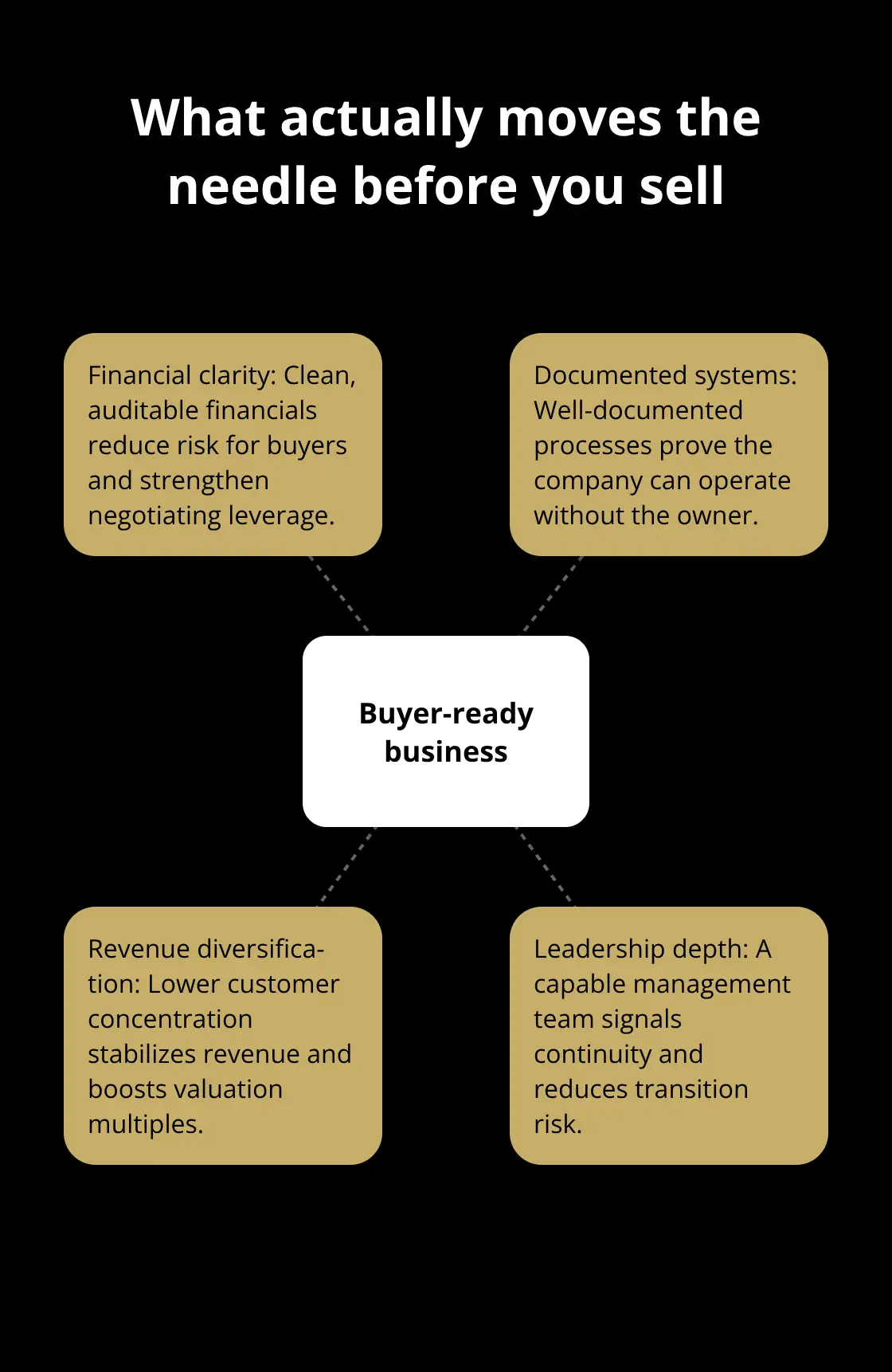
If your top three employees are flight risks, address that now. Offer retention bonuses, clarify their roles under new ownership, or identify backups. Losing institutional knowledge during transition talks kills deals. When you strengthen these four areas-financial clarity, documented systems, revenue diversification, and leadership depth-you transform your business from owner-dependent to buyer-ready.
Final Thoughts
A strategic business transition succeeds when you address the fundamentals before you need to. Clean financials, documented systems, a diversified customer base, and a capable management team aren’t luxuries-they’re the foundation that transforms your business from a personal project into a saleable asset. The owners who achieve the outcomes they want don’t stumble into exits; they plan methodically, starting years in advance.
Your legacy extends beyond the sale itself. It lives in the systems you’ve built, the team you’ve developed, and the customers you’ve served. When you strengthen these areas, you’re not just increasing your sale price-you’re ensuring that what you’ve created continues to deliver value under new ownership. That’s how legacies actually survive transitions.
The path forward requires three concrete actions: gather your financial records and assess your current position with professional help, define what success looks like for you personally (not just financially), and assemble advisors who understand your goals and can guide you through valuation, tax strategy, and deal structure. We at Unbroker understand that selling a business shouldn’t require paying excessive brokerage fees or navigating opaque processes, which is why Unbroker offers transparent, low-cost options designed to give you control over your exit.