Selling a business is one of the biggest financial decisions you’ll make. Getting the valuation wrong can cost you hundreds of thousands of dollars.
At Unbroker, we’ve seen countless business owners leave money on the table because they didn’t understand what their company was actually worth. This guide walks you through the proven methods to calculate your small business valuation accurately.
Common Valuation Methods for Small Businesses
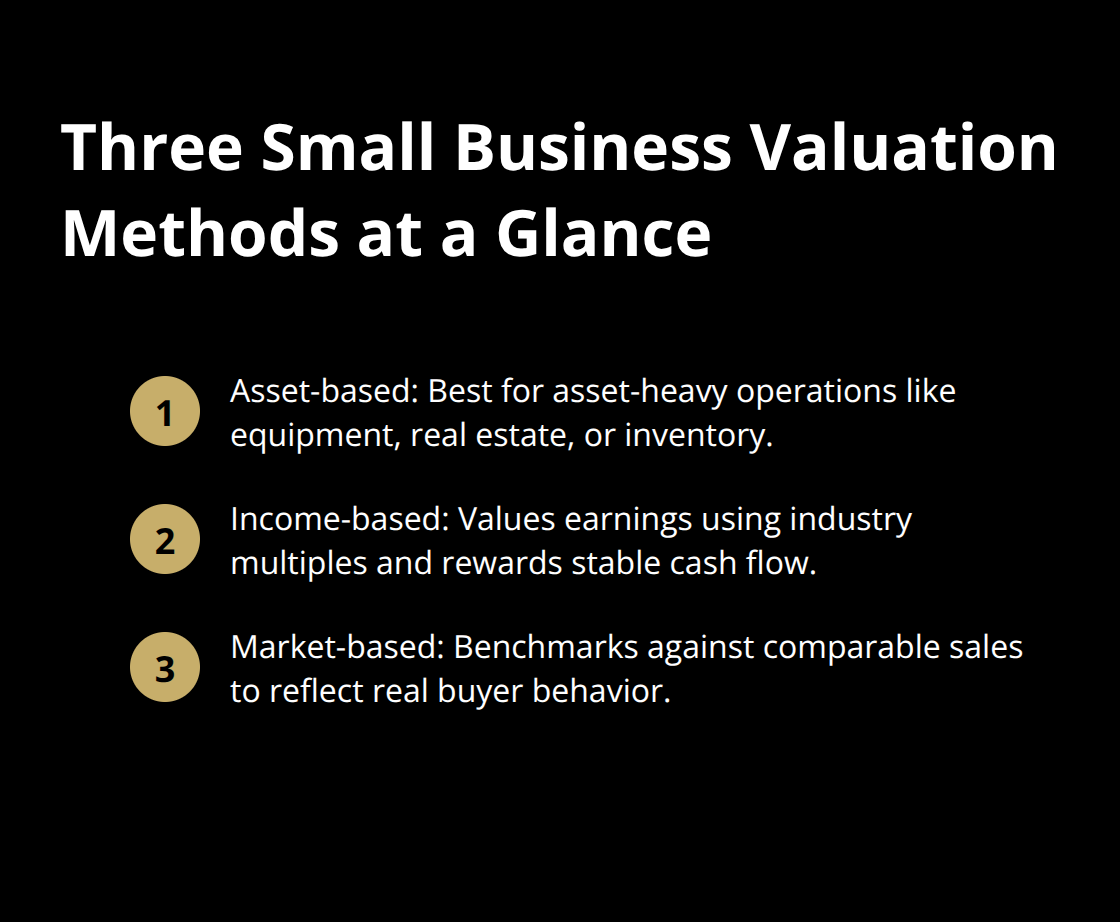
The most common mistake we see is business owners selecting a valuation method that makes their company look good rather than selecting the method that actually reflects reality. The three primary approaches-asset-based, income-based, and market-based-each tell a different story about what your business is worth, and the right one depends entirely on your situation.
Asset-Based Valuation Works Best for Asset-Heavy Businesses
This method adds up everything your business owns and subtracts what it owes. You total your equipment, inventory, real estate, intellectual property, and cash, then subtract liabilities. Asset-based valuations work best when a business’s worth is closely linked to its tangible assets rather than its income or market standing. However, this approach severely undervalues service-based businesses or software companies where most value comes from people and relationships rather than physical things. If you own a consulting firm or digital agency, an asset-based valuation will make your company look worthless on paper, which is why most service businesses need a different approach entirely.
Income-Based Valuation Reflects What Your Business Actually Generates
This method looks at how much profit your business generates and applies a multiplier based on industry standards. Most small businesses sell for three to six times their annual earnings, though this varies dramatically by industry. According to data from BizBuySell’s market reports, software companies often command eight to ten times earnings because they have predictable recurring revenue, while service businesses typically fall at the lower end of that range. This approach rewards profitable operations and stable cash flow. If you’ve built a business that consistently generates $500,000 in annual profit, an income-based valuation will capture that value accurately. The weakness is that it heavily penalizes businesses with inconsistent earnings or those that have recently invested in growth. A company that spent the last two years building infrastructure and has lower current profits will appear less valuable than it actually is.
Market-Based Valuation Shows What Buyers Actually Pay
This method compares your business to similar companies that recently sold. If comparable businesses in your industry sold for five times revenue, that becomes your benchmark. This approach grounds valuation in real-world transactions rather than theory. The challenge is finding truly comparable sales data. Most small business sales happen privately without public disclosure, making it difficult to know what similar companies actually sold for. Market-based valuation relies on transaction databases to pinpoint comparable company data. Market-based valuations work best in established industries like franchises or retail where enough transactions occur to identify patterns. They work poorly in specialized or emerging sectors where comparable sales data simply doesn’t exist.
Each method has strengths and limitations, which means your business value depends on which lens you use to examine it. The next step is understanding which factors actually move that valuation number up or down.
Key Factors That Impact Your Business Value
Cash Flow Consistency Trumps Raw Profit Numbers
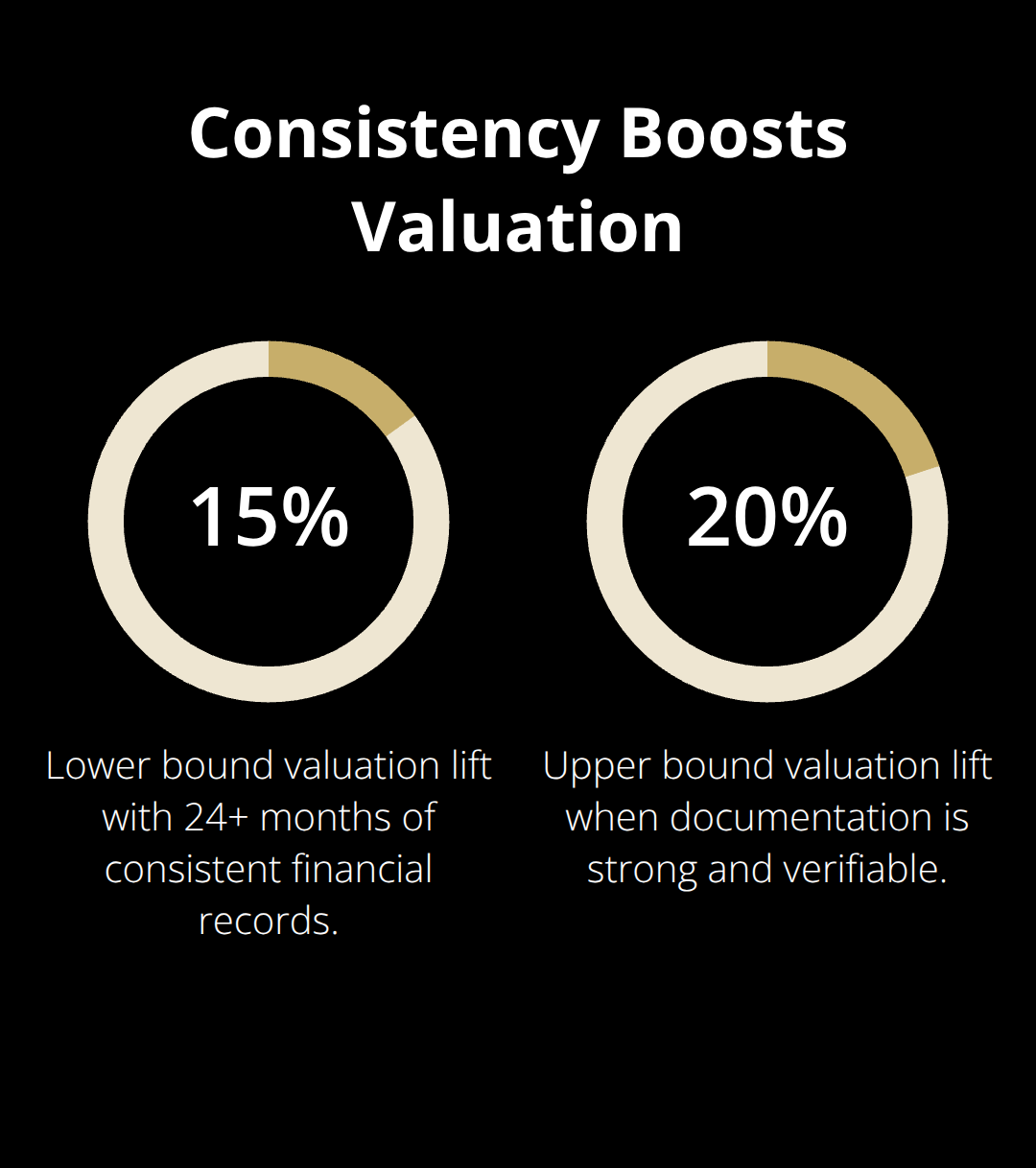
Buyers care about what they’ll actually receive after taking over, which means cash flow consistency matters more than raw profit. A business generating $300,000 in annual profit with predictable monthly revenue streams is worth significantly more than one generating $350,000 with erratic quarterly spikes. According to SBA lending data, businesses with 24+ months of consistent financial records command valuations 15-20% higher than those with spotty documentation. Lenders and buyers trust what they can verify.
If your profit margins have climbed for three consecutive years, that trend becomes part of your value story. If you’ve had one good year followed by a decline, appraisers will assume the decline is the new normal. Clean financial records matter because they provide the foundation for every valuation method. The stronger your documentation, the higher confidence buyers have in your numbers.
Revenue Concentration Creates Serious Valuation Risk
Revenue concentration creates the opposite problem of consistency. If 60% of your income comes from a single customer, your valuation gets hammered because that customer could leave tomorrow. Revenue concentration risk shows businesses dependent on one or two major clients sell for significantly less than diversified competitors with similar profits. Buyers are pricing in the risk that revenue evaporates the moment ownership changes.
Building a diversified customer base directly increases what your business is worth. Recurring revenue models command premium valuations because they’re predictable. Customer retention rates SaaS valuation multiples show that revenue retention is the most important metric for ensuring medium- to long-term growth and valuation. Your customer retention rates and repeat business percentages tell the real story of what your business is worth.
Competitive Moat and Market Position Drive Premium Valuations
Market position and competitive barriers are where most small business owners underestimate their worth. A plumbing service in a saturated market with ten competitors down the street has minimal pricing power and faces constant pressure from new entrants. A software tool with 500 paying customers who’ve been with you for three years has real defensibility.
If you own proprietary technology, exclusive partnerships, or strong brand recognition in your niche, buyers see reduced risk and pay accordingly. Conversely, if your business relies entirely on your personal relationships or technical expertise, valuations suffer because buyers know they’re not getting the real asset-they’re getting you. The strongest businesses create value independent of their founders, and that independence shows up directly in valuation multiples.
Document your years of service history with your top accounts and your competitive advantages. These details matter when appraisers and buyers assess what you’ve actually built. Understanding these three factors means you now know where your business stands and what needs to change before valuation conversations begin.
How to Prepare Your Business for a Higher Valuation
Organize Financial Records Into Audit-Ready Documentation
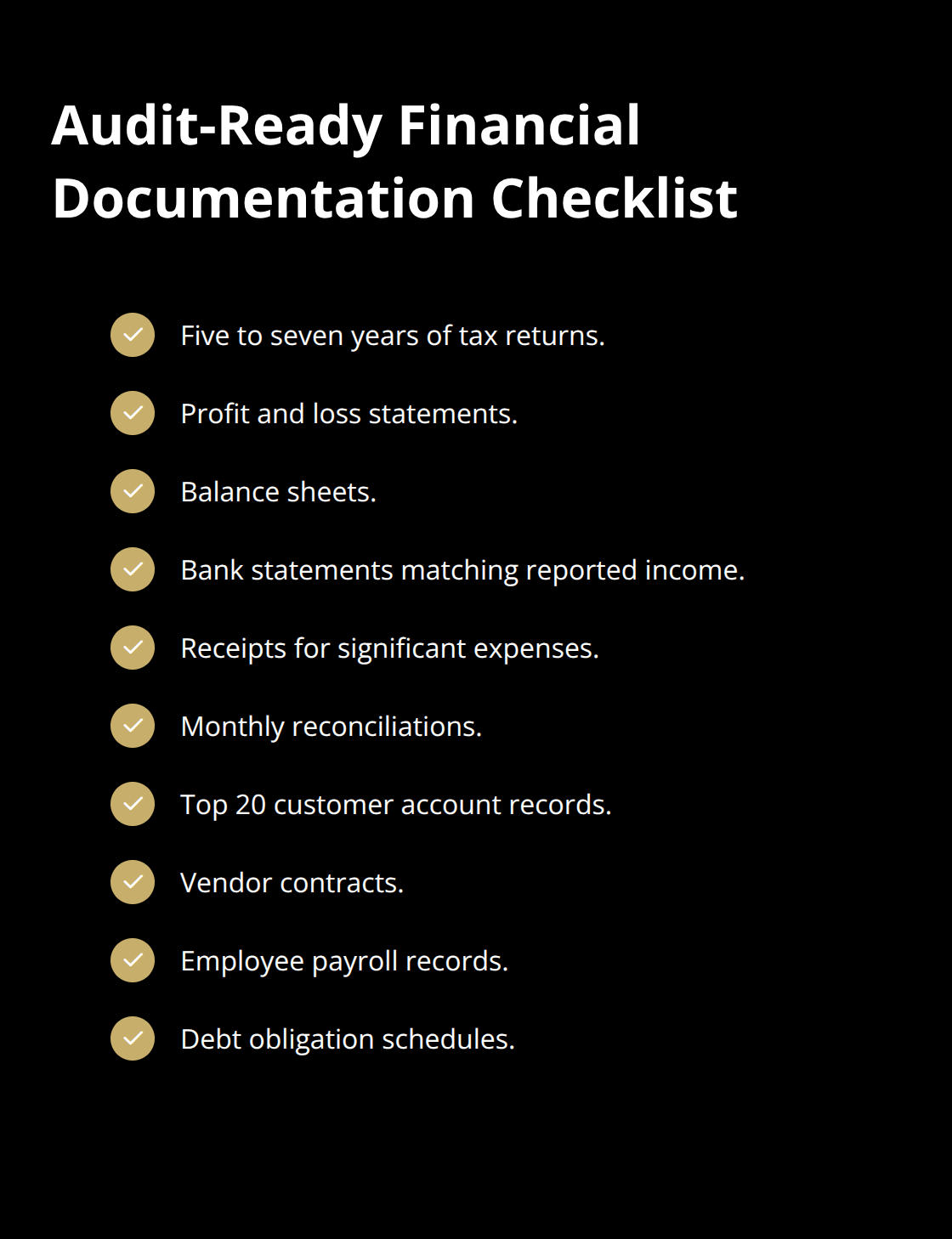
Buyers want five to seven years of tax returns, profit and loss statements, and balance sheets. Most business owners maintain informal financial systems that won’t survive buyer scrutiny. Pull together bank statements that match your reported income, document significant expenses with receipts, and reconcile your books monthly rather than annually. The IRS requires businesses to keep records for at least three years, but serious buyers expect far more comprehensive documentation.
Inconsistencies between your tax returns and internal records create immediate red flags that tank valuations. Buyers will request detailed records of your top 20 customer accounts, vendor contracts, employee payroll records, and any debt obligations. Schedule a meeting with your accountant specifically to address what documentation buyers will request, then fix any discrepancies before the sales process begins.
Build Management Structure Independent of Your Presence
If you’re the only person who know how operations work, your business stops functioning the moment you leave, and buyers price that risk into their offers. Start delegating critical functions to other team members now, not after you’ve decided to sell. Document your standard operating procedures for every major process, from customer onboarding to project delivery to financial management. Create an organizational chart showing who reports to whom and what each person handles.
Bringing in a general manager or operations lead signals to buyers that your business can operate without you present. If your business lacks a second-in-command or management structure, hire or promote someone into that role before valuation conversations start.
Diversify Your Customer Base Across Multiple Accounts
Revenue concentration kills valuations because losing any one client threatens the entire business. Systematically work toward spreading your customer base across at least 15-20 active accounts rather than relying on a handful of major clients. Spend the next six months aggressively expanding your customer acquisition efforts, even if it temporarily reduces profit margins.
Document your years of service history with your top accounts and your competitive advantages. These details matter when appraisers and buyers assess what you’ve actually built.
Final Thoughts
You now understand the three primary valuation approaches and what actually moves your small business valuation up or down. Asset-based valuation works for asset-heavy operations, income-based valuation captures what your business generates, and market-based valuation grounds your worth in real transactions. The method that matters most depends on your specific situation, but all three require accurate financial documentation and a clear picture of your competitive position.
Getting your small business valuation right changes everything-the difference between an undervalued and accurately valued business can mean hundreds of thousands of dollars in your pocket. Most owners leave money on the table because they skip the preparation work, maintain poor financial records, or fail to address revenue concentration before entering the sales process. The businesses that command premium valuations share three characteristics: clean auditable financials, management structures that operate independently of the founder, and diversified customer bases that reduce buyer risk.
Start preparing now, even if you’re not selling for another year. Unbroker connects you with qualified buyers through AI-driven matching and national marketing, handling the valuation process, legal documents, and negotiations with expert advisors. You only pay a 6% success fee when your business actually sells, with no hidden costs along the way.