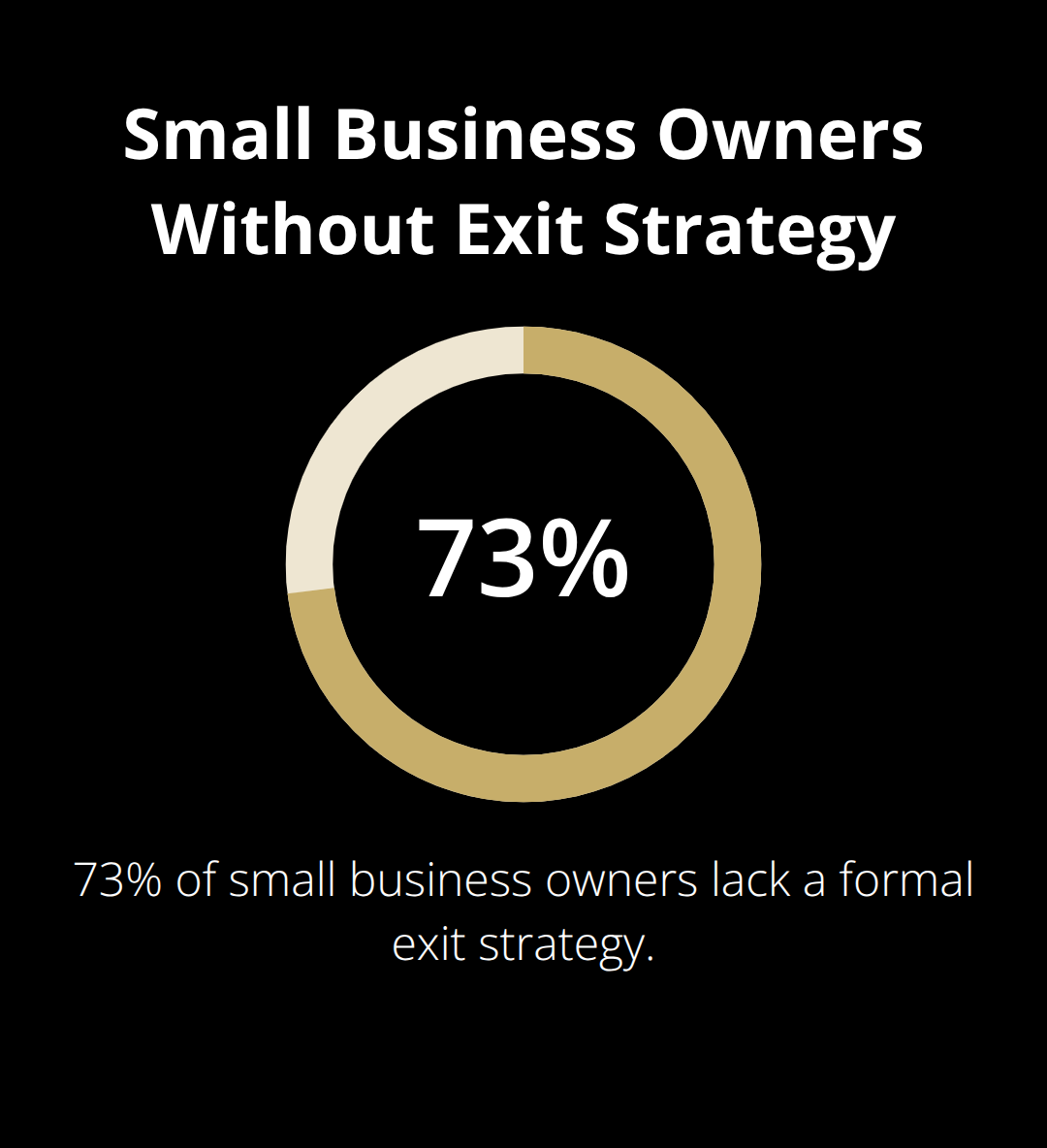
Most solopreneurs build their businesses without thinking about the end game. Yet 73% of small business owners have no formal exit strategy, according to the Exit Planning Institute.
We at Unbroker see this gap daily. A well-planned small business exit can mean the difference between walking away with substantial value or leaving money on the table.
The key lies in starting your exit planning years before you actually want to leave.
What Does Exit Planning Actually Mean for Solo Businesses
Exit planning for solopreneurs creates a roadmap to extract maximum value from your one-person business when you decide to step away. Unlike corporate exit strategies that involve boards and shareholders, solo business exit planning focuses on three core scenarios: you sell your business operations and client relationships, you license your intellectual property for ongoing royalties, or you transfer ownership to a trusted contractor or employee. The Exit Planning Institute endorses a network of software tools, specialists, and education providers advisors can utilize with business owner clients.
Start Your Exit Plan Five Years Before Your Target Date
Most solopreneurs wait too long to begin exit planning, and this delay costs them significant money. The most successful exits require five to seven years of preparation. During this timeframe, you must document your processes, build recurring revenue streams, and create systems that operate without your daily involvement. Solopreneurs who start early can increase their business valuation significantly compared to those who rush the process.
Document Everything While You Still Remember It
Your business knowledge lives in your head, and this makes it worthless to potential buyers unless you document it properly. Create detailed process manuals, client relationship histories, and operational procedures that someone else can follow. Proper documentation becomes your most valuable asset during negotiations, as it proves that your business can operate beyond your personal involvement.
Build Systems That Work Without You
Smart solopreneurs design their businesses to run independently from day one. You need automated workflows, standardized client onboarding processes, and clear service delivery methods that any qualified person can execute. Companies with documented systems typically command higher valuations because buyers see reduced risk in the transition. The next step involves preparing your business for sale through specific documentation and financial preparation strategies.
How Do You Make Your Business Sellable
Your solopreneur business needs concrete preparation before any buyer will take it seriously. Start with your financial records, which must span at least three complete years with consistent profit margins. Clean, audited financials help establish credibility with potential buyers and demonstrate the true profitability of your operations.
Organize Your Financial Documentation
Track every revenue stream, expense category, and client payment history with dedicated software like QuickBooks or FreshBooks. Monthly profit and loss statements, cash flow projections, and client retention metrics become your strongest negotiation tools. Buyers want to see predictable patterns in your income and expenses, not scattered records that raise red flags about business stability.
Transform Your Knowledge Into Documented Systems
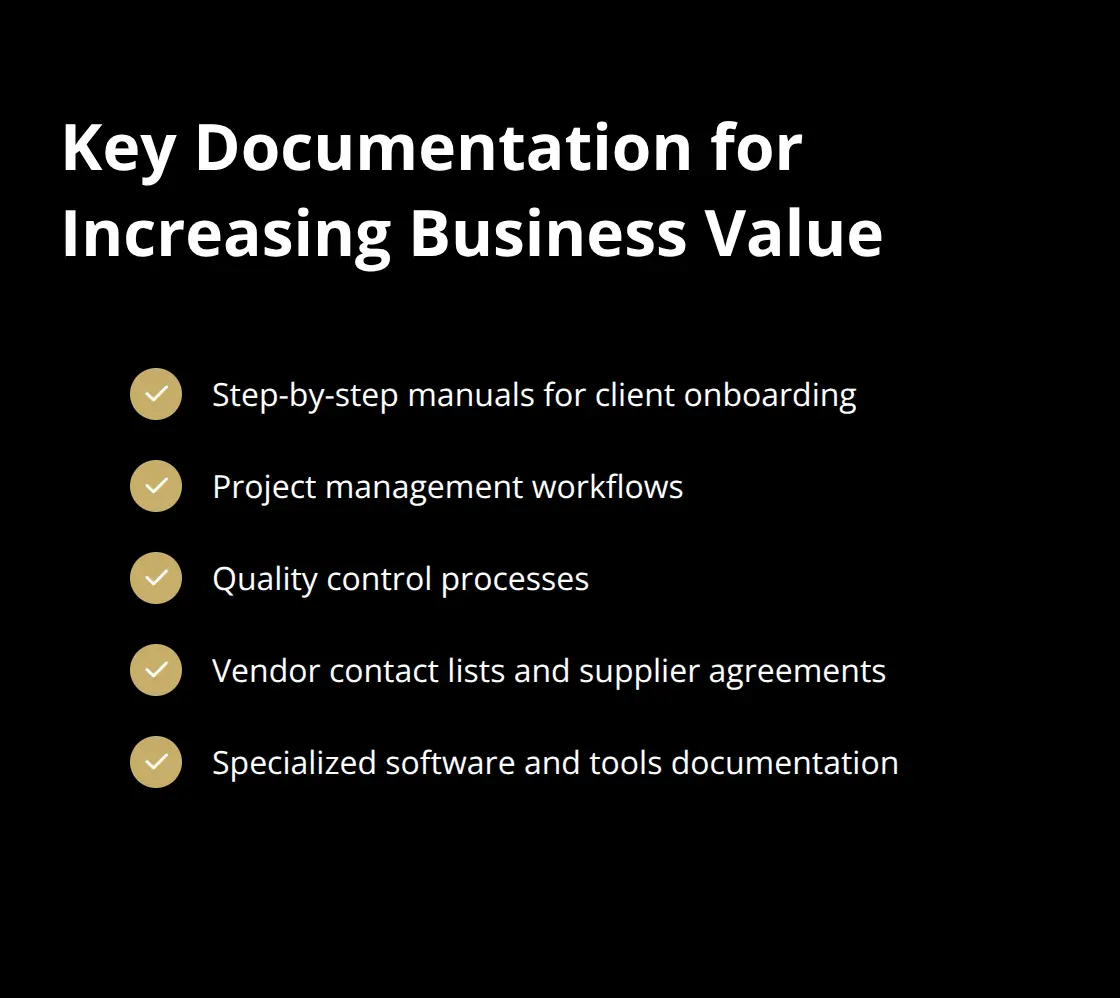
Smart buyers want businesses that operate without the founder, so document every client interaction, service delivery method, and operational procedure you currently handle. Create step-by-step manuals for client onboarding, project management workflows, and quality control processes. Include vendor contact lists, supplier agreements, and any specialized software or tools your business relies on. Companies with comprehensive documentation typically command higher valuation multiples, while undocumented businesses struggle to reach competitive market rates.
Package Your Intellectual Property for Maximum Value
Your frameworks, methodologies, client lists, and proprietary processes represent significant value that most solopreneurs underestimate. Register any trademarks, copyrights, or trade secrets through the USPTO, which requires filing fees but can increase your business value by thousands. Compile client testimonials, case studies, and performance metrics that demonstrate measurable results from your work.
Create training materials and knowledge bases that a new owner can use immediately. Recurring revenue streams from existing contracts or retainer agreements can boost your valuation substantially, as buyers pay premium prices for predictable income streams. Once you complete this preparation work, you can explore the specific exit strategy options available to solo business owners.
What Exit Options Actually Work for Solo Businesses
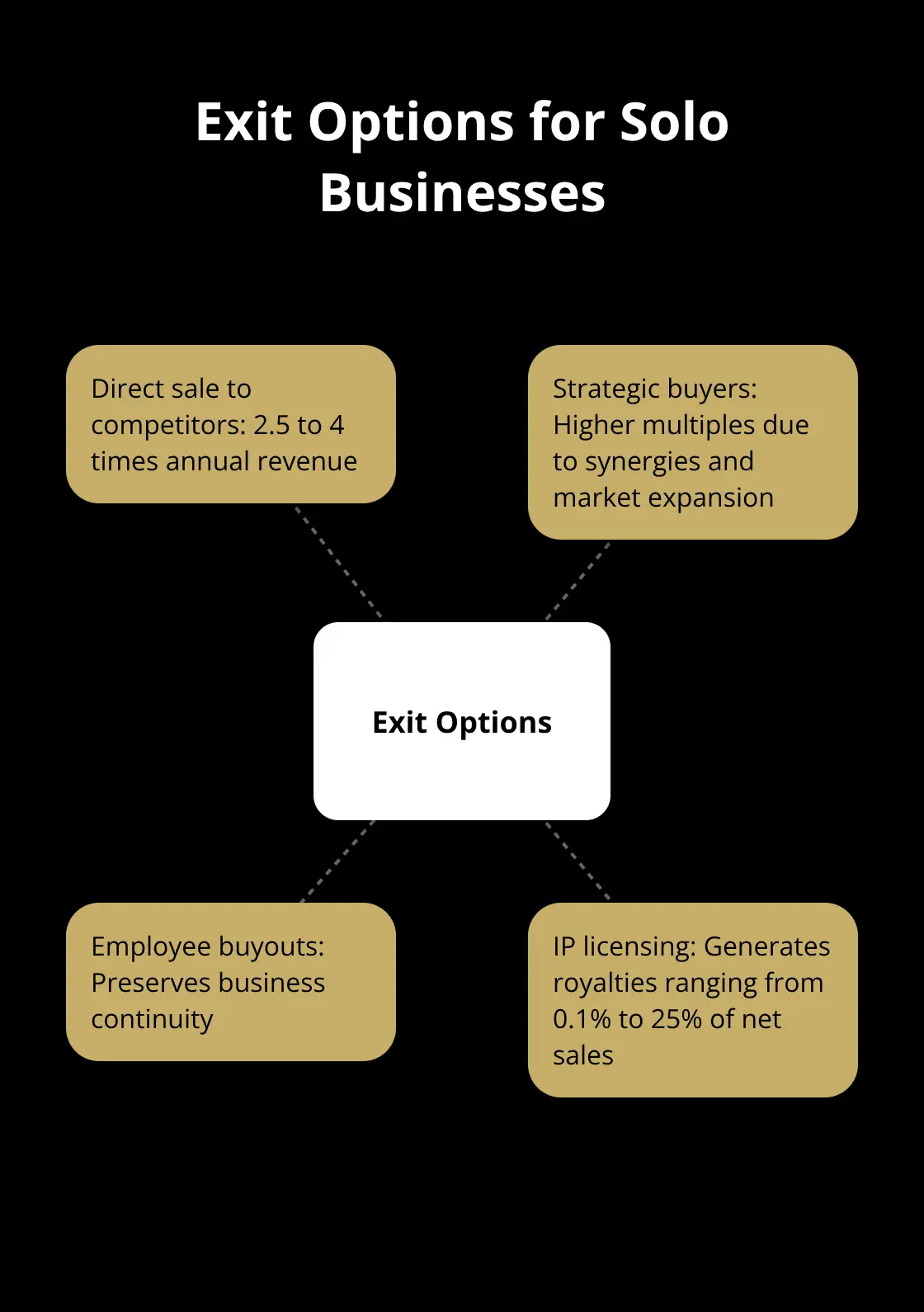
Direct sales to competitors offer the fastest path to maximum value because industry players understand your business model and client base immediately. Direct competitors pay premium prices for established client relationships and proven methodologies, often offering 2.5 to 4 times annual revenue compared to 1.5 to 2 times from financial buyers. Research your industry landscape and identify companies that serve similar clients or offer complementary services. Approach these conversations strategically through warm introductions or industry events rather than cold outreach, which often fails to generate serious interest.
Strategic Buyers Pay Higher Multiples
Strategic buyers focus on synergies and market expansion rather than pure financial returns, which drives higher valuations for well-positioned solopreneurs. Companies like Accenture actively acquire specialized firms to gain unique methodologies and established client relationships. Prepare detailed client analysis that shows retention rates, average project values, and growth potential that strategic buyers can leverage across their operations. Document your competitive advantages and proprietary processes that differentiate your business from standard service providers.
Employee Buyouts Preserve Business Continuity
Trusted contractors or long-term collaborators often make ideal buyers because they already understand your operations and client relationships. Employee stock ownership plans work well for solopreneurs who have built teams around their core business. Structure these deals with seller finance at competitive interest rates (typically 6 to 8 percent), which provides steady income while helping the buyer manage cash flow during transition. The Small Business Administration reports that only 30% of family-owned businesses survive into the second generation.
License Your IP for Recurring Revenue
Transform your intellectual property into revenue streams through agreements with companies that serve similar markets. Software methodologies, training programs, and proprietary frameworks generate royalties typically ranging from 0.1% to 25% of net sales for successful deals. Target companies with established sales teams who can scale your intellectual property faster than you could alone. Structure agreements with minimum guarantees and performance milestones to protect your interests while you incentivize partner success (this approach reduces risk while maximizing upside potential).
Final Thoughts
Start your small business exit plan today with three years of financial records and documented core processes. Most solopreneurs wait until they want to leave, which reduces their business value by 30 to 50 percent compared to those who plan ahead. Begin with a realistic business valuation and identify potential buyers in your network or industry.
We at Unbroker see the biggest mistake daily: solopreneurs fail to create systems that operate without them. Buyers pay premium prices for businesses that generate predictable revenue through documented processes, not personal relationships. Never rush the exit process or skip professional legal review of sale agreements.
Professional guidance makes the difference between a successful exit and money left on the table. Business brokers, attorneys who specialize in small business sales, and certified exit planners provide expertise that pays for itself through higher valuations and smoother transactions (their fees often represent a fraction of the additional value they help create). Unbroker offers transparent business sale services that eliminate traditional high brokerage fees while providing access to extensive buyer networks and AI-driven tools.