Selling a business is one of the biggest financial decisions you’ll make. Yet many sellers discover hidden fees, vague pricing, and unclear terms only after signing agreements.
At Unbroker, we believe a seller transparency promise isn’t optional-it’s essential. When you know exactly what you’re paying and what you’re getting, you can make decisions that actually protect your bottom line.
What Hidden Fees Actually Cost You
The Real Price of Vague Pricing
Selling a business involves far more than finding a buyer and closing a deal. The real damage happens in the fine print. Traditional brokers typically charge 10% of the sale price, which on a $500,000 business means $50,000 leaves your pocket before you even see the money. But the fees don’t stop there.
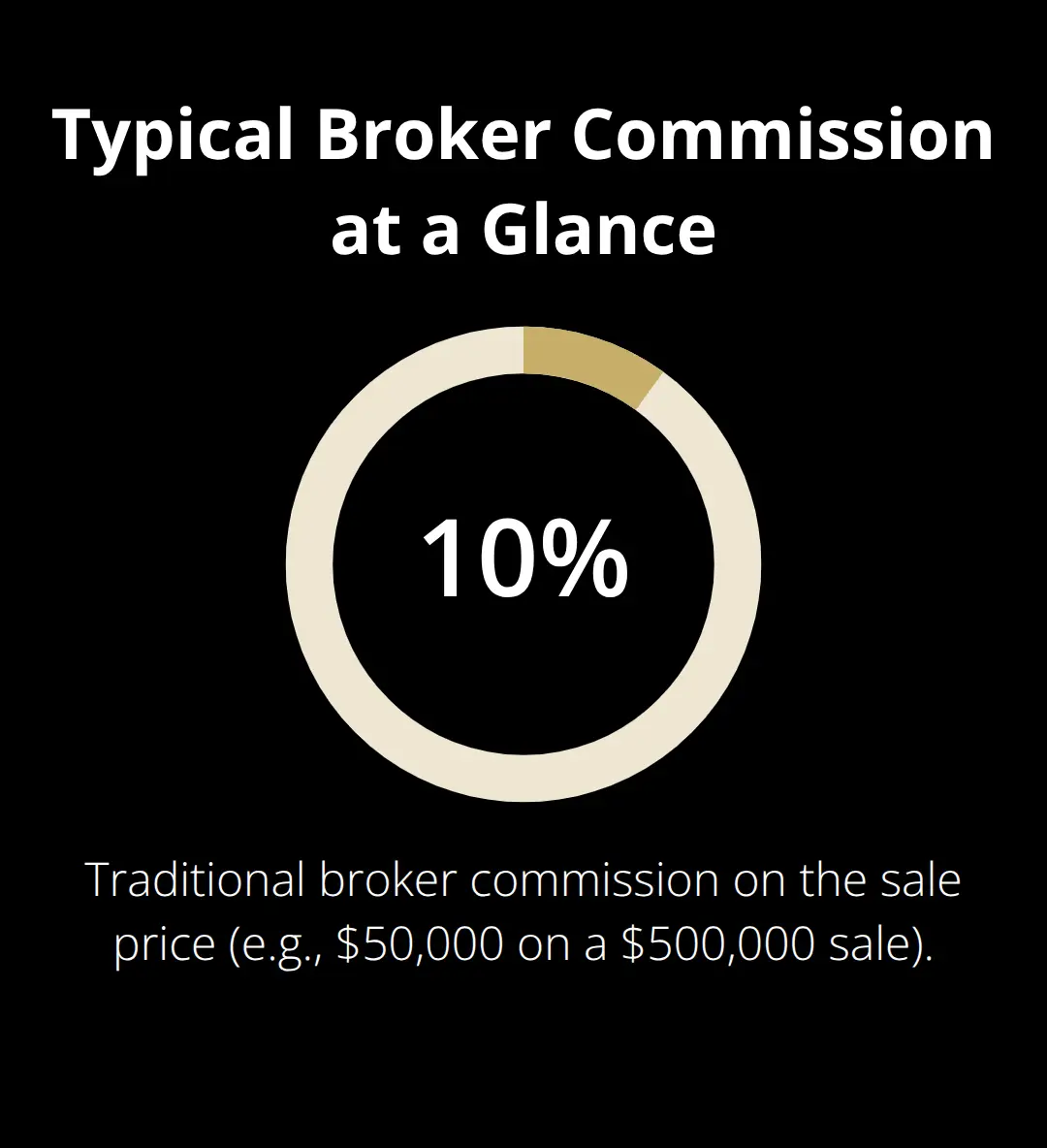
Many sellers encounter hidden fees in business sales, including transaction costs, earnout management fees, escrow charges, and advisory fees that weren’t mentioned upfront.
We’ve seen sellers lose tens of thousands to unexpected line items that appeared only after they’d already committed to a broker. One seller discovered a $15,000 escrow administration fee three weeks before closing, with no way to renegotiate. The damage extends beyond your bank account. When fees remain hidden, you lose the ability to make informed decisions about whether the broker’s services actually justify the cost.
Why Vague Pricing Undermines Your Control
You can’t compare options fairly or negotiate better terms when pricing stays vague. Vague pricing creates a power imbalance where the broker controls the information and you’re left guessing about your actual net proceeds. This uncertainty doesn’t just affect your bottom line-it affects your timeline, your stress levels, and your confidence in the entire process.
The stakes are high. A seller who doesn’t know their true costs can’t plan their next move with confidence. They can’t evaluate whether a broker’s services match their needs or their budget. They simply accept whatever terms appear on the contract.
Transparency Reveals What You’re Actually Paying
Knowing your true costs upfront changes everything. When you see a clear fee structure before signing anything, you can calculate your net proceeds calculation accurately and plan your next move with confidence. A seller with complete fee transparency can compare brokers on equal footing, negotiate better terms, or choose a platform that aligns with their budget.
The difference in decision quality is stark. When fees are transparent, you stop overpaying for services and start investing strategically in the sale process that actually matters to your business. You gain the power to ask hard questions: Do I need this service? Can I get it cheaper elsewhere? What value does this fee actually deliver?
This clarity matters most when you’re evaluating different selling options. Some platforms bundle fees into percentage-based commissions and add charges for services you might not need. Others price their offerings upfront with no hidden fees, letting sellers understand their total investment immediately and compare it against traditional broker commissions without surprises.
The next step is knowing how to demand this transparency from whoever you choose to work with.
Where Hidden Costs Hide in Business Sales
Fees Stack Up Across Multiple Line Items
The problem with business sales transparency isn’t that fees exist-it’s that sellers often don’t see them until it’s too late. Many traditional brokers structure their agreements to obscure total costs. A broker might quote 10% commission upfront, but that’s rarely where the charges end. Earnout management fees kick in when the deal includes seller financing. Escrow administration fees appear as separate line items. Advisory fees for post-sale support get added without clear explanation. Document preparation charges, transaction coordination fees, and buyer verification costs accumulate quietly across the closing statement.
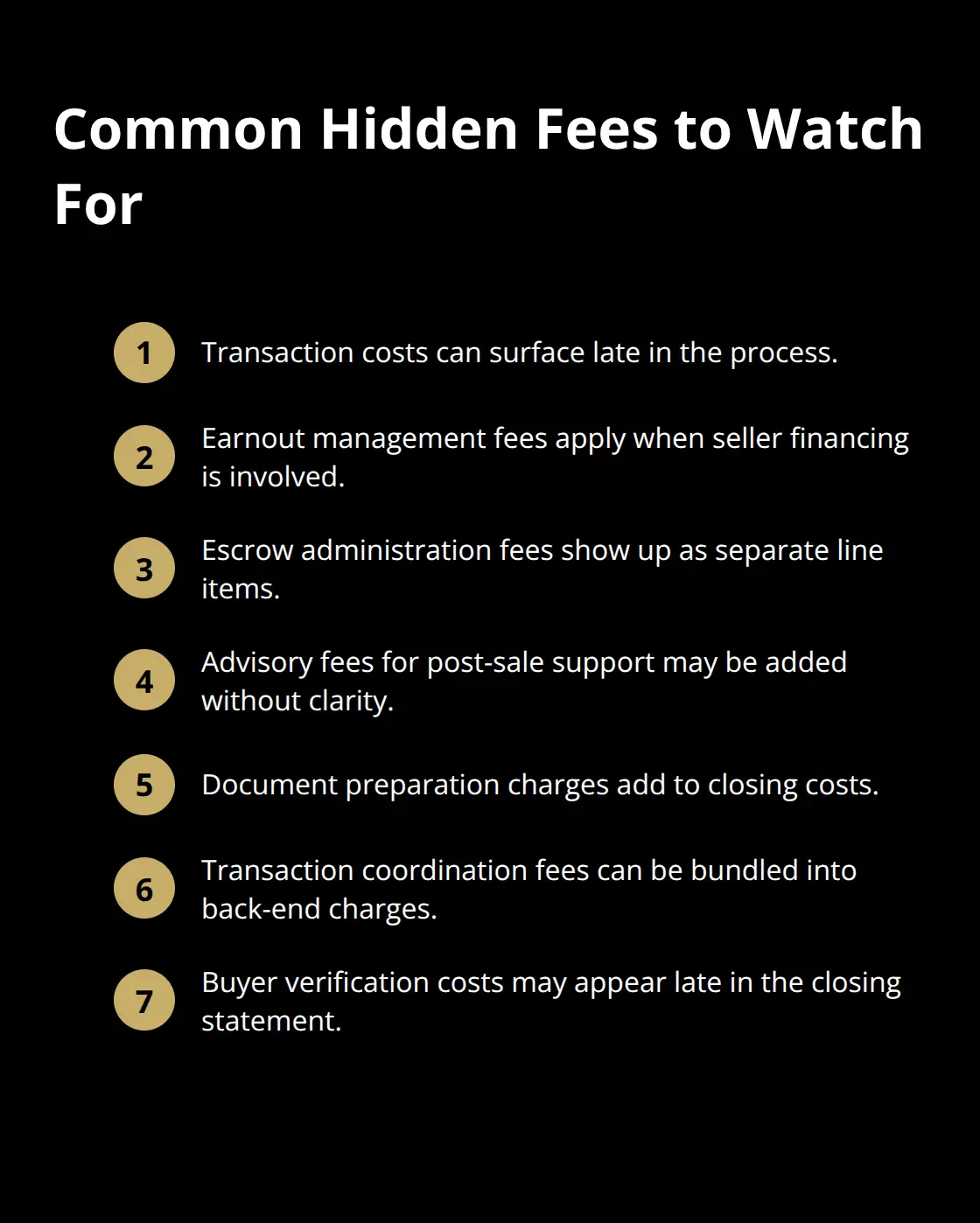
Fees stack up across multiple line items in ways that obscure total costs. These charges aren’t accidents or surprises-they’re structural features of how many brokers operate. Brokers intentionally keep pricing fragmented because sellers can’t easily compare total costs across different brokers when fees scatter across multiple categories. This fragmentation works in the broker’s favor, not yours.
Information Asymmetry Tilts the Playing Field
Traditional brokers control access to buyer data, pricing benchmarks, and market conditions. You depend entirely on what they choose to share. A broker might tell you the market for your industry is soft without showing you the actual comparable sales data or buyer interest metrics that support that claim. You can’t verify their assessment or challenge their valuation recommendations because you lack access to the same information they have.
This imbalance becomes dangerous when you’re making decisions worth hundreds of thousands of dollars. The broker holds all the cards while you operate in the dark. Information asymmetry tilts negotiations in the broker’s favor, leaving you unable to ask informed questions about whether their recommended strategy actually matches your goals.
Transparency Shifts Power Back to Sellers
Platforms that prioritize transparency give sellers direct access to buyer networks, real-time market data, and clear pricing from day one. No gatekeeping. No information hoarding. Just clear numbers and actual buyer interest you can see yourself. This transparency eliminates the power imbalance that makes traditional broker relationships feel one-sided and risky.
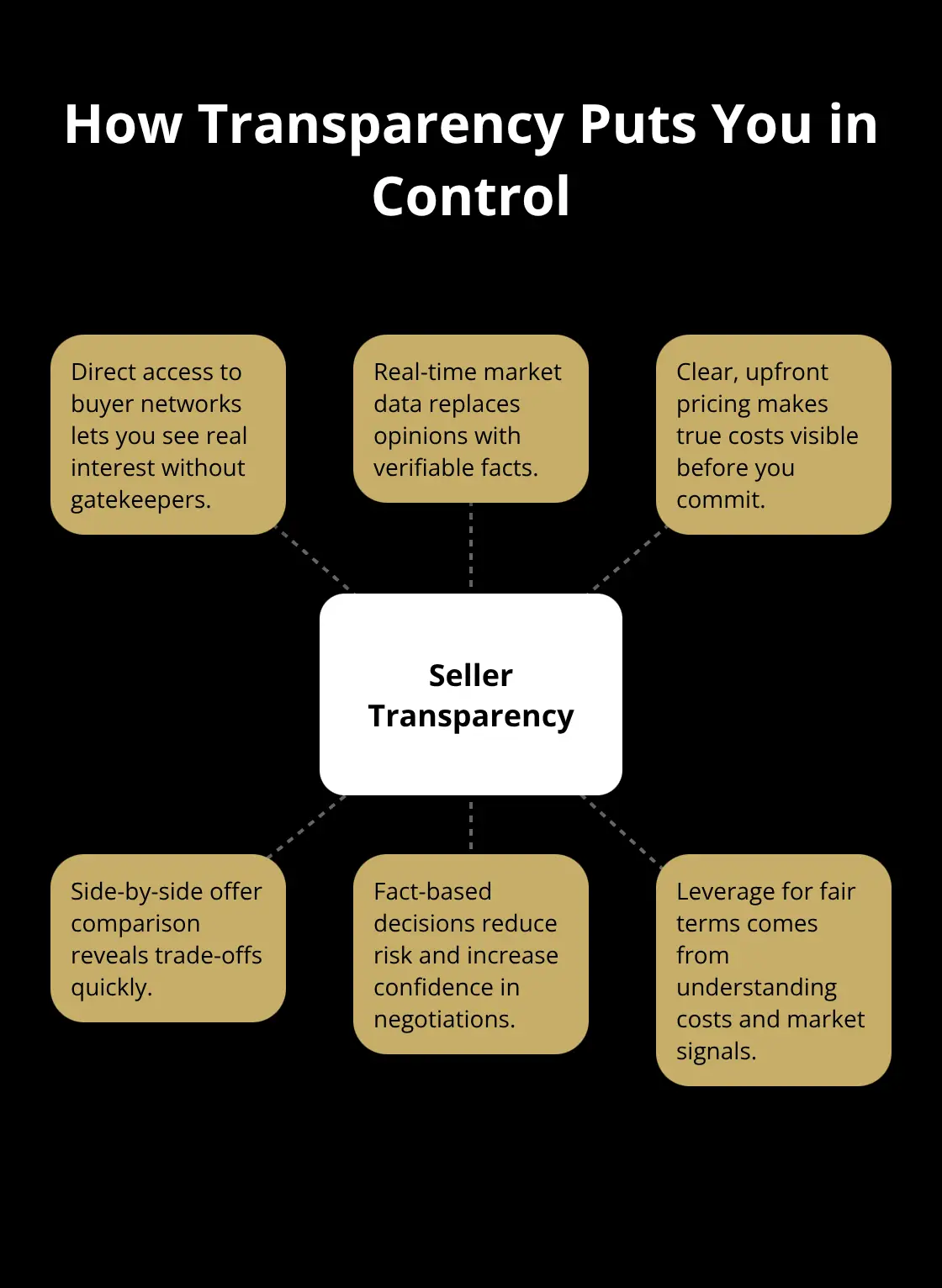
When you control the information, you control the negotiation. You can compare offers side by side, understand exactly what each service costs, and make decisions based on facts rather than broker recommendations. Transparency shifts power dynamics in buyer-seller negotiations, giving you the leverage to demand fair terms. The next step is learning how to demand this transparency from whoever you choose to work with.
Demanding Real Transparency Before You Commit
Request a Complete Fee Schedule in Writing
Start your conversation with any potential broker or platform by asking for a complete fee schedule in writing before any discussions about your business begin. Not a verbal estimate. Not a general range. A detailed document that lists every charge, when it’s due, and under what conditions it applies. Traditional brokers resist this request because their fee structures are deliberately opaque, but platforms that prioritize transparency provide this immediately.
When you request a fee breakdown, also ask what happens if the deal falls through, if earnouts are involved, or if the sale extends beyond the expected timeline. Brokers often add charges for these scenarios, and you need to know the costs before they surprise you at closing. Request the fee schedule in writing and have a lawyer review it specifically for hidden charges buried in subsections or contingency clauses. Don’t accept verbal assurances that fees are standard or typical-standard is what’s written in your contract, and that’s the only version that matters.
Demand Specificity in Every Written Commitment
Get every commitment in writing, including the broker’s responsibilities, your timeline expectations, and what support you’ll receive throughout the sale process. A verbal promise that the broker will introduce you to qualified buyers means nothing if the contract says they’ll make reasonable efforts to find buyers without specifying what reasonable means. Vague language in contracts protects brokers, not sellers.
If a broker promises to provide market analysis, require them to specify the frequency, what metrics they’ll track, and how you’ll access the data. If they promise buyer verification, ask them to document their screening process and confirm they’ll verify buyer seriousness before wasting your time. Many sellers later discover their broker provided minimal support because the contract contained no enforceable commitments. The written agreement should also specify how disputes about fees or performance will be resolved and whether you have recourse if the broker fails to deliver promised services. Have your attorney review the entire agreement, not just the fee section, and flag any language that leaves obligations vague or conditional.
Access Buyer Networks and Market Data Directly
Choose a platform that gives you direct access to buyer networks and real-time market data rather than depending on a broker’s filtered information. Platforms built on transparency let you see buyer interest yourself, compare multiple offers without intermediaries controlling the narrative, and verify market conditions through actual data instead of broker opinions. This access shifts the power dynamic entirely.
You’re no longer trusting a broker’s assessment of market conditions because you can see them yourself. You can track how many qualified buyers viewed your listing, what questions they asked, and which aspects of your business generated the most interest. That real-time feedback helps you adjust your strategy immediately rather than waiting for a broker to summarize market activity weeks later. Platforms that prioritize transparency also provide legal document templates, negotiation assistance, and marketing tools that let you control how your business is presented to buyers. You reach a broader audience through AI-driven matching and premium marketing tools that showcase your business effectively. This combination of direct access, real data, and control over your presentation eliminates the information asymmetry that has traditionally favored brokers over sellers.
Final Thoughts
Selling your business shouldn’t mean surrendering control to a broker who profits from opacity. The seller transparency promise outlined throughout this post rejects the broken system that has dominated business sales for decades-a system where hidden fees drain your profits, vague pricing creates uncertainty, and information asymmetry tilts every negotiation against you. These aren’t inevitable costs of selling a business; they’re choices made by brokers who benefit from keeping you in the dark, and you have the power to refuse them entirely.
Transparency protects your bottom line by eliminating surprise charges that appear only after you’ve committed to a broker. When you know exactly what you’re paying upfront, you stop overpaying for services and start investing strategically in what actually matters (legal support, marketing, buyer verification). Clear terms lead to better outcomes because you can compare options fairly, negotiate from a position of strength, and make decisions based on facts rather than broker recommendations that serve their interests, not yours.
The real shift happens when you take control of your sale with partners who operate honestly and give you direct access to buyer networks, real-time market data, and transparent pricing. Unbroker builds its platform around this exact principle-no hidden fees, no information hoarding, and no unnecessary complexity-so your business receives the sale process it deserves.