Selling your business privately gives you control over who sees your financials and how the process unfolds. Most owners worry about leaks that could spook employees or alert competitors, and rightfully so.
At Unbroker, we’ve seen how the right approach protects both your business operations and your negotiating position. This guide walks you through the practical steps to sell a business privately without compromising your leverage or peace of mind.
Why Private Sales Protect Your Business
A Journal of Applied Psychology study found that uncertainty about job security during a sale announcement increases voluntary turnover in the first three months. One careless disclosure can drain your best people before you’ve even closed a deal. When your sale stays private, employees focus on their jobs instead of updating their résumés. Your customers don’t panic about continuity or start exploring alternatives. Your suppliers don’t demand new terms or accelerate payment schedules. The operational damage from a public leak is real and measurable, and it compounds quickly. Competitors also gain nothing from knowing you’re shopping the business-they won’t poach clients, recruit your team, or time their own moves to undercut your valuation.
The Financial Reality of Confidentiality
Private sales typically command higher valuations than public listings. That gap exists because fewer buyers know about the opportunity, which reduces competition among purchasers and eliminates the pressure to accept lowball offers. When a business hits the open market, price expectations shift downward as more tire-kickers enter the process and dilute serious interest. A controlled buyer pool-one you’ve vetted and qualified-tends to move faster and negotiate harder on terms that matter beyond price (like earnouts, transition support, and tax structure). You also keep your negotiating leverage intact when information flows only to genuine contenders who’ve signed a non-disclosure agreement and proven their financial capacity. The moment your business becomes public knowledge, you’ve surrendered control over how the story spreads and who shapes the narrative about your company’s value.
Controlling Information Flow to Maintain Leverage
Information asymmetry works in your favor when you manage it carefully. A buyer who knows three competitors are bidding will move faster and offer more. A buyer who thinks they’re your only option will drag out due diligence and whittle down the price. Phase your disclosures strategically: share high-level metrics first, then move to detailed financials only after serious interest and vetting. Require proof of funds before you hand over sensitive details. Ask buyers about their acquisition timeline, capital sources, and prior deal experience. These steps identify real buyers and separate them from explorers who are just gathering market intelligence.
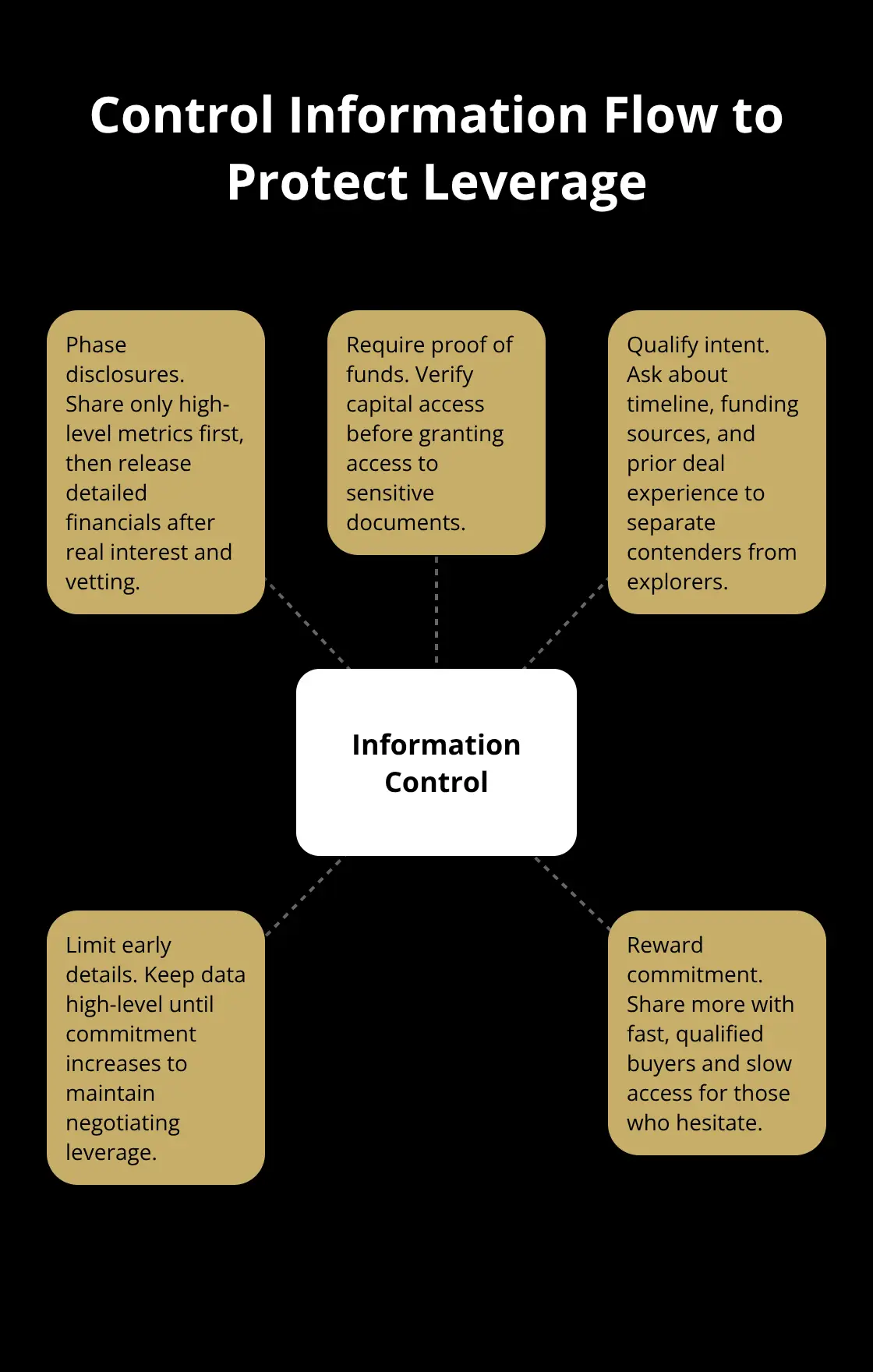
The moment you share everything with everyone, you’ve lost the ability to reward commitment or penalize hesitation.
Screening Buyers Before You Reveal Anything
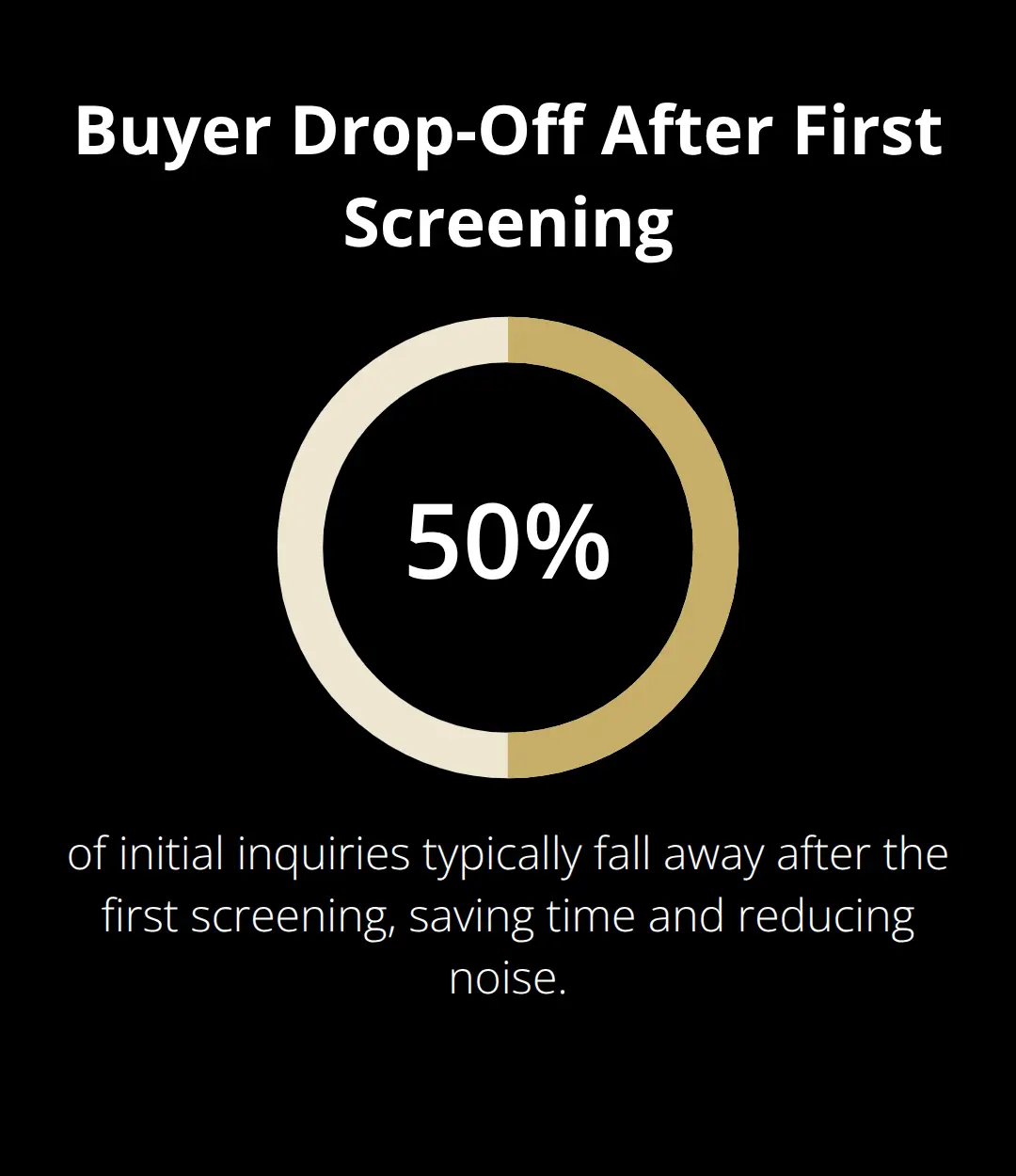
Pre-qualify inquiries before you hand over any sensitive information. Ask potential buyers about their purchase goals, timeline, experience, and the means to buy. Treat the buyer screening like a job interview to find a good cultural and financial fit. Verify their financial capacity through bank statements, audited statements, or lender letters. A buyer who refuses to sign a non-disclosure agreement is likely not serious or lacks necessary experience. Professional intermediaries screen inquiries and verify financial capacity to reduce exposure. They also help you build a dedicated buyer database with verified capacity and use professional networks to pre-screen and accelerate closings. Expect roughly 50% of initial inquiries to drop after the first screening; this normal filter saves time and reduces noise.
Structuring Disclosure in Phases
Phase one disclosure should share high-level metrics (revenue ranges, EBITDA trends, customer diversification, geographic reach, competitive advantages) while withholding sensitive details. Phase two occurs only after serious interest and vetting; you share a more detailed offering memorandum with financials after a signed letter of intent. Due diligence should begin only after the letter of intent and financing verification (you conduct it and limit internal discussions, meeting off-site to minimize confidentiality risk). This staged approach protects your leverage and quickly identifies genuine buyers from those who lack commitment or capacity. The structure also allows you to maintain operational continuity while you evaluate which buyer aligns best with your vision for the business and your personal goals after the sale.
How to Structure a Private Sale
A non-disclosure agreement is not optional-it forms the foundation of every private sale. The moment a potential buyer expresses serious interest, your solicitor must draft an NDA that explicitly prohibits them from contacting your employees, customers, or suppliers without written permission. The agreement should specify what information counts as confidential (client lists, contracts, financial records, operational details), how long confidentiality lasts, and what happens if they breach it. Include a no-poach provision to prevent the buyer from recruiting your top talent after you disclose sensitive information. A buyer who refuses to sign an NDA signals either inexperience or bad intent-either way, you should walk away. The NDA also protects you legally; if a competitor uses disclosed information to undercut your sale or poach clients, you have grounds for injunctive relief and damages. Use a secure data room with controlled access and audit trails to track who views what and when. This approach transforms information sharing from a risky gamble into a trackable, legally defensible process.
Verify Financial Capacity Before Sharing Sensitive Details
Never hand over detailed financials to a buyer until they prove they can actually close a deal. Request bank statements, audited financial statements, or lender commitment letters that confirm they have access to capital. Ask specific questions about their acquisition timeline, whether they completed prior transactions, and how they plan to fund the purchase. A buyer with genuine intent answers these questions directly and without hesitation. Once the buyer submits an offer, they should verify financial capacity by submitting source documents to verify their financial ability to complete the transaction. You filter out tire-kickers and explorers who waste your time without serious commitment. Professional intermediaries handle this vetting, building a database of pre-qualified buyers and conducting background checks to spot red flags. This front-loaded screening accelerates the entire process because you negotiate only with buyers who have both motivation and means. Once you verify capacity, move to phase two: share a detailed offering memorandum and recent financials, but only after they sign the letter of intent and you confirm their financing is solid. This sequencing protects your leverage and prevents sensitive information from circulating among unqualified prospects.
Secure Your Communications and Operational Boundaries
Create a separate email address and phone line exclusively for sale discussions to keep your ongoing business operations completely isolated from transaction chatter. This simple step prevents accidental leaks when employees answer calls or access inboxes, and it gives you a clean audit trail of all buyer communications. Use encrypted messaging platforms for sensitive conversations and avoid discussing the sale in your office or over standard business lines. Meet potential buyers off-site-never at your headquarters-to minimize the chance that employees or customers notice unusual activity. If certain employees must participate in due diligence, have them sign their own NDA to reinforce the confidentiality obligation and create personal accountability. Limit internal discussions to only those who absolutely need to know, and brief them on information security protocols before they access any sale-related materials. Digital tools designed for secure transactions offer data rooms where you control exactly what each buyer can access and for how long. These platforms maintain detailed logs of who viewed which documents at what time, giving you concrete evidence if someone exceeds their authorization. The combination of operational separation and digital control transforms a chaotic, leaky process into one where information flows only to vetted buyers under clear legal and technical restrictions.
Move Forward with Confidence Through Structured Phases
You now have the framework to control who learns about your sale and when. The next step involves understanding which buyers deserve your attention and how to evaluate their fit beyond just financial capacity. This is where the real negotiation begins-and where most sellers either gain significant leverage or surrender it entirely.
What Kills Private Sales
Most sellers assume that a private sale automatically means fewer buyers and lower prices. That assumption costs them money. The real damage comes from poor execution: sharing information with unqualified prospects, skipping professional guidance during due diligence, or mishandling competing offers. A limited buyer pool isn’t the problem if you’ve vetted them properly. The problem is accepting the first offer that lands on your desk because you panic about how long the process takes or worry that no other serious buyers exist. Research on business valuations shows that private sales often command 15 to 20 percent higher multiples than public listings when the seller controls the narrative and maintains genuine competition among qualified buyers. This means three serious, pre-screened buyers will generate better terms than fifty tire-kickers who found your business on a public marketplace. The cost of mishandling this lies in leaving millions on the table through rushed decisions, weak negotiations, or information leaks that sabotage your leverage.
Qualify Buyers Ruthlessly Before Sharing Anything Sensitive
Many sellers share detailed financials with anyone who submits an initial inquiry, then wonder why negotiations drag on or deals collapse. Every buyer you brief without proper vetting becomes a liability. If they’re a competitor, they’ve gathered market intelligence about your margins, customer concentration, and operational weaknesses. If they’re a tire-kicker, they’ve wasted weeks of your time while you waited for feedback.
The fix is straightforward: require proof of funds before phase two disclosure. Bank statements, audited financial statements, or lender commitment letters should arrive before you hand over anything beyond high-level metrics. A genuine buyer with serious intent completes this step within days. A prospect who stalls, claims confidentiality concerns, or refuses to provide documentation simply isn’t ready.
Set a firm rule: no phase two information without proof of funds. This single discipline prevents information leakage and accelerates your path to serious negotiations with qualified contenders. Ask direct questions about their acquisition timeline, whether they’ve completed prior business purchases, and whether they’ve secured financing. A buyer who hedges or gives vague answers hasn’t done their homework and doesn’t deserve access to your sensitive data.
Handle Due Diligence With Professional Oversight
Due diligence without proper structure becomes a fishing expedition where buyers extract information far beyond what’s relevant to their decision. They’ll request customer contracts, supplier agreements, employee records, tax returns (going back five years), and operational details that have nothing to do with evaluating the business. Without a professional managing the process, you’ll either hand over everything and expose yourself to massive risk, or you’ll refuse requests and signal that you’re hiding problems.
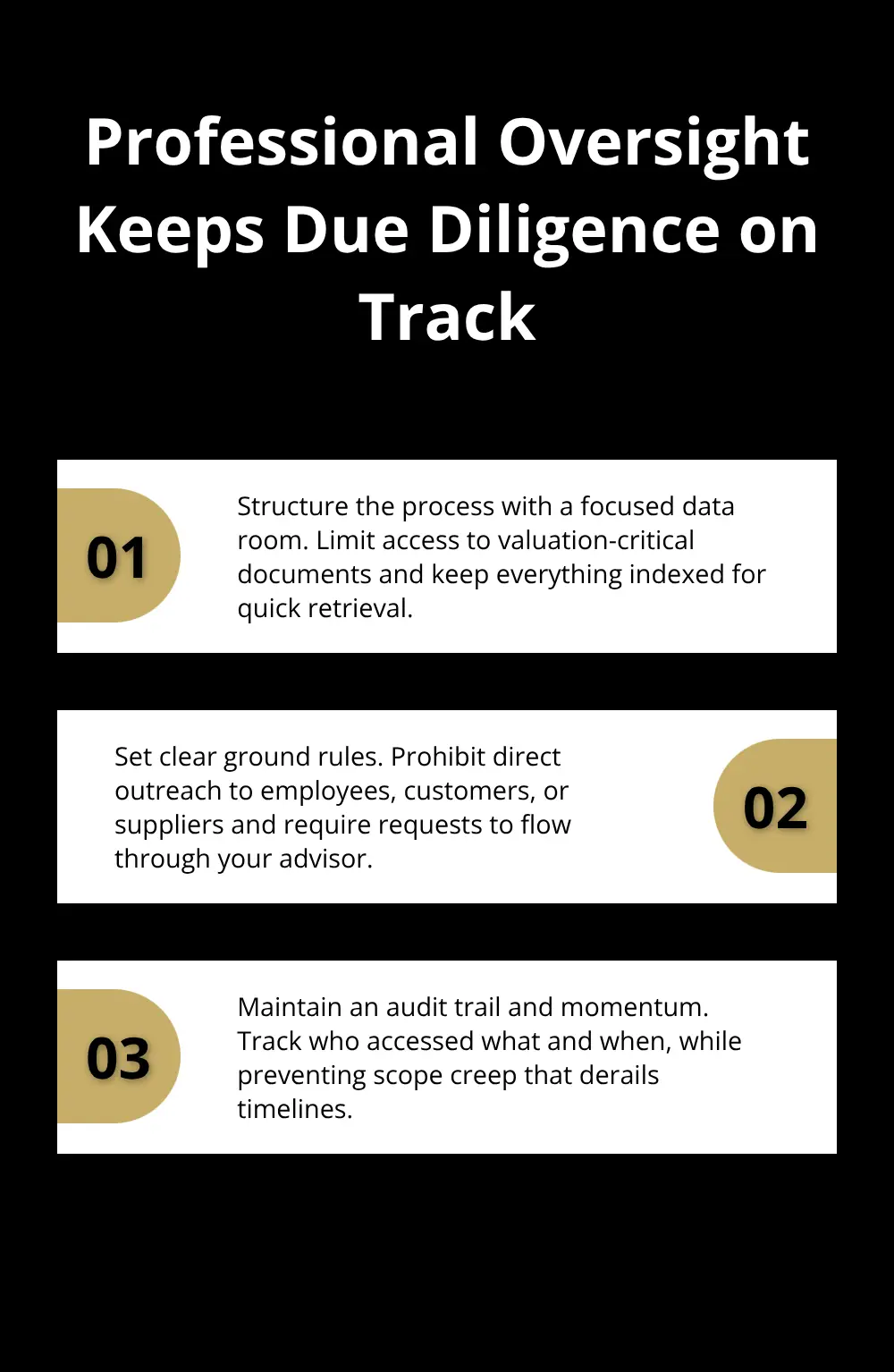
A transaction advisor or M&A attorney creates a structured data room where buyers access only what matters for valuation and integration planning. They establish clear rules: no direct contact with employees, no customer calls, no supplier interviews without your presence. This protects your operational continuity and prevents deals from falling apart because employees heard rumors or customers got spooked by unexpected buyer outreach.
The advisor also creates a document index so you know exactly what each buyer accessed and when, creating an audit trail that protects you if information later appears in competitor hands. Professional guidance typically costs between 0.5 and 1.5 percent of transaction value, but it prevents information leaks that could cost you far more and accelerates due diligence timelines significantly. Sellers who skip this step and try to manage due diligence alone almost always regret it. They either lose control of information flow, face aggressive buyer demands for unnecessary documents, or spend months answering redundant questions from multiple buyers simultaneously.
Final Thoughts
Selling a business privately works because you control the narrative, protect your leverage, and attract serious buyers willing to pay for that exclusivity. Information functions as currency in this process-every document you share without vetting the buyer first surrenders leverage you cannot recover. The difference between a successful private sale and a frustrating one often comes down to discipline: you refuse to share phase two information without proof of funds, you insist on NDAs before meaningful conversations, and you keep due diligence structured and controlled.
Professional guidance transforms information flow from a risky gamble into a trackable, legally defensible process. A transaction advisor or M&A attorney screens buyers, manages document access, and creates audit trails that protect you legally and operationally. They handle the tedious work of indexing and access control so you can focus on evaluating which buyer aligns with your vision for the business.
We at Unbroker understand that selling a business privately requires both strategy and execution. Start with Unbroker’s platform to explore how modern tools and transparent pricing can streamline your private sale while keeping your business information secure.