Most traders overpay for brokerage services without realizing it. Hidden fees, inflated commissions, and unnecessary charges quietly drain your returns year after year.
At Unbroker, we believe low cost brokerage options shouldn’t mean sacrificing quality tools or support. This guide shows you exactly how to evaluate brokers on total cost, not just headline commissions, and find a platform that actually works for your trading style.
Understanding Low Cost Brokerage Models
Commission and Fee Structures Across Brokers
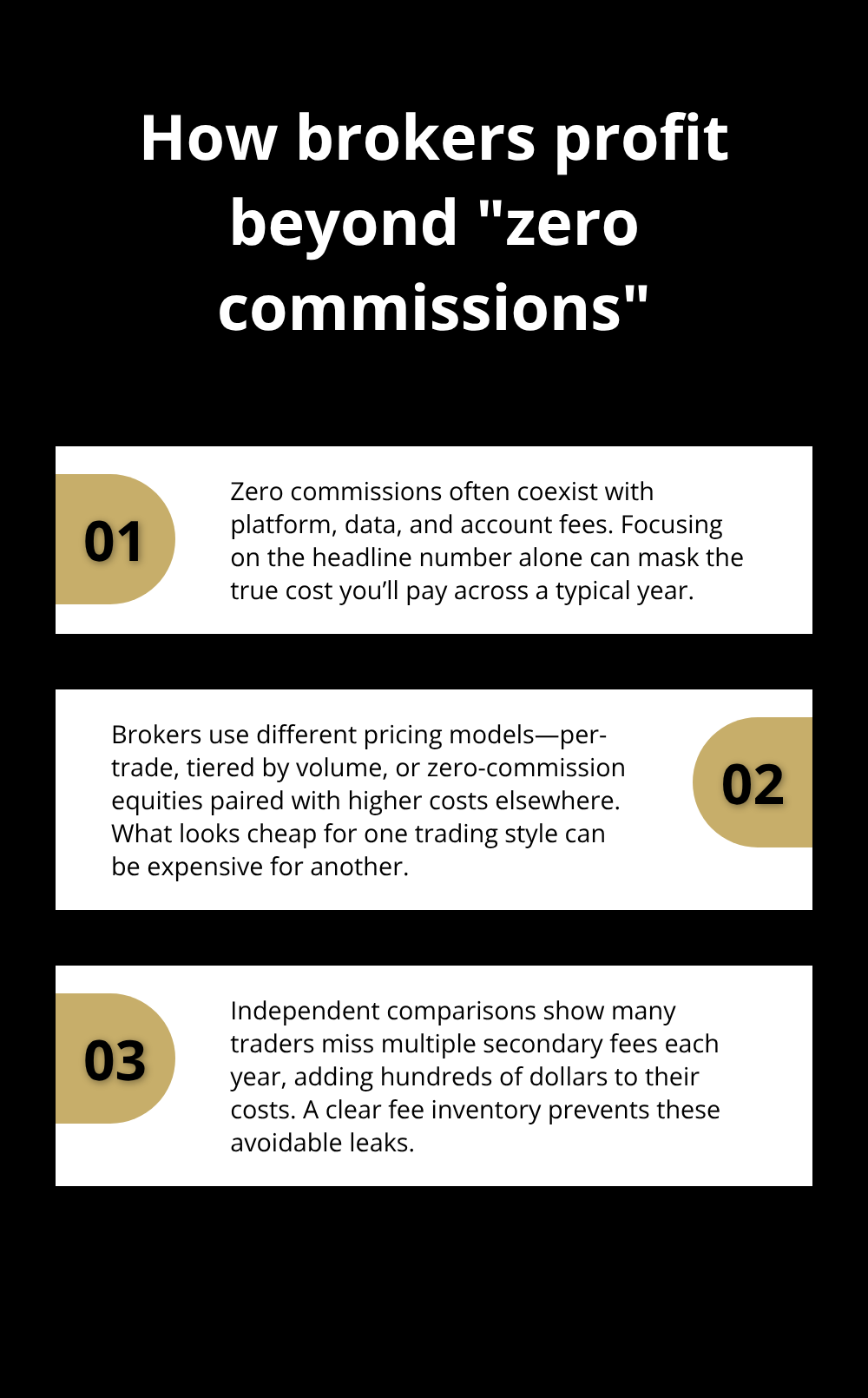
Most brokers publish one number and hide another. You see zero commissions advertised, then encounter platform fees, data subscriptions, inactivity charges, or withdrawal costs that quietly accumulate. Transparency matters, which is why understanding the full cost picture separates smart traders from those bleeding money unnecessarily.
Commission structures vary wildly across the industry. Some brokers charge per trade, others use tiered models based on volume, and many now offer zero-commission equity trading while profiting from options spreads or forex markups. According to data from NerdWallet’s 2024 broker comparison, the average trader overlooks approximately 3 to 5 secondary fees annually, costing between $200 and $500 in aggregate.
Hidden Fees and What to Watch For
These aren’t the commissions you see on the homepage. Real cost evaluation requires examining data feed charges, which can range from $10 to $150 monthly depending on market access level. Professional stock market data from NYSE or NASDAQ costs more than basic delayed quotes.
Real-time options data adds another $20 to $50 monthly for serious options traders. Inactive account fees hit dormant traders hard, typically $25 to $100 quarterly. Some brokers charge for wire transfers, typically $25 outbound, while others waive this entirely.
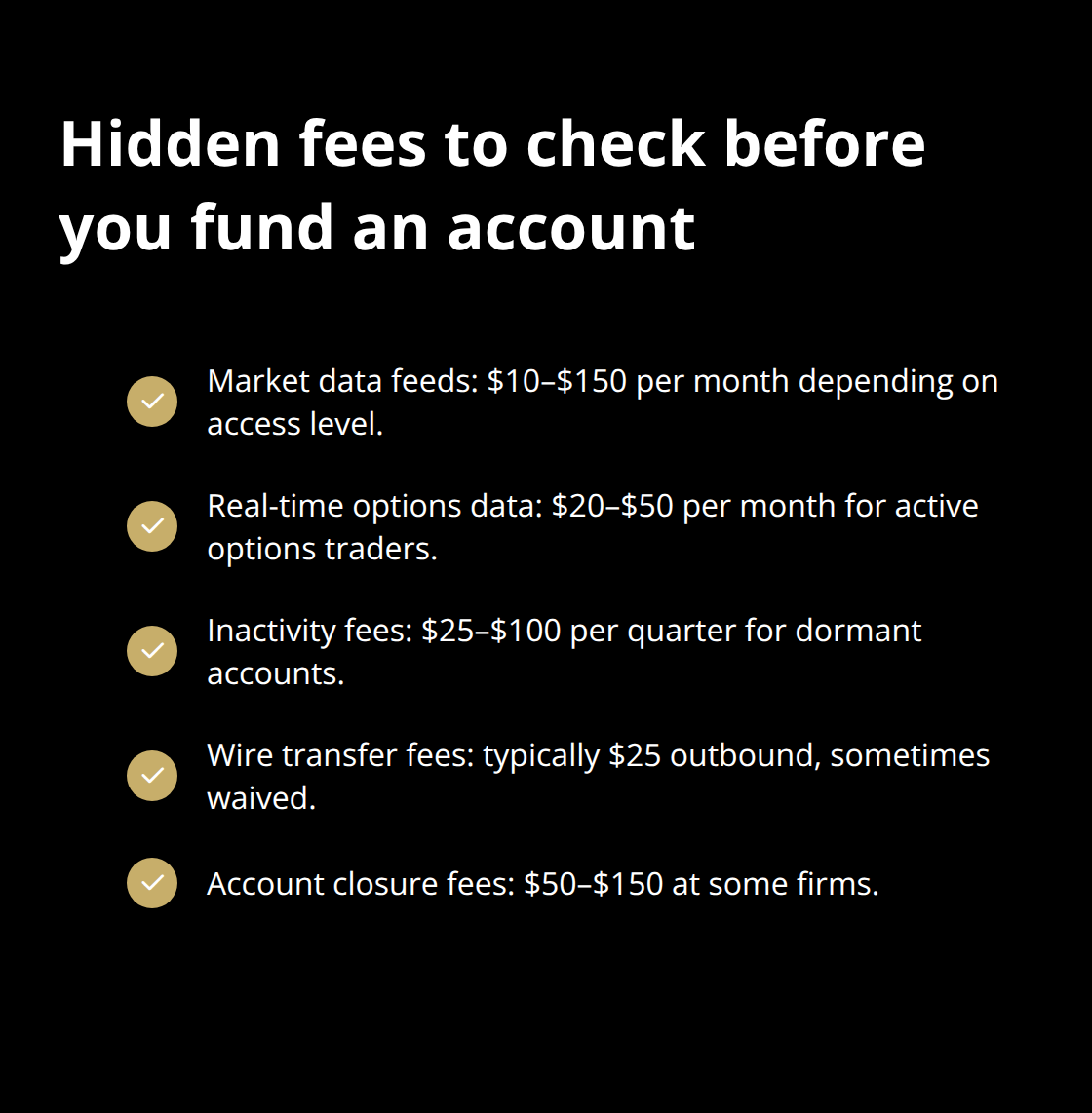
Account closure fees exist at certain firms, ranging from $50 to $150.
Comparing Total Cost of Ownership
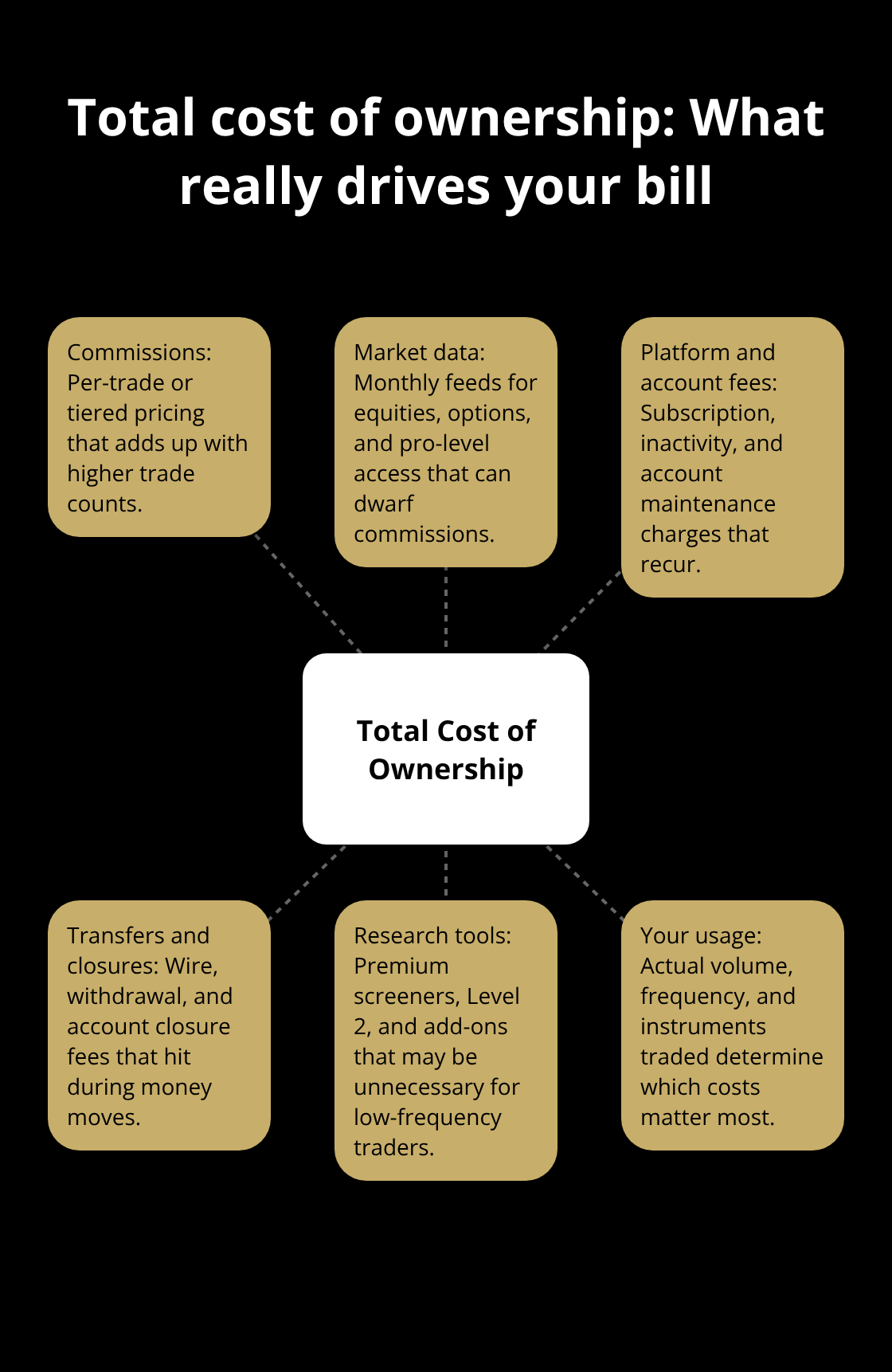
The total cost of ownership calculation must include all these components, not just headline commissions. Calculate your expected trading volume, frequency, and data needs, then add every secondary charge the broker lists.
A broker advertising zero commissions but charging $75 monthly for professional data becomes expensive at $900 annually for a trader making only 20 trades per year. Compare this against a broker charging $5 per trade with no data fees. At 20 trades annually, you pay just $100 total.
The math shifts dramatically based on your actual trading behavior.
Your optimal broker depends on whether you trade stocks, options, or forex, how frequently you trade, whether you need professional research tools, and whether you maintain minimum balances. A day trader needs different cost evaluation than a quarterly rebalancer. The next section reveals which features actually matter when you evaluate brokers against your specific usage pattern, not industry averages.
Key Features to Look for in Budget-Friendly Brokers
Research Tools and Market Data Access
Low cost doesn’t mean choosing between price and functionality. The real question is which tools you genuinely use versus which ones you pay for and ignore. Most budget-conscious traders waste money on premium research packages they never touch, while overlooking free alternatives that deliver identical insights. A platform charging $50 monthly for professional-grade research tools becomes worthless if you trade quarterly and rely on free financial websites like Yahoo Finance or MarketWatch for your analysis. Conversely, a day trader making 50 trades monthly desperately needs real-time Level 2 data and advanced charting, making those premium subscriptions genuinely productive rather than wasteful.
Write down exactly which tools you use weekly, which ones you check monthly, and which icons you’ve never clicked. This brutally honest inventory prevents you from paying for aspirational features that never materialize into actual trading decisions.
Trading Platforms and User Experience
The platform experience separates traders who execute efficiently from those who abandon brokers after months of frustration. A clunky interface that takes three clicks to place a trade costs you money through missed opportunities and execution delays, especially during volatile market moments. Platforms like Webull and TD Ameritrade’s thinkorswim offer powerful charting and order management at no commission, though Webull’s customer support operates primarily through chat rather than phone lines.
Test the mobile app if you trade while away from your desk. Check whether the platform lets you set up custom watchlists and alerts without paying extra. Verify that the interface responds quickly when you need to execute orders during critical moments.
Customer Support and Educational Resources
Fidelity provides comprehensive research tools alongside zero-commission trading, with educational webinars that run daily for free. Your broker’s educational resources matter significantly when you’re learning to evaluate trades independently rather than paying for expensive advisory services. Some platforms like Interactive Brokers charge monthly data fees but cater specifically to serious traders who need API access or sophisticated order types.
The deciding factor isn’t which platform looks best in reviews, but which one matches your actual workflow. Verify that customer support responds within reasonable timeframes-a broker offering chat-only support during market hours creates real costs when you can’t reach anyone during critical moments. Your next step involves testing multiple platforms side-by-side to identify which combination of tools, interface design, and support quality aligns with how you actually trade.
Low Cost Brokerage Options Available Today
Fidelity and Charles Schwab Lead the Market
Fidelity and Charles Schwab dominate the budget broker space because they stopped competing on commissions and started competing on actual value. Both charge zero commissions on stocks and ETFs, offer professional-grade research tools included in standard accounts, and provide phone support during market hours. Fidelity’s advantage lies in its research depth-their equity research team produces original stock analysis you won’t find elsewhere, and their portfolio advisory tools run sophisticated backtesting without monthly fees. Charles Schwab edges ahead on education, with a learning center that covers everything from basic options strategies to tax-loss harvesting tactics.
Platforms for Active Traders
TD Ameritrade’s thinkorswim platform remains the gold standard for active traders who need advanced charting and options analysis, though Schwab has gradually migrated thinkorswim features into its core platform following its acquisition. Webull attracts cost-conscious traders with extended trading hours from 4 AM to 8 PM and fractional share trading, but their customer support operates exclusively through chat rather than phone calls, which becomes problematic when you need immediate help during market volatility. Interactive Brokers serves serious traders willing to pay monthly data fees in exchange for API access, direct market access, and sophisticated order types that institutional traders demand.
Match Your Trading Style to Broker Strengths
The real opportunity exists in matching your specific trading style to the broker’s actual strengths rather than accepting generic recommendations. A quarterly investor rebalancing a diversified portfolio needs zero commissions and solid research tools-Fidelity delivers this without paying for features you’ll never use. An options trader making weekly adjustments to spreads needs real-time Greeks, advanced charting, and responsive customer support when orders don’t fill as expected-Schwab’s thinkorswim platform handles this efficiently. A day trader executing 50 trades daily needs sub-millisecond execution, direct market access, and detailed order routing options-Interactive Brokers justifies its monthly platform fee plus data costs through execution quality that discount brokers simply cannot match.
Test Brokers Before Committing
The mistake most traders make involves choosing a broker based on what competitors recommend rather than testing the platform for two weeks with actual trades in your specific market. Open accounts at two different brokers, execute your typical trades on both platforms, and measure which one feels faster, clearer, and less frustrating during execution. After fourteen days of real trading, one platform will feel obviously superior for your workflow. That’s your broker.
Final Thoughts
Low cost brokerage options succeed when they match your actual trading behavior, not when they promise the lowest headline numbers. Fidelity and Charles Schwab set the standard because they stopped racing to the bottom on commissions and started building platforms that traders genuinely want to use repeatedly. Your next move involves testing two brokers with real trades for two weeks, measuring execution speed and interface clarity, then committing to whichever one feels faster and less frustrating.
The cost savings from selecting the right low cost brokerage options compound dramatically over years. A trader paying $500 annually in unnecessary fees saves $5,000 over a decade while maintaining identical trading results. That money stays in your account, working for you instead of enriching your broker.
We at Unbroker understand that finding the right partner matters for your financial goals. Whether you’re evaluating brokers for your trading or exploring other business decisions, the principle remains identical: transparent pricing, genuine value, and no hidden surprises. If you’re selling a business, Unbroker applies this same philosophy with a 6% success fee paid only when your business sells, expert advisors guiding the process, and AI-driven buyer matching that finds serious purchasers efficiently.