Selling a business is one of the biggest financial decisions you’ll make. The process involves more than just finding a buyer-it requires careful planning, strategic marketing, and smart negotiation.
At Unbroker, we’ve helped countless business owners navigate this journey successfully. This guide walks you through every stage, from preparing your business for sale to closing the deal.
Getting Your Business Ready to Sell
The foundation of a successful business sale is preparation, and most owners underestimate how much work this requires. Start preparing your business 18 to 24 months before you go to market to maximize valuation. This isn’t about cosmetic improvements-it’s about creating a clear, defensible financial story that buyers will trust.
Establish Your Business Value With Professional Valuation
Start with a professional valuation using three approaches: the income approach (based on estimating the present value of expected returns), the market approach (comparing to recently sold similar businesses), and the asset approach (net asset value after liabilities). For small businesses, the income approach matters most because buyers focus on cash flow. Don’t guess at your business value or rely on rough multiples you’ve heard from other owners. Obtain a valuation from a credible source like a local accounting firm or regional broker using current industry data. Unrealistic valuations waste time and damage your credibility with serious buyers.
Normalize Your Financials and Demonstrate Sustainable Profitability
Next, normalize your financial records and present 2 to 3 years of monthly trends to demonstrate sustainable profitability. This means identifying add-backs-personal perks, one-time costs, or non-recurring expenses that boost your Normalized EBITDA and multiplier value. A buyer wants to see what the business actually generates, not what your personal tax return shows. Gather and organize at least three years of financial statements and ensure they’re accurate and complete. Prepare detailed customer retention analytics and document any growth initiatives. Tax history matters significantly; unresolved tax issues can reduce deal value considerably. You’ll also need to assemble supporting documentation: articles of incorporation, contracts, intellectual property documentation, employment agreements, and lease terms.
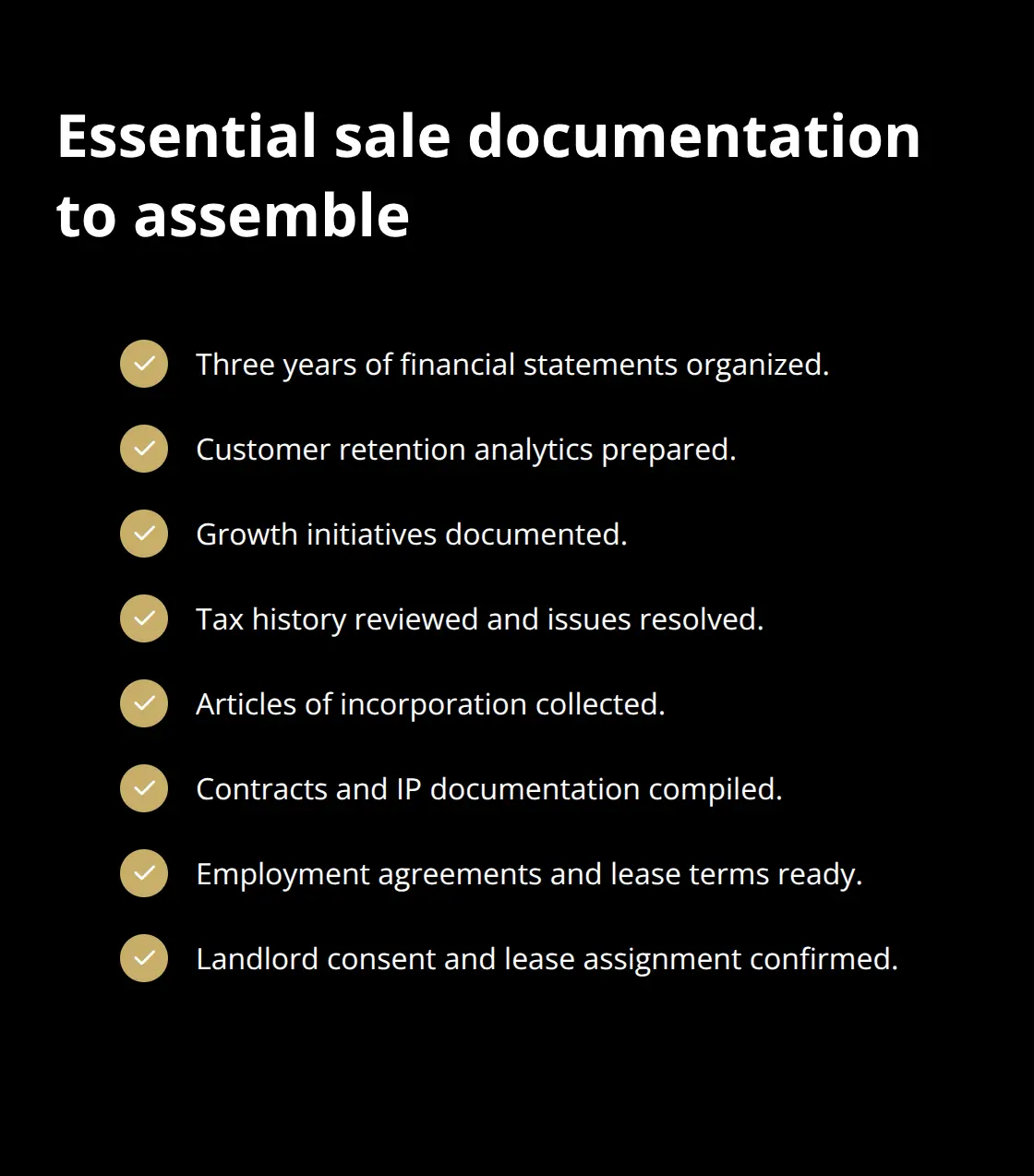
Confirm your ability to assign leases and resolve landlord consent issues now-landlord problems cause delays or complications in small deals.
Fix Operational Weaknesses Before Due Diligence Begins
Identify and fix operational weaknesses before due diligence exposes them. A strong management team and documented processes signal stability to buyers. If key customers represent too much revenue concentration, work to diversify or document long-term contracts. If your business relies heavily on your personal relationships, document those relationships and transition them to other team members. If your systems are outdated or inconsistent, standardize them now. Buyers conduct more rigorous due diligence today than they did five years ago, and handshake deals based on simple multiples are outdated. They’ll examine your vendor relationships, customer churn rates, employee retention, and operational vulnerabilities. Address these before they appear in a buyer’s due diligence report, where they become negotiating leverage against you.
With your business prepared and your financials polished, you’re ready to craft a compelling story that attracts qualified buyers and positions you for a stronger negotiation.
Marketing Your Business to Potential Buyers
Your listing makes the first impression serious buyers will have of your business, and it must tell a clear story about why your company is worth buying. Start by defining your ideal buyer type-strategic buyers who want synergies with their existing operations will pay differently than financial buyers focused purely on cash flow. This distinction shapes everything you communicate. Strategic buyers care about growth potential, market position, and how your business complements theirs. Financial buyers want to see stable, recurring revenue and healthy margins. Tailor your listing language accordingly. If you’re selling a SaaS company with 85% recurring revenue and 60% gross margins, emphasize that stability to financial buyers. If you’re selling a distributor with exclusive supplier relationships, highlight the synergy potential for strategic buyers.

Craft a Compelling Business Listing
Your listing should explain your competitive edge, customer retention rates, recurring revenue breakdown, and exactly what’s included in the sale. Vague listings attract tire-kickers, not serious buyers. Be specific about what makes your business defensible. Professional marketing materials-financial summaries, operational overviews, and customer concentration charts-signal that you’re a serious seller with a well-run business. Buyers expect polished materials. Handwritten spreadsheets and informal pitch decks undermine your valuation. Invest in clean, professional presentations that highlight your normalized EBITDA, customer acquisition costs, and retention metrics.
Choose the Right Distribution Channels
Distribution matters as much as content. A structured marketplace with NDAs and virtual data rooms protects your confidentiality while sharing sensitive information in stages. List on credible partner sites like The Wall Street Journal, BizBuySell, BizQuest, and LoopNet to reach serious buyers rather than relying on generic online postings alone. These platforms attract qualified purchasers with real capital and serious intent.
Decide Between Broker Representation and Direct Outreach
Brokers typically charge 4% to 6% of the sale price but provide real value through their buyer networks and confidentiality management. If you work with a broker, they handle outreach, screen buyers, and manage the sales process. Direct outreach works if you have existing relationships with potential acquirers, but it requires discipline to maintain confidentiality and prevent operational disruption. The more data you provide upfront, the faster serious buyers move forward and the fewer tire-kickers waste your time.
With your listing positioned and your marketing channels selected, you’re ready to evaluate the offers that come in and negotiate terms that protect your interests.
Negotiating and Closing the Deal
Once serious buyers submit offers, the real negotiation starts-and most sellers make costly mistakes here because they focus only on price. Enterprise value matters, but so does structure. An all-cash offer at closing is worth more than one loaded with earnouts that depend on future performance you won’t control. When you evaluate offers, calculate what you actually keep after paying off debt, transaction costs, and taxes. A $2 million enterprise value sounds impressive until you subtract $400,000 in bank debt, $150,000 in legal and accounting fees, and $300,000 in taxes. Your net proceeds drop to $1.15 million.
Evaluate Offers Beyond the Headline Price
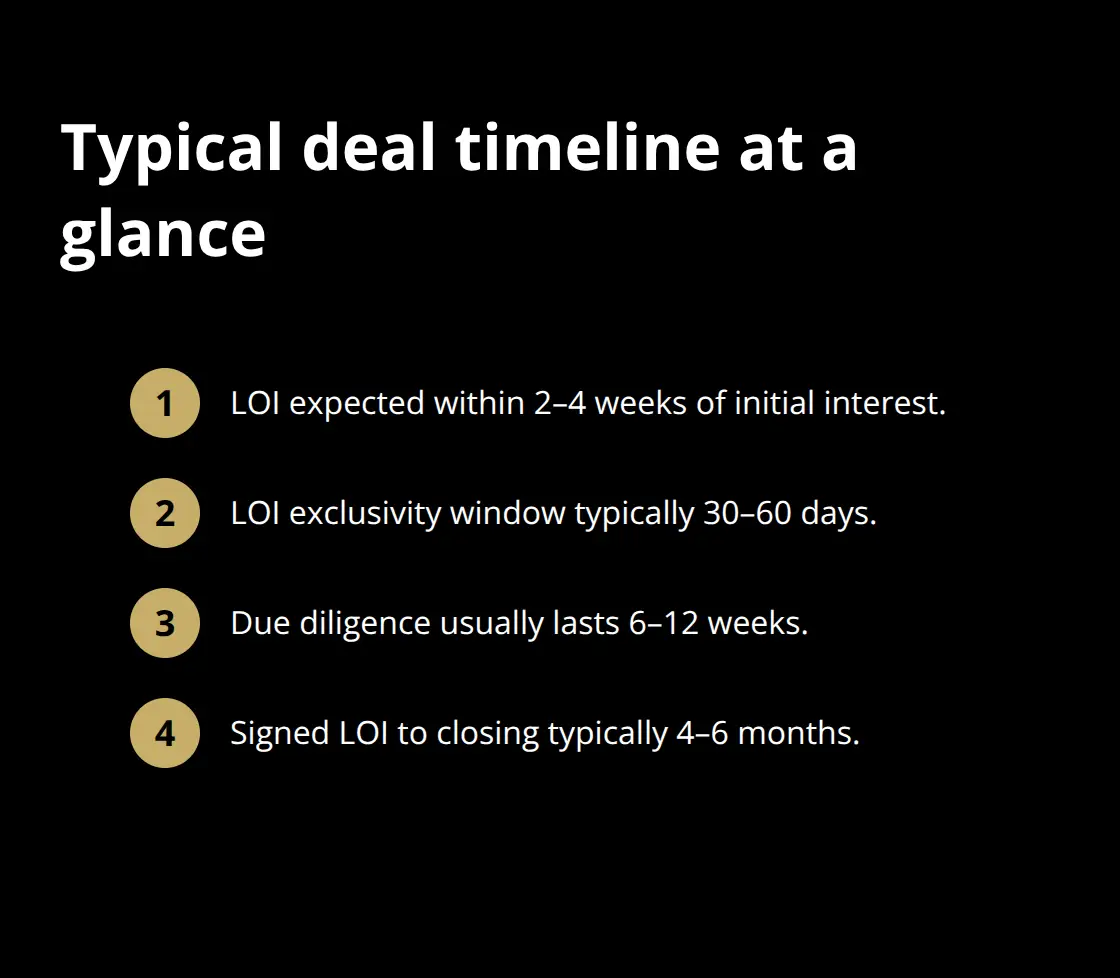
Diligence processes are far more rigorous today than five years ago, with scope expanded to include not just financials but also culture, human resources, and ESG factors. This is your leverage point. Serious buyers move quickly once they feel confident in your financials and operations. Expect the letter of intent to arrive within 2 to 4 weeks of initial interest if a buyer is genuinely qualified. The LOI outlines headline terms-price, asset versus stock structure, earnouts, and an exclusivity window typically 30 to 60 days. This is nonbinding but signals intent. Don’t negotiate indefinitely on the LOI; use it to confirm alignment and move to the binding agreement.
Prepare for Rigorous Due Diligence
Due diligence typically lasts 6 to 12 weeks, and speed depends entirely on your preparation. Buyers will scrutinize your financials, customer contracts, employee agreements, vendor relationships, lease terms, and compliance records. Landlord consent for lease transfers can significantly impact deal timelines, so address this before due diligence starts. Provide a well-structured data room-organized by category, clearly labeled, and accessible digitally-and respond to information requests within 48 hours. Slow responses signal disorganization and kill deals.
Finalize the Asset Purchase Agreement
Once due diligence closes, your M&A attorney drafts the Asset Purchase Agreement, which is the binding contract that specifies exactly what you’re selling, the price, closing conditions, representations and warranties, and indemnification terms. Budget $3,000 to $10,000 for attorney review and drafting. Negotiate escrow holdbacks carefully-the average escrow amount typically ranges between 10 and 20 percent of the purchase price, held for 12 to 24 months to cover post-closing claims. Try for staged release: 50 percent at 6 months, 50 percent at 12 months, rather than full holdback until month 24.
Execute the Closing
Closing itself is increasingly virtual through DocuSign; funds wire, title transfers, and you complete the transaction in one day. The entire process from signed LOI to closed deal typically takes 4 to 6 months for a straightforward transaction, though complexity and financing requirements add time.
Final Thoughts
Selling a business demands a structured approach from start to finish. The owners who succeed prepare early, present their financials clearly, and negotiate beyond price alone. Preparation 18 to 24 months before listing dramatically improves your valuation, professional marketing materials attract serious buyers instead of tire-kickers, and understanding deal structure protects your actual net proceeds.
The most common mistake sellers make is underestimating preparation time and rushing to market with incomplete records, outdated systems, and vague positioning. Another frequent error is focusing only on headline price while ignoring earnouts, escrow holdbacks, and debt payoff that shrink your take-home amount. A third mistake is choosing the wrong sales channel-relying on generic online listings alone rarely attracts qualified buyers with real capital.
After closing, plan for 30 to 90 days of transition assistance to help the new owner understand operations, customer relationships, and vendor dynamics. The entire process from preparation to closed deal typically spans 10 to 12 months, and rushing it usually costs money. If you want to sell a business without excessive broker fees, explore Unbroker’s transparent, low-cost options to get started today.