Selling a business is one of the biggest financial decisions you’ll make. Most sellers rely on traditional brokers and hope for the best-but that approach leaves money on the table.
At Unbroker, we’ve seen firsthand how robust marketing tools change the game. The right strategy puts your business in front of serious buyers, builds real credibility, and drives up your sale price.
Why Standard Marketing Leaves Money on the Table
Brokers Control Your Narrative-and Your Price
Traditional brokers control how your business appears to the market, and that control costs you real money. Most brokers list your business on their internal database and maybe a few industry sites, then wait for inbound inquiries. This passive approach reaches only a fraction of qualified buyers actively searching for acquisitions. The National Bureau of Economic Research found that businesses marketed directly to a wider audience sell for significantly higher valuations than those limited to broker networks alone. When your sale depends on who walks through a broker’s door, you compete against their entire portfolio for attention, and your business becomes one listing among dozens.
The Hidden Fees That Erode Your Proceeds
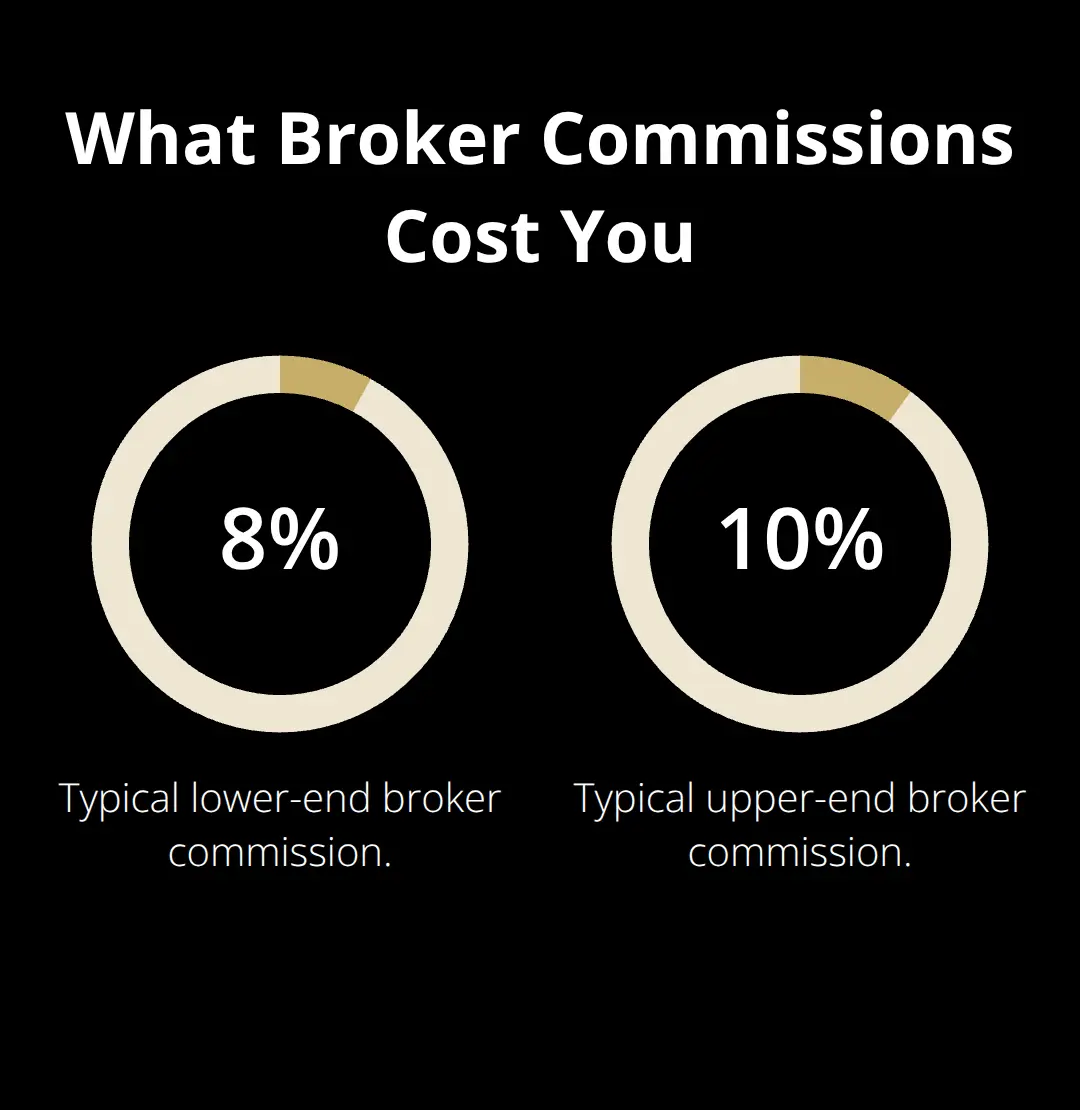
Broker commissions typically run between 8% and 10% of the sale price. On a $500,000 sale, that’s $40,000 to $50,000 gone before you see a dime. Beyond commissions, brokers charge hidden fees for legal documents, due diligence coordination, and buyer verification. These extras add up fast and eat directly into your proceeds. You also bear the opportunity cost of a slow sales process. If a traditional broker takes eight months to find a buyer when a well-marketed sale could close in four, the delayed capital costs you months of potential reinvestment returns or reduced carrying expenses. Most sellers never calculate this hidden drag because brokers obscure the timeline and ancillary fees in fine print.
You Lose Control Over Your Business Story
When you rely solely on a broker, you lose control over how your business appears to the market. Brokers use generic templates, focus on surface-level metrics, and rarely highlight what makes your business unique. Serious buyers want proof of your competitive advantages, real customer testimonials, and transparent financial performance. A broker’s one-page listing cannot deliver that depth. Modern platforms now let you build professional detailed presentations that showcase your business exactly as you see it. You can include video walkthroughs, customer case studies, financial dashboards, and your personal story about building the company. This direct access to buyer visibility means you no longer depend on a broker’s sales skills or their willingness to prioritize your deal over their other listings. You control the timeline, the message, and who accesses your information.
The real opportunity lies in taking back that control. Professional marketing tools and transparent platforms eliminate the middleman markup and put your business directly in front of serious buyers who want what you’ve built. This shift from passive broker listings to active, data-driven marketing fundamentally changes what your business can command in the market.
Marketing Tools That Actually Work for Business Sales
Professional Listing Pages That Convert Buyers
Professional listing pages that convert buyers separate serious acquisition candidates from tire-kickers. A weak listing sits dormant; a strong one generates inbound interest within days. The difference comes down to specificity and proof. Generic broker listings typically include basic financials, a company description, and maybe a photo. That’s not enough. Serious buyers need detailed financial dashboards showing revenue trends, EBITDA breakdowns, and customer concentration risk. They want to see your operational metrics-employee retention rates, customer acquisition costs, repeat purchase percentages. They expect video walkthroughs of your facility or operations and documented case studies from your actual customers explaining why they stay.
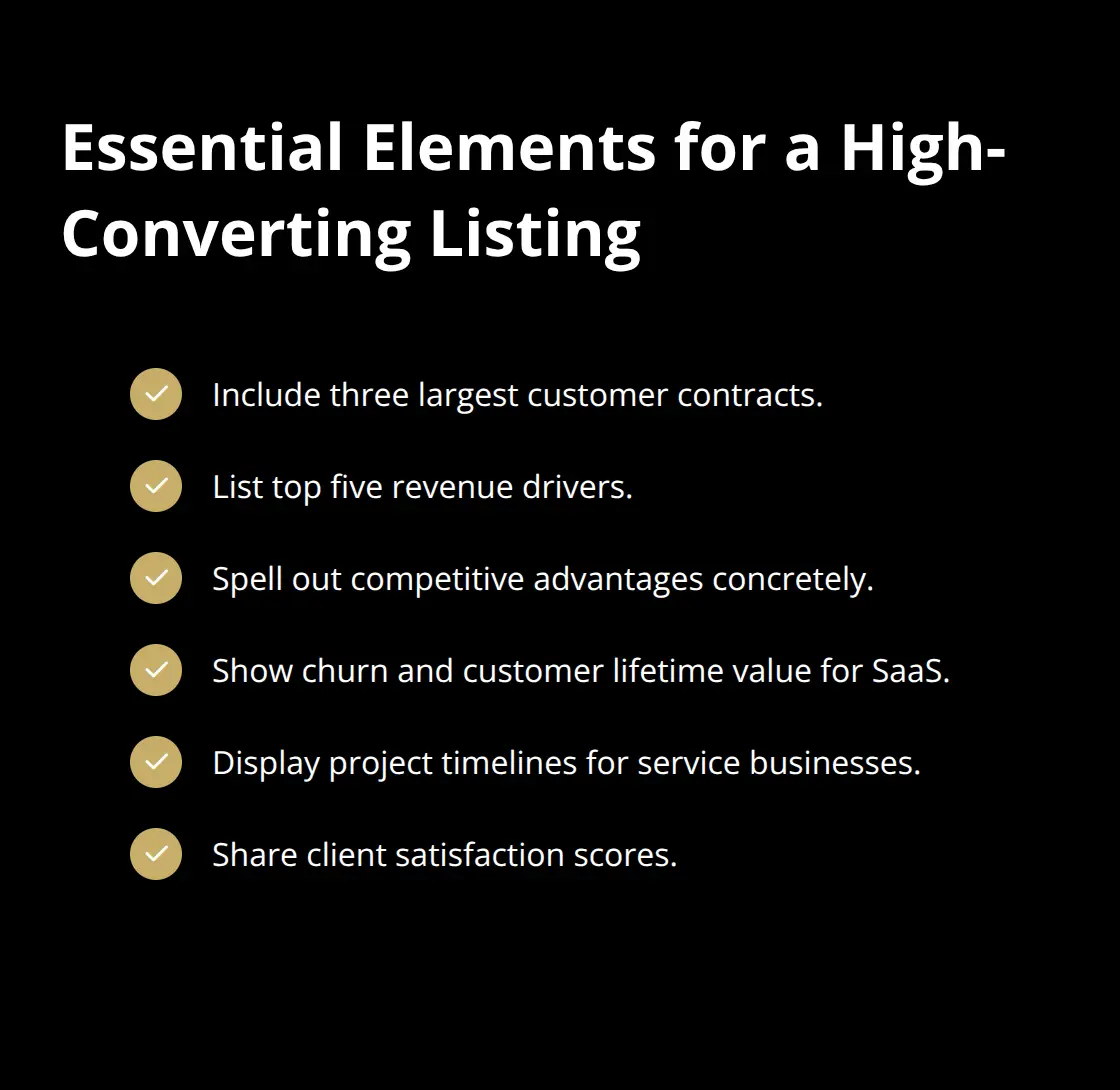
When you control your listing directly, you add those elements immediately. Include your three largest customer contracts (with names visible if possible), your top five revenue drivers, and your competitive advantages spelled out in concrete terms. A SaaS seller should show churn rates and customer lifetime value. A service business should display project completion timelines and client satisfaction scores.
The more specific your proof, the faster qualified buyers move toward an offer.
Targeted Buyer Matching Through Data and AI
Targeted buyer matching through data and AI fundamentally changes who sees your listing. Traditional brokers cast a wide net hoping someone bites; modern platforms use AI to identify and contact buyers actively seeking acquisitions in your industry and size range. Platforms now match your business profile against databases of registered buyers, private equity firms, and strategic acquirers looking for companies just like yours. This targeted approach means your listing reaches people with actual buying power and genuine interest, not just casual browsers.
Building Credibility With Social Proof and Certifications
Social proof accelerates the process significantly. Real customer testimonials-especially video testimonials from recognizable companies-build immediate credibility. A manufacturing business with a video case study from a Fortune 500 client signals stability and scale. A staffing company with documented client retention above 85% proves operational strength. Third-party certifications matter too. ISO certifications, industry awards, and compliance badges all function as trust signals that cost you nothing to display but carry enormous weight with serious buyers. When a buyer sees your business has won industry recognition or maintains professional certifications, they move faster through due diligence because uncertainty drops.
The combination of detailed financials, customer proof, and third-party validation transforms your listing from a passive advertisement into a compelling investment case. Qualified buyers act faster when they see concrete evidence of your business strength, which means you can move toward multiple competing offers and higher valuations.
How to Position Your Business for Maximum Buyer Interest
Identify Your Concrete Competitive Advantages
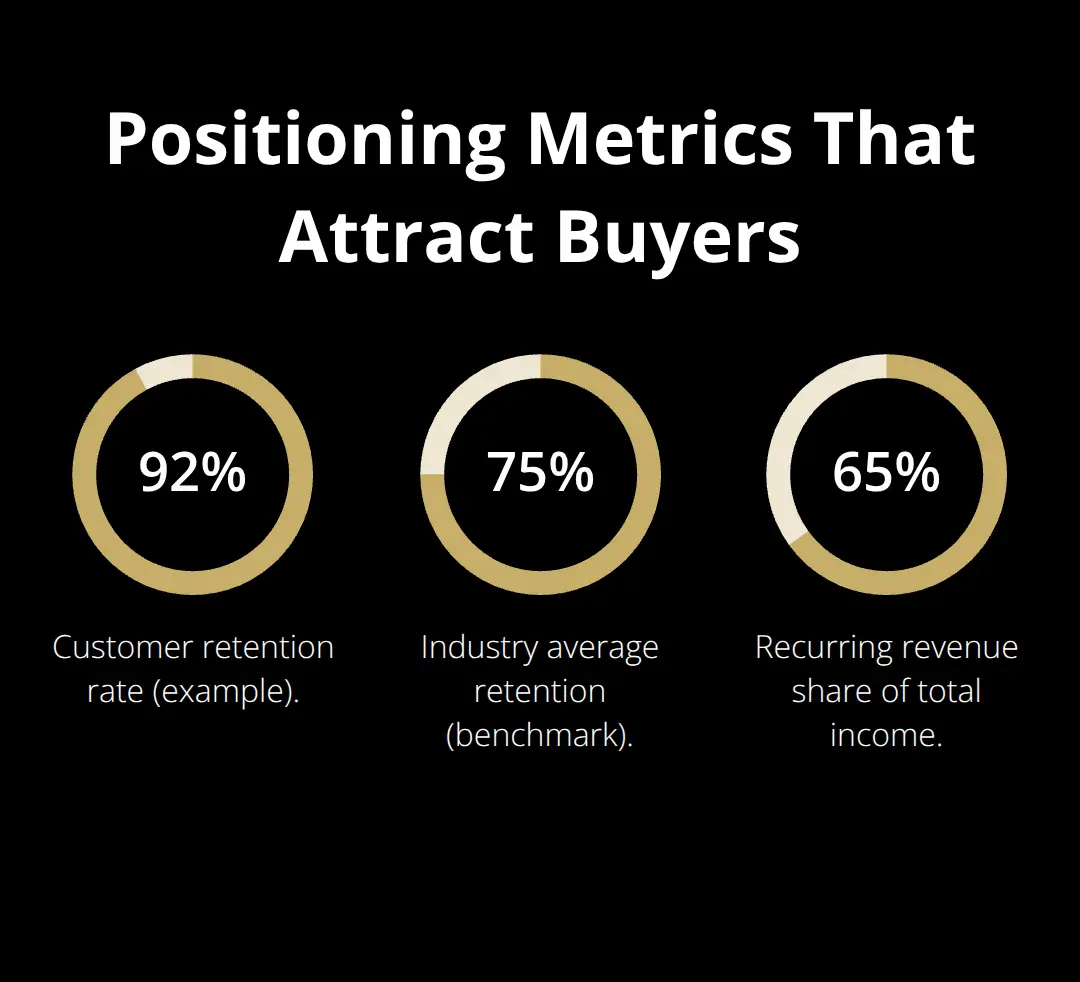
The difference between a mediocre sale price and a premium valuation rests on positioning. Serious buyers evaluate whether your business represents a unique opportunity worth competing for, not just your financials. Start by identifying what makes your business genuinely different from competitors in your market. This isn’t about generic claims like “great customer service”-it’s about concrete, measurable advantages. If your customer retention rate sits at 92% while the industry average is 75%, that’s a positioning anchor. If you’ve built recurring revenue that represents 65% of total income, that’s a defensible moat worth highlighting.
Document your competitive advantages with hard numbers, not adjectives. A manufacturing business with proprietary processes should quantify the efficiency gains. A service firm with exclusive client relationships should show contract terms and renewal rates. Create a one-page positioning statement that clearly articulates why a buyer should choose your business over three alternatives in your market. This statement becomes the foundation for all marketing materials, buyer conversations, and negotiation leverage.
Leverage Multiple Buyer Interest to Drive Competition
When multiple qualified buyers see the same positioning and understand your unique value, they naturally compete against each other rather than against your asking price. Professional marketing platforms with detailed information naturally attract multiple inquiry streams. Share this activity with prospects honestly. A buyer who learns that two other qualified parties are reviewing your financials moves faster through their evaluation process. This isn’t manipulation-it’s transparency about real market demand.
Set clear timelines for responses to buyer questions, financial disclosures, and offer submissions. Communicate these timelines upfront so buyers understand the process moves deliberately but decisively. A 48-hour response window for due diligence questions keeps momentum without creating artificial panic. The goal is reaching multiple competing offers, which typically increases your final sale price by 15% to 25% compared to single-offer scenarios (this happens because buyers know they’re bidding against others, not negotiating with a seller desperate to close).
Create Genuine Urgency Through Transparent Activity
Genuine urgency accelerates buyer decisions without resorting to artificial pressure. The most effective approach involves demonstrating that other serious buyers are actively interested. Professional marketing visibility surfaces more qualified acquisition candidates than traditional broker channels ever could. When you control your listing directly, you attract buyers actively seeking acquisitions in your industry and size range. This natural demand creates real urgency because buyers understand other parties have access to the same opportunity.
Final Thoughts
Selling your business without robust marketing tools means leaving money on the table. Traditional brokers limit your reach, charge hidden fees, and control your narrative-but you don’t have to accept that trade-off. Professional listing pages with detailed financials and customer proof convert serious acquisition candidates faster than generic broker listings, while targeted buyer matching through data and AI puts your business in front of people with actual buying power and genuine interest in what you’ve built.
When you position your business as a unique investment opportunity with concrete competitive advantages, buyers naturally compete against each other rather than negotiate down your price. Multiple competing offers typically increase your final sale price by 15% to 25% compared to single-offer scenarios. Genuine urgency emerges from transparent activity and real market demand, not artificial pressure tactics that damage trust.
The right tools give you control over your business story, your timeline, and your outcome. Take control of your business sale on Unbroker and stop letting brokers decide what your years of work are worth.