Selling a business shouldn’t drain your profits before you even close the deal. Traditional brokers take 10% or more in commissions, which means thousands of dollars vanish from your final payout.
At Unbroker, we’ve seen sellers lose control of their bottom line to outdated pricing models. The good news: low cost brokerage options now exist that let you keep more of what you’ve earned.
Why Traditional Business Brokers Are Expensive
Traditional business brokers operate on a commission model that fundamentally misaligns their interests with yours. When a broker takes 10% of your sale price, they pocket the same amount whether they secure a buyer in three months or twelve months. This structure means you absorb all the risk while they collect their fee regardless of the outcome. If your business sells for $500,000, that’s $50,000 gone before you see a dime. Worse, many brokers layer additional costs on top: listing fees ranging from $2,000 to $10,000, transaction fees, wire transfer charges, and document preparation costs. These hidden expenses stack up quickly, sometimes adding another $5,000 to $15,000 to your total cost. You pay for services you may not have requested and have no control over. The commission model also creates perverse incentives where brokers push for faster sales at lower prices rather than waiting for the right buyer at the right valuation. Your profit margin shrinks before the deal closes, and you’ve already paid the broker’s commission whether the sale succeeds or fails.
Commission Fees Consume Your Profit
A 10% commission on a $500,000 sale costs you $50,000. That’s not a small number-it’s money that could fund your next venture, pay off debt, or secure your retirement. Traditional brokers justify this percentage as payment for their network and expertise, but you have no guarantee they’ll actually use their network effectively for your specific business. Many brokers handle dozens of sales simultaneously, which means your business competes for their attention. The commission structure rewards speed over value. A broker who closes your sale in three months at $450,000 earns $45,000. A broker who waits six months to find a buyer willing to pay $550,000 earns $55,000-but that takes more work and carries more risk for them. Guess which outcome most brokers prioritize? You lose $100,000 in potential sale price while the broker gains an extra $10,000. This misalignment happens thousands of times across the brokerage industry, and sellers foot the bill.
Hidden Costs Stack Up Quickly
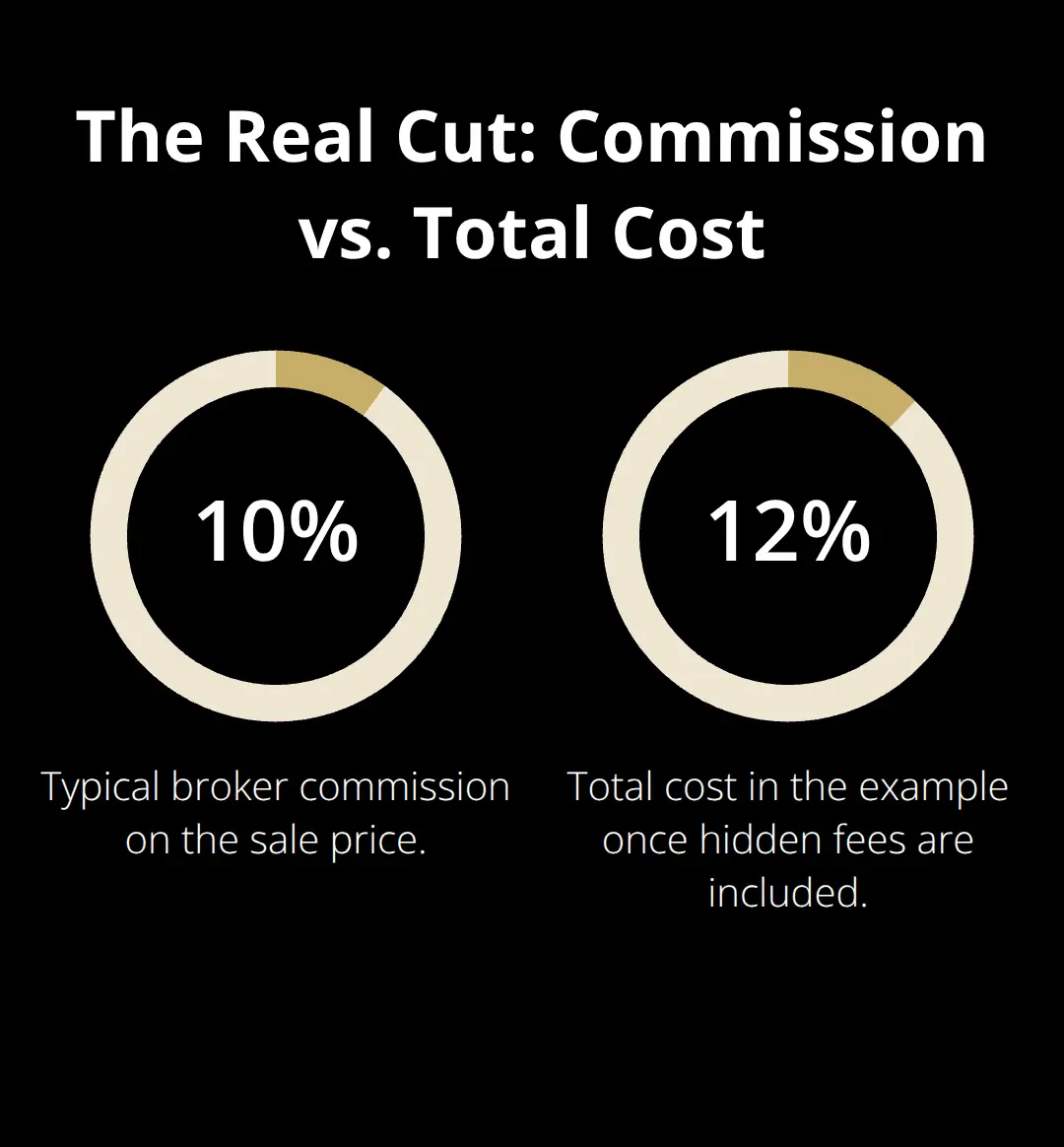
Commission fees represent only part of the damage. Brokers add listing fees ($2,000 to $10,000), transaction fees, wire transfer charges, and document preparation costs. These expenses often appear in fine print or emerge only after you’ve signed an agreement. A $5,000 listing fee plus $3,000 in transaction costs plus $2,000 in document fees adds another $10,000 to your total expense. Combined with a $50,000 commission, you’ve now paid $60,000 to sell a $500,000 business-a 12% total cost that most sellers don’t anticipate. You pay these fees regardless of whether the broker’s efforts actually lead to a sale.
Some brokers charge upfront fees that you never recover if the deal falls through. Others structure fees so that you pay them at closing, but the amount still comes directly from your proceeds. Either way, these costs reduce your net payout and give you zero control over how your money gets spent.
The Real Cost of Waiting
Traditional brokers often spend months marketing your business, running background checks on potential buyers, and managing negotiations. During this time, you’re locked into exclusivity agreements that prevent you from exploring other options. The longer the process takes, the more you lose to opportunity costs and carrying expenses. If your business generates $50,000 monthly in profit, a six-month broker process costs you $300,000 in forgone earnings plus the commission fee. Many sellers don’t calculate this hidden cost, but it dwarfs the upfront commission percentage. The broker faces zero penalty for extending the timeline because they still collect their fee at closing. This is why low-cost business broker alternatives exist that let you control the pace and stop paying once the sale completes. With traditional brokers, you’re essentially renting their network and paying a percentage for the privilege, regardless of whether that network actually delivers results or whether you could have found a buyer independently through your own connections. Understanding these costs sets the stage for exploring modern alternatives that operate on fundamentally different principles.
Modern Alternatives to Traditional Brokers
Success-fee models eliminate the percentage-based drain that traditional brokers impose by tying cost directly to results. Instead of losing 10% or more of your sale price, you pay a 6% success fee only when your business actually sells. A business selling for $500,000 under a 6% success fee would cost $30,000 total, compared to $50,000 under a traditional 10% commission. This keeps incentives aligned: the fee only gets paid if the sale closes, and the amount scales with the price you achieve, which means the interest aligns with yours: maximize the final sale price.
Platforms offering success-fee models charge a single percentage-based fee when your business sells, rather than locking you into monthly charges or costs owed regardless of outcome. The math works in your favor immediately. Even with full-service professional support, a 6% success fee costs far less than a traditional broker’s 10% or higher commission. This approach gives you access to legal templates, marketing tools, and negotiation guidance without forcing you to surrender control of the timeline or accept whatever price a broker deems acceptable. You pay only when your business sells, and only a fraction of what a traditional commission would take.
Success-Fee Structures Reward Better Outcomes
When a broker’s compensation depends on your sale price, both parties win together. A success-fee model means the company invests in your success while charging a modest percentage instead of a heavy commission. At 6%, you keep substantially more of a higher final price than you would under a traditional 10% commission. This incentive structure exists across the low-cost brokerage landscape. Platforms competing on success fees invest heavily in marketing tools and buyer networks because their revenue depends on getting you the best possible sale price. They succeed by helping you sell faster and at higher valuations, not by processing more deals at lower prices.
Hybrid services stack this benefit even higher. You pay a monthly fee for expert guidance while you manage the sale yourself, or you pay the full-service fee and let professionals handle everything. Either way, you avoid the commission trap. The monthly fee model particularly suits sellers who already have buyer interest or strong industry networks. You get professional negotiation help and legal document templates for a predictable cost, then you’re done paying. No surprise fees emerge at closing. No percentage of your proceeds disappears after months of work.
DIY Platforms Demand Your Time, Not Your Money
Listing your business directly on a platform costs almost nothing upfront. You upload financial statements, write your business description, and wait for inquiries. Some platforms charge small monthly listing fees, typically $50 to $200, but nothing approaching traditional brokerage costs. The hidden cost is your time. You respond to buyer inquiries, vet serious prospects, manage negotiations, and handle document exchanges. If your business is straightforward and you’ve already fielded buyer interest informally, this approach works well. You’ll spend 10 to 20 hours over several months managing the process, which costs you far less than hiring a broker.
The risk emerges if you lack sales experience or if your business requires sophisticated negotiation around earnouts non-competes transition periods. A buyer’s lawyer will exploit any weakness in your paperwork or agreements. Professional brokers have seen these issues thousands of times and know how to structure deals that protect you. DIY sellers sometimes miss protections that cost them tens of thousands in disputes after closing.
Choosing Your Level of Professional Support
The decision hinges on your specific business and your comfort level. A straightforward e-commerce business with clean financials and no complex operations suits DIY selling. A service business dependent on your personal relationships with clients, or a business with complicated revenue streams, benefits from professional guidance even at a modest monthly fee. Hybrid platforms let you test the market yourself first, then add professional support if you need it. This flexibility means you control both your costs and your involvement throughout the entire process. When you’re ready to explore which option fits your situation, the next step involves understanding exactly what each platform provides and how to evaluate them against your specific needs.
Choosing the Right Platform for Your Business Sale
Match Your Business Complexity to Your Available Time
Start by mapping your business complexity against your available time. A straightforward retail or service business with stable revenue and minimal client dependencies suits DIY platforms where you pay $50 to $200 monthly to list and manage inquiries yourself. You handle buyer outreach, answer questions, and negotiate terms directly. This works if you’ve already received informal buyer interest or operate in an industry where buyers actively search online.
However, if your business depends on your personal relationships, involves complex revenue structures like earnouts or recurring contracts, or requires careful handling of sensitive client information, DIY platforms create real risk. You’ll spend 15 to 30 hours managing the process while learning deal structure on the fly, and mistakes compound quickly. A buyer’s lawyer will expose gaps in your paperwork that cost thousands to fix after closing.
Hybrid Platforms Balance Control and Professional Support
The flat-fee hybrid platforms for business sales approach is one alternative, but a success-fee model offers the same middle-ground benefits without a cost owed regardless of outcome. These platforms give you access to legal templates, negotiation guidance, and expert review without surrendering control. You list your business, manage initial buyer conversations, then hand off complex negotiations to professionals who’ve seen thousands of deals. Because you pay a 6% success fee only when your business actually sells, a $500,000 sale would cost $30,000 total, far below the $50,000 or more a traditional 10% commission would take.
The math favors this approach for most sellers. You retain decision-making power throughout the process while professionals handle the technical aspects that trip up inexperienced sellers. Monthly fees stop once your sale closes, so you never pay for extended timelines or services you don’t use.
Full-Service Platforms Maximize Your Sale Price
Full-service platforms matter most when your business requires sophisticated marketing or your network lacks serious buyers. These services charge a 6% success fee, paid only when your business sells. On a $500,000 sale, that’s $30,000. Compare this against traditional brokerage: a $500,000 sale costs $50,000 in commission plus $5,000 to $15,000 in hidden fees, creating a $25,000 to $35,000 gap.
Full-service platforms invest in AI-driven buyer matching and premium marketing because their revenue doesn’t depend on transaction volume. They succeed when your business sells at the highest possible price, not when they process deals quickly. This incentive alignment protects your interests throughout the entire transaction.
Evaluate Platform Capabilities Before Committing
Assess each platform’s buyer network size and industry focus before committing. A platform specializing in e-commerce attracts different buyers than one focused on service businesses or manufacturing. Check whether they provide confidentiality protections since buyer names matter during negotiations. Verify their satisfaction guarantee and cancellation policy.
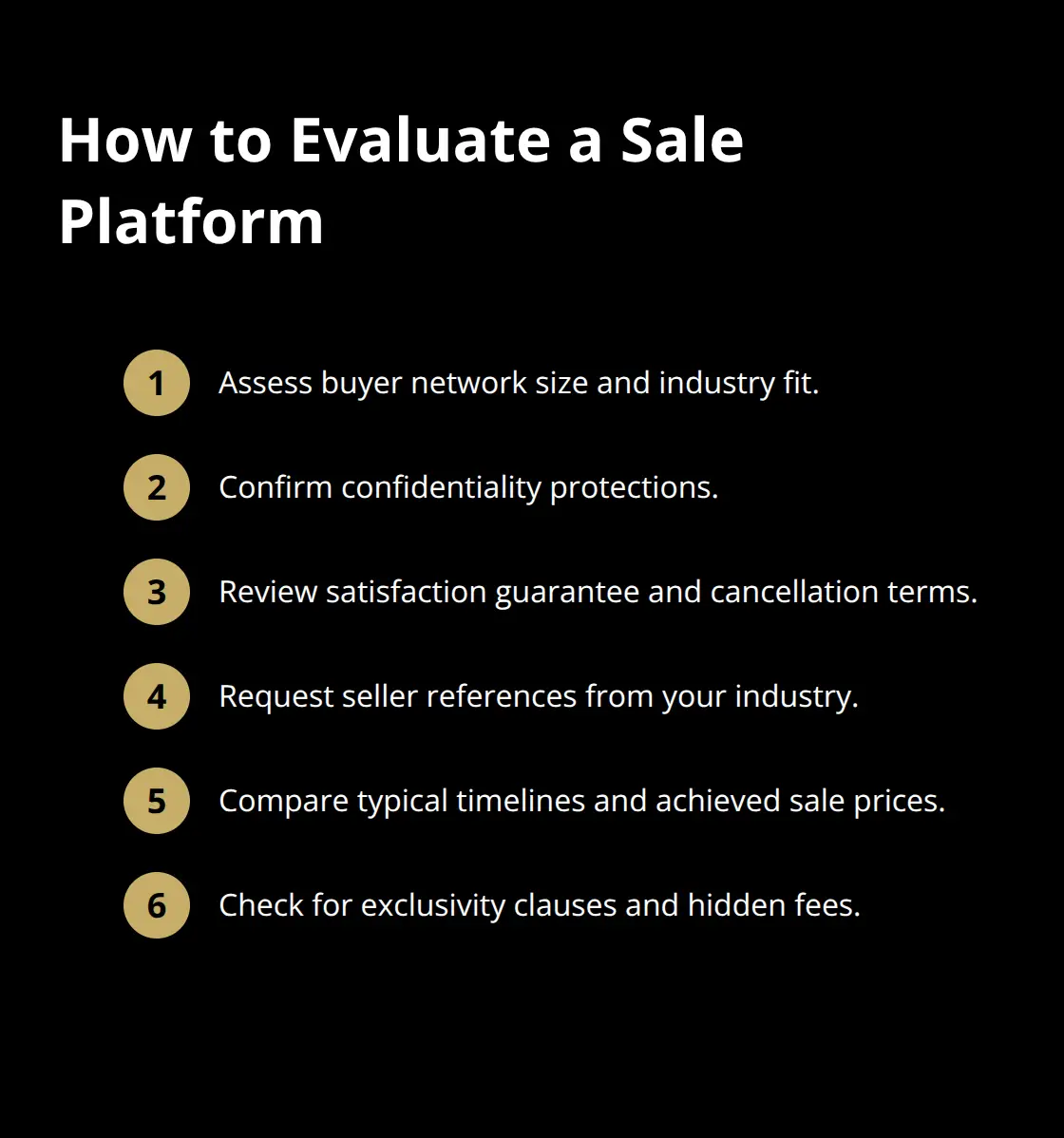
Some platforms lock you into business sale exclusivity agreements that prevent you from pursuing other options if their process stalls. Request references from sellers in your industry who’ve used the platform. Ask specifically how long their sales took, what final prices they achieved, and whether hidden fees emerged at closing. These conversations reveal whether a platform’s marketing claims match reality.
Final Thoughts
Selling your business doesn’t require surrendering control of your finances to a traditional broker. Low cost brokerage options for business sales have fundamentally changed what sellers can expect to pay, shifting the balance from 10% commissions toward success-based fees that keep thousands of dollars in your pocket. Your choice depends entirely on your business complexity and available time-DIY platforms work if you have buyer interest and understand deal structure, while hybrid support provides professional guidance without the commission trap.
Full-service platforms matter most when your business needs sophisticated marketing or your network lacks serious buyers. At a 6% success fee, paid only when your business sells, they cost a fraction of traditional brokerage while aligning incentives with yours (the platform succeeds when your business sells at the highest possible price, not when they process deals quickly). We at Unbroker built our platform around this principle, offering a Full Service Business Sale with a 6% success fee due at closing, plus an Assisted Business Sale option for sellers who want expert support on their own timeline.
Start by assessing your business complexity and available time, then match that to the right platform. Visit Unbroker to explore how low cost brokerage options can protect your bottom line and get your business in front of serious buyers without the traditional commission drain.