Selling your business without a broker means keeping more money in your pocket, but it also means handling every step yourself. We at Unbroker built this DIY business sale guide to walk you through the process from start to finish.
You’ll learn how to prepare your financials, find real buyers, and negotiate a deal that works for you. The right preparation and knowledge make the difference between a smooth exit and a costly mistake.
Getting Your Business Ready to Sell
Before you contact a single buyer, your business needs to be in selling condition. Most sellers who handle their own exits underestimate how much work this takes. Your financial records must be audit-ready, your valuation defensible, and your operations documented so a buyer can actually understand what they’re purchasing. This isn’t about making your business look better than it is-it’s about showing exactly what you have in a way that commands respect and money.
Clean Financial Records Are Your Foundation
Start with your last three years of tax returns, profit and loss statements, and balance sheets. These documents form the backbone of any buyer’s decision. If your books are messy, you’ll either lose serious buyers or they’ll use your disorganization as a reason to lowball you. Your supporting documents should identify the payee, the amount paid, proof of payment, the date incurred, and include a description of the item. Hire a CPA to review your records before you start marketing. This costs between $1,500 and $3,000 but prevents far costlier problems later. Your accountant should also prepare a normalized earnings statement that shows what a buyer can actually expect to earn.
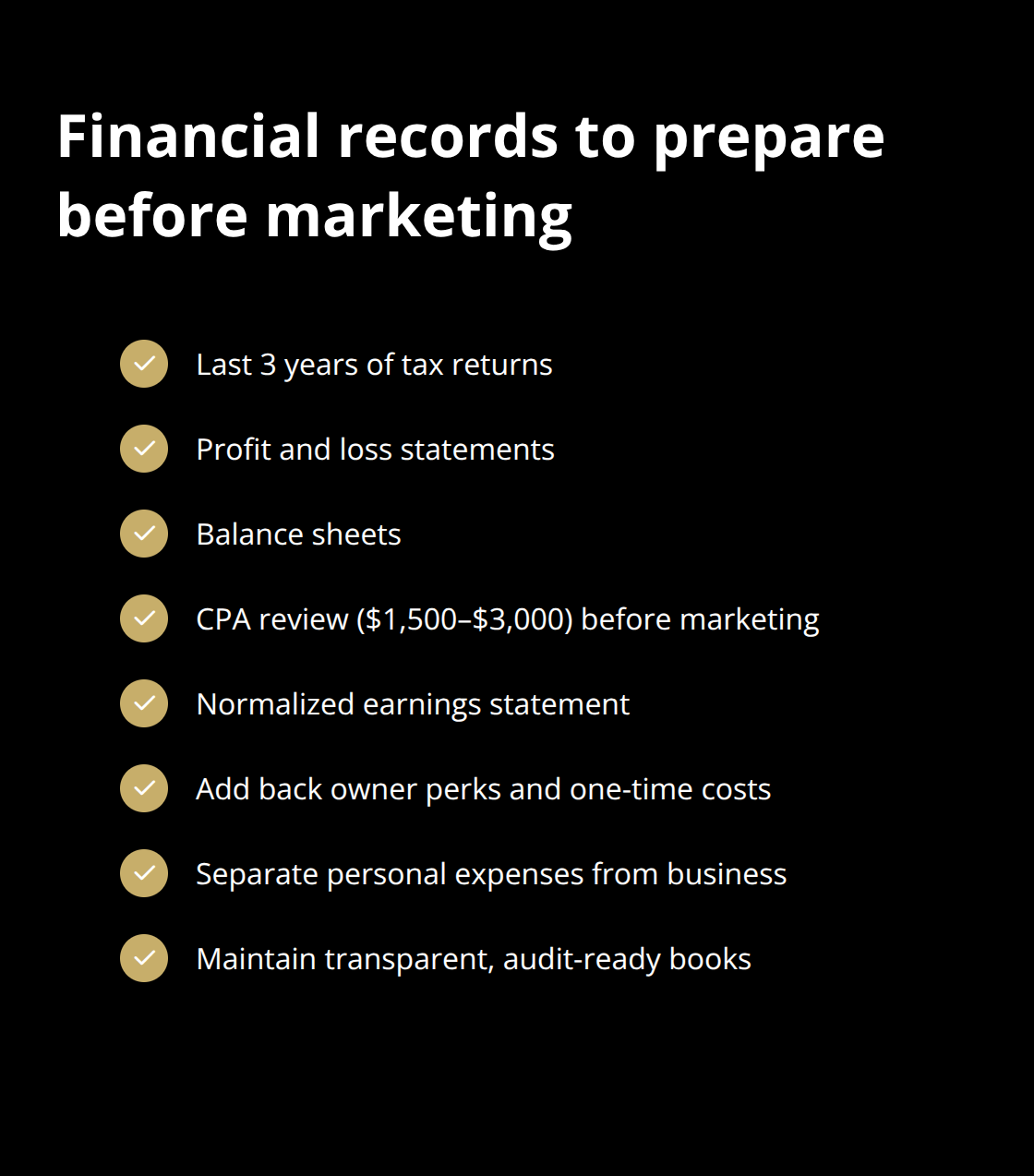
This means adding back owner perks, one-time expenses, and non-recurring costs so the true earning power becomes visible. If you’ve been writing off personal expenses through the business, now is the time to separate those out. Buyers know this happens, and they respect transparency far more than inflated numbers.
Valuation Requires More Than Guessing
Your asking price determines everything that follows. Price too high and qualified buyers disappear. Price too low and you leave substantial money on the table. Most business sales in the lower-middle market range from 2.5 to 4.5 times EBITDA, though this varies dramatically by industry. A software company might command 5 to 8 times EBITDA while a service business might sell for 2 to 3 times. The only way to know your real value is to look at comparable sales in your industry. Sites like Flippa track digital asset sales with actual transaction data. For traditional businesses, BizBuySell publishes anonymized sale prices by category. Don’t rely on online valuation calculators-they’re entertainment, not analysis. Instead, identify three to five similar businesses that sold in the past two years and study their multiples. If you can’t find comparable sales, your industry may be too niche or too new for a standard valuation approach. In that case, a buyer-centric valuation based on cash flow replacement cost becomes more relevant. The goal isn’t to prove your business is worth more-it’s to establish a price that reflects actual market conditions and buyer expectations.
Document What Makes Your Business Run
Buyers want to understand your operations without you present. Create a detailed operations manual covering customer acquisition, fulfillment, staffing, vendor relationships, and technology systems. Include your customer list with revenue per customer over the past 12 months, your supplier agreements, and any software licenses or subscriptions essential to operations. Document your key employee roles and compensation. If your business depends heavily on you, a buyer needs to know that and factor it into their valuation and offer structure. List all recurring revenue contracts and their renewal dates. Recurring revenue is worth more than one-time sales because it’s predictable. If you have customer concentration risk (meaning one or two customers represent more than 30% of revenue), disclose this clearly. Buyers will discover it anyway, and hiding it destroys trust. Compile your marketing and sales processes. How do customers find you? What’s your customer acquisition cost? What’s your retention rate? Organize your intellectual property, including trademarks, patents, domain names, and proprietary processes. These assets often represent significant value that sellers forget to highlight.
Prepare for the Buyer’s Questions
The more complete your documentation, the faster due diligence moves and the fewer questions derail negotiations. Buyers will want to verify everything you’ve presented, so anticipate their requests now. Gather contracts with major customers and vendors, employment agreements, lease terms, insurance policies, and any litigation history. Prepare explanations for revenue fluctuations, customer turnover, or operational changes over the past three years. Have your tax returns, bank statements, and accounting software access ready for inspection. A buyer who can move quickly through verification becomes a buyer who closes quickly. The strength of your preparation directly impacts both the speed of your sale and the final price you receive. With your business documented and your financials polished, you’re ready to identify the right buyers and present your company in the strongest possible light.
Finding and Vetting Potential Buyers
Most business owners who sell without a broker cast too wide a net and waste months on unqualified inquiries. The goal isn’t to find every possible buyer-it’s to find buyers with actual money and genuine interest in your specific business. Start by identifying who would logically want to purchase what you’ve built. This might be a competitor wanting to expand market share, a larger company seeking to acquire your customer base, a financial buyer looking for cash flow, or an entrepreneur entering your industry. Each buyer type has different motivations and negotiation styles.
Identify Your Most Likely Buyers
Competitors often move faster because they understand your business immediately and see synergies you might miss. Strategic buyers from adjacent industries sometimes offer higher prices because they can cut costs through integration. Financial buyers care primarily about cash flow and return on investment, so they’ll scrutinize your numbers intensely.
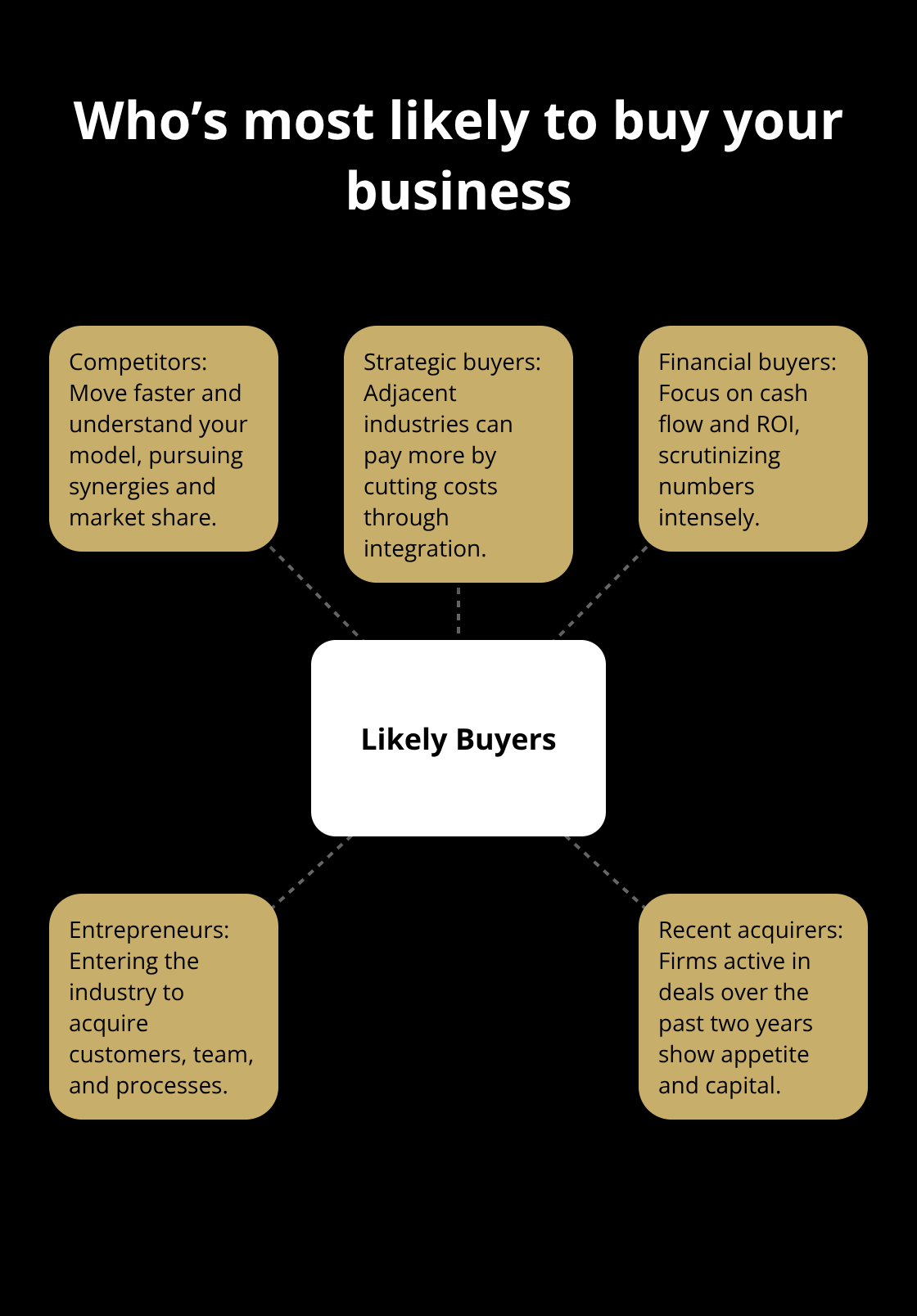
Scan your industry for acquisitions that happened in the past two years and identify the acquiring companies. These firms have proven appetite and capital.
Industry-specific forums, trade associations, and LinkedIn groups connect you with serious players. Your accountant and attorney often know local or regional buyers actively seeking acquisitions. Personal networks frequently surface qualified interest faster than any platform.
Screen Buyers Before Investing Time
When you receive inquiries, ask three immediate questions: Do they have financing in place or pre-approved? Have they purchased a business before? What timeline are they working with? Vague answers eliminate time-wasters. A serious buyer provides specifics about funding sources, previous acquisitions, and closing timelines.
Evaluating whether a buyer can actually close requires verification before you invest hours in negotiations. Request proof of funds from their bank or financing institution. Many buyers have decent net worth but terrible liquidity.
Verify Buyer Credibility and Track Record
Ask for references from previous business purchases and actually call those sellers. Find out whether the buyer closed on time, paid as agreed, and treated the transaction professionally. Run a basic background check using tools like LinkedIn, court records, and Google. Search for any litigation involving the buyer, especially failed business acquisitions or fraud allegations.
If a buyer has a history of disputes or abandoned deals, that’s your signal to move forward cautiously. Contact your state’s Secretary of State office to verify the buyer’s business is registered and in good standing. For larger offers, hire a business attorney to review the buyer’s background and financing structure before you sign anything. This costs $500 to $1,500 but protects you from predatory buyers or deals that collapse mid-process.
Protect Your Information Early
Request a non-disclosure agreement before sharing detailed financial information. Any serious buyer signs an NDA without hesitation. Once you’ve confirmed a buyer has genuine capability and intent, you move into serious negotiations where your preparation from the previous steps determines whether you close strong or leave money on the table. The terms you negotiate-price structure, payment timeline, and contingencies-shape your actual proceeds and post-sale obligations.
Negotiating Your Deal Structure and Terms
Now that you have a qualified buyer across the table, the conversation shifts from proving your business has value to structuring a deal that actually works for you. Most first-time sellers make critical mistakes here because they focus only on the headline price and ignore how that money gets paid. A buyer offering $1 million all cash at closing is fundamentally different from a buyer offering $1.2 million with $400,000 held in escrow for two years. The structure determines your real proceeds and your post-sale risk.
Set Your Asking Price with Precision
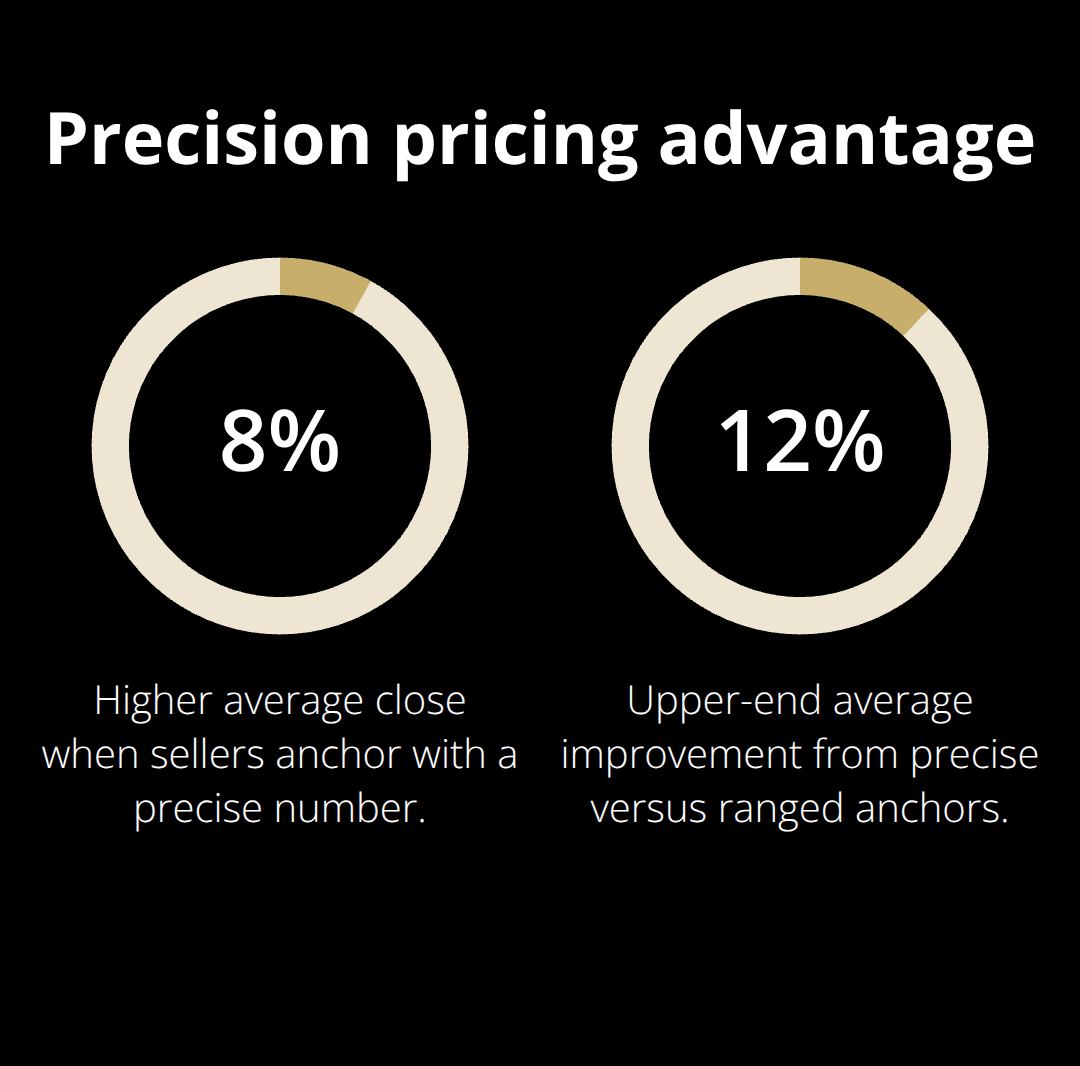
Your first move anchors the conversation with a specific asking price, not a range. Ranges invite buyers to bid at the bottom. According to research from Harvard Business School, sellers who open with a precise number close 8 to 12 percent higher on average than those who provide ranges.
Your number should reflect the valuation work you completed earlier, adjusted slightly upward to account for negotiation room without appearing delusional.
If comparable sales in your industry averaged 3.5 times EBITDA and your business generates $300,000 in normalized EBITDA, your anchor sits around $1.05 million. Price it at $1.15 million and you’ve created legitimate negotiation space. This precision signals confidence and preparation to any serious buyer.
Structure the Deal Beyond Price
Beyond price, the deal structure matters more than most sellers realize. Cash at closing is worth more than seller financing because you avoid the risk of buyer default. If a buyer insists on financing a portion, cap seller-financed amounts at 10 to 20 percent of the purchase price and require a promissory note with personal guarantees.
Earnout provisions, where you receive additional payments based on post-sale performance, sound attractive but create ongoing entanglement with the new owner. Avoid earnouts whenever possible because they require you to remain involved in business operations you no longer control. The cleaner your exit, the better your outcome.
Respond to Counteroffers Strategically
Counteroffers will come, and how you respond determines whether you leave money on the table or create deal fatigue that kills the transaction. When a buyer counters significantly below your asking price, resist the temptation to split the difference immediately. Instead, ask specifically what concerns drove their offer down. Is it cash flow projections? Customer concentration risk? Equipment condition?
A buyer who counters at $850,000 when you asked $1.15 million may be willing to move to $950,000 if you address their specific concerns rather than just haggling over price. Make your counteroffers in writing with clear explanations for your numbers. Verbal negotiations create confusion and give buyers room to claim misunderstandings later.
If you counter at $1.05 million, explain that this reflects your normalized EBITDA calculation and comparable market transactions. Typically, two to three rounds of counteroffers move most deals toward closure. If you’re beyond four rounds without meaningful movement toward agreement, the buyer may lack genuine purchasing intent or financing capability. Don’t waste months on a buyer who won’t move.
Protect Yourself with Legal Documents and Escrow
Hire a business attorney before you sign anything. This costs $2,000 to $5,000 but prevents far costlier mistakes. Your attorney reviews the purchase agreement, ensures all representations and warranties protect your interests, and clarifies contingency terms.
Escrow is non-negotiable. Most business sales place escrow at 10 to 20 percent of the purchase price for 12 to 24 months to cover warranty breaches or undisclosed liabilities. This protects the buyer but also protects you by ensuring funds remain available if disputes arise. Understand exactly what triggers escrow release and what representations you’re making about your business. Misrepresentation of revenue, customer contracts, or operational issues can result in escrow holdback that never gets released.
Final Thoughts
Selling your business without a broker demands preparation, discipline, and realistic expectations about what you can handle alone. This DIY business sale guide covered the three critical phases: preparing your business, finding qualified buyers, and negotiating terms that actually work for you. The sellers who succeed follow this sequence without shortcuts-they clean their financials, document their operations, price with precision, and protect themselves with proper legal structure.
The mistakes happen when sellers skip steps or rush through them. Underestimating how much work preparation takes costs you buyers and money. Casting too wide a net wastes months on unqualified inquiries. Focusing only on headline price while ignoring deal structure leaves you with less cash than you think. Signing documents without legal review exposes you to liability that escrow won’t cover. Your real proceeds depend on accurate valuation, serious buyer qualification, and ironclad deal terms working together.
If managing every detail of a business sale feels overwhelming, Unbroker offers a modern platform combining expert advisors, AI-driven buyer matching, and national marketing with a 6% success fee paid only when your business sells. The choice between handling this yourself or getting professional support depends on your time, expertise, and risk tolerance. Either way, the preparation work remains the same-start with clean financials, document everything, and price based on real market data.