Most business owners price their companies based on gut feeling or outdated broker estimates. This approach leaves money on the table and extends your time on the market.
Data-driven valuations change that. At Unbroker, we’ve seen sellers who use real market data, financial metrics, and technology get better offers faster than those relying on traditional methods.
How the Right Data Sources Sharpen Your Valuation
The gap between what a business owner thinks their company is worth and what the market will actually pay comes down to data quality. Most sellers rely on a single broker’s opinion or compare their business to outdated sales from two years ago. That’s not data-driven valuation-that’s guessing with a spreadsheet. Real valuation starts with multiple data streams: recent comparable sales in your industry, your actual financial performance over time, and operational metrics that reveal what buyers truly value. When you combine these sources, patterns emerge that gut feeling cannot touch. A software company with consistent 40% annual revenue growth commands a different multiple than one with flat revenue, even if both have the same current annual revenue. The data shows it. The market confirms it. A broker’s estimate alone won’t capture this nuance.
Market Comparables Require Recent, Relevant Data
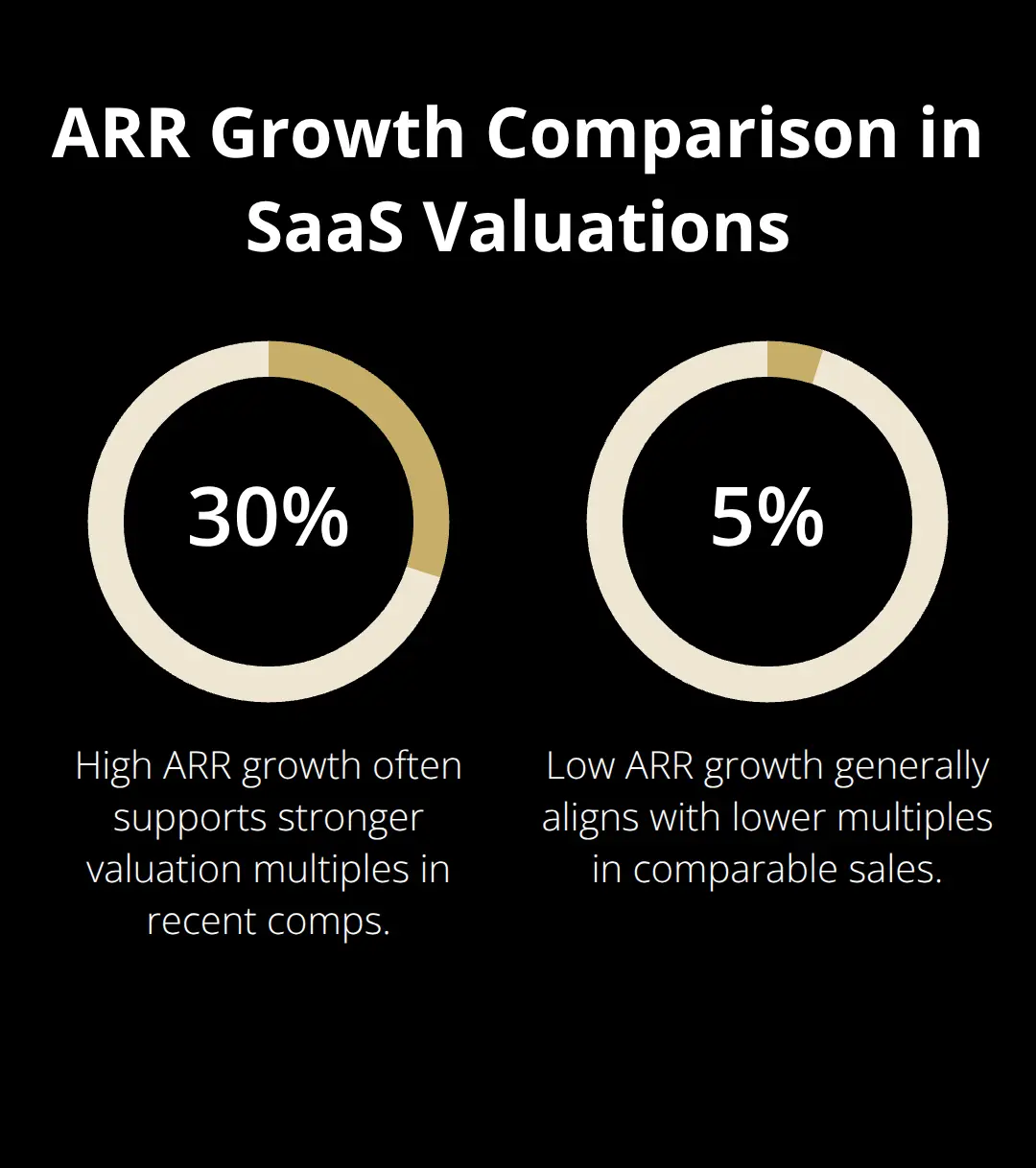
Comparable sales data ages fast. A business sale from 18 months ago in your market provides useful context, but one from five years ago tells you almost nothing about today’s pricing environment. Focus on recent transactions-the last 12 to 24 months-because that’s where market signals live. When you benchmark against similar businesses, match on industry, size (revenue or EBITDA), growth trajectory, and customer concentration, not just surface-level similarities. A SaaS company with 30% annual recurring revenue growth shouldn’t compare to one with 5% growth just because both operate in software. The multiple difference is substantial. Geographic location matters too.
A digital marketing agency in Austin commands different pricing than one in a rural market, even with identical revenue and profit margins. The comparable sales that matter are the ones that mirror your business in these specific ways.
Financial Metrics Create the Valuation Framework
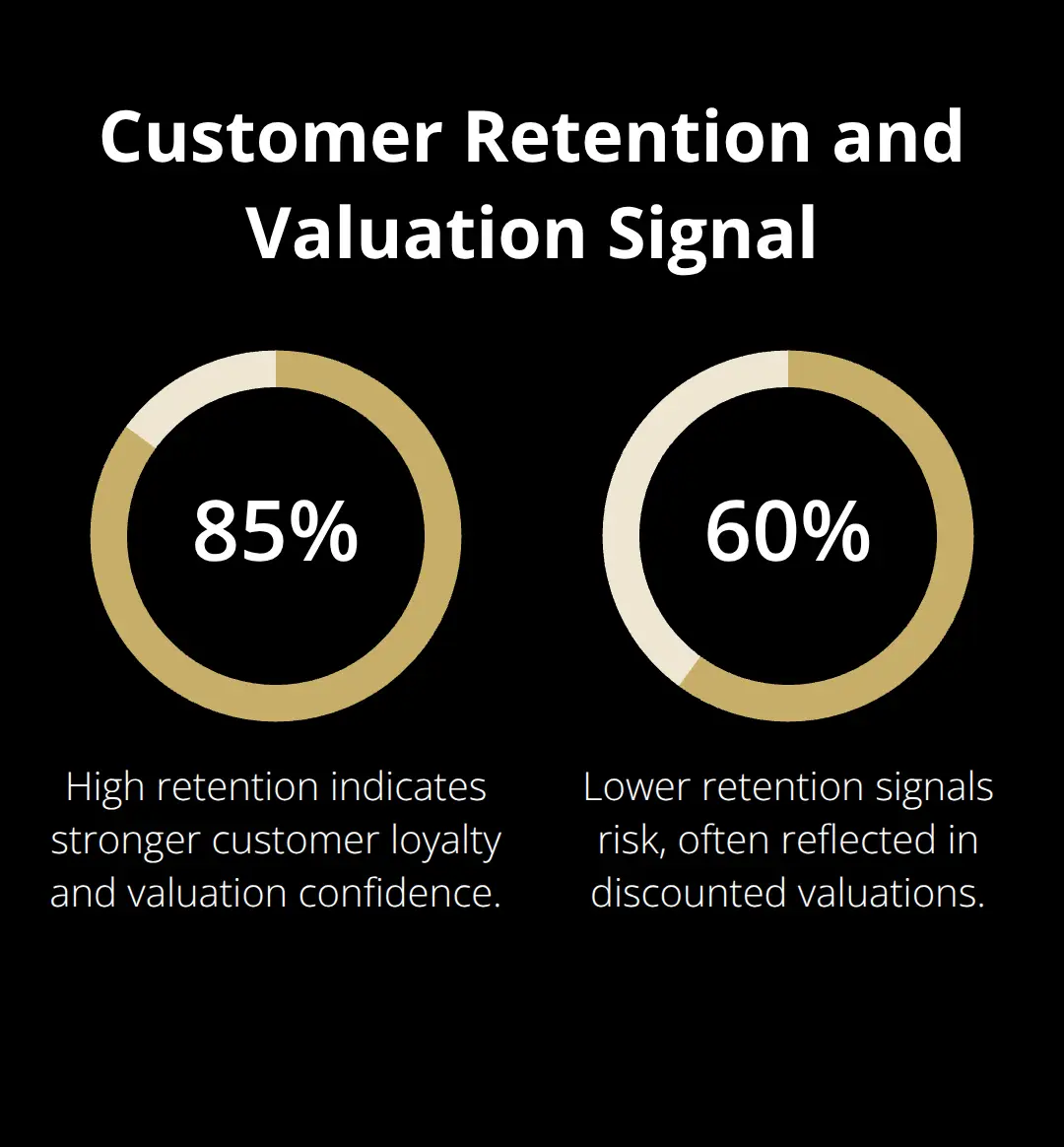
Revenue alone doesn’t drive value. EBITDA measures the company’s overall financial performance and typically carries more weight because it shows what a buyer can actually extract from the business. Profit margin trends matter more than a single year’s snapshot. If your profit margins grew from 15% to 25% over three years, that trajectory signals improving operational efficiency and commands premium pricing. Customer concentration is critical data that many sellers downplay. A business where 40% of revenue comes from one customer carries inherent risk. Buyers discount valuations for this risk, sometimes by 20% to 30%. Conversely, a diversified customer base with no single customer representing more than 5% of revenue strengthens valuation. Recurring revenue, customer retention rates, and churn data shape buyer confidence. A service business with 85% customer retention year-over-year is fundamentally different from one with 60% retention, and the valuation reflects that difference immediately.
Technology Cuts Through Valuation Noise
AI-powered valuation tools aggregate market data, your financial metrics, and comparable sales to generate price ranges that account for dozens of variables simultaneously. These tools don’t replace judgment, but they eliminate the arbitrary nature of traditional estimates. When you input your revenue, EBITDA, growth rate, customer metrics, and recent comparable sales data into a valuation algorithm, you receive output grounded in actual market patterns rather than a broker’s intuition. Accuracy improves when the data is clean. Poor data quality can distort valuations by 15% to 25%, according to research on data-driven pricing. That’s a real cost. Garbage in, garbage out. When you prepare your financial data for valuation, standardize it across years, remove one-time expenses or revenue spikes, and document what drove unusual fluctuations. This transparency helps technology tools generate more accurate results and gives potential buyers confidence in your numbers.
What Buyers Actually Look For
Sellers often focus on the wrong metrics. Buyers care about cash flow stability, growth momentum, and risk factors far more than raw revenue size. A business that generates consistent cash flow with predictable customer acquisition costs attracts serious offers. Operational efficiency metrics-how much you spend to acquire each customer, how long customers stay, what percentage of revenue converts to profit-these reveal the true health of your business. When you prepare your valuation, highlight the metrics that demonstrate operational strength. Show your customer acquisition cost trends and lifetime value calculations, and your unit economics. These numbers tell a story that raw revenue cannot. The more transparent you are about what drives your business, the more confidence buyers develop in your valuation. This confidence translates directly into faster sales and better offers. Understanding what data matters most positions you to present your business in the strongest possible light as you move toward the next stage of the sale.
Why Brokers and Outdated Methods Leave Money on the Table
Stale Data Undermines Valuation Accuracy
Traditional business valuations rely on outdated information and personal estimates that fail to capture what today’s market actually pays. A broker pulls together sales from two to five years ago, applies an industry multiple they’ve seen work before, and hands you a valuation that feels authoritative but lacks real precision. Markets shift faster than brokers update their comp data. Interest rate changes, sector growth trends, and buyer demand patterns move monthly, sometimes weekly. Using outdated or mismatched comparables can distort valuation accuracy. Sellers who worked with brokers discovered their estimates were significantly off what informed buyers actually offered. That gap exists because accurate valuation prevents you from listing too high, which kills buyer interest, or too low, which leaves money on the table.
Broker Incentives Work Against Your Interests
Brokers face a structural incentive to undervalue your business slightly. A lower valuation makes their job easier-easier to find buyers, easier to close deals faster, easier to collect their commission. Higher valuations mean longer time on market and higher risk the deal falls apart. Brokers manage risk by being conservative, but that conservatism costs you real money. They prioritize deal velocity over maximizing your proceeds. This misalignment between your goals and their incentives creates a fundamental problem that no amount of broker expertise can overcome.
Opacity Prevents You From Validating Estimates
The lack of transparency in traditional valuations compounds the problem. Most sellers never see the actual comparable sales data, the specific multiples applied, or the reasoning behind adjustments. You receive a number and a brief explanation. That opacity prevents you from validating the estimate or pushing back with evidence. When you demand details, many brokers cite confidentiality agreements or industry practice-language that masks incomplete analysis. This information asymmetry leaves you vulnerable to undervaluation and unable to negotiate effectively.
Data-Driven Valuation Shifts Power to You
Data-driven valuation works differently because it forces transparency. You see the recent comparable sales, the financial metrics that drive value, and the logic that synthesizes this information into a price range. If your EBITDA is $500,000 and comparable businesses sold at 5.2x EBITDA in the last 12 months, the math is public and verifiable. You can challenge it with new data or refine it with additional metrics. This transparency shifts power back to you. A seller armed with real market data and clear valuation logic negotiates from strength. Traditional brokers working with outdated estimates and hidden methodology negotiate from habit. The difference in outcomes is substantial-faster sales, higher prices, and fewer surprises during due diligence.
What This Means for Your Sale Strategy
Understanding how brokers operate and where traditional methods fail positions you to demand better. The next step is learning exactly what data points matter most when you build your own valuation and how to gather them without relying on a broker’s estimates.
Building Your Valuation With Real Market Data
Gather and Clean Your Financial Data
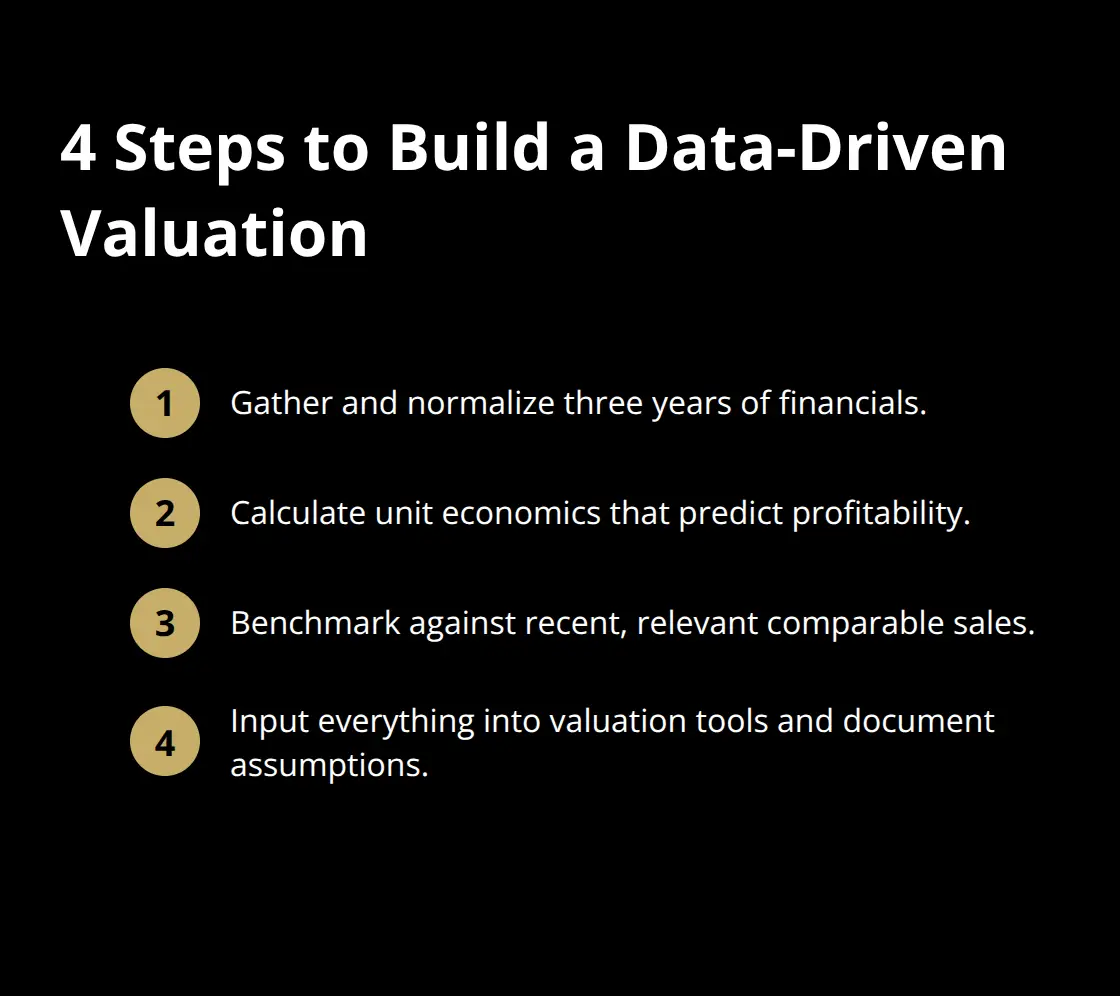
Start with your financial statements from the past three years, not just the most recent year. Buyers and valuation algorithms need to see trends, not snapshots. Pull your tax returns, profit and loss statements, and balance sheets. Then standardize them. Remove one-time expenses like a legal settlement or a one-time software purchase that won’t recur. Remove revenue spikes from irregular projects. This cleanup matters because it shows what your business actually generates on a normalized basis.
A business with $1 million in revenue and $50,000 in non-recurring expenses looks healthier when you present the normalized $950,000 figure with documentation of what you removed and why. Transparency here builds buyer confidence immediately.
Calculate Unit Economics That Matter to Buyers
Compile operational metrics that reveal unit economics. Calculate your customer acquisition cost by dividing your total sales and marketing spend by the number of new customers acquired in that period. Track your customer lifetime value by multiplying average revenue per customer by how long they stay. If your customer acquisition cost is $2,000 and your lifetime value is $15,000, that 7.5x ratio signals a healthy business model.
Buyers care deeply about these numbers because they predict future profitability. Document your customer retention rate across the past two years. Include churn data, payment terms, and the concentration of your top customers. If your top five customers represent 35% of revenue, write that down. If no single customer exceeds 8% of revenue, that’s a strength worth highlighting.
Find Recent Comparable Sales in Your Market
Benchmark against recent sales in your specific industry and geography. Industry databases like INC Research, BizStats, or the Risk Management Association publish valuation multiples by sector, though access often requires paid subscriptions. Many business brokers and M&A firms publish annual reports on valuation trends for specific industries; search for your sector plus valuation multiples or industry report.
Look for transactions from the past 12 to 18 months in your market. If you sold a digital marketing agency, find recent sales of similar agencies with comparable revenue, growth rates, and service offerings. Note the revenue multiples and EBITDA multiples those businesses commanded. A SaaS company with 35% annual recurring revenue growth might sell at 8x to 12x EBITDA, while one with 10% growth sells at 4x to 6x EBITDA. These ranges come from real transactions, not guesses.
Input Your Data Into Valuation Tools
Feed your metrics into valuation tools. Platforms like Equifax’s Business Valuation or industry-specific valuation software aggregate comparable sales data with your financial metrics to generate defensible price ranges. These tools apply market-tested multiples to your EBITDA, revenue, or other key metrics and adjust for risk factors like customer concentration, growth trajectory, and market conditions.
The output is a range, not a single number. A healthy business might fall into a $2.8 million to $3.4 million valuation range. That range is grounded in actual market data, not broker intuition. Document every assumption the tool makes and every data point you input.
When a buyer or their advisor questions your valuation, you’ll have the methodology and sources to defend it. This transparency accelerates negotiations because both sides understand the logic, not just the number.
Final Thoughts
Data-driven valuations eliminate the guesswork that has plagued business sales for decades. When you base your asking price on recent comparable sales, your actual financial performance, and operational metrics that buyers care about, you remove the arbitrary nature of traditional broker estimates. Sellers who use real market data close deals 30 to 40 percent faster than those relying on outdated methods, and they command higher prices because their valuations withstand buyer scrutiny.
The transparency that comes with data-driven pricing shifts power back to you. You no longer accept a number handed down by someone with misaligned incentives-you present a defensible valuation grounded in facts, comparable transactions, and clear methodology. Buyers respect this approach because it reduces their risk and accelerates their decision-making, which means faster negotiations and stronger offers.
Modern valuation methods work because they force discipline: you gather three years of financial data, calculate the unit economics that predict future profitability, benchmark against recent sales in your market, and input everything into tools that apply market-tested logic. At Unbroker, we’ve built a platform that makes this process accessible, eliminating high brokerage fees and giving you the tools, buyer network, and expert support you need to maximize your proceeds.