Becoming a business broker requires more than ambition-it demands specific credentials, financial expertise, and proven sales ability. At Unbroker, we’ve seen firsthand that the most successful brokers combine formal education with hands-on experience and continuous learning.
This guide walks you through the exact certifications you need, the skills that separate top performers from the rest, and realistic income expectations as you build your practice.
What Credentials You Actually Need to Start
The path to becoming a business broker isn’t as standardized as becoming a lawyer or accountant, which means you have flexibility but also responsibility to get it right. Most states don’t require a specific business broker license, but 10 states including California, Florida, and New York do mandate licensing, and you’ll need to pass exams covering business law, ethics, and valuation methods.
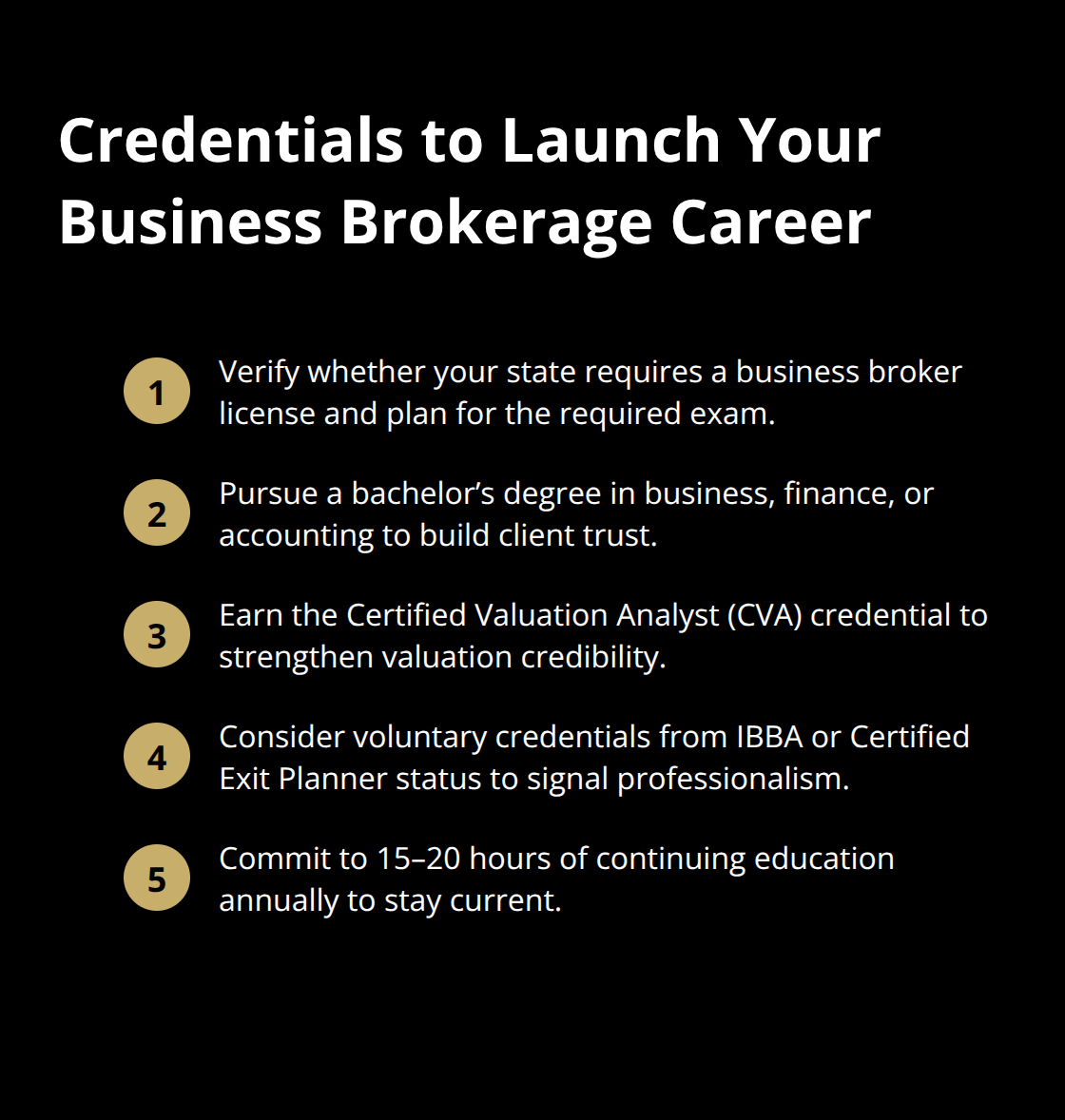
The Certified Valuation Analyst credential requires passing a comprehensive, five-hour, multiple-choice, proctored examination. A bachelor’s degree in business, finance, or accounting helps significantly because clients trust brokers who understand financial statements, tax implications, and market trends. If you already work in accounting, finance, or sales, you’re ahead of most people entering this field.
State Licensing Separates Serious Brokers from the Rest
If you’re in a regulated state, obtain your license before you market yourself as a broker. California’s exam covers business and professions code, California-specific valuation practices, and ethics violations that actually happened to real brokers. The exam typically requires 4 to 6 weeks of focused study, and you can’t shortcut this part because clients verify credentials immediately. Florida requires 60 hours of classroom instruction plus a passing score on their state exam, and many brokers complete this in 3 to 4 months while working a current job. New York’s licensing process is similarly rigorous. In states without mandatory licensing, a voluntary credential from the International Business Brokers Association or Certified Exit Planner status through the American College of Advisors shows clients you’re committed to professional standards and continued learning.
Ongoing Education Keeps Your Advice Relevant
The business sale market changes constantly. Tax law shifted significantly in 2024, affecting how buyers structure deals and what sellers can expect. The average business sells for 3.5 to 4 times EBITDA according to recent market data, but this varies wildly by industry, and you need current knowledge to guide clients accurately. You should complete 15 to 20 hours of continuing education annually-this isn’t just required in many states, it’s essential for your credibility. Courses on valuation methods, deal structures, and industry-specific exits keep your expertise sharp. Real estate brokers often transition into business brokerage and bring valuable transaction experience, but they need specific training on business valuations because the skills don’t transfer directly.
Why Financial Analysis Skills Matter Most
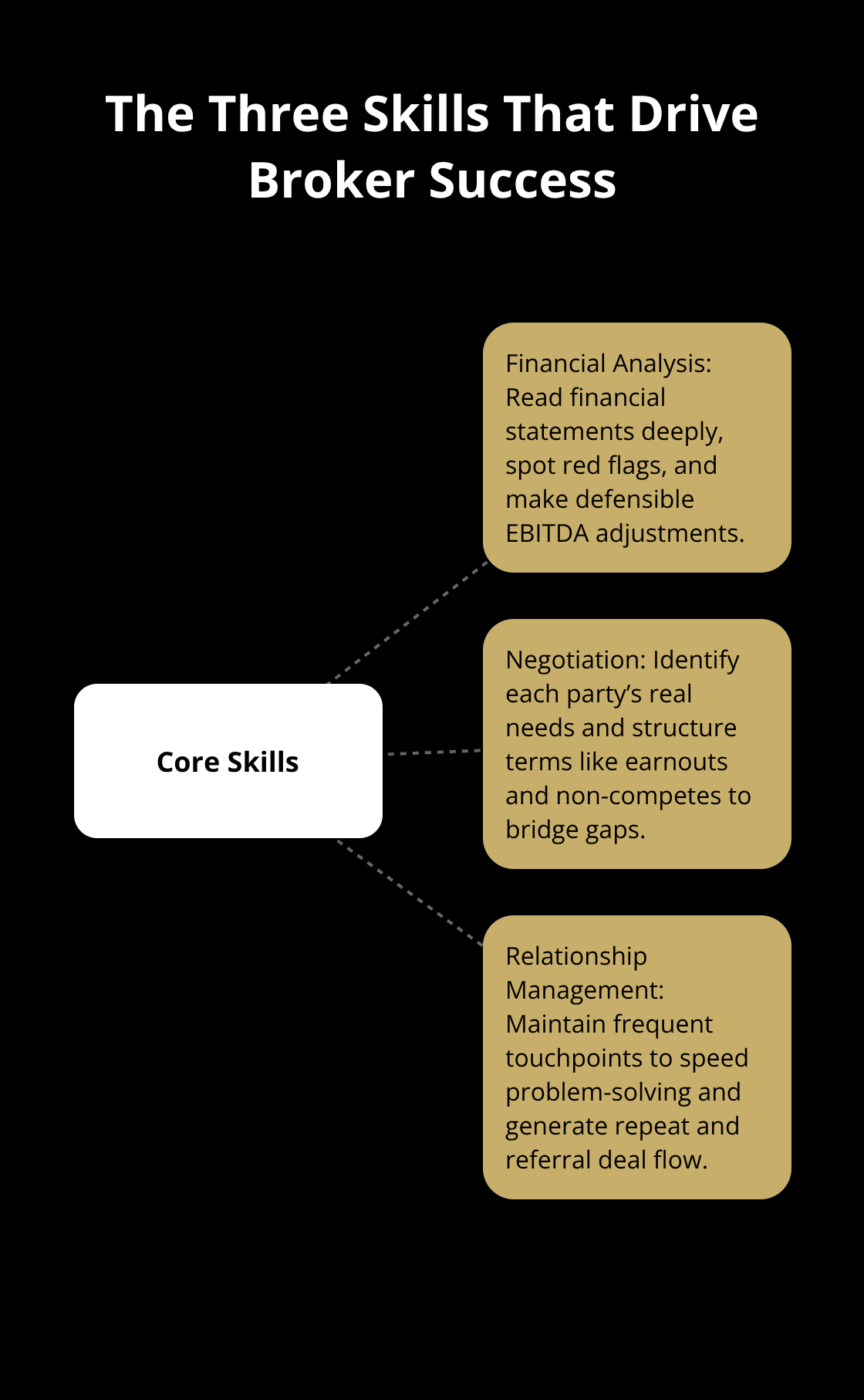
Your ability to read financial statements separates you from amateurs. Buyers and sellers both expect you to spot red flags in revenue trends, explain EBITDA adjustments, and identify which expenses actually affect business value. You’ll analyze tax returns, profit-and-loss statements, and balance sheets weekly, so weak financial skills cost you deals. Most successful brokers spend their first year studying how different industries report earnings and which metrics matter most (EBITDA, cash flow, customer concentration). This foundation makes every conversation with clients more credible and every valuation more defensible.
Building Your Expertise Beyond Credentials
Credentials open doors, but real expertise comes from handling transactions. You’ll learn more from your first 10 deals than from any course because you’ll see how market conditions, buyer financing, and seller expectations actually work. Many brokers join established firms first to learn the business before starting their own practice, which reduces your risk and accelerates your learning curve. Your next step involves choosing whether to work for an existing brokerage or build your own platform-and that decision shapes everything about your income potential and career trajectory.
The Three Skills That Determine Your Success
Financial analysis forms the foundation of credibility with both buyers and sellers. You need to read income statements, balance sheets, and tax returns the way a surgeon reads X-rays-spotting problems instantly and explaining what they mean. Most brokers spend their first year learning which metrics matter in different industries. In manufacturing, inventory turnover and customer concentration drive valuation. In SaaS businesses, customer acquisition cost and churn rate determine what buyers will pay. In service businesses, owner dependency is the biggest red flag that tanks valuations.
You’ll spend 30% of your first year on deals analyzing these documents, so weak skills here mean weak deals.
Why Financial Expertise Separates Top Performers
Strong financial analysis skills let you spot red flags that amateurs miss. You identify which expenses actually affect business value, explain EBITDA adjustments that matter, and defend your valuations with data. Clients expect you to catch revenue trends that signal problems, inventory issues that hide losses, and customer concentration risks that scare buyers away. This expertise makes every conversation with clients more credible and every deal more defensible.
Negotiation Goes Beyond Price Discussions
The second critical skill is negotiation-not the Hollywood version where someone yells and wins, but the version where you understand what each party actually needs and structure deals that satisfy both sides. Sellers care about price, but they also care about earnouts, non-competes, and whether the buyer will keep their employees. Buyers care about price, but they’re equally focused on inventory accuracy, customer retention, and whether the owner will stay during transition. A skilled negotiator finds the real problem behind each demand. When a buyer pushes hard on price, ask why-is it financing constraints, concern about customer retention, or just standard negotiation? The answer changes your strategy completely.
Relationship Management Accelerates Deal Velocity
Your third foundation is relationship management, which means staying in touch with past clients, understanding their ongoing concerns, and referring them to other professionals they need. Brokers with strong relationship networks close deals faster because they solve problems faster. You should spend 10 hours monthly on relationship maintenance-coffee meetings, phone calls, emails to past clients-because repeat business and referrals generate 60% of successful brokers’ pipelines. These three skills compound over time, so your first year determines your trajectory more than most careers.
How These Skills Translate to Income
The combination of financial expertise, negotiation ability, and strong relationships directly impacts your earning potential. Brokers who master all three skills handle larger deals, command higher commissions, and build sustainable practices that generate consistent revenue. Your foundation in these areas shapes not just your first year but your entire career trajectory in business brokerage.
How Much You’ll Actually Earn as a Business Broker
Starting as a business broker means accepting lower income initially while you build deal flow and credibility. Most entry-level brokers earn $20,000 to $40,000 annually in their first year because they handle small deals, learn valuation methods, and build their client network simultaneously. Your first year income depends heavily on whether you join an established firm or start independently.
Income Structures: Firm vs. Independent
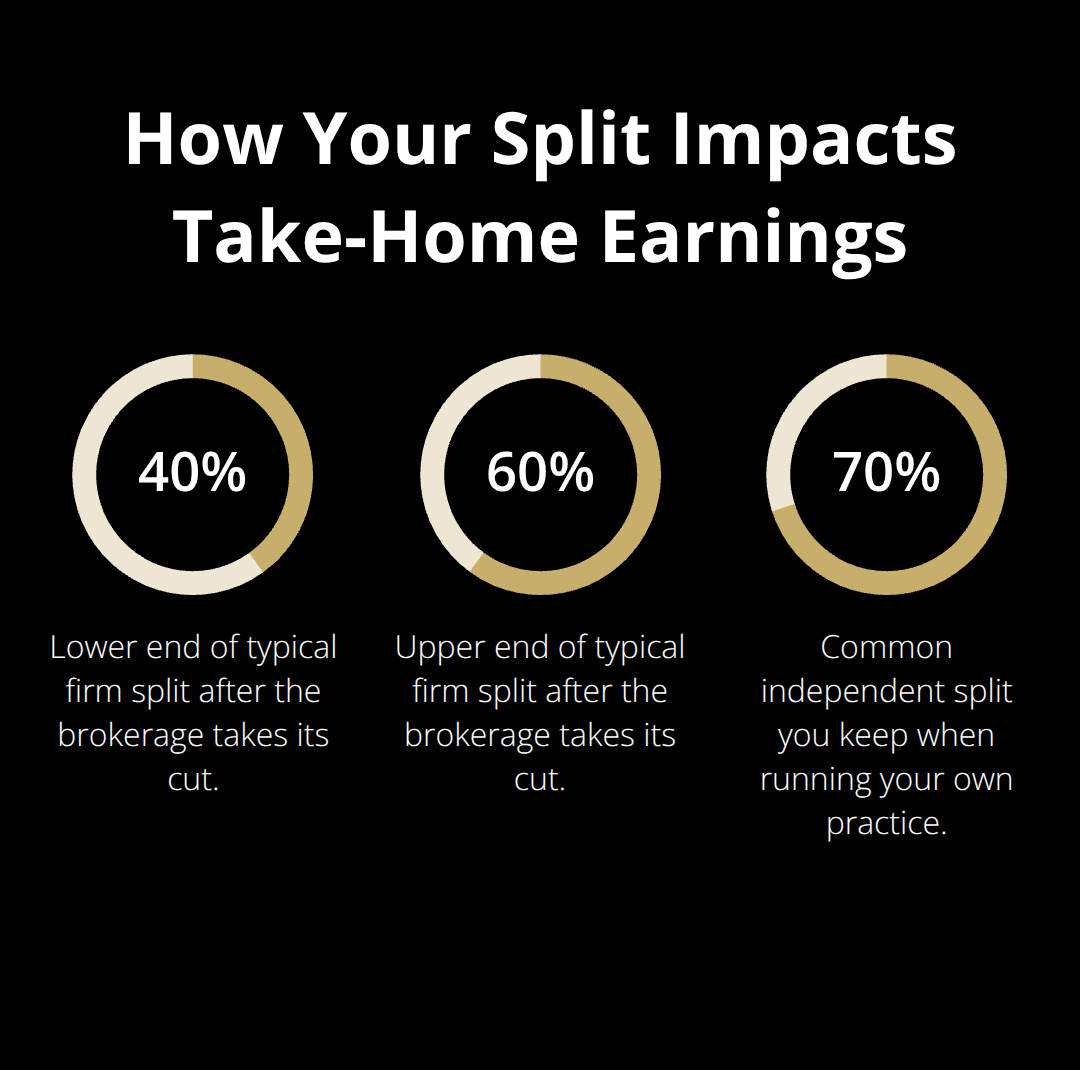
Joining a firm means smaller commissions per deal-typically 40 to 60 percent of the brokerage commission after the firm takes its cut-but you receive training, deal flow, and infrastructure without personal capital investment. Starting independently means you keep higher commission percentages, often 70 to 100 percent of what you earn, but you cover all marketing costs, licensing fees, and office expenses upfront.
Most brokers spend 12 to 18 months building enough deal flow to reach $60,000 to $80,000 annually. After three years of solid performance, successful brokers typically earn $100,000 to $200,000 annually as they handle larger transactions and develop repeat client relationships.
Commission Rates and Deal Economics
The commission structure typically ranges from 8 to 12 percent of the sale price for businesses selling under $500,000, dropping to 5 to 8 percent for larger deals. A broker closing a $1 million business at 8 percent commission earns $80,000 before splitting with their firm or covering business expenses. This means your income scales directly with deal size and frequency, which is why relationship management and financial expertise matter so much.
Building Sustainable Practice Economics
Successful brokers treat business brokerage like a real business, not a side venture. You should expect to invest $15,000 to $30,000 in your first year on licensing, continuing education, website development, and marketing materials. Many brokers reinvest 20 to 30 percent of their earnings back into marketing because deal flow depends on visibility. Your practice becomes genuinely profitable around year three when referrals and repeat clients generate 40 to 60 percent of your pipeline, reducing your marketing costs.
Long-Term Income Potential
Successful brokers spend their first two years focusing on one specific market segment-whether that’s tech companies, manufacturing businesses, or service firms-because specialization builds reputation faster than generalization. Your long-term income potential in business brokerage genuinely exceeds most careers if you master financial analysis, build a strong network, and stay committed through the difficult early years when deals are scarce and competition feels overwhelming.
Final Thoughts
Becoming a business broker demands three foundational elements: relevant credentials, financial expertise, and relationship-building skills. State licensing matters in regulated markets, but voluntary credentials from professional organizations signal commitment to clients regardless of location. Your financial analysis ability determines credibility with buyers and sellers, while negotiation skills and consistent relationship maintenance drive deal velocity and income growth.
The income trajectory in business brokerage rewards persistence through your first three years. Your first year typically generates $20,000 to $40,000 as you build deal flow and market knowledge, and successful brokers reach $100,000 to $200,000 annually through larger transactions and repeat client relationships. This income scales directly with deal size and frequency, making specialization in specific market segments a smart strategy for accelerated growth.
For business owners considering a sale, Unbroker combines expert advisors with AI-driven buyer matching and national marketing, charging a 6% success fee paid only when your business sells. The platform handles confidential processes, legal documentation, and negotiation assistance so you focus on running your business through closing.