Becoming a business broker offers real earning potential and independence, but it requires strategy and preparation. At Unbroker, we’ve seen firsthand how the right roadmap transforms ambitious professionals into successful brokers.
This guide walks you through what the role actually involves, how to build your foundation, and what obstacles you’ll encounter in year one.
What Business Brokers Actually Do
Business brokers spend their days connecting buyers with sellers, which sounds simple until you realize the role demands constant juggling of spreadsheets, phone calls, and emotional negotiations. Your mornings typically start with reviewing financial statements and valuations for businesses in your pipeline. You analyze tax returns, profit-and-loss statements, and customer contracts to determine accurate business valuations. According to the International Business Brokers Association, the median business broker handles between 8 and 15 active listings at any given time, which means you manage multiple timelines and personalities simultaneously.
Daily Responsibilities That Define the Role
Much of your work involves qualifying buyers, which requires asking tough questions about their capital, experience, and motivation. You conduct market research to position each business competitively, prepare offering memorandums that highlight strengths while remaining honest about weaknesses, and coordinate inspections and due diligence. The role demands strong financial literacy because buyers will challenge your valuations, and you need concrete numbers to defend your assessments.
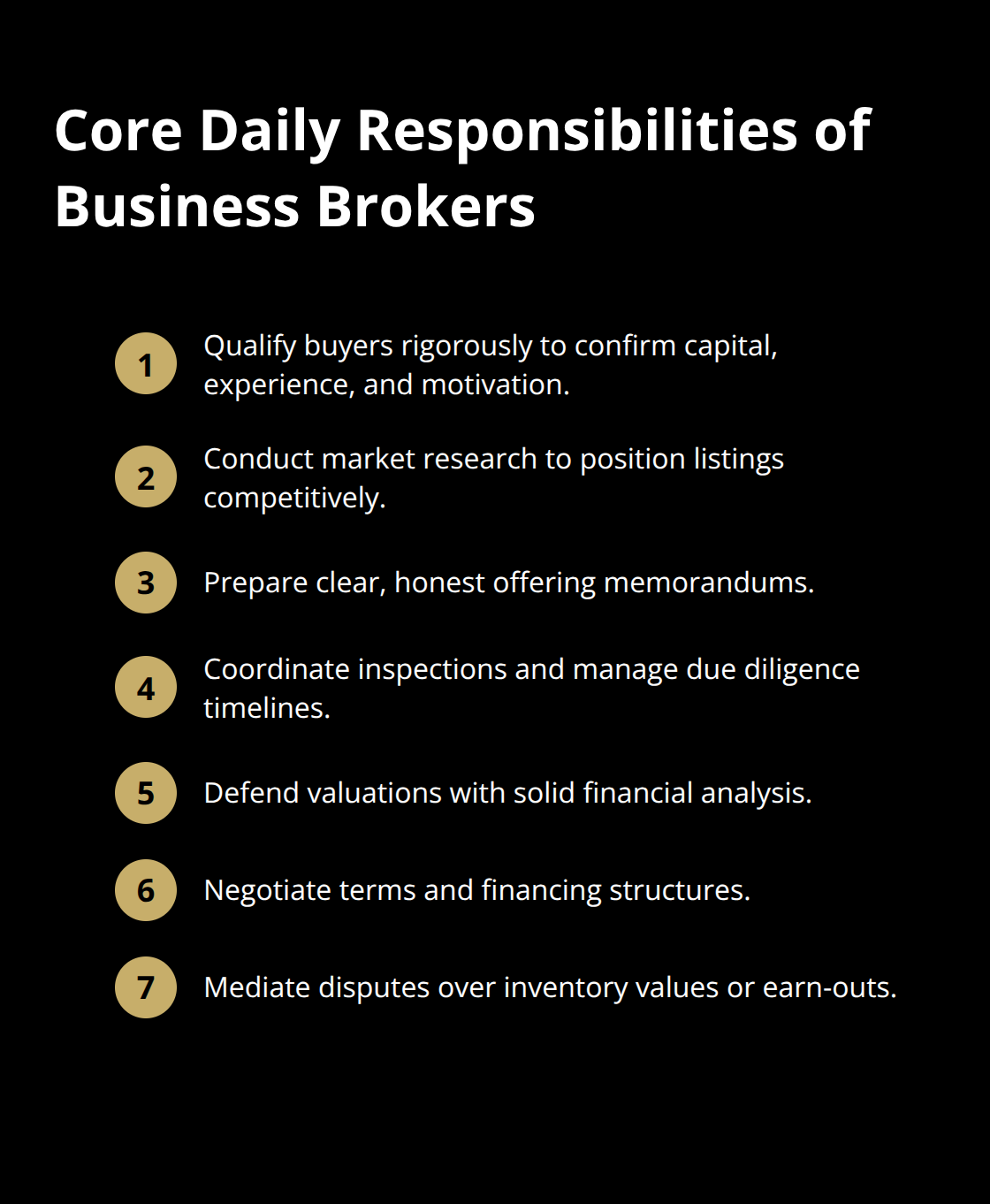
You also negotiate terms, navigate financing hurdles, and sometimes act as a mediator when deals threaten to collapse over disagreements about inventory value or earn-out provisions.
The Skills That Actually Matter
Success as a business broker hinges on three non-negotiable abilities. First is financial analysis-you must understand balance sheets and cash flow statements well enough to spot red flags and explain them clearly to non-accountants. Second is relationship building, which means you follow up relentlessly and stay in contact with past clients, potential buyers, and other brokers who might refer deals. Third is sales ability, but not the pushy kind; brokers who succeed are those who ask questions, listen carefully, and match the right buyer to the right business rather than forcing misaligned deals.
You’ll also need resilience because rejection is constant-most buyer inquiries won’t convert, many listings won’t sell, and deals collapse for reasons beyond your control. Technical competence matters too; you should be comfortable with CRM software, valuation tools, and digital marketing platforms. The brokers who thrive combine financial rigor with genuine curiosity about how businesses actually operate and what motivates the people who buy and sell them.
Income Reality and Commission Models
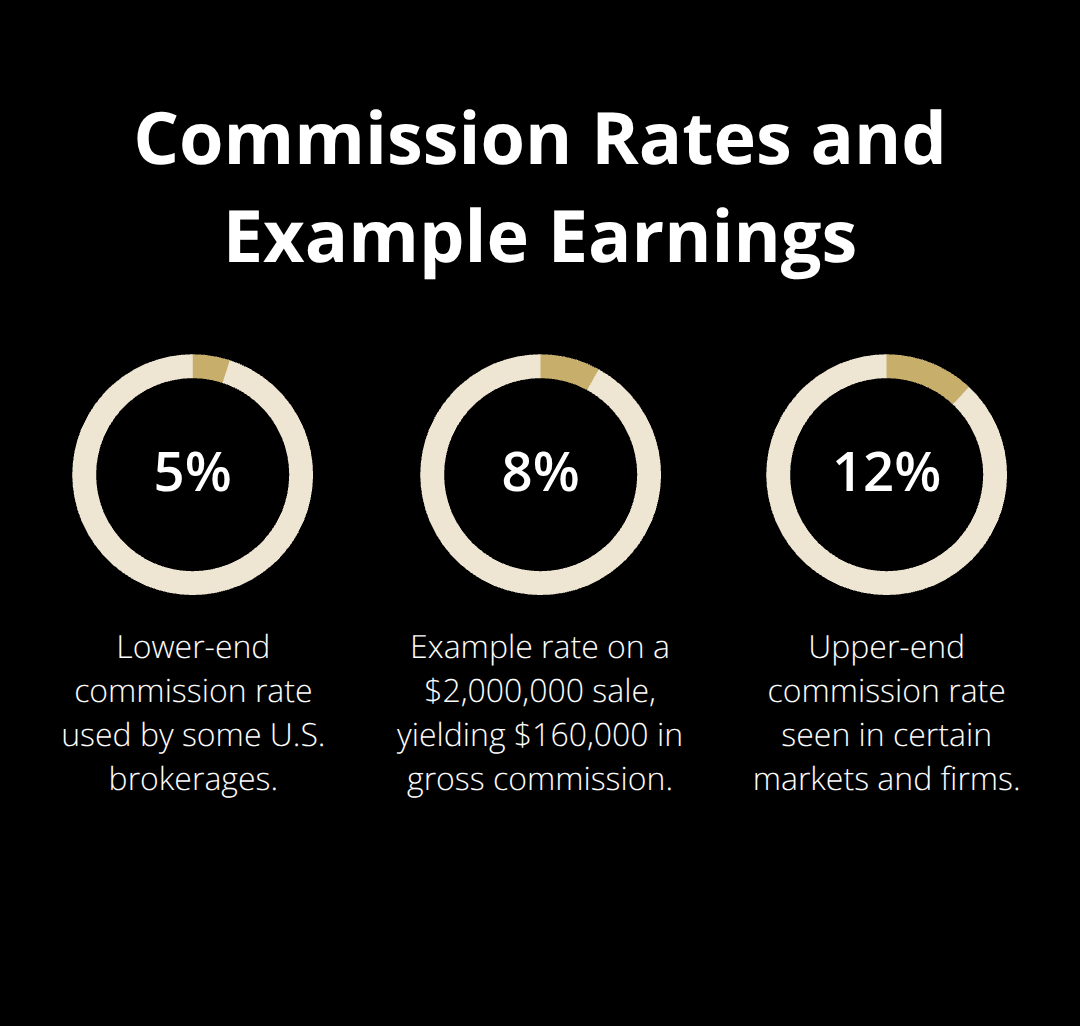
Business broker compensation typically operates on commission, usually ranging from 5% to 12% of the sale price, though this varies widely by region and firm. A broker closes a $2 million business sale at 8% commission and earns $160,000, but that figure masks the reality that many brokers work months or years on deals that never close. Most brokers split commissions with their firm, often taking 40% to 60% of the total commission depending on the brokerage structure and your experience level.
Income is highly inconsistent in year one because you build your pipeline while earning nothing on deals that won’t close for months. Independent brokers keep a larger commission percentage but absorb all business expenses, marketing costs, and liability insurance. Brokers working within established firms earn lower percentages but benefit from company leads, training, and operational support.
The income potential is real, but only if you survive the lean early months and build a consistent pipeline of qualified deals. This financial reality shapes everything about your first year-how you market yourself, which deals you pursue, and whether you can afford to be selective about clients. Understanding this upfront helps you prepare for the transition from your current income to commission-based earnings.
How to Get Started as a Business Broker
Educational Requirements and Certifications
Most states don’t require a specific business brokerage license, which opens the door but also creates a trap. Some states mandate real estate licenses or securities certifications depending on how you structure deals. The National Association of Certified Valuators and Analysts offers the Accredited Business Appraiser credential, which takes 12 to 18 months and costs roughly $3,000 to $5,000 including courses and exam fees.
This certification builds credibility with institutional buyers and lenders who want independent valuations, but it matters less for closing deals initially. Many successful brokers skip formal certifications at first and earn them later once they’ve built a client base and can justify the investment. What matters immediately is demonstrating competence through your first few deals, which means you need insider knowledge fast.
Finding a Mentor and Building Your Network
A mentor who actively brokers businesses is non-negotiable because textbooks won’t teach you how to handle a seller who inflates revenue numbers or a buyer who suddenly gets cold feet two weeks before closing. Reach out to established brokers directly and offer to work on deals for free or reduced commission in exchange for learning their process. Most brokers remember struggling themselves and will take on an apprentice if you show genuine interest rather than just chasing quick money.
Attend state business broker association meetings and industry conferences where actual deals get discussed. The International Business Brokers Association hosts regional events where you’ll meet practitioners who understand your market specifically. Your network becomes your pipeline, so coffee meetings with accountants, business attorneys, and commercial bankers pay dividends for years because they refer clients to brokers they trust.
Joining a Firm Versus Going Independent
The choice between joining an established firm or going independent shapes your entire first year and your income trajectory. Joining a firm means starting with lower commission splits (typically 40% to 50% of commissions earned), but you receive leads from the company pipeline, formal training on valuation and deal structure, and access to marketing resources that cost thousands to build alone. Independent brokers keep 80% to 100% of commissions but must generate all their own leads, handle their own marketing, manage liability insurance (which runs $1,500 to $3,000 annually), and cover technology costs for CRM systems and valuation software.
The financial math favors independence only after you’ve built relationships and closed enough deals to generate consistent referrals. Most brokers spend their first two to three years with a firm specifically to build deal experience and a client network before going independent. If you join a firm, try one with a strong reputation in your geographic market over one offering slightly higher commission splits because your first deals determine your credibility.
Verify whether the firm provides actual training or just desk space, and ask specifically about the experience level of brokers who’ve succeeded there. Some firms charge desk fees or monthly charges on top of lower commission splits, which is a red flag because it means they profit whether you close deals or not. Independent brokerage works best if you already have business relationships from a previous career or if you’re willing to spend your first six months exclusively on business development without closing a single deal.
The Hybrid Path Forward
The hybrid approach gaining traction is joining a firm initially for 18 to 24 months, building relationships and learning deal mechanics, then transitioning to independence with an established pipeline. This strategy gives you credibility without the financial risk of complete independence while still capturing higher commissions once you’re proven. The transition from learning the mechanics of valuation and deal structure to actually managing your own client relationships and pipeline requires both the foundation a firm provides and the independence that lets you control your own destiny. Your first year challenges will test whether you’ve chosen the right path, and that choice determines how you’ll handle the obstacles ahead.
Challenges You’ll Face in Your First Year
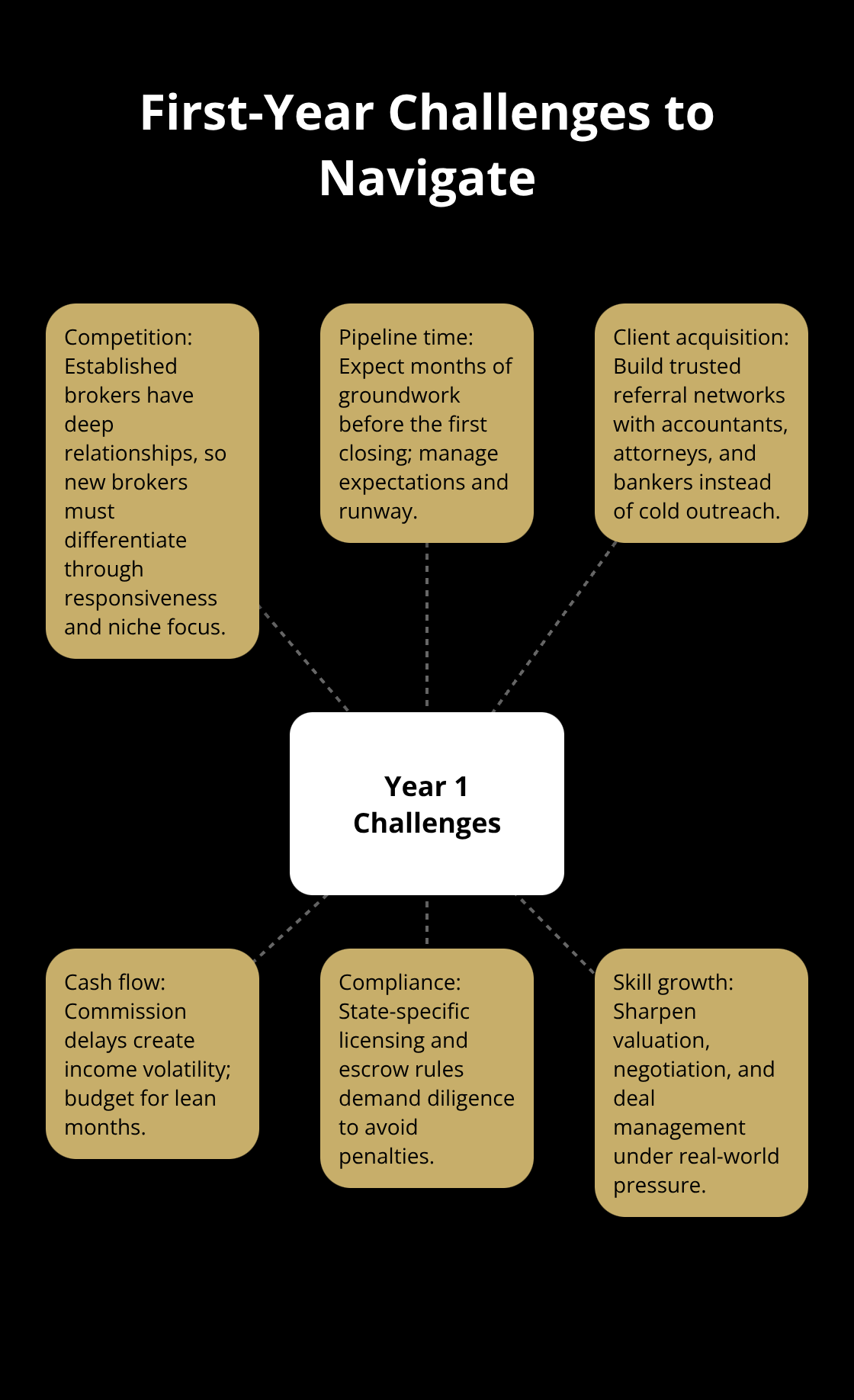
Your first year as a business broker will expose gaps between what you expected and what actually happens. Competition in most markets is fiercer than it appears because established brokers have relationships spanning decades, and they won’t surrender deals easily. According to the International Business Brokers Association, the average broker closes 4 to 6 deals annually, but that number masks the brutal truth that your first year will likely yield zero closings. You’ll spend months qualifying buyers, preparing valuations, and marketing listings while watching experienced brokers close deals in weeks. The brokers who survive this phase aren’t the smartest or most ambitious; they’re the ones who accept that building a pipeline takes time and planned their finances accordingly.
Competition and Market Saturation
If you joined a firm, this pressure is manageable because you’re earning a small percentage of other brokers’ deals. If you went independent, you’re burning savings with no incoming commission, which is why the hybrid approach makes financial sense. Your competitive disadvantage isn’t permanent, but it’s real in year one, and pretending otherwise leads to burnout and premature exits.
Client Acquisition and Retention
Client acquisition in business brokerage differs fundamentally from other sales because you need both sellers and buyers, and neither comes easily initially. Sellers want brokers with proven track records and established buyer networks, which you don’t have yet. Buyers want competitive deals and fast closings, neither of which happens when you’re learning. Your strategy must shift from chasing every lead to building relationships with commercial bankers, accountants, and business attorneys who refer sellers to brokers they trust.
These referral sources take six to nine months to produce results because trust develops slowly and they test you on your first few deals. Most brokers waste their first year trying to market directly to business owners through cold calls and digital ads, both of which fail because owners don’t know who you are. Instead, attend monthly meetings with local business attorney associations and chamber of commerce events where referral sources congregate, then follow up consistently with people you meet.
A single accountant who refers two qualified sellers annually generates more revenue than a thousand cold leads ever will. Retention of these relationships requires that you close deals professionally, communicate transparently about timelines and challenges, and stay in contact even when you have nothing immediate to sell.
Legal and Regulatory Requirements
Legal and regulatory requirements vary significantly by state, and ignorance creates liability that destroys new brokers financially. Some states require business brokers to hold real estate licenses, while others mandate securities compliance depending on how you structure earn-outs or seller financing. Your first action must be consulting a business attorney licensed in your state who understands broker regulations, not a general practice attorney (this consultation costs $500 to $1,500 but prevents costly mistakes that could result in fines or license suspension).
Document everything in writing, maintain proper escrow accounts for earnest money deposits, and never commingle client funds with your operating accounts. Liability insurance costs $1,500 to $3,000 annually and protects you when deals implode or clients claim you misrepresented valuations. The brokers who thrive in year one accept these constraints rather than resenting them; they view compliance as a competitive advantage because it protects their reputation and their bank account.
Final Thoughts
Your first year as a business broker will test your financial stability, your patience, and your commitment to building relationships over chasing quick commissions. Start by choosing between joining a firm for foundational training or going independent if you already have established business relationships. Consult a business attorney about your state’s specific regulations before you take a single client, and plan your finances to survive months without commission income.
The brokers who succeed past year one build their networks with accountants, attorneys, and bankers who refer sellers rather than pursuing cold outreach to business owners. They treat compliance as a competitive advantage that protects their reputation and income. They understand that closing four to six deals annually represents the industry standard, not a failure, and they close their first few deals professionally while maintaining proper escrow accounts.
When you become a business broker, you enter a field where realistic expectations separate those who persist from those who quit. If you’re selling a business yourself, we at Unbroker offer a modern platform combining expert advisors, AI-driven buyer matching, and national marketing through our Full Service Business Sale with a 6% success fee paid only when your business sells. Take your first step by connecting with an established broker in your market and committing to the long game.