Business broker fees can eat into your sale proceeds faster than you think. Many sellers discover unexpected charges only at closing, when it’s too late to negotiate.
We at Unbroker believe transparency should be standard, not optional. This guide exposes the hidden costs that traditional brokers often bury in fine print.
What Hidden Fees Are Brokers Charging You?
Traditional business brokers excel at burying costs in complex fee structures that catch sellers completely off guard. Marketing fees between $2,000 and $5,000 appear as line items at closing, despite promises that these services were included.
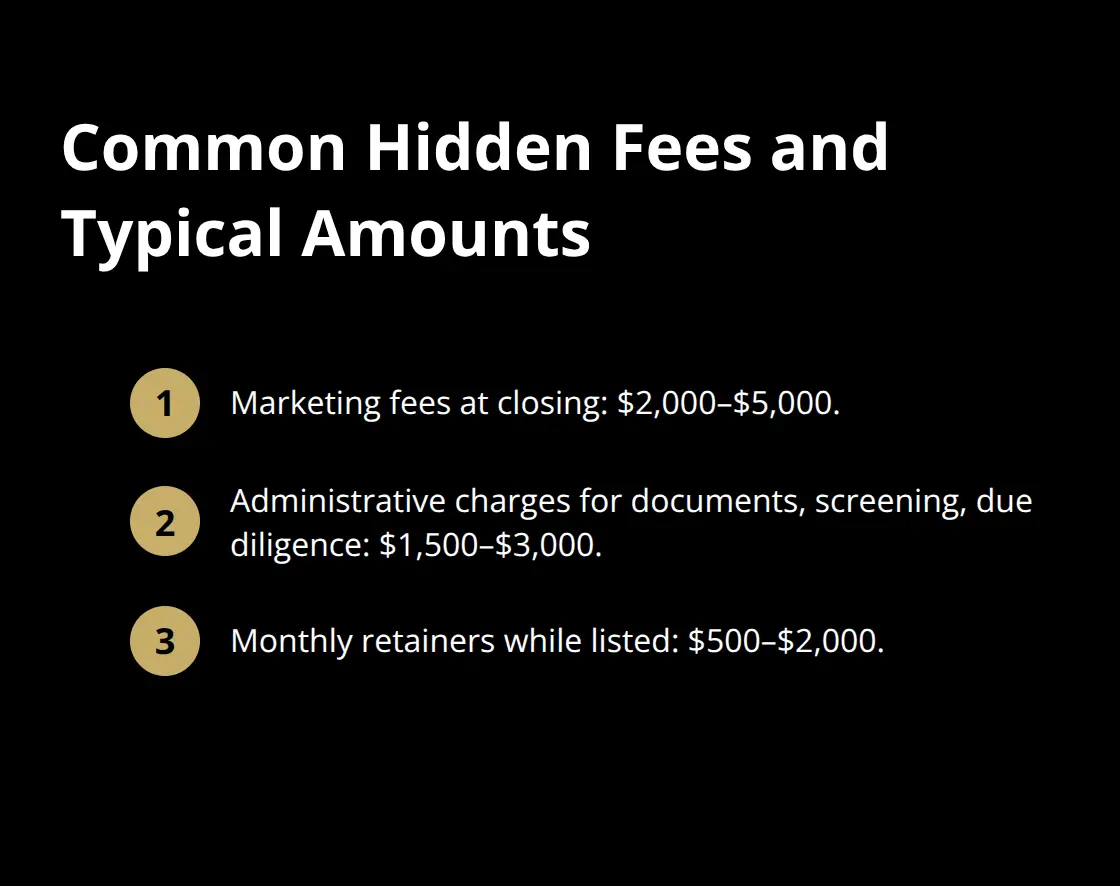
Administrative charges for document preparation, buyer screening, and due diligence coordination add another $1,500 to $3,000 to your final bill. Monthly retainer fees between $500 and $2,000 accumulate while your business sits on the market for months.
The Double-Dip Fee Structure
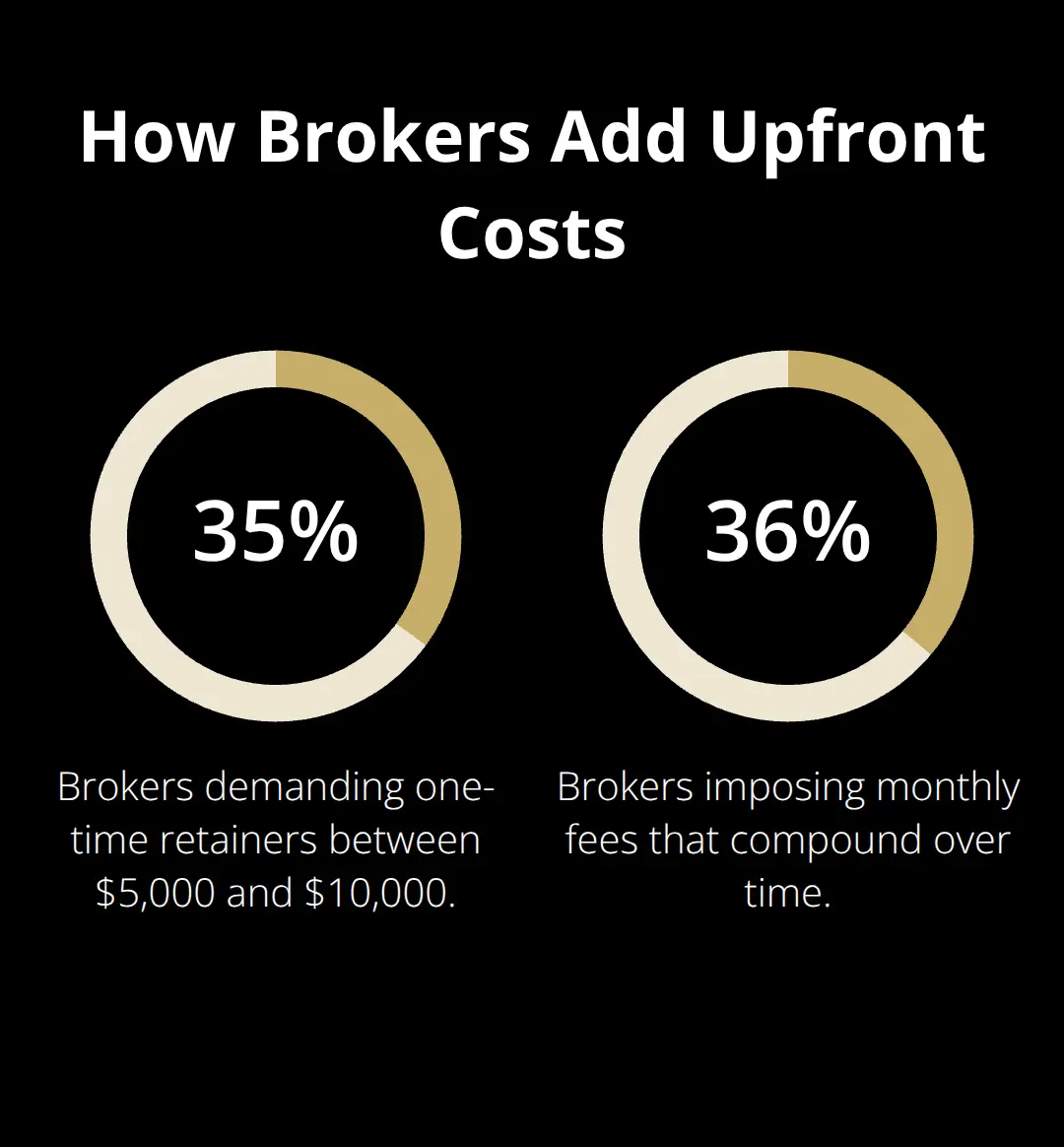
Most brokers combine upfront costs with success fees, creating a double-payment scenario that maximizes their profits while minimizing your proceeds. Industry data shows 35% of brokers demand one-time retainers between $5,000 and $10,000, while another 36% impose monthly fees that compound over extended selling periods. Success fees follow the Double Lehman formula: 10% on the first million, 8% on the second million, 6% on the third million, 4% on the fourth million.
A $2 million business sale generates $180,000 in commission alone, before adding retainers and hidden charges.
The Real Financial Impact
These combined fees typically consume 5% to 12% of your total sale proceeds, far exceeding the advertised commission rates. A business that sells for $1.5 million faces $150,000 in success fees, plus $8,000 in upfront costs, and potentially $12,000 in monthly retainers over an eight-month selling period. Your actual net proceeds drop from the expected $1.35 million to $1.33 million or less (representing a $170,000 total cost that was never clearly disclosed upfront).
These fee structures create significant financial surprises that can derail your exit strategy. Understanding what constitutes a red flag in broker agreements becomes essential for protecting your interests.
What Warning Signs Expose Problematic Brokers
Dangerous brokers reveal themselves through their contracts and pricing presentations. The International Business Brokers Association conducts industry research to explain the current brokerage marketplace and explore forecasts. They avoid specific dollar amounts for additional services. Watch for phrases like “consultation fees” or “administrative costs” without concrete pricing. Legitimate brokers provide itemized breakdowns that show exactly what each service costs, while deceptive ones present vague categories that allow unlimited billing later.
Commission Rates That Signal Exploitation
Main Street brokers typically charge 10% to 12% on the business’s value and an extra 6% on related real estate, sometimes with a minimum fee. Brokers who demand upfront fees above $20,000 without demonstrating specific value often target desperate sellers. The U.S. Small Business Administration warns against brokers who refuse to explain their minimum commission requirements or who structure their fees to maximize charges regardless of sale complexity.
Monthly Retainer Red Flags
Excessive monthly retainers above $2,000 combined with high success fees indicate brokers who prioritize their profits over your sale proceeds. Nearly half of the firms surveyed raised at least one component of their M&A fee in 2023, yet many failed to communicate these changes transparently to existing clients. These escalating costs compound over extended selling periods (often 8-12 months), creating substantial unexpected expenses that erode your final proceeds.
Documentation and Communication Warning Signs
Brokers who avoid putting fee structures in writing or who present contracts filled with undefined terms create intentional confusion. Legitimate brokers welcome fee negotiations and provide clear refund policies for unsuccessful sales, while problematic ones impose non-negotiable terms and refuse to discuss alternatives. Brokers who cannot provide specific industry experience references or who pressure immediate contract signing demonstrate unprofessional practices that typically extend to their fee handling.
Understanding these warning signs protects you from predatory practices, but the real question becomes: what does transparent pricing actually look like in practice?
Why Transparent Pricing Changes Everything
Transparent pricing transforms business sales from financial guesswork into predictable transactions. When brokers provide itemized fee breakdowns upfront, sellers can calculate exact net proceeds before they list their business. A single, transparent success-fee model eliminates the uncertainty that plagues traditional percentage-based structures. For a $2 million business sale, sellers who know their total cost will be a 6% success fee, $120,000, instead of facing potential charges between $100,000 and $240,000, gain immediate clarity for retirement plans, debt payoff, or reinvestment strategies.
Predictable Costs Enable Strategic Decisions
Clear fee structures allow sellers to evaluate multiple exit scenarios with confidence. Traditional brokers who charge 10% success fees plus $15,000 in hidden costs on a $1.5 million sale consume $165,000 of proceeds. Modern platforms with transparent pricing (like Unbroker’s 6% success fee) preserve $75,000 more for sellers.
This difference determines whether you can afford your next business acquisition, pay off existing debt, or fund your retirement completely. Business brokers typically charge 5% to 15% commission, with an average around 10% of the final sale price.
Control Through Clear Expectations
Transparent pricing eliminates closing day surprises that derail transactions. When every service carries a defined cost, sellers maintain control over which services they actually need. Monthly retainer models that accumulate charges over extended periods create financial pressure to accept lower offers just to stop the cost accumulation. Fixed upfront structures remove this pressure and allow sellers to wait for optimal offers without watching costs compound monthly.
Better Negotiation Position
Sellers who know their exact financial position throughout the process make better negotiation decisions and achieve higher final sale prices because they can afford to be selective with buyer offers. Traditional brokers often pressure quick closings to minimize their own costs, while transparent fee models align broker incentives with seller goals. This alignment leads to more patient deal-making and ultimately higher sale prices that justify the time investment.
Final Thoughts
Hidden business broker fees destroy the financial plans of countless business owners every year. Traditional brokers charge 5% to 12% of sale proceeds through complex structures that stack upfront retainers, monthly charges, and success fees together. A $1.5 million business sale often faces $170,000 in total costs that sellers never anticipated when they first signed broker agreements.
Transparent fee structures eliminate these financial shocks and restore control to business owners. A clear, single success-fee model lets you calculate expected net proceeds before you list your business, which enables better retirement plans and investment decisions. You avoid the pressure to accept lower offers just to stop fees from accumulating over extended sale periods.
We at Unbroker created our platform to solve these exact problems with transparent pricing that replaces confusing broker fee structures with a single 6% success fee, paid only when your business sells. Your business sale represents years of hard work that deserves protection from predatory fee structures.