Selling a business means managing dozens of documents-from legal agreements to financial records. Without the right templates, you’ll waste weeks organizing paperwork and risk missing critical details that buyers expect.
At Unbroker, we’ve seen sellers lose deals because their documentation was incomplete or disorganized. The good news: having document templates included in your sales process changes everything.
What Documents Buyers Actually Expect to See
Legal Agreements Form the Foundation
When you sell a business, buyers need specific legal documents before they’ll make an offer. Missing even one category signals disorganization and tanks your credibility. Legal agreements form the foundation of any transaction.
Sellers must prepare a detailed bill of sale, articles of incorporation or organization, bylaws, and operating agreements. Shareholder agreements matter too, along with any existing contracts with customers, vendors, or employees. Many sellers overlook non-compete agreements and employment contracts-buyers want to know exactly who stays and under what terms.
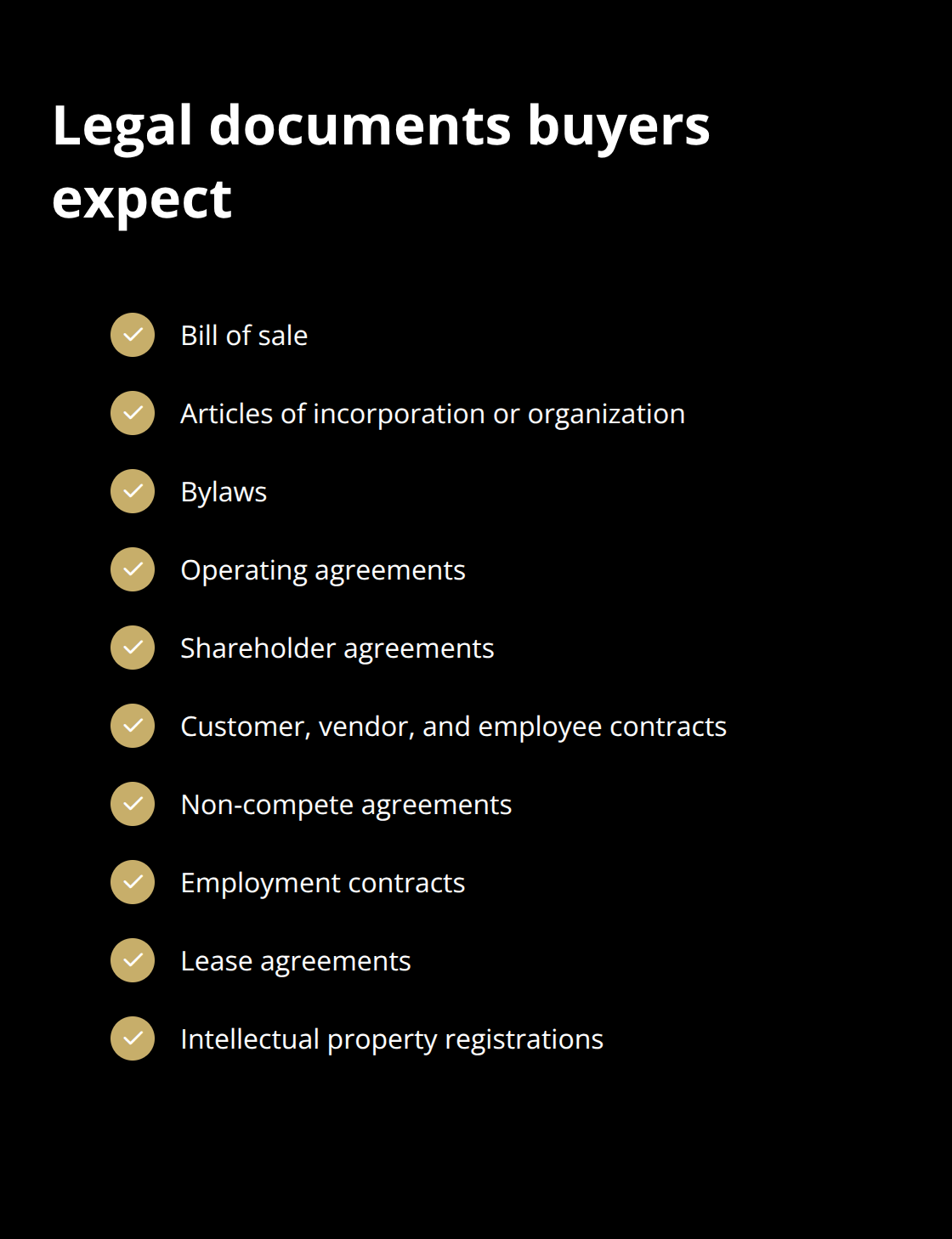
Title documents, lease agreements if you rent your location, and intellectual property registrations round out this category.
Financial Records Require Careful Attention
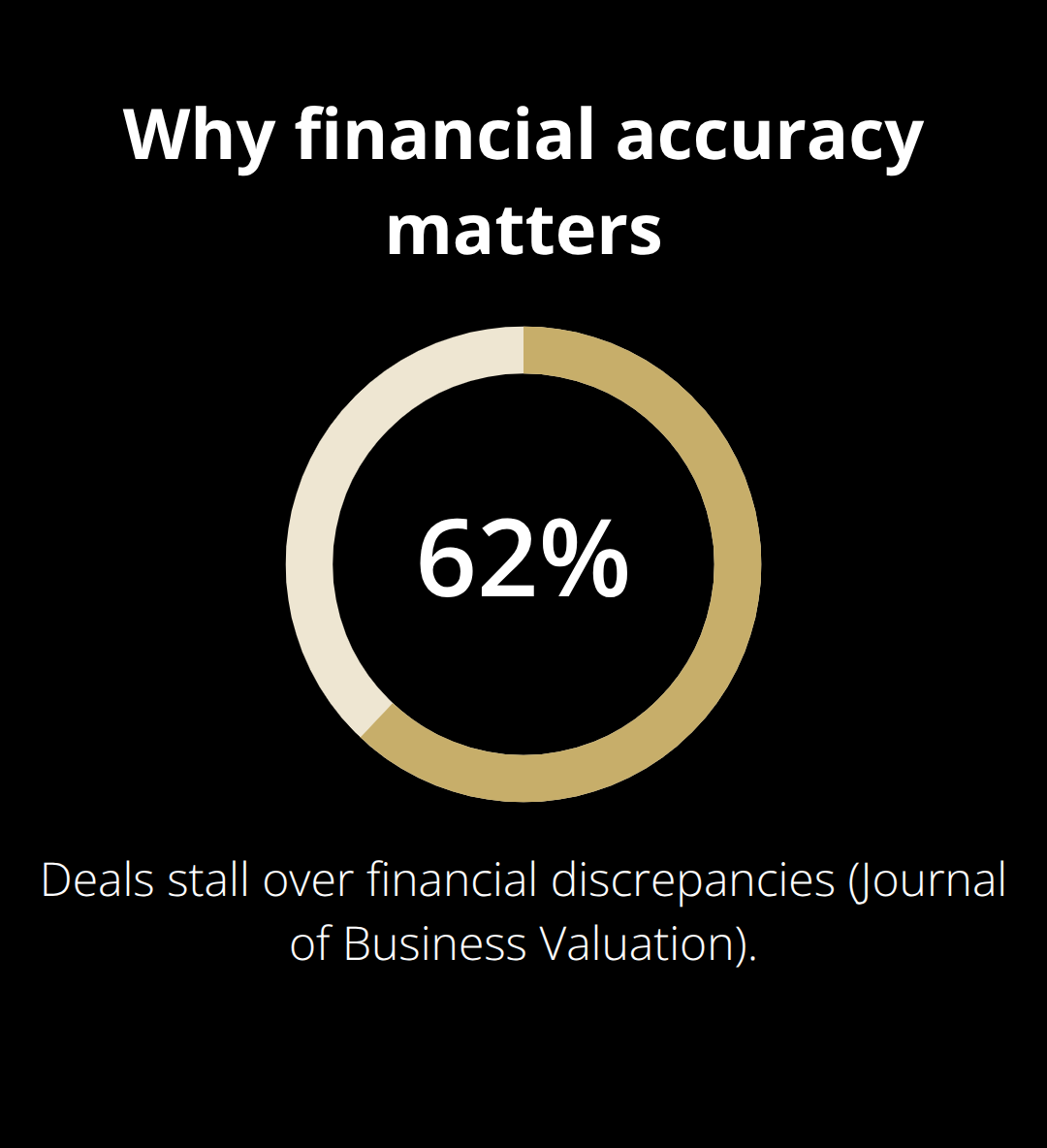
Buyers scrutinize financial documentation with intense focus. You’ll need tax returns for the past three years, profit and loss statements, balance sheets, accounts receivable aging reports, and bank statements. The Journal of Business Valuation found that 62% of deals stall over financial discrepancies.
Detailed records of equipment, inventory, and customer lists with contact information matter equally. Buyers want to verify that your numbers align with your claims about business performance. Incomplete or inconsistent financial submissions create friction that kills momentum.
Confidentiality Agreements Protect Your Interests
Confidentiality and non-disclosure agreements protect your business while you show it to potential buyers. A mutual NDA protects your interests by establishing trust upfront. Many sellers skip this step thinking it complicates negotiations, but it actually streamlines them by establishing trust upfront.
Having these templates prepared in advance means you compile information into existing structures rather than scrambling to gather documents or hiring lawyers to draft agreements from scratch. This approach reduces back-and-forth with accountants and attorneys, cuts legal fees substantially, and prevents costly delays that come from incomplete submissions. Presenting yourself as a serious seller who respects a buyer’s time and due diligence process matters more than most sellers realize-and proper documentation proves it.
How Templates Cut Your Costs and Timeline
Legal Fees Disappear When You Use Templates
Having document templates ready eliminates the most expensive part of selling a business: paying lawyers to create agreements from scratch. A standard business sale requires 15 to 20 different documents, and hiring an attorney to draft each one costs between $150 and $400 per hour. For a seller without templates, that adds up to $2,250 to $8,000 in legal fees before negotiations even begin.
Templates eliminate this cost entirely because you work from proven structures rather than paying someone to reinvent the wheel. You fill in your specific details into existing frameworks that already comply with legal requirements. This approach also accelerates your timeline dramatically. Instead of waiting for lawyers to draft documents over weeks, you prepare templates in days.
Buyers Move Faster With Complete Documentation
Buyers accelerate their process when they receive organized, professional documentation immediately. Deals with complete initial documentation close faster than those requiring multiple rounds of document requests. Every week your sale takes longer costs you money through lost business operations and delayed capital access.
Incomplete or inconsistent documentation creates another hidden cost: deal delays and renegotiations. When a buyer receives poorly organized financial statements or missing contracts, they assume you’re hiding problems. This triggers extended due diligence periods where they dig deeper, ask more questions, and request additional verification.
Missing Documents Tank Your Credibility
Some deals collapse entirely because sellers can’t produce documentation quickly enough. Templates prevent this by ensuring you present everything buyers expect upfront and in professional format. You also avoid compliance mistakes that surface during due diligence and tank your credibility.
Missing tax filings, unsigned agreements, or conflicting information between documents forces renegotiations where buyers demand lower prices or walk away. Having templates means you catch these issues before a buyer sees them, fixing problems on your timeline instead of theirs. This preparation positions you as an organized seller who respects the buyer’s process-and that perception influences their willingness to move forward.
What Happens When Sellers Skip Documentation
Buyers Reject Incomplete Submissions Immediately
Sellers without proper document templates face three brutal realities: buyers reject incomplete submissions immediately, deals stall for weeks waiting on missing paperwork, and legal problems emerge during due diligence that kill negotiations entirely. The consequences aren’t theoretical-they’re financial and they’re immediate.
A seller who hasn’t prepared financial documentation upfront wastes 40 to 60 hours gathering scattered records, emailing accountants for clarification, and reconstructing years of business information. That’s time away from running your business while a buyer sits waiting. Incomplete submissions signal incompetence to buyers who’ve already decided they’re taking a risk by purchasing from you.
Disorganization Tanks Your Credibility and Price
When a buyer receives a bill of sale without corresponding articles of incorporation, or tax returns that don’t match your claimed revenue, they assume you’re either disorganized or hiding something. Both conclusions trigger extended due diligence periods where buyers demand lower purchase prices, request additional verification, or walk away entirely.
The financial impact is staggering-a single month delay in closing costs most sellers between $5,000 and $15,000 in lost cash flow and operational expenses. Missing employment contracts create legal exposure that extends beyond closing. If you haven’t documented which employees stay post-sale and under what terms, you’re liable for disputes, severance claims, and non-compete violations after the buyer takes over.
Hidden Liabilities Surface and Kill Deals
Unsigned vendor contracts mean the buyer inherits undisclosed obligations or discovers that critical suppliers aren’t actually committed to the business. These surprises tank deals because buyers refuse to close on unknown liabilities. Documentation gaps also expose you to tax complications and compliance failures that surface months after closing.
If your financial records don’t clearly separate personal and business expenses, or if you’ve missed filing requirements in certain years, the buyer’s accountant discovers these issues during due diligence and demands price reductions to cover their risk. Some sellers lose 10 to 20 percent of their asking price because they couldn’t produce clean financial documentation.
Templates Prevent Scrambling and Protect Your Interests
The solution isn’t hiring more lawyers or accountants-it’s preparing templates that structure your information correctly from the start. A bill of sale template captures every required legal element. A financial documentation checklist ensures you provide tax returns, profit and loss statements, balance sheets, and accounts receivable reports in the exact format buyers expect.
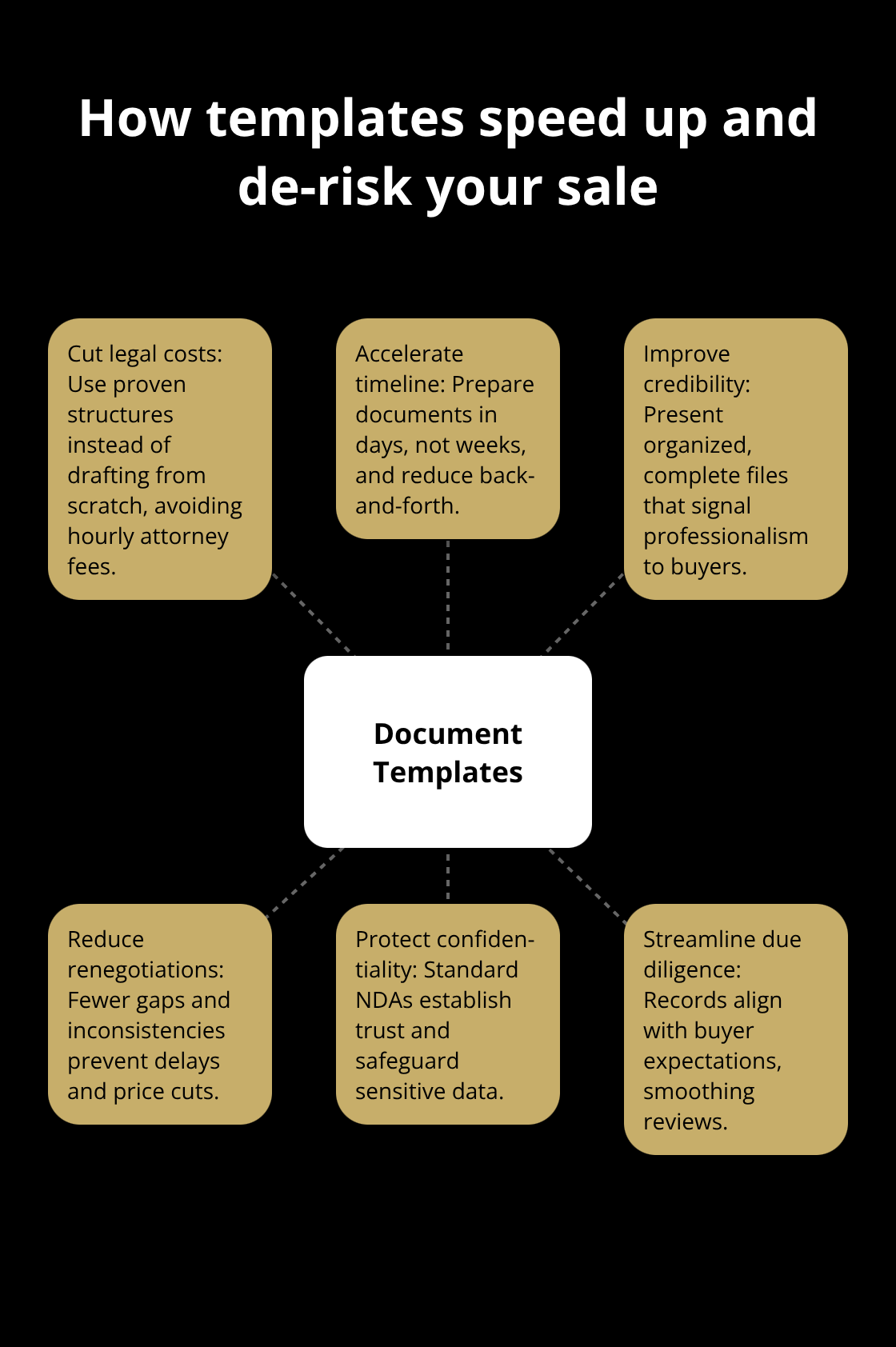
These templates prevent the scrambling that kills deals and protect you from legal exposure that creates liability long after you’ve sold. Sellers who use templates close faster, receive higher valuations, and avoid the costly mistakes that come from disorganized submissions.
Final Thoughts
Selling your business without a unified platform means you juggle spreadsheets, email chains, and scattered documents across multiple tools. You waste hours tracking down files, coordinating with accountants and lawyers, and hoping nothing falls through the cracks. That chaos costs you money and credibility with buyers.
A platform that centralizes your entire sale process eliminates this friction. When document templates included in your sales platform sit organized in one place, you present yourself as a professional seller who respects a buyer’s time. Your financial records, legal agreements, and confidentiality documents flow seamlessly from preparation through closing, reducing the back-and-forth that kills momentum.
The sellers who close fastest and receive the highest valuations aren’t the ones with the most complex businesses-they’re the ones who present organized, complete documentation that signals competence and builds buyer confidence. Start your business sale with Unbroker and see how a unified approach transforms your process from chaotic to controlled.