Selling your business exposes sensitive financial data, buyer information, and confidential negotiations to risk. A single security breach can derail a deal, damage your reputation, and cost you millions.
At Unbroker, we’ve seen how platform security measures separate successful sales from compromised ones. The right protections keep your business sale private while building buyer confidence.
Why Security Matters When Selling Your Business
Data breaches in the business sale space hit hard and fast. IBM’s 2024 Cost of a Data Breach Report found that the average breach costs organizations $4.45 million, with healthcare and financial sectors experiencing even steeper losses. When you sell a business, you expose buyer identities, financial statements, tax returns, customer lists, and negotiation details simultaneously. A single breach doesn’t just cost money-it kills deals. Buyers walk away when they discover their information was compromised.
Confidentiality during the sale process isn’t optional; it’s the foundation of a successful transaction. Your buyer needs proof that their identity stays hidden from competitors. Your financial data needs protection from bad actors who might use sensitive information for fraud or extortion. The moment a breach happens, trust evaporates. Platforms that lack proper encryption, access controls, and authentication systems create unnecessary risk for everyone involved.
What Gets Exposed During a Business Sale
The information you share during a sale is worth protecting because it’s worth stealing. Buyer names, contact information, and their purchase intent attract competitors who want to intercept deals. Financial records (including revenue, profit margins, tax returns, and customer acquisition costs) are gold for fraudsters. Employee lists, supplier contracts, and operational details give hackers leverage for extortion.
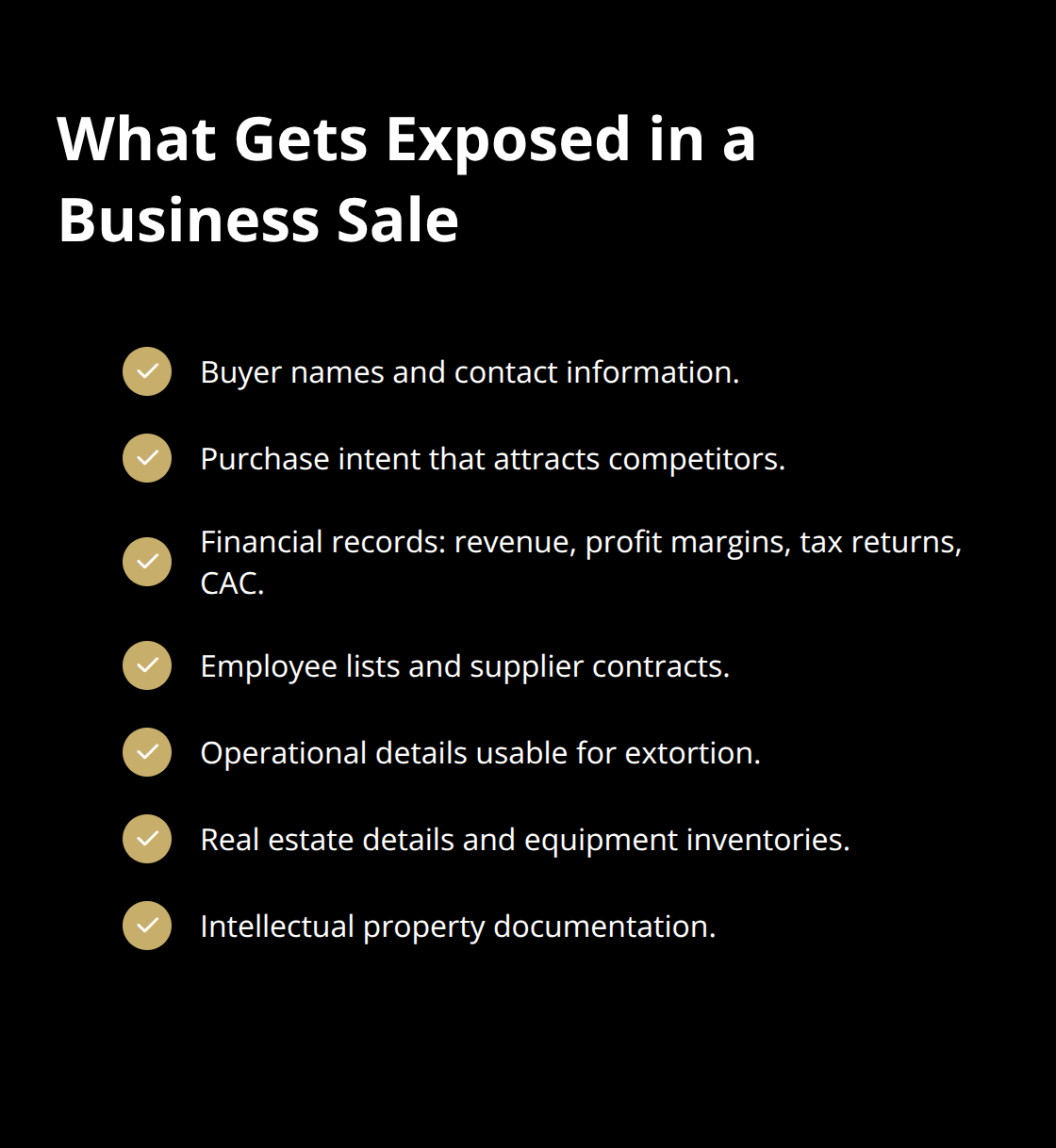
Real estate details, equipment inventories, and intellectual property documentation all represent your business’s competitive advantage.
A platform without proper security lets unauthorized people access this information. Weak authentication means someone could log in with a stolen password and download everything. Poor encryption means data travels unprotected across networks where it can be intercepted.
Essential Security Features You Need
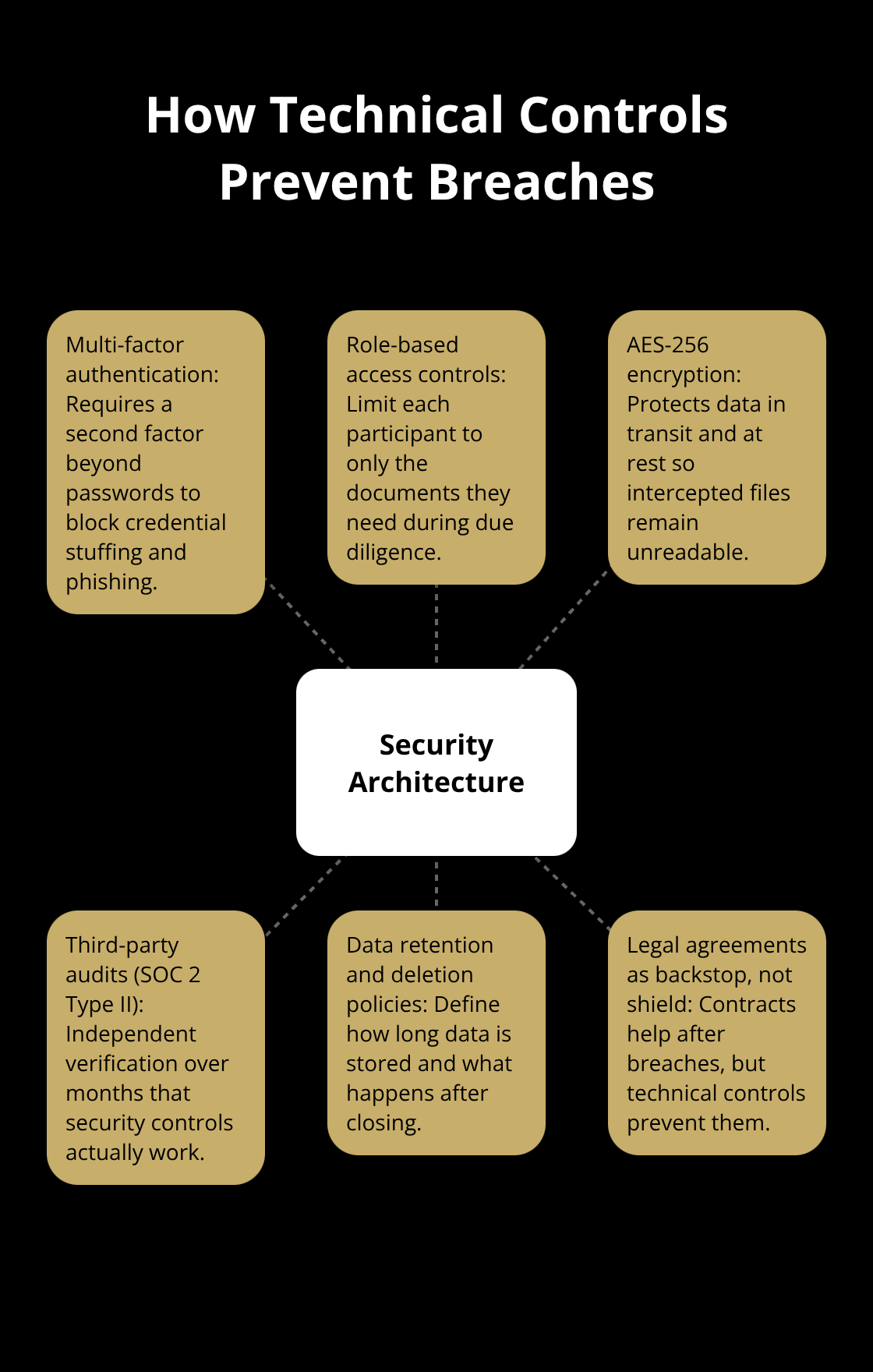
You need platforms that implement multi-factor authentication, requiring more than just a password to access sensitive files. You need encryption standards like AES-256 encryption, which scrambles data so even if someone steals it, they can’t read it. Third-party security certifications like SOC 2 Type II compliance show that independent auditors have verified the platform’s security practices (not just the platform’s own claims).
Without these measures, your sale stays vulnerable from initial listing through closing. The right platform protects your competitive advantage while you negotiate with serious buyers.
How Security Architecture Protects Your Business Sale
Encryption Standards That Prevent Data Theft
Encryption technology forms the backbone of any legitimate business sale platform. AES-256 encryption, the same standard used by financial institutions and government agencies, scrambles your data so thoroughly that even intercepted files remain unreadable. When you upload financial statements or buyer information, this encryption applies both in transit (as data moves across the internet) and at rest (when stored on servers). Your confidentiality agreements mean nothing if the underlying data sits unprotected on servers using outdated security protocols.
Third-party security audits like SOC 2 Type II compliance verify that these protections actually work, not just that a platform claims to use them. SOC 2 audits can take 6-12 months due to ongoing compliance verification, making them far more credible than self-reported security statements. Platforms avoiding third-party audits typically do so because they would fail the inspection.
Access Controls and Authentication Systems
Access controls determine who can see what information, and this matters enormously during negotiations. Role-based access means a document reviewer sees only specific files, not your entire business profile or other buyer information. Multi-factor authentication goes beyond passwords-it requires a second verification method like an authenticator app or SMS code, making stolen credentials useless without that second factor. Platforms implementing these controls experience significantly fewer unauthorized access incidents than those relying on passwords alone.
Confidentiality agreements legally bind all parties to specific data handling practices, but they only work when technical controls back them up. A seller can sue over a breach, yet recovering damages takes years while your competitive position deteriorates immediately. The practical reality is that legal protections become your last resort, not your primary defense. Strong technical architecture prevents breaches before they happen, which is infinitely preferable to fighting them in court afterward.
Why Technical Defenses Matter More Than Legal Ones
The information you share during a sale attracts bad actors at every stage. Buyer names, contact information, and their purchase intent attract competitors who want to intercept deals. Financial records (including revenue, profit margins, tax returns, and customer acquisition costs) are gold for fraudsters. Employee lists, supplier contracts, and operational details give hackers leverage for extortion. Real estate details, equipment inventories, and intellectual property documentation all represent your business’s competitive advantage.
A platform without proper security lets unauthorized people access this information. Weak authentication means someone could log in with a stolen password and download everything. Poor encryption means data travels unprotected across networks where it can be intercepted. These vulnerabilities don’t just create theoretical risks-they expose you to real financial and reputational damage that no legal agreement can fully remedy.
Red Flags That Signal Weak Platform Security
Transparent Security Policies Separate Trustworthy Platforms
Platforms that sell businesses often hide their security weaknesses behind vague language and missing documentation. When a platform refuses to publish its security policies, that’s a deliberate choice, not an oversight. Companies that protect your data explain their encryption standards, authentication requirements, and data retention practices in plain language. If you visit a platform’s website and can’t find this information after five minutes of searching, the platform doesn’t want you asking questions. Legitimate platforms make security details easy to find because they have nothing to hide.
Platforms without published security policies bet that you won’t notice the absence. Ask directly: What encryption standard do you use? How long do you retain data after a sale closes? Who has access to buyer information? If you receive vague answers like “we take security seriously” or “we follow industry standards,” that’s a red flag. Industry standards vary wildly. AES-256 encryption is specific. SOC 2 Type II compliance is verifiable. Anything less specific than that indicates the platform either doesn’t implement proper protections or doesn’t want to admit it.
Third-Party Certifications Prove Security Claims
Third-party security certifications separate platforms that actually protect data from platforms that claim to. SOC 2 audits require independent verification over months, making them expensive and time-consuming. Platforms that skip these audits typically do so because they would fail. When a platform advertises ISO 27001 certification or SOC 2 compliance, verify it directly through the certifying body’s database rather than trusting their website.
Many platforms cite generic security features like SSL certificates, which every website uses and which only protects data in transit, not at rest. That’s like saying your business sale is secure because the front door has a lock while the windows remain wide open. A platform that avoids third-party audits signals that independent inspectors would find problems.
Data Handling Practices Reveal Platform Priorities
Data handling practices that remain unclear or buried in lengthy terms of service indicate a platform prioritizes legal protection over transparency. A trustworthy platform explains specifically how long it stores your data, whether it shares information with third parties, what happens to files after closing, and who can access what information at each stage. If these details require a lawyer to interpret, the platform is obscuring rather than clarifying.
The platform you choose should make security practices obvious, not mysterious. Platforms that hide data handling details in dense legal language typically do so because the actual practices wouldn’t satisfy you if stated plainly. Vague security language combined with unclear data policies signals that the platform cuts corners on protection.
What Legitimate Platforms Disclose
Legitimate platforms publish specific information about their security architecture. They state their encryption standards by name (AES-256, not “military-grade”). They list their third-party certifications with verification details. They explain their access control systems and authentication requirements. They describe their data retention schedules and deletion procedures. They clarify whether they share data with third parties and under what circumstances.
Platforms that provide this information demonstrate confidence in their security practices. Platforms that withhold it demonstrate the opposite. Your business sale contains information worth millions of dollars. The platform protecting that information should prove its competence through transparent, specific, verifiable security disclosures.
Final Thoughts
Selling your business means exposing information that competitors, fraudsters, and bad actors actively want to steal. You cannot control whether someone attempts to breach your data, but you can control which platform you trust with it. Platform security measures form the foundation that determines whether your sale succeeds or fails.
The platforms worth using make their security practices obvious through published encryption standards, displayed third-party certifications, and access controls explained in plain language. They do not hide behind vague promises or generic claims about taking security seriously. Platforms that withhold these details signal that their actual practices would not satisfy you if stated plainly.
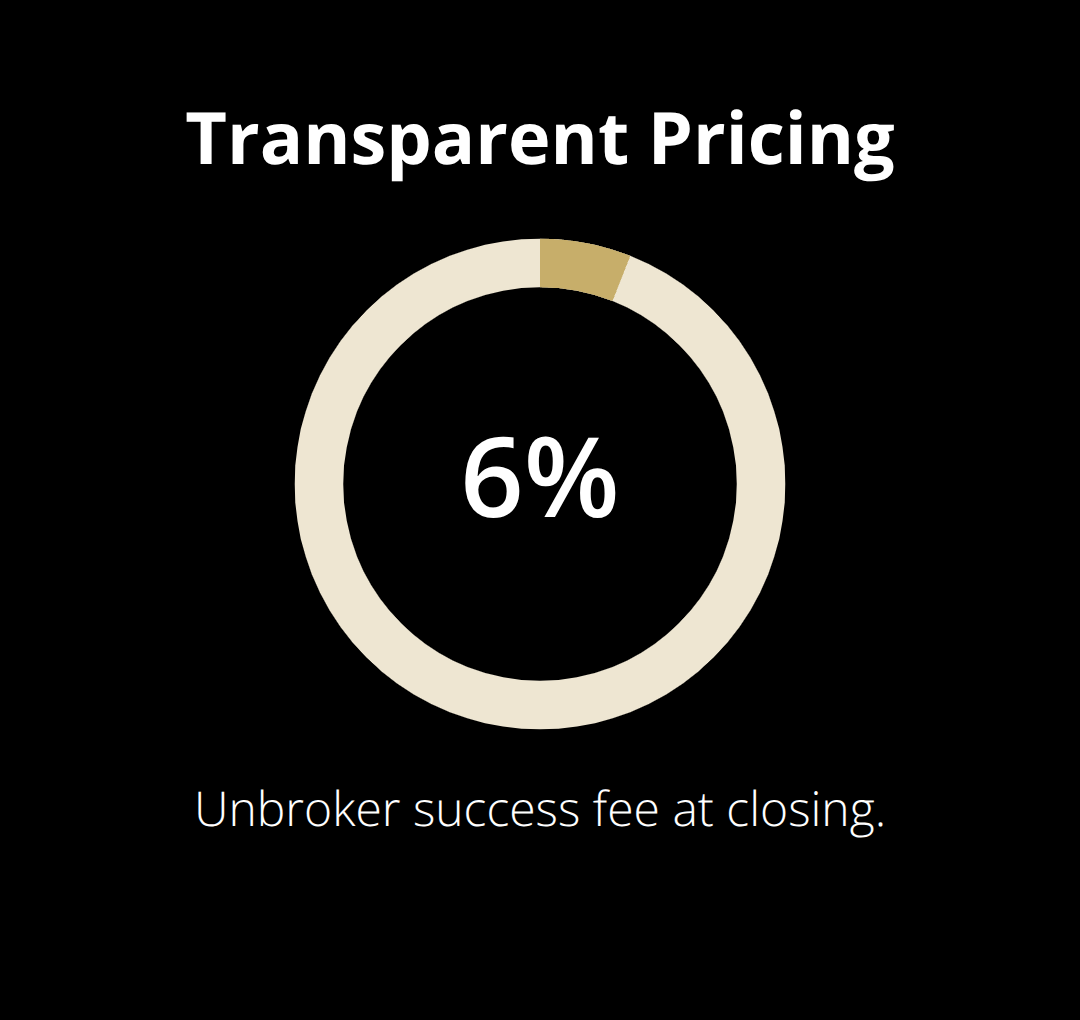
At Unbroker, we built our platform around the principle that your business sale deserves comprehensive protection through AES-256 encryption, multi-factor authentication, and third-party security audits. We combine expert advisors with platform security measures designed to keep your sale private while connecting you with serious buyers through our AI-driven matching process, and you pay only a 6% success fee when your business sells.