Selling a business shouldn’t mean handing over a massive chunk of your profits to a broker. Traditional business sales are slow, opaque, and expensive-leaving sellers frustrated and shortchanged.
At Unbroker, we built a digital business sale marketplace that changes this. You get transparent pricing, qualified buyers, and control over your entire process.
Why Traditional Brokers Cost You Far More Than Commission
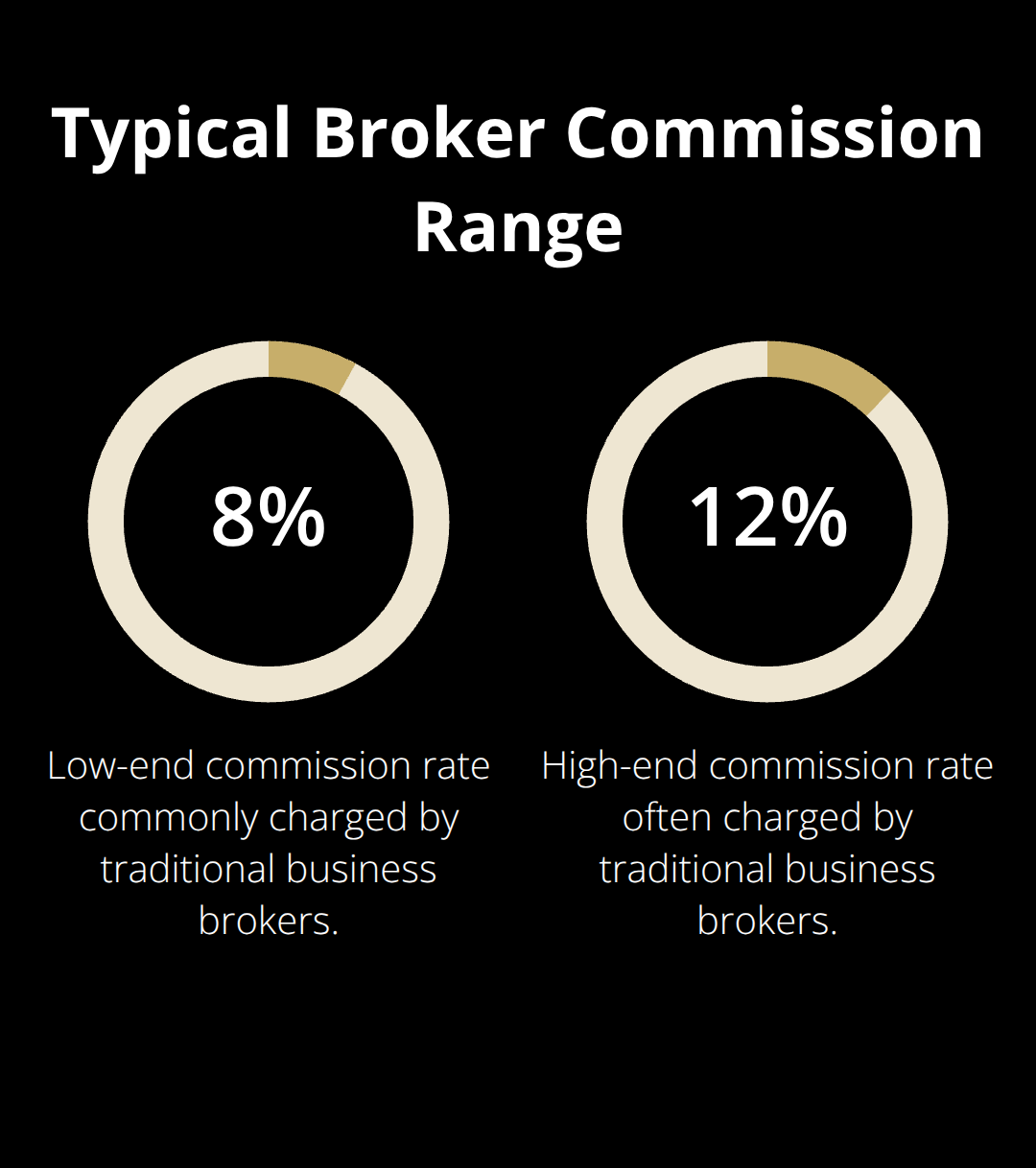
Traditional business brokers charge between 8% and 12% of your sale price, according to the International Business Brokers Association. On a $1 million business sale, that’s $80,000 to $120,000 going directly to the broker instead of your pocket. But the financial damage doesn’t stop there.
Most brokers also charge upfront fees ranging from $2,500 to $25,000, transaction fees, and administrative costs that aren’t always transparent until you’re deep in the process.
The seller often discovers these hidden charges buried in contracts, making the true cost of selling substantially higher than the initial commission quote. Many brokers also restrict access to buyer information, meaning you have no visibility into who’s actually interested in your business or why deals fall through.
The opacity problem that wastes months
Brokers control the narrative around your business sale. They decide which buyers see your listing, how your business is positioned, and what information gets shared. This lack of transparency creates bottlenecks that slow everything down.
A typical broker-led sale takes 6 to 12 months from initial listing to closing, with many sellers reporting that their broker goes silent for weeks at a time. You don’t know if buyers are actively interested or if your broker is simply waiting for the right moment to push the deal. The buyer network is also limited to whoever the broker has relationships with, which means qualified buyers who could offer better terms never hear about your business.
What modern platforms offer instead
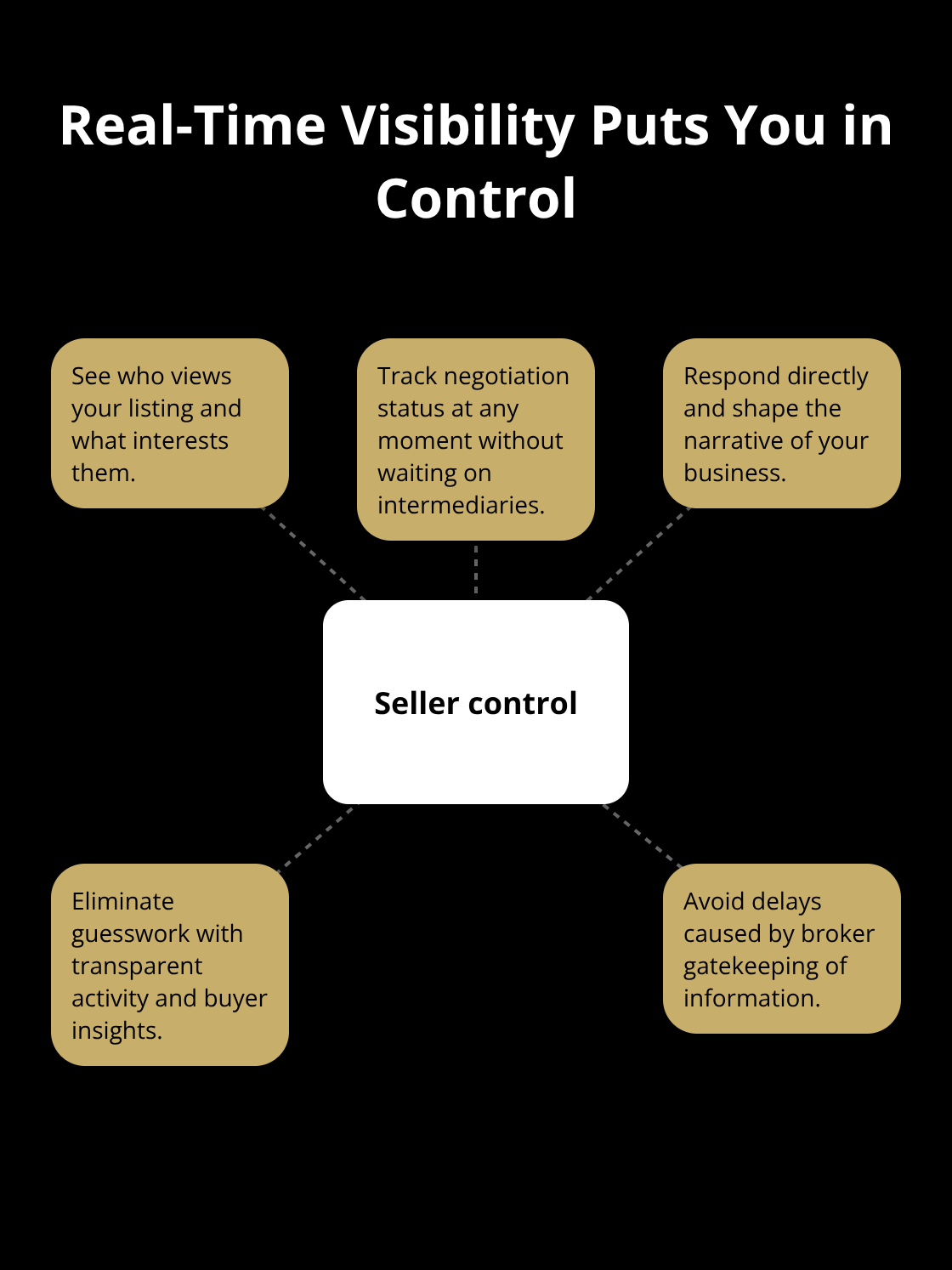
Digital marketplaces operate on a fundamentally different principle. You see exactly who’s viewing your listing, what they’re interested in, and where negotiations stand at every moment. This transparency removes the guesswork and puts you in control of your own sale process.
Instead of relying on a broker’s limited network, modern platforms connect you with a vastly larger pool of qualified buyers through AI-driven matching. You know the true cost upfront-no surprise fees buried in fine print. The result is faster timelines, better visibility, and significantly more money staying in your pocket where it belongs.
How Digital Marketplaces Cut Through the Noise
Digital marketplaces operate on radical transparency that traditional brokers actively avoid. Unbroker publishes pricing upfront so sellers know exactly what they’ll pay before listing anything. The Full Service Business Sale costs $485 upfront and $4,500 after closing, while the Assisted Business Sale runs $99 monthly for sellers who prefer handling negotiations themselves.
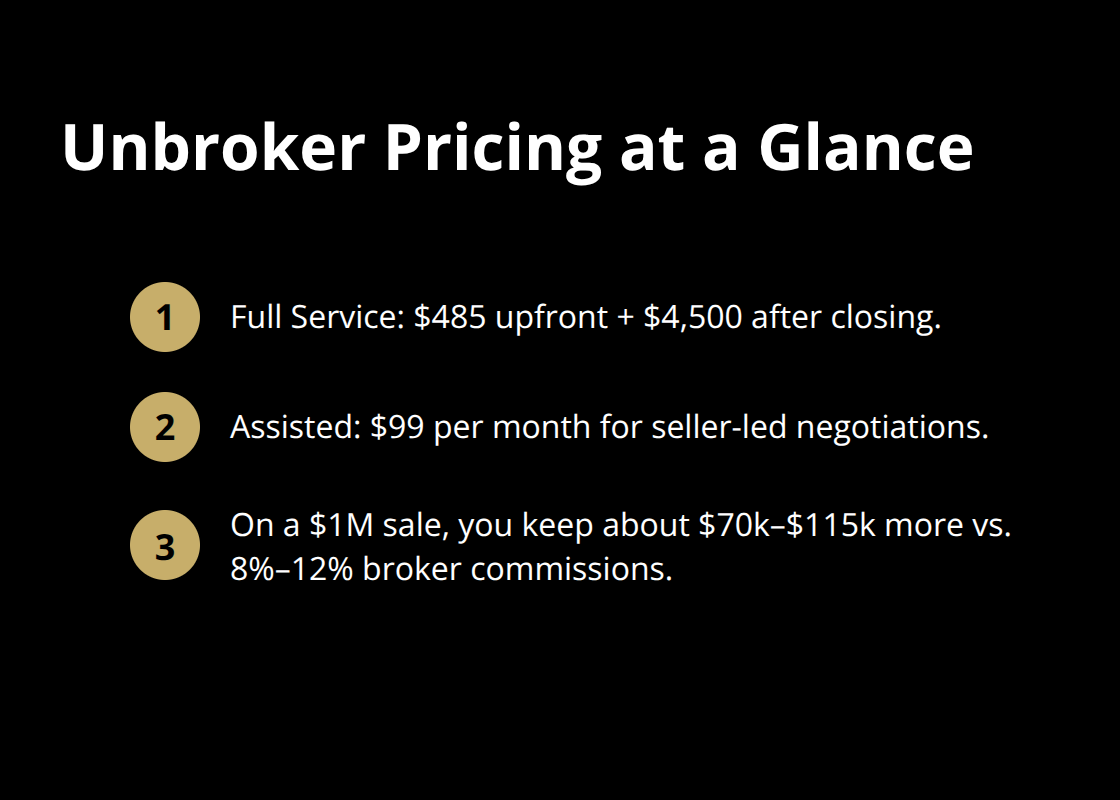
Compare this to a broker’s 8% to 12% commission plus hidden fees, and a $1 million sale suddenly puts an extra $70,000 to $115,000 back in your pocket. You see every cost before committing, which means no surprise invoices appearing three months into the process.
Transparency gives you real-time control
This transparency extends to buyer information. You know who views your listing, what questions they ask, and exactly where each negotiation stands at any moment. Traditional brokers guard this information like state secrets, but modern platforms give you real-time visibility into your own sale. You control the narrative around your business instead of waiting for your broker to decide what information matters.
AI matching replaces the broker’s rolodex
AI-powered matching systems connect your business with qualified buyers far more efficiently than a broker’s limited network ever could. Instead of hoping your broker knows someone interested in your industry, algorithmic matching identifies buyers actively looking for businesses like yours based on revenue, location, industry, and growth profile. This eliminates the months wasted on tire-kickers who were never serious buyers.
Speed compounds your financial advantage
Most digital marketplace sales close in 3 to 6 months compared to the 6 to 12 months typical with brokers. That faster timeline matters tremendously because every month of delay costs you money in operating expenses and ties up your attention when you should be moving forward. The platform handles document templates, legal guidance, and negotiation assistance built into the system, removing friction points that traditionally required back-and-forth communication with your broker. You control the pace and respond to offers within hours rather than waiting for your broker to check their email.
This speed and transparency fundamentally change what’s possible when you sell. With control over your timeline and visibility into every step, you’re positioned to make decisions that actually serve your interests-not your broker’s commission targets.
Who’s Actually Winning With Digital Sales Platforms
The Math That Speaks for Itself
A seller with a $500,000 business pays $40,000 to $60,000 in broker commissions on business sales alone, money that vanishes before you ever see it. On a $2 million sale, that’s $160,000 to $240,000 leaving your pocket. Digital platforms operate on fixed fees instead. The Full Service Business Sale costs $485 upfront and $4,500 after closing, regardless of your sale price. That same $2 million business now costs you $4,985 total instead of $160,000 to $240,000. The financial gap is so stark that sellers who understand it rarely choose brokers anymore.
You Control Your Timeline, Not Your Broker
Traditional brokers operate on their schedule, not yours. They list your business, disappear for weeks, then suddenly pressure you to accept an offer because they’ve found a marginally interested buyer and want their commission. Digital platforms work differently. You see every offer as it arrives and respond within hours if you want. You negotiate directly with buyers instead of waiting for your broker to find time in their calendar to relay messages back and forth.
This control extends to how your business gets positioned to the market. You write your own description, choose which financials to highlight, and decide what questions to answer. Brokers often minimize certain aspects of your business to fit their predetermined buyer profiles, potentially costing you deals with buyers who would have paid more if they’d understood your full value.
Access to Professional Infrastructure Without the Price Tag
The legal and marketing infrastructure available through modern platforms removes another traditional broker advantage. You gain access to document templates for letters of intent, purchase agreements, and disclosure documents without paying $3,000 to $5,000 for a lawyer to draft them from scratch. Professional marketing materials, buyer communication templates, and negotiation guidance come built into the platform (specifically designed for business sales and covering actual scenarios you’ll encounter).
Incentives Aligned With Your Success
Sellers who’ve used both approaches consistently report that digital platforms produce better outcomes because they’re not paying for intermediaries who profit from prolonged negotiations or restricted information flow. A broker makes more money when your sale takes longer and when they control buyer access. A digital platform makes money from your transaction fees regardless of timeline, which means the platform’s interest aligns with closing quickly and transparently. That alignment matters far more than most sellers realize until they’ve experienced both models.
Real Visibility Into Your Own Sale
Traditional brokers guard buyer information like state secrets, but modern platforms give you real-time visibility into your own sale. You know who views your listing, what questions they ask, and exactly where each negotiation stands at any moment. You control the narrative around your business instead of waiting for your broker to decide what information matters. This transparency removes the guesswork and puts you in control of your entire process.
Final Thoughts
The shift from traditional brokers to digital business sale marketplaces isn’t coming-it’s already here. Sellers who’ve moved to modern platforms report dramatically different outcomes: lower costs, faster closings, and genuine control over their own process. A $2 million business sale costs $160,000 to $240,000 with a traditional broker, while that same sale through a digital marketplace costs under $5,000-a difference that transforms your financial outcome.
What makes this transition stick is that digital platforms remove the conflict of interest baked into traditional brokerage. Brokers profit when sales drag on and when information stays compartmentalized, but digital marketplaces profit from transparent, efficient transactions. Your interests and the platform’s interests finally align, which means you work with a system designed to serve your goals rather than someone else’s commission targets.
We at Unbroker built our platform on this principle: transparent pricing upfront, no hidden fees, and access to a vast buyer network enhanced by AI-driven matching. The infrastructure that once justified paying brokers massive commissions now comes built into the platform itself (legal templates, marketing tools, negotiation assistance, and buyer matching all included). Visit Unbroker to see how much more you can keep when you sell on your own terms.