Seller transparency promises sound great in marketing materials. But when you’re actually selling, most platforms hide the real costs until you’re already committed.
At Unbroker, we believe you deserve to know exactly what you’re paying for before you sign anything. This guide shows you what genuine transparency looks like and how to spot platforms that are hiding something.
What Real Transparency Looks Like
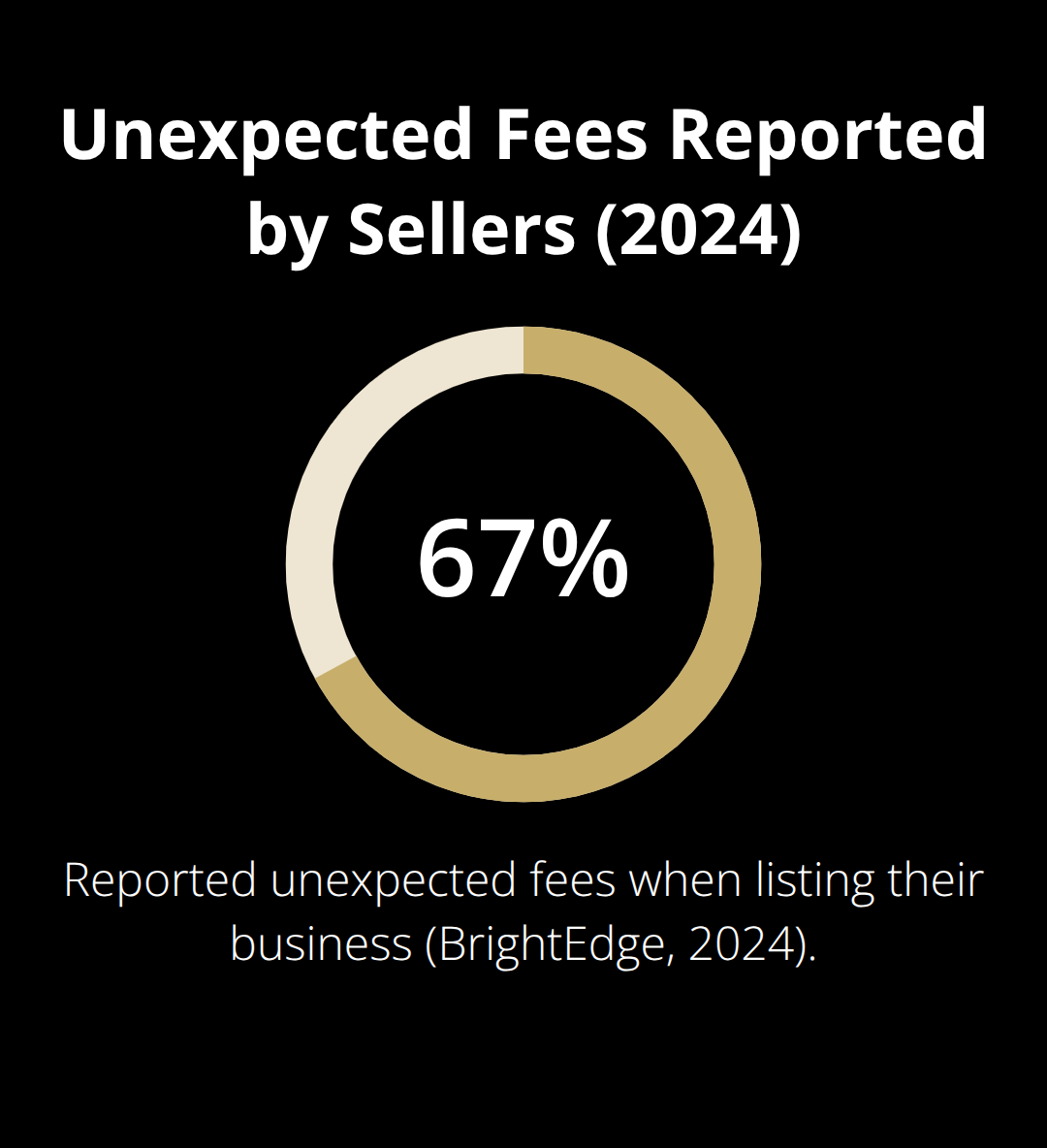
Transparency in business sales means one thing: you know every dollar you’ll pay before you commit. Not after signing, not during the process, but upfront. Most platforms fail this test. According to a 2024 BrightEdge report, 67% of business sellers reported unexpected fees they didn’t anticipate when listing their business. These hidden costs in business seller platforms range from processing fees to escrow charges to marketing add-ons that weren’t mentioned in initial conversations.
The problem isn’t accidental-it’s structural. Platforms benefit from keeping pricing opaque because sellers have limited leverage once they’ve started the process. Real transparency in business sales platforms eliminates this power imbalance entirely. When you see exact numbers for commissions, service fees, and optional add-ons laid out in advance, you can actually compare platforms and make an informed decision.
Documentation matters equally. Legitimate platforms provide written agreements that specify what services are included, what they cost, and what happens if things change. Too many sellers work with verbal promises or vague email confirmations, only to discover later that certain services cost extra or weren’t included at all.
The Cost of Vague Pricing
Vague commission structures represent the most common transparency problem. Some platforms charge 10% commission but don’t clarify whether that applies to the sale price, the business valuation, or something else entirely. Others use phrases like “variable costs” that fluctuate based on market conditions-which means you never actually know your final bill.
A seller might think they’re paying 8% commission, only to discover at closing that additional transaction fees, buyer facilitation charges, and compliance costs add another 3-4% to their total expense. That’s a massive difference on a multi-million dollar sale. Documentation gaps create additional confusion. Platforms often bundle services without explaining what’s included. Does their marketing package mean they’ll create a professional listing, or just post your basic information? Will they handle negotiations, or do you manage all buyer communications yourself?
Information You Should Demand
Demand access to performance data and success metrics. How many businesses has the platform sold in your industry? What’s their average time on market? What percentage of listings result in completed sales? Platforms confident in their transparency provide these numbers. If they hesitate or say data isn’t available, that’s a red flag.
Request references from recent sellers in your industry-not handpicked testimonials, but actual contact information for people who’ve sold businesses similar to yours in the past six months. Ask them specifically about costs, timeline accuracy, and whether any surprise fees appeared during the process. Compare what you learn from these conversations against the written agreements each platform provides, and you’ll quickly spot which ones actually practice transparency.
What Separates Real Transparency From Marketing Talk
The platforms that truly operate transparently publish their pricing clearly and make performance data accessible. They answer specific questions about costs without deflecting to general statements. They provide written documentation that covers every service, every fee, and every contingency (not vague promises buried in lengthy terms of service).
When you evaluate platforms, look for ones that state exact numbers upfront. If a platform charges $485 upfront and $4,500 post-sale, that’s transparent. If they charge a percentage commission but won’t tell you the percentage until you call, that’s not. The difference determines whether you’ll face surprises at closing or move forward with confidence about your actual costs.
Red Flags That Signal a Lack of Transparency
Vague Pricing Language Hides Real Costs
Platforms that won’t state exact numbers are hiding something. When a sales platform talks about commission in vague terms like “competitive rates” or “market-based pricing,” that’s code for “we’ll tell you later.” The worst offenders use phrases like “variable costs depending on circumstances” or “fees determined at closing.” These aren’t pricing models-they’re blank checks.
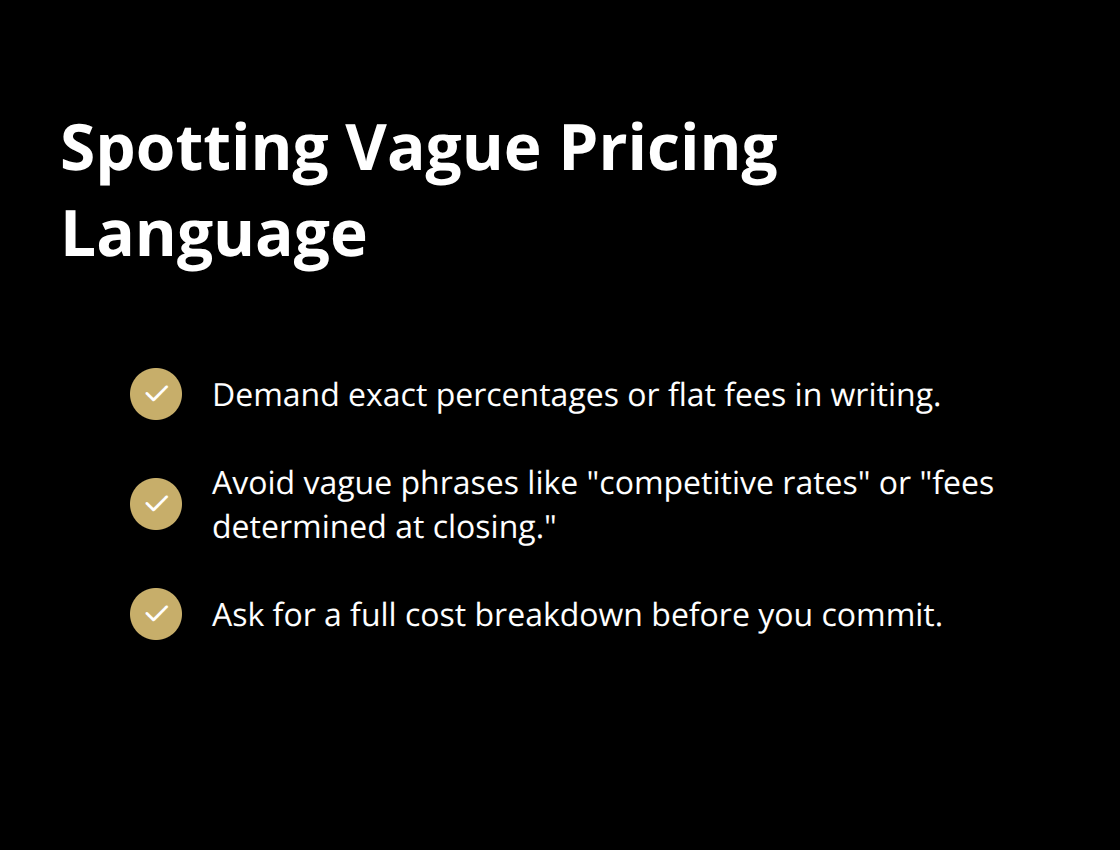
Real platforms state exact percentages, flat fees, or both. If a platform won’t provide those specifics in writing before you commit, walk away.
Service Bundling Without Clear Definitions
Service bundling without clarity creates another major trap. Platforms often list services like “comprehensive marketing” or “full transaction support” without defining what those actually include. Does their marketing mean they’ll create professional photography, write a compelling listing, and promote it across multiple channels? Or does it mean they’ll post your information on their website and call it a day? Will they handle buyer negotiations, or do you manage all communications yourself?
A seller on a business sales platform discovered at the negotiation stage that their platform’s “buyer facilitation” service only meant they’d introduce the buyer-the seller had to negotiate every detail alone. The platform had never explicitly stated this limitation. Always request a detailed service agreement that lists each deliverable separately. Ask whether optional add-ons exist and what they cost.
Missing Performance Data and Metrics
Performance metrics and success data reveal whether platforms actually deliver results or just make promises. Platforms confident in their track record publish specific numbers: average days on market, percentage of listings that close, average sale prices in your industry. If a platform says they’re “successful” or have “strong closing rates” without providing actual data, that’s a red flag.
Contact recent sellers directly and ask specific questions: Did the timeline match what the platform promised? Were there unexpected fees? Did the platform’s buyer network actually include serious buyers for your type of business? Written testimonials don’t count-these conversations do. Platforms that restrict access to seller references or provide only handpicked testimonials are protecting something.
How to Verify Claims Against Reality
The gap between what platforms promise and what they deliver often appears during the actual transaction. Request a detailed breakdown of all costs in writing before you sign anything. Ask for contact information from recent sellers in your industry (not testimonials selected by the platform). Compare their actual experiences against the written agreements each platform provides, and you’ll quickly spot which ones practice transparency versus which ones use marketing language to obscure their true costs.
Testing Platform Transparency Before You Commit
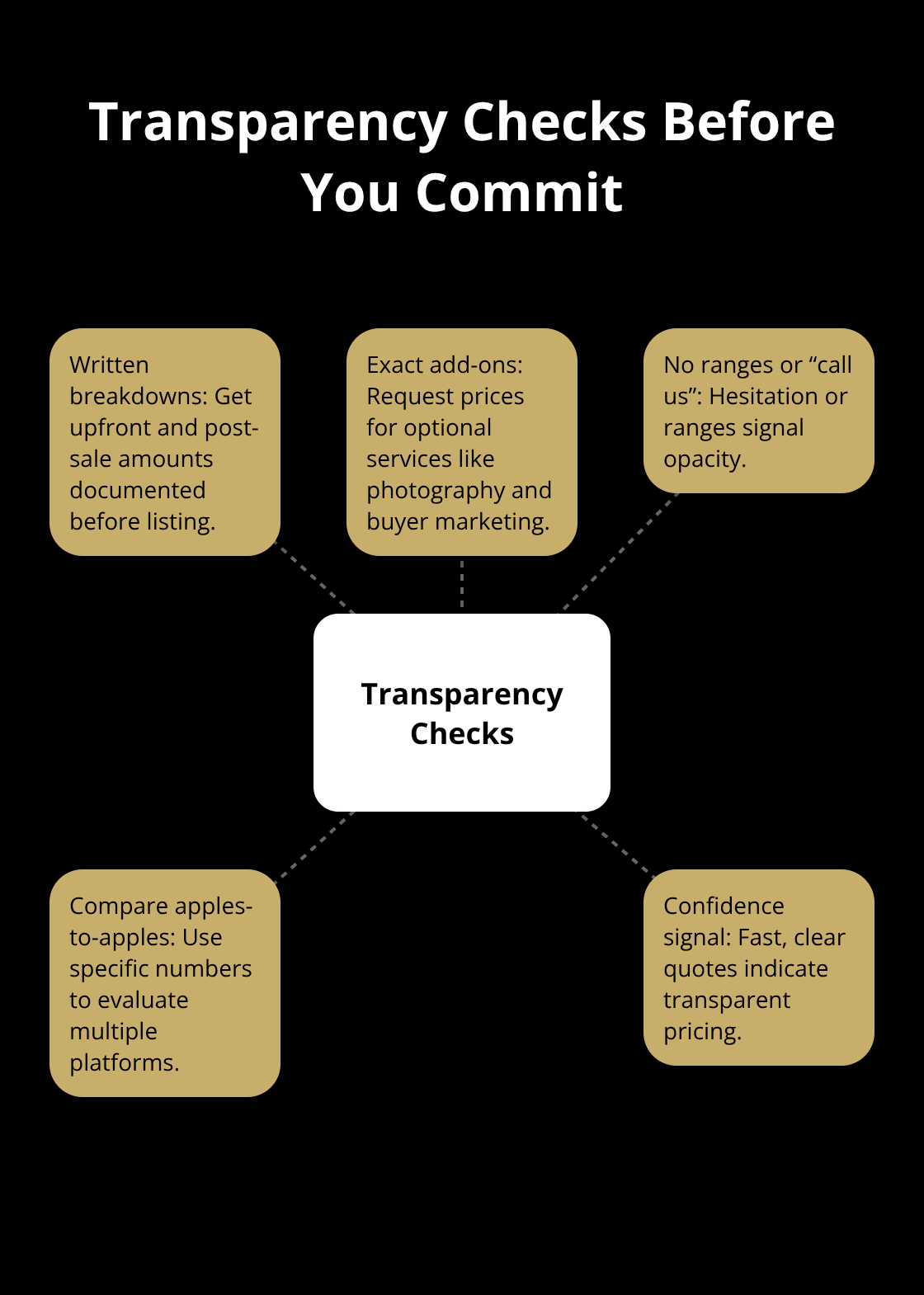
Most sellers discover a platform’s real transparency level only after they’ve already started the process. Stop waiting until then. Start by requesting a detailed cost breakdown in writing before any conversation about listing your business. Demand specifics: exact upfront fees, exact post-sale percentages or flat amounts, exact costs for any optional services like professional photography or buyer marketing. If a platform hesitates, provides ranges instead of exact numbers, or suggests you call to discuss pricing, that’s your answer about their commitment to transparency.
Request Written Cost Breakdowns Upfront
Platforms that won’t provide written cost breakdowns before you commit are operating on opacity by design. When you compare platforms, this clarity matters more than any marketing promise. Ask for exact numbers in writing: What do you charge upfront? What percentage or flat fee applies after the sale closes? What costs apply to optional services? Platforms confident in their pricing welcome these questions because transparent pricing is their competitive advantage. Those that deflect or delay this conversation are hiding something.
Verify Performance Claims Through Direct Seller Contact
Don’t trust testimonials or published case studies alone. Contact recent sellers directly and ask about their actual experience. Request at least three seller references from people who sold similar businesses in your industry within the past six months. Ask them specific questions: Did the timeline match what the platform promised? Were there unexpected costs at closing? Did the buyer pool include serious, qualified buyers? Did the platform handle negotiations professionally, or did you manage everything yourself?
Platform-selected references are nearly worthless because they’re obviously biased. Sellers who volunteered to speak with prospects without platform coordination give you honest answers. If a platform refuses to provide direct seller contacts or only offers testimonials, assume they’re hiding negative experiences. Platforms confident in their results welcome this scrutiny because their actual sellers will confirm their promises.
Examine Success Metrics and Industry-Specific Data
Performance data reveals whether platforms deliver results. Request specific metrics: average days on market for businesses in your category, percentage of listings that actually close, average final sale prices compared to initial listing prices. According to the National Federation of Independent Business, the median time to sell a small business ranges from 7 to 12 months depending on industry and valuation. If a platform claims average sales timelines significantly outside this range without explanation, that’s suspicious.
Ask whether their metrics cover all listings or only completed sales, because platforms sometimes exclude failed transactions from their reported averages. Request industry-specific data rather than general statistics, since a platform’s success selling restaurants differs from their success with software companies. Platforms that provide transparent, detailed performance metrics by industry category are showing genuine confidence in their results. Those that offer vague statements about being successful or having strong closing rates without supporting numbers are deflecting.
Final Thoughts
Transparency directly impacts your bottom line when you sell a business. Every hidden fee, vague commission structure, and unclear service definition reduces what you actually take home. The platforms making the biggest seller transparency promises are often the ones hiding the most. You now know exactly what to look for: written cost breakdowns, direct seller references, and verifiable performance metrics that platforms provide without hesitation.
Demand clear answers before you commit to any platform. Request exact numbers in writing, contact recent sellers directly to ask about unexpected costs, and verify performance claims against industry benchmarks. This process takes time, but it prevents far more expensive mistakes at closing. A platform that won’t answer these questions upfront isn’t worth your time, regardless of what their marketing claims state.
We at Unbroker built our platform around this principle-our seller transparency promises reflect our actual pricing structure, not marketing language. We charge $485 upfront and $4,500 post-sale for our Full Service Business Sale, with no hidden fees, variable costs, or surprise charges at closing. Visit Unbroker to see what genuine transparency looks like in practice and compare our pricing against any other platform.