Selling a small business is one of the biggest financial decisions you’ll make as an owner. Most business owners underestimate how complex the process is, which costs them thousands in lost value.
At Unbroker, we’ve seen what separates successful exits from messy ones. The difference comes down to three things: knowing your business’s real value, finding serious buyers, and handling the paperwork correctly.
What Your Small Business Is Actually Worth
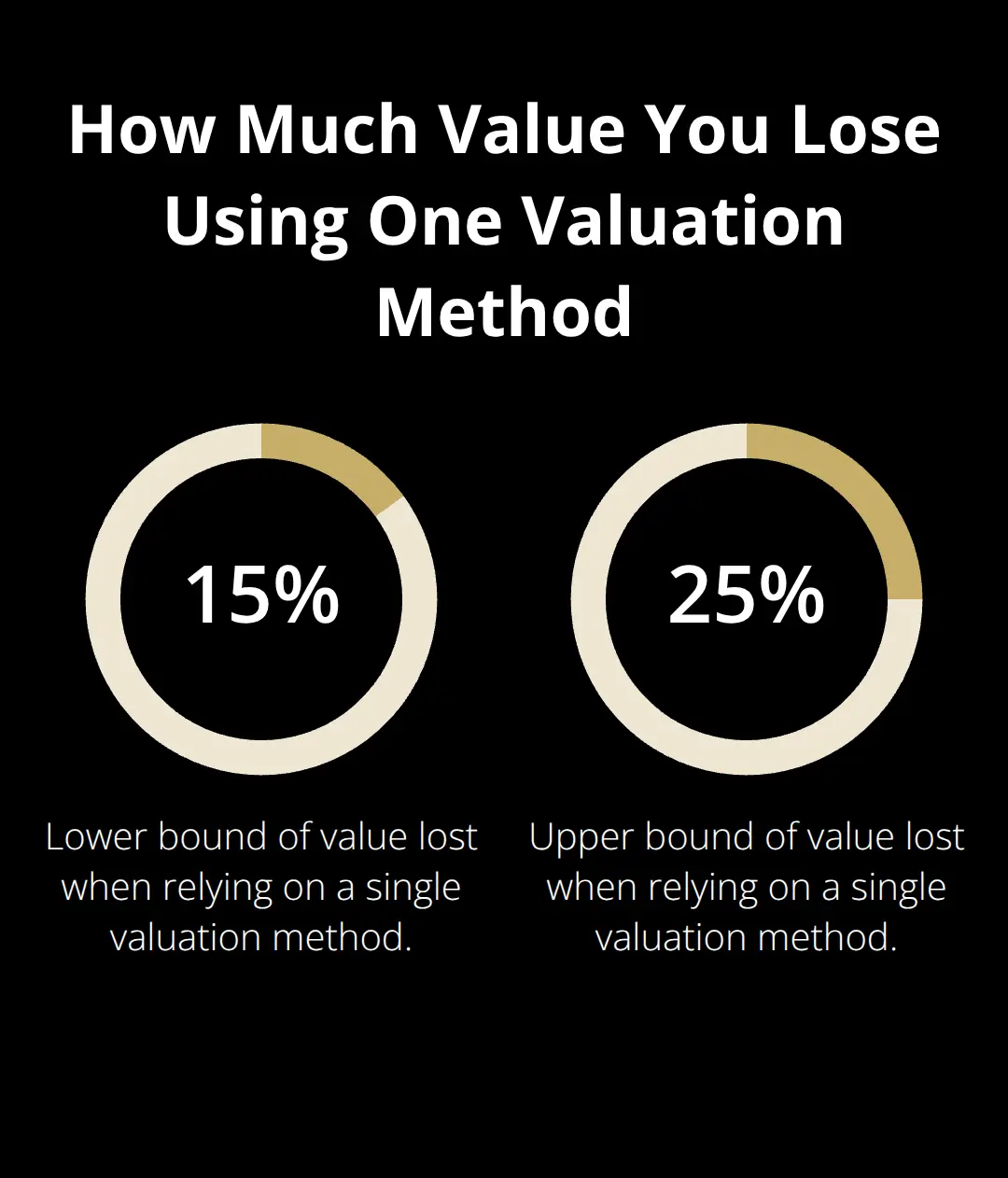
Most business owners rely on a single valuation method, which costs them 15% to 25% of their actual sale price. Different buyers use different approaches, and understanding all of them gives you leverage during negotiations. Start with Seller’s Discretionary Earnings, or SDE, which takes your net profit and adds back owner salary, benefits, and personal expenses that a new owner wouldn’t need to pay.
For small businesses, SDE multiples typically range from 1.5x to 4.5x depending on your industry, growth rate, and how dependent the business is on you personally. A grocery store might sell for 2x to 3x SDE, while a service business with recurring revenue could command 3x to 4x. SDE reflects what an actual buyer will pay because it shows real cash available after normal operating costs.
Why Revenue Multiples Mislead You
Don’t rely on revenue multiples alone-they mislead you, especially if your business is asset-light or seasonal. Revenue alone tells you nothing about profitability or sustainability. If you own the building your business operates from, value the real estate separately from the operations because property can represent 30% to 50% of your total exit value. Gather at least four years of historical financials and adjust them for anomalies like pandemic spikes or one-time expenses so your numbers reflect sustainable earning power, not outliers.
How Owner Involvement Affects Your Price
A business that runs without you commands a higher multiple than one where you’re the essential person. Document your systems, train management, and reduce customer and supplier dependency before going to market. Buyers pay premiums for businesses with bench depth and repeatable processes because they know the operation will survive the transition. Owner involvement affects valuation directly-the success rate for selling a small business is only 20%, and reducing your dependence improves deal terms and accelerates closing. The labor market also affects your valuation directly-if you’re in an area with high employee turnover, buyers will factor that instability into their offer. Conversely, a business with stable, trained staff and low turnover becomes more attractive and commands better terms.
Getting a Professional Valuation
A professional valuation from accounting firm or business broker with access to current national data and comparable sales in your industry provides a credible third-party assessment. This prevents emotional pricing and gives you a defensible number during negotiations. Don’t make the common mistake of minimizing reported profits for tax efficiency and then claiming higher earnings during the sale-buyers and their accountants will catch the inconsistency and lose trust in your financials. Once you know your true value, the next step is finding buyers who will actually pay it.
Finding the Right Buyer for Your Business
Finding the right buyer matters more than finding any buyer. The wrong buyer can kill your deal, expose sensitive information, or tank your valuation. Deloitte’s 2024 M&A Trends Survey shows that despite optimism around deal activity, only 25% to 33% of small- to mid-sized businesses listed for sale actually close. Most failures happen because sellers approach the wrong buyers or cast too narrow a net.
Start by mapping three buyer categories: strategic buyers in your industry who see acquisition as growth, financial buyers like private equity groups seeking cash flow, and owner-operator types buying their first or next business. Strategic buyers often pay premiums because they can cut costs by merging operations with theirs-eliminating duplicate admin, sharing vendors, or consolidating locations.
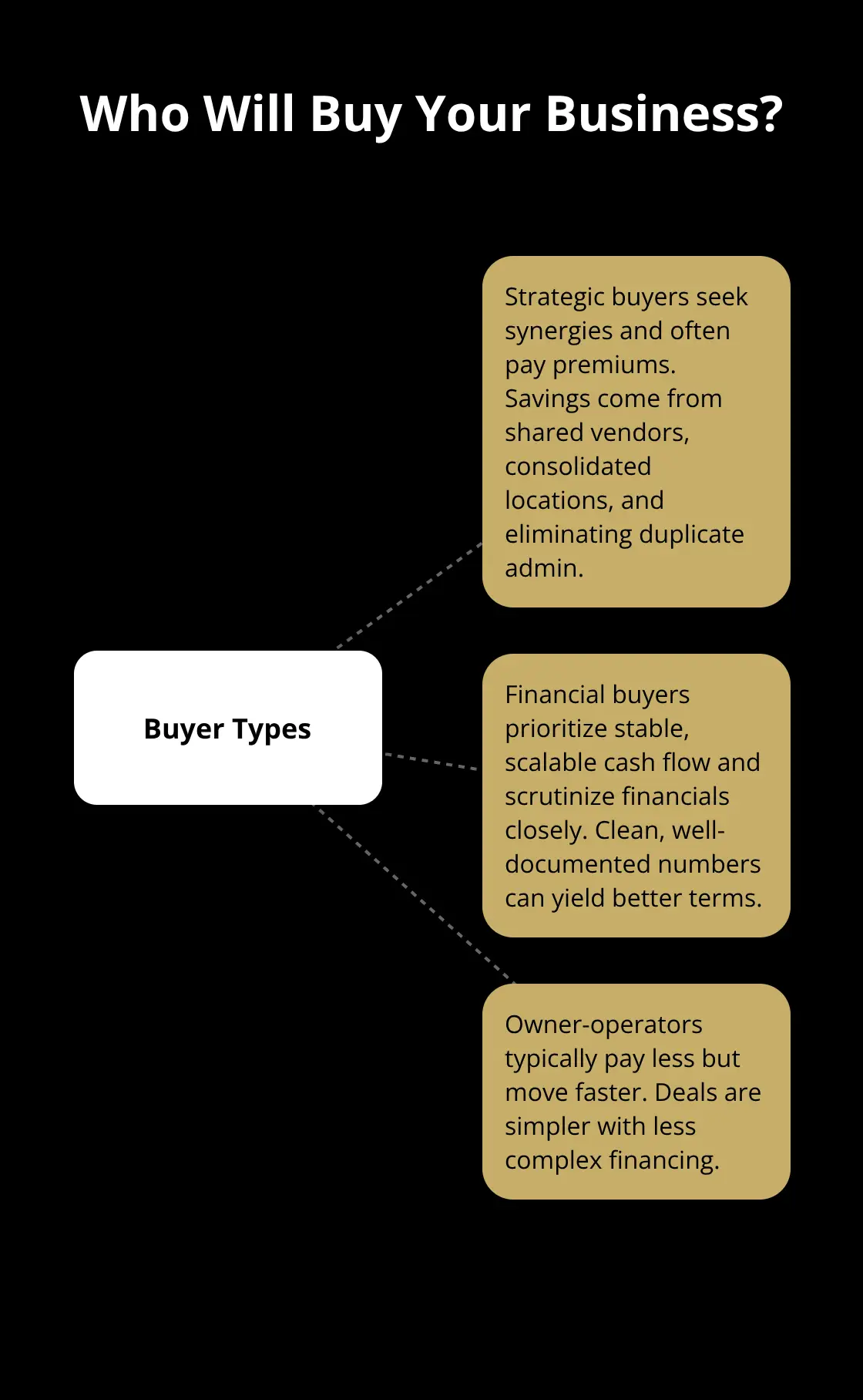
Financial buyers focus on cash flow stability and scalability, so they scrutinize your financials harder but may offer better terms if your numbers are clean. Owner-operators typically pay less but close faster and require less complex financing.
Your network likely skews toward one type, which means you’re probably leaving money on the table. Expand beyond local connections and industry friends. Private equity groups and family offices actively hunt for small businesses, and they have capital ready to move. Competitors in your space are obvious candidates, but vet them carefully-a competitor might acquire your customer list and shut you down, which destroys employee relationships and your reputation.
Expand Your Buyer Pool Beyond Your Network
Online platforms connect you to a broader pool, though quality varies. These marketplaces attract serious buyers actively searching for acquisitions in your sector. The wider your reach, the more competitive offers you attract and the stronger your negotiating position becomes.
Decide Whether You Need a Broker
A broker accelerates buyer discovery and handles coordination, but not all brokers justify their fees. Traditional brokers charge 10% of the sale price, which on a $500,000 deal means $50,000 gone. If you can identify qualified buyers yourself through industry connections or online channels, you might skip the broker and save significantly.
However, most owners lack buyer networks large enough to attract competitive offers. A good broker manages confidentiality-critical if word reaches employees or competitors. Seek referrals from your CPA, attorney, or financial planner, and verify their track record in your industry. Ask how many deals they closed last year, what industries they focus on, and whether their fee structure is transparent. If a broker hedges on fees or hides terms, walk away.
The best brokers provide comparable sales data and help you price competitively from day one, shortening the sale timeline. Homeowners who sell with a broker generally avoid the 5-to-7 percent discount that For-Sale-By-Owners typically give up, though this varies by industry and business quality.
Prepare Your Deal Book Before Buyers Call
Serious buyers want data, not hope. Before you contact a single prospect, assemble a deal book with adjusted financials showing realistic earnings, organizational charts proving the business runs without you, customer concentration analysis, and documented growth opportunities. Include at least four years of P&L statements with owner add-backs clearly labeled.
If you’ve minimized profits for tax purposes, restate financials to show actual operational performance-buyers and their accountants will find inconsistencies, and dishonesty kills deals. A deal book also includes your lease terms, key customer contracts, employee data, and intellectual property. This package accelerates due diligence and signals professionalism.
Buyers who receive a complete deal book move faster because they spend less time requesting documents and chasing information. Incomplete information signals disorganization or hidden problems, which tanks valuations and extends timelines. Once you’ve assembled your materials and identified your buyer categories, the next step is navigating the actual sales process and closing the deal.
How to Close Your Deal Without Leaving Money on the Table
The sales process separates careful sellers from rushed ones. Most small business owners make critical mistakes in documentation, negotiation, and due diligence that cost them 10% to 20% of their final sale price. The process from signed letter of intent to closing typically takes 90 to 120 days, though disorganized sellers stretch this to six months or longer. Speed matters because extended timelines create uncertainty, kill buyer momentum, and invite deal fatigue that erodes your negotiating position.
Assemble Your Legal Team Before You Need It
Start by assembling your legal team immediately, not after a buyer appears. Hire a transaction attorney who specializes in business sales, not a general corporate lawyer. General counsel miss sale-specific issues like earnout structures, seller financing terms, and tax implications that directly impact your net proceeds. Your team should also include your CPA to handle tax strategy and a business broker or advisor if you haven’t already.
Meet with your attorney before you sign anything with a buyer. The letter of intent sets the framework for negotiations, and most owners sign it without understanding what they’re agreeing to. Your lawyer will identify red flags like unreasonable earnout conditions, excessive seller financing requirements, or indemnification clauses that expose you to liability years after closing. Avoiding common pitfalls when selling your business protects deal value and strengthens your negotiating position.
Create a 100-Day Transition Plan
Create a 100-day plan that outlines exactly what happens between signing and closing: when employees find out, how you introduce the new owner to customers, which vendor relationships transfer, and what training you’ll provide. Document everything in writing. This plan prevents confusion and keeps all parties aligned throughout the handoff.
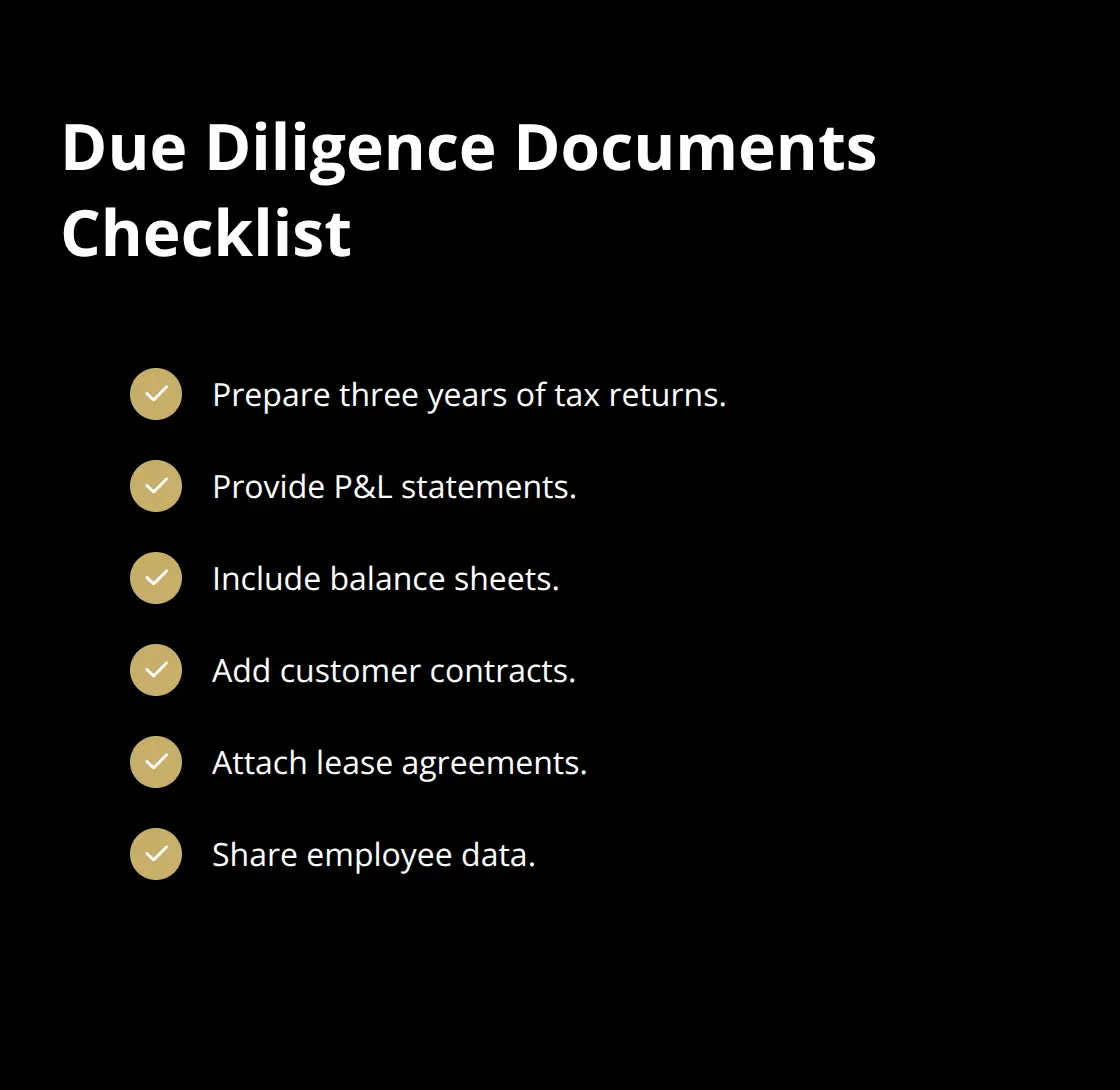
Buyers expect rigorous due diligence because they’re increasingly sophisticated about hidden liabilities. Keep your records complete, transparent, and organized in a centralized location so your buyer’s accountants can access them immediately. Disorganized files signal dysfunction and kill deals. Prepare your tax returns for at least three years, your P&L and balance sheet statements, customer contracts, lease agreements, and employee data. If you’ve deferred maintenance or hidden problems, they’ll surface during due diligence and destroy trust.
Honesty accelerates closings because it eliminates surprises that derail negotiations.
Negotiate From Strength, Not Emotion
Negotiation strategy matters more than most owners realize. Never make the first offer. Let the buyer state their number first, which reveals their ceiling and gives you negotiating room. If you announce your asking price before hearing their offer, you anchor the negotiation at your number, and buyers will negotiate downward from there.
Once you have their offer, don’t accept immediately. Buyers expect pushback, and accepting quickly signals you overpriced the business. Respond with a counteroffer that’s defensible based on your valuation work, adjusted financials, and comparable sales data. Most deals involve three to five rounds of back-and-forth negotiation before both sides settle.
If the buyer demands seller financing or an earnout, understand what you’re actually agreeing to. Seller financing means you’re now the bank, carrying risk if the buyer defaults. Earnouts tie your final payment to future performance metrics, which means you have no control over achieving the targets yet lose money if they’re missed. Negotiate earnout periods to no longer than 24 months and tie payments to metrics you can influence. A buyer who insists on aggressive earnouts or excessive seller financing is signaling they don’t believe in the business’s cash flow, which should concern you.
Your CPA can model different deal structures and show you the net present value of each option so you understand what you’re actually receiving. A $1 million deal structured as $600,000 cash at close plus a $400,000 earnout over three years is worth significantly less than $1 million cash because you’re carrying risk and losing time value of money.
Respond to Due Diligence Requests Immediately
Due diligence is where deals either accelerate or stall. Buyers will request customer lists, vendor contracts, employee agreements, intellectual property documentation, and detailed financial records. Assemble a due diligence package that answers questions before they’re asked. Include a compliance risk summary addressing potential concerns like environmental permits, health licenses, or regulatory compliance.
Maintaining current licenses, permits, and certificates from relevant authorities prevents buyers from discovering lapses during review. If your business operates under federal licenses (USDA, TTB, ATF for alcohol, FWS for certain products), verify renewals are current. Environmental compliance documentation, if applicable, should include hazardous materials handling procedures and EPA permits. Workplace safety posters and required training certificates must be current and documented. Buyers will verify these independently, and missing documentation creates friction and delays closing.
Respond to buyer requests within 48 hours. Slow responses signal disorganization and kill momentum. Assign one person to coordinate all due diligence requests and create a shared document repository so both sides can access materials simultaneously. Transparency here matters enormously because it builds buyer confidence and accelerates the process.
If the buyer’s accountants find inconsistencies between your tax returns and your claimed earnings, that inconsistency kills the deal or tanks your valuation. Normalized EBITDA with clear add-backs prevents this problem. Show the buyer exactly which expenses you’ve added back and why, so they understand your true cash generation.
Final Thoughts
Selling a small business successfully requires three non-negotiable actions: knowing your real value, finding serious buyers, and executing the process without shortcuts. Most owners who fail at one of these steps leave 15% to 25% of their potential sale price on the table. The owners who win prepare thoroughly, assemble the right advisors, and stay disciplined through negotiations.
Your valuation work matters most because it anchors every conversation that follows. Use multiple methods, adjust your financials honestly, and obtain a professional assessment so you have a defensible number. Document your systems and reduce your personal involvement before going to market, since buyers pay premiums for businesses that run without the founder. Gather four years of clean financials and organize them before a single buyer calls, and expand beyond your network to find strategic buyers, financial investors, and owner-operators who each bring different value and different risk.
The sales process itself separates careful sellers from rushed ones-hire a transaction attorney before you sign anything, create a detailed transition plan, and respond to due diligence requests immediately. Never make the first offer, structure earnouts carefully, and understand what seller financing actually costs you (slow responses and disorganized records kill deals or tank valuations). When you sell a small business, you manage risk, timing, and multiple stakeholders simultaneously, which is exactly why most owners benefit from professional support. At Unbroker, we’ve built a platform that removes the traditional broker markup while keeping the expertise you need through transparent, low-cost fees and access to a broad buyer network, legal templates, and negotiation guidance.