Selling a business is a race against time, and most buyers have already made up their minds before they even contact you. At Unbroker, we’ve seen firsthand how pre-sale marketing tools separate listings that attract serious buyers from those that languish.
The difference between a quick sale and a prolonged listing comes down to preparation. Strategic marketing before your business goes live builds momentum, generates qualified interest, and positions your company for maximum value.
Why Buyers Make Decisions Before They Contact You
Research Happens Before Contact
Most business buyers spend weeks researching before they reach out to a seller. According to data from Harvard Business School, 71% of business acquisition prospects complete their initial screening and form preliminary judgments entirely through online research. This means your listing isn’t just a document-it’s your only chance to pass the first filter.

If your business description lacks specifics about revenue trends, profit margins, or customer retention rates, qualified buyers move on to the next opportunity.
Listings with detailed financial snapshots and clear market positioning attract inquiries from serious buyers within days. Vague or incomplete listings sit dormant for months. The buyers who contact you after thorough research are already 80% convinced they want to proceed. Your pre-sale marketing isn’t about convincing fence-sitters; it’s about standing out to people who’ve already decided to buy something in your industry.
Financial Clarity Builds Credibility
First impressions in business sales operate differently than in other contexts. A professional business valuation summary, recent financial statements, and growth metrics establish credibility immediately. Buyers expect to see concrete numbers: customer acquisition cost, average customer lifetime value, monthly recurring revenue, and churn rates.
If your listing omits these details, potential acquirers assume you’re hiding weakness or lack operational sophistication. Professional photography of your facilities, equipment, or workspace matters, but only as secondary support to financial clarity. The real differentiator is positioning your business within its market category with specificity.
Specificity Attracts the Right Buyers
Rather than stating you serve small businesses, specify that you serve dental practices with 2-10 employees in the Northeast region, and back it up with customer data. This specificity filters out unqualified buyers and attracts those with genuine interest in your exact business model. Early marketing campaigns that target these specific buyer profiles create momentum before your formal listing launches, generating competitive tension that drives faster sales and higher valuations.
The tools you select for pre-sale marketing determine whether you reach tire-kickers or serious acquirers. Strategic positioning transforms your listing from a passive document into an active sales instrument.
Tools That Actually Move the Needle
Financial Documentation Trumps Aesthetics
Professional photography for business listings ranks high on every broker’s checklist, but it’s largely theater. Buyers of businesses care far more about financial documentation in business sales than workspace aesthetics. A pristine photo of your office means nothing if your profit margins are unclear or your customer concentration is dangerously high. Countless sellers invest thousands in professional photography only to receive the same questions about revenue verification and expense breakdowns. The real work happens in your financial presentation.
Create a one-page financial summary that shows revenue for the past three years, current monthly recurring revenue, gross profit margins, and customer acquisition costs in concrete numbers. Include a customer breakdown showing your top five clients and what percentage of revenue each represents. Buyers will ask for this anyway, so lead with it.
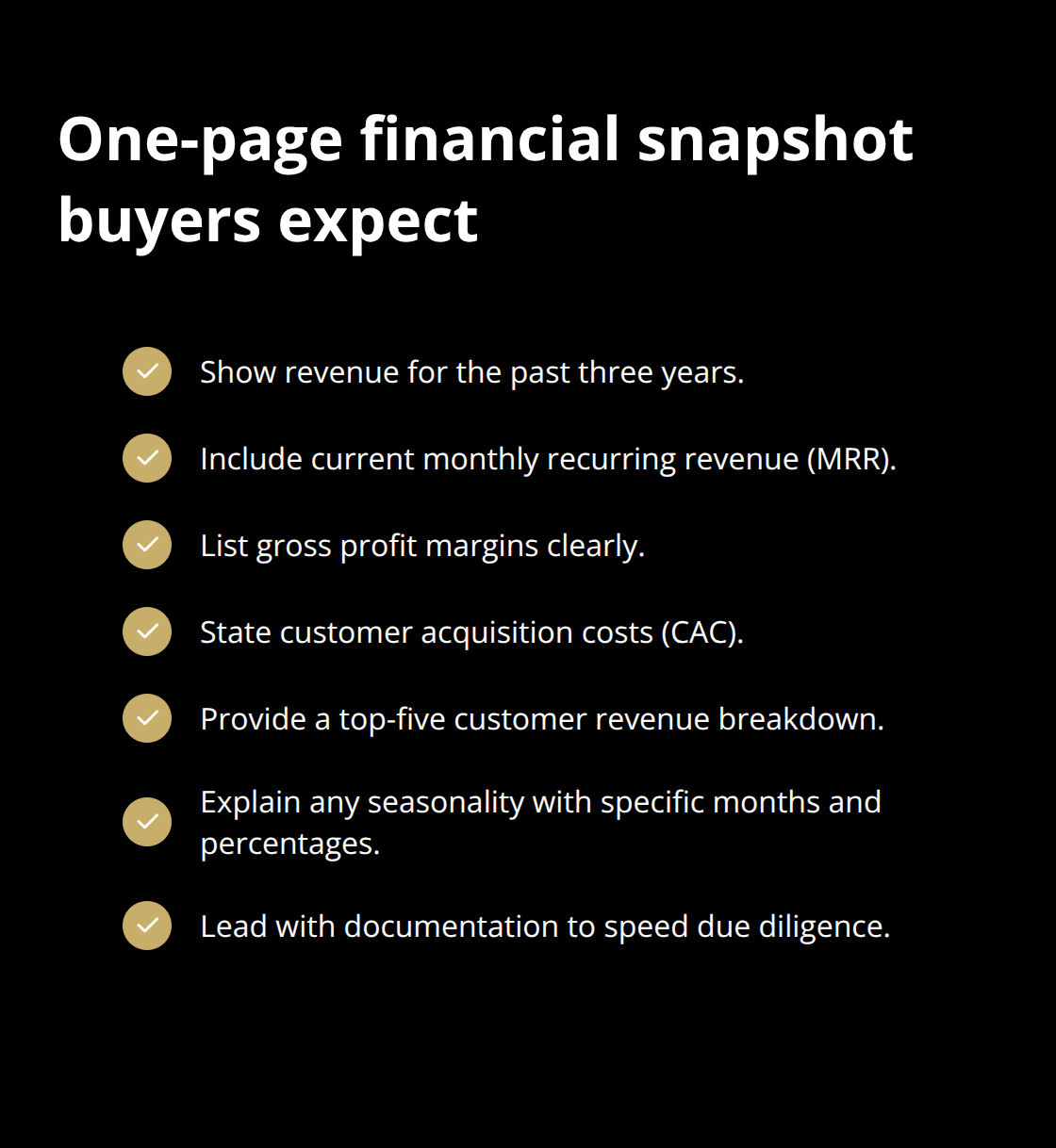
If your business has seasonal revenue patterns, explain them upfront with specific months and percentages rather than leaving buyers to guess. This transparency accelerates due diligence and signals that you have nothing to hide.
Your Description Needs Specificity, Not Marketing Speak
Your business description should read like a market analyst’s report, not marketing copy. State exactly what your business does, who your customers are, and why they pay you. Include specific metrics: if you’re a SaaS company, mention your monthly churn rate and average customer lifetime value; if you’re a service business, specify your average project margin and client retention rate.
Vague descriptions invite tire-kickers and lowball offers. Specific descriptions attract serious buyers who’ve already calculated what they’re willing to pay and recognize your business model immediately.
Pricing Strategy Signals Confidence
Pricing your business requires understanding comparable sales in your industry. Look at recent business sales in your space on platforms that track this data, and position your asking price within that range with clear justification tied to your margins and growth trajectory. Transparent pricing attracts serious buyers who’ve already calculated what they’re willing to pay.
Vague pricing invites lowball offers and signals uncertainty about your company’s value. When you anchor your price to specific comparable transactions and your own financial performance, you eliminate negotiation theater and draw acquirers who respect your valuation. This positions your listing for the next critical phase: reaching the right buyers through targeted channels.
Getting Your Listing in Front of Serious Buyers
The best financial documentation and pricing strategy mean nothing if serious buyers never see your listing. Most business sellers rely on a single broker or platform and hope for visibility. This passive approach leaves money on the table. You need multiple channels working simultaneously to reach qualified acquirers before they commit to competing opportunities.
Search engine optimization for business listings
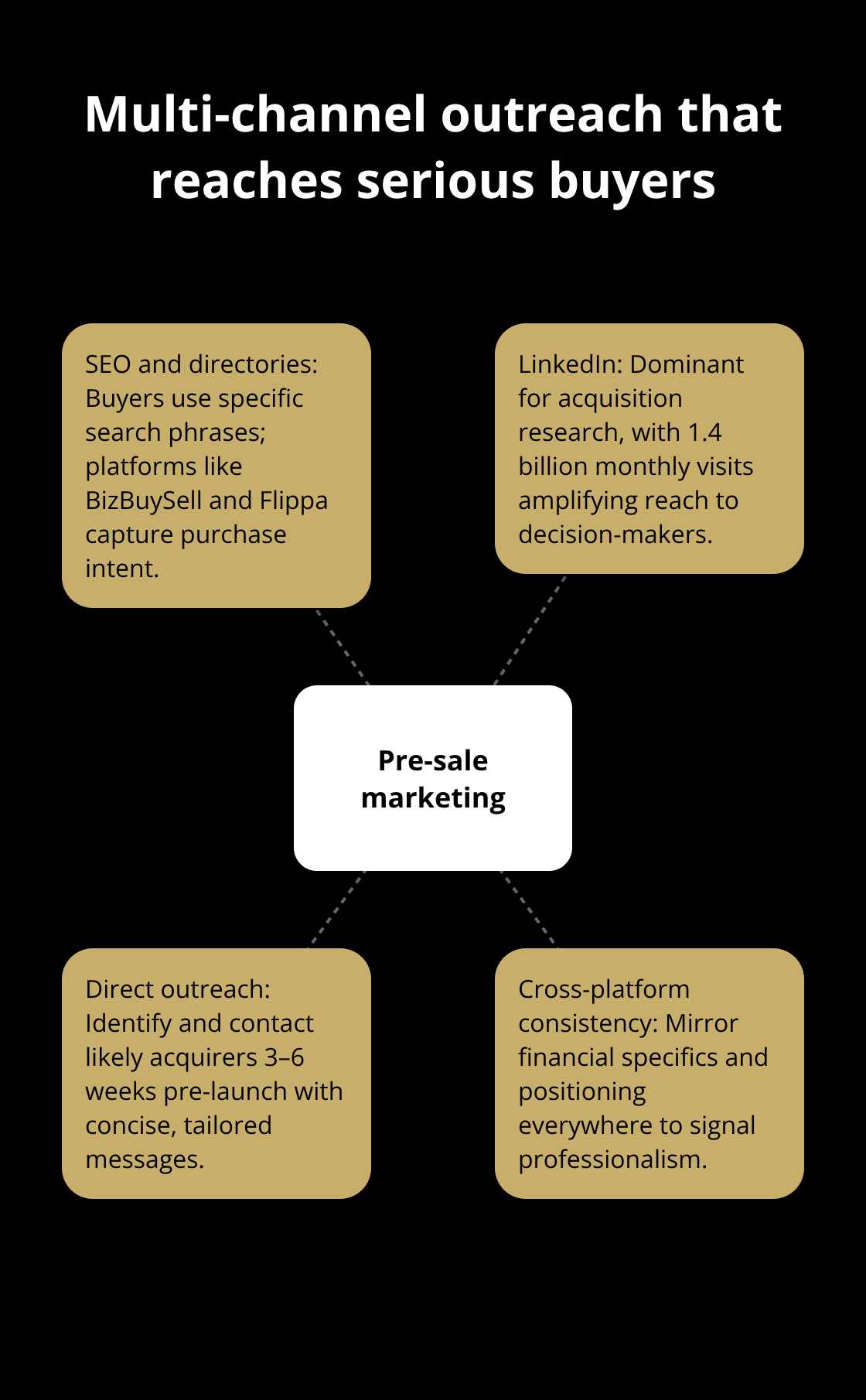
Search engine optimization for business listings operates differently than traditional SEO. Buyers searching for acquisition targets use specific phrases like “SaaS company for sale in [region]” or “[industry] business acquisition.” Claiming your business on industry-specific directories where buyers actively search matters more than ranking for generic terms. Platforms like BizBuySell and Flippa for digital assets attract serious acquirers with purchase intent already formed.
When you list on these platforms, include the same financial specifics and market positioning from your written materials. Consistency across platforms signals professionalism and builds credibility with potential buyers who cross-reference your information.
Leverage LinkedIn and Professional Networks
Social media and professional networks function as lead generation channels, not sales channels. LinkedIn remains the dominant platform for business acquisition research. 1.4 billion monthly visits demonstrate the platform’s reach, and many actively monitor acquisition opportunities in their industries. Post about your business milestones, customer wins, and market position without directly selling.
This content reaches potential buyers’ networks and establishes your business as a credible market player. Join industry-specific groups and participate in conversations about market trends. When acquisition discussions emerge, your established presence positions you as someone worth investigating further.
Direct Outreach to Qualified Buyers
Targeted outreach campaigns work best when you identify specific buyer profiles before your listing launches. Research companies that have acquired similar businesses in your industry. Cross-reference their acquisition announcements with LinkedIn profiles of decision-makers involved. Reach out directly to these individuals with a brief, specific message about your business and why it aligns with their acquisition strategy.
This approach generates inbound interest from qualified buyers who have already proven they acquire businesses like yours. Most sellers wait until their listing goes live to start outreach. Starting three to six weeks before launch creates momentum and generates preliminary interest that accelerates the formal sales process once your listing becomes public.
Early momentum often translates to multiple competing offers, which strengthens your negotiating position significantly.
Final Thoughts
Pre-sale marketing tools form the foundation that determines whether your business attracts serious buyers or languishes without interest. Financial clarity, specific market positioning, and strategic visibility across multiple channels create momentum that compounds throughout your sales process. Buyers who find your listing after thorough research have already filtered themselves and stand ready to move forward if your documentation and pricing align with their acquisition criteria.
The timeline matters more than most sellers realize. Starting your marketing efforts three to six weeks before your formal listing launch generates preliminary interest, builds competitive tension, and positions you for multiple offers. This early momentum accelerates negotiations and strengthens your negotiating position significantly, while waiting until your listing goes live to start outreach leaves months of potential advantage on the table.
We at Unbroker built our platform around this reality, providing the marketing resources, financial templates, and buyer network access that sellers need to execute this strategy without traditional brokerage fees. Start your business sale on Unbroker and take control of your timeline and valuation from day one.