Selling a business shouldn’t mean handing over 10% or more of your proceeds to a broker. Traditional commission structures are outdated, and we at Unbroker believe there’s a better way.
A low-cost, transparent platform puts money back in your pocket while giving you full visibility into every cost. The shift toward transparent, low-cost selling is reshaping how business owners approach their exits.
What Traditional Brokers Really Cost You
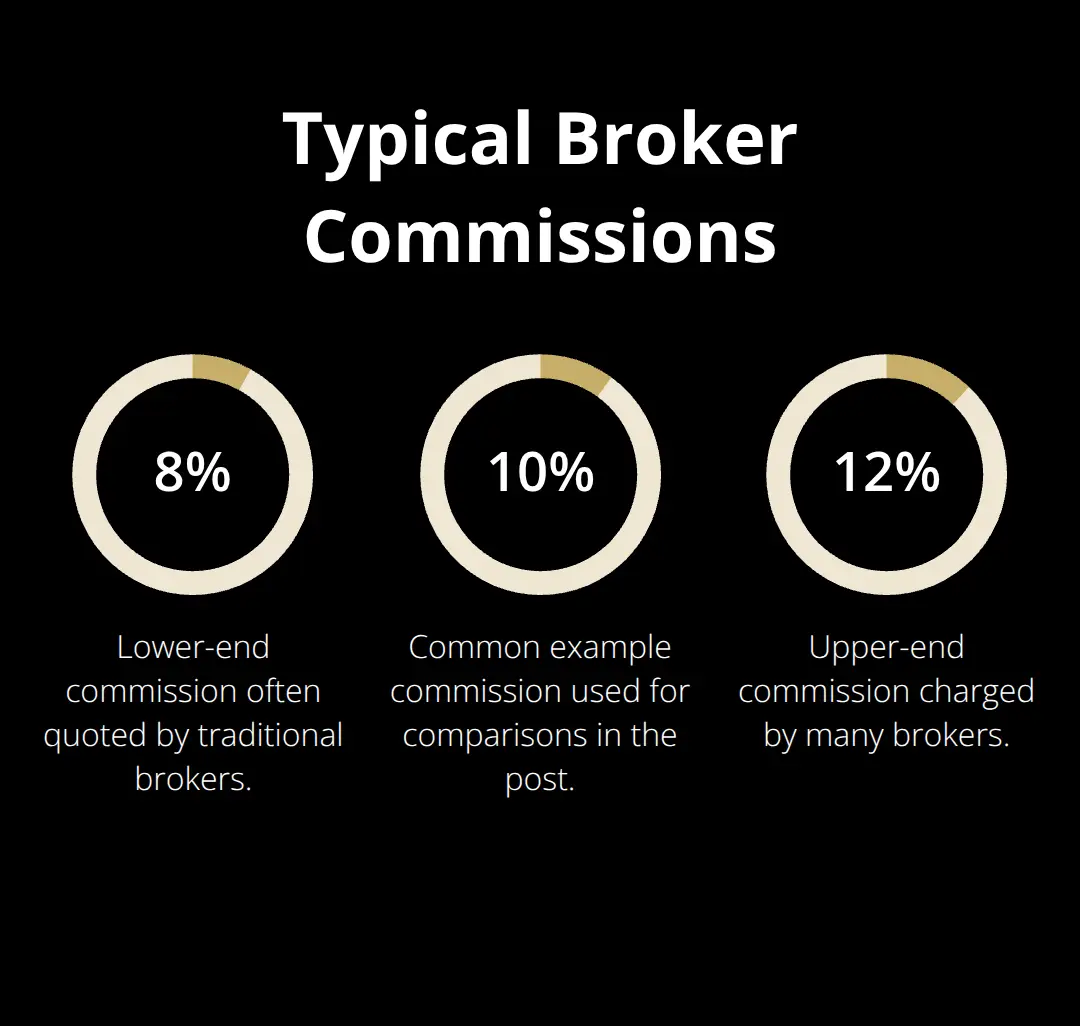
Traditional business brokers operate on a commission model that typically ranges from 8% to 12% of your sale price. On a $1 million business sale, that means $80,000 to $120,000 leaves your pocket before you even see the money. The commission structure isn’t just a single fee either. Most brokers layer on additional charges that compound the damage to your bottom line. Escrow fees, transaction fees, legal review charges, and administrative costs accumulate throughout the process.
A business owner selling for $500,000 might pay $45,000 in commissions plus another $5,000 to $10,000 in hidden fees, reducing actual proceeds to $445,000 or less. This financial drain happens because traditional brokers have built their entire business model around extracting maximum revenue from each transaction, not maximizing what you keep.
The Real Cost Beyond the Commission Percentage
Brokers rarely disclose their full fee structure upfront. You might hear the 10% commission rate, but the fine print reveals transaction fees, buyer verification costs, and document preparation charges that weren’t mentioned in initial conversations. Some brokers charge separate fees for marketing materials, photography, or listing distribution. Others impose penalties if you want to review their process or request changes mid-sale. The opacity here is intentional. When sellers don’t know what they’re paying, they can’t compare alternatives or negotiate effectively. A $2 million sale might carry $200,000 in commissions plus $15,000 in miscellaneous fees that the broker presents as standard industry practice. The seller has already committed emotional energy and time to the process, making it difficult to walk away when hidden costs emerge.
Why Transparency Matters More Than You Think
Lack of transparency in fee structures creates information asymmetry that favors brokers. You don’t know if their marketing approach is standard or premium, whether certain services are mandatory or optional, or how they calculate various charges. This uncertainty prevents informed decision-making. A platform offering transparent pricing lets you calculate your net proceeds before you list your business. Knowing exactly what you’ll pay allows meaningful comparison between selling approaches and helps you understand the true financial impact of your exit strategy.
How Low-Cost Platforms Change the Equation
Modern platforms eliminate the opacity that traditional brokers rely on. They publish their fees upfront, break down each cost component, and let you see exactly what you’ll pay before you commit. This transparency shifts power back to you as the seller. You can now compare the true cost of different selling approaches and make decisions based on complete information rather than broker promises. The financial advantage becomes clear when you calculate net proceeds across options-and that clarity transforms how business owners approach their exits.
How Low-Cost Platforms Reshape Business Sales
Transparent Pricing Eliminates Financial Surprises
Transparent pricing fundamentally changes how sellers evaluate their options. When a platform discloses its complete fee structure upfront, you can calculate your net proceeds before listing a single asset. A seller with a $2 million business knows exactly what they’ll pay, not an estimated range.
Compare this to traditional brokers where final costs often surprise you after months of work. Unbroker charges a straightforward 6% success fee, paid only when your business sells-making the math easy to follow. On that same $2 million sale, you’d pay roughly $120,000 with Unbroker’s full service versus $200,000 with a traditional 10% commission. That transparent pricing eliminates the guessing game and puts real numbers in front of you before you decide.
Aligned Incentives Drive Better Outcomes
A single success fee removes broker incentives to inflate sale prices artificially or rush deals to collect commissions faster. Your interests align with the platform’s interests when the fee is a modest, published percentage rather than a hidden markup. A broker earning 10% wants your business to sell for as much as possible-but they also want it to sell quickly so they can move to the next deal. Platforms with a simple, disclosed success fee have no reason to push you toward either outcome. They succeed when you succeed, which means they focus on finding the right buyer at the right price rather than any buyer at any price.
Direct Networks Accelerate Deal Flow
Direct access to buyer networks accelerates deal flow without intermediaries taking cuts. Traditional brokers control buyer relationships and information, creating bottlenecks that slow transactions and limit your negotiating power. Modern platforms connect you directly to qualified buyers through AI-powered matching systems that identify serious purchasers based on business profile data. Grand View Research reported that the global online trading platform market reached $10.90 billion in 2025 and is projected to grow to $19.87 billion by 2033, with retail investor adoption accelerating fastest. This expansion reflects how digital platforms democratize access to buyers and sellers at scale.
AI-Powered Marketing Reaches More Prospects
Platforms integrate AI marketing tools that target prospects more effectively than traditional broker outreach. Instead of waiting for a broker to find one or two interested parties, you access a network actively seeking businesses in your category. The marketing happens faster, reaches more qualified prospects, and costs you less because the platform’s technology does the heavy lifting rather than paying individual brokers for manual prospecting. This efficiency translates directly into faster closings and better offers because multiple interested buyers compete for your business.
What This Means for Your Sale Strategy
The combination of transparent fees and direct buyer access shifts control back to you. You see the true cost of selling upfront, you access more potential buyers simultaneously, and you avoid the artificial pressure that commission-based brokers create. These structural advantages compound throughout your sale process, affecting everything from how quickly offers arrive to how much negotiating power you retain. Understanding these mechanics helps you evaluate which selling approach actually serves your financial interests-a question we’ll address directly in the next section.
Full Service vs. Assisted Selling
Full service and assisted platforms serve different sellers based on available time and comfort with sales processes. Full service handles everything from marketing to closing, which costs more but removes you from day-to-day tasks. Assisted platforms keep you in control while providing expert guidance when needed, costing significantly less but requiring your active participation. The choice depends on what you value more: your time or your money.
Understanding the Cost Difference
Full service costs a 6% success fee, paid when your business sells. That fee covers marketing, buyer communications, and negotiation on your behalf, which matters if you don’t have the bandwidth to handle those tasks yourself. Many sellers overestimate their capacity. Running your business while managing a sale creates stress that often leads to poor decisions. You might accept a lower offer just to end the process, or miss qualified buyers because operations demand your attention. Time is money, and undervaluing your time leads to worse financial outcomes than paying for full service.
When Assisted Selling Makes Sense
Assisted platforms work best if you’re genuinely hands-on and enjoy sales processes, or if you’re selling a smaller business where the workload stays manageable. You handle marketing coordination, respond to buyer inquiries, and participate actively in negotiations while the platform provides templates, legal documents, and strategic advice. This approach appeals to sellers who want control and understand business sale mechanics. The workload remains light for smaller transactions, but it grows substantially as business complexity increases.
Why Full Service Delivers Better Results
Full service appeals to sellers who view the sale as a discrete project requiring concentrated attention from professionals. The platform handles buyer outreach, vetting, marketing, and negotiation while you continue running operations. You stay informed but don’t manage day-to-day sale activities. The cost difference becomes negligible when you factor in what your time is worth. A business owner earning $100 per hour who spends 200 hours on a sale has effectively paid $20,000 in time costs plus platform fees. Full service eliminates that time investment entirely. Most experienced sellers choose full service because they understand that their hourly value far exceeds platform fees, and professional handling of negotiations typically recovers the cost through better deal terms.
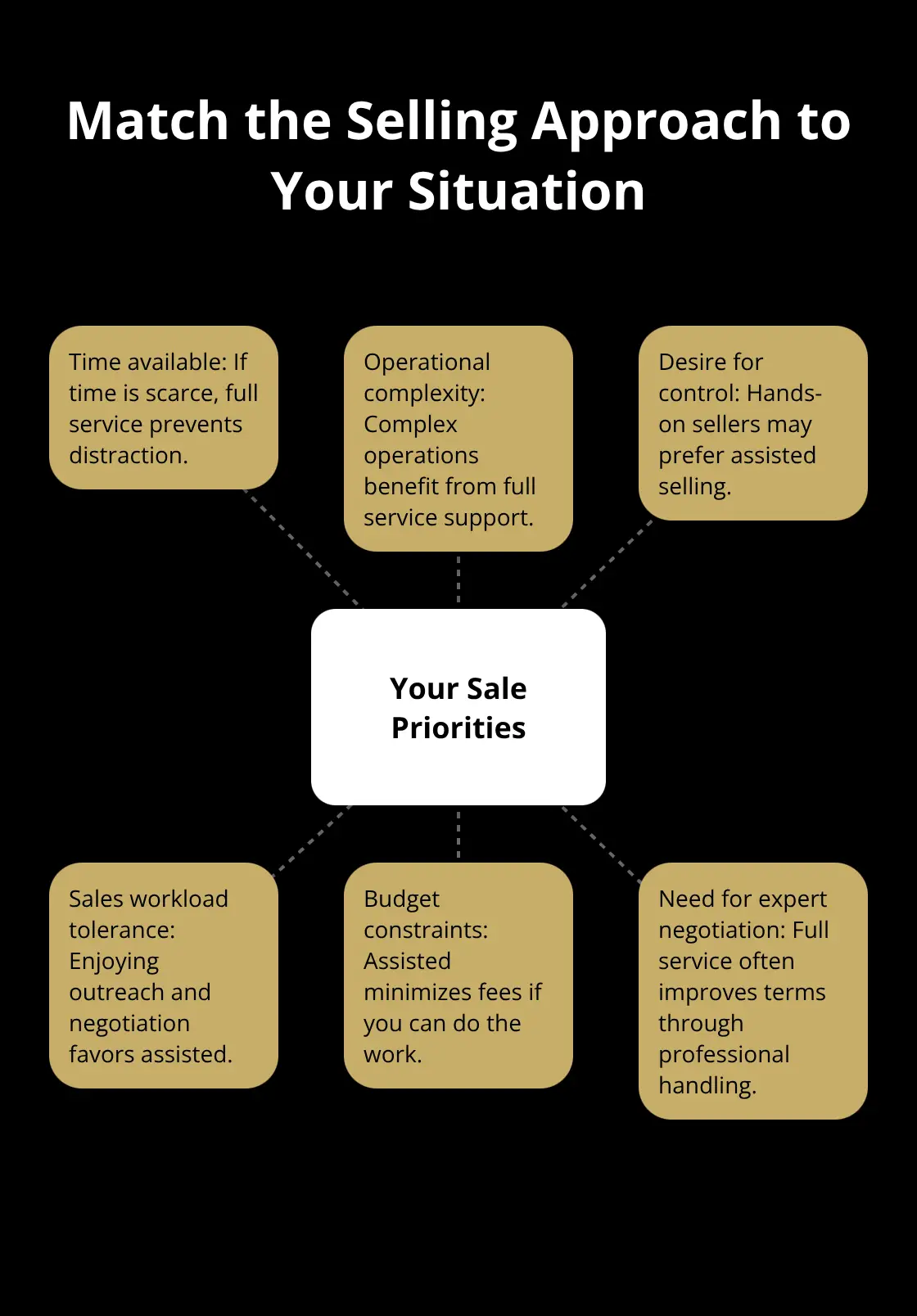
Matching Your Approach to Your Situation
The assisted approach works best for sellers with genuine extra capacity or those selling businesses small enough that the workload stays light. Sellers with limited time or those managing complex operations should try full service, which removes the distraction entirely. Your decision ultimately reflects how you value your own time relative to the platform fees involved.
Final Thoughts
The financial case for selling your business through a low-cost, transparent platform is straightforward. Traditional brokers extract $80,000 to $120,000 from a $1 million sale while layering on hidden fees that further reduce your proceeds. A transparent platform charging a 6% success fee-just $60,000 on that same sale-lets you keep tens of thousands more while understanding exactly what you pay before you commit.
Transparency reshapes power dynamics in your favor. When you know the complete cost upfront, you evaluate selling approaches based on actual numbers rather than broker promises. When fees don’t depend on your sale price, the platform’s incentives align with yours, and AI-driven systems connect you directly to qualified buyers so you negotiate from strength rather than scarcity. These advantages compound throughout your sale process, affecting offer quality, timeline, and your ability to walk away from bad deals.
Your situation determines which approach works best. If you have limited time or manage a complex business, full service selling removes the distraction while you continue operations. If you’re hands-on and want control, assisted selling provides expert guidance at minimal cost. Unbroker offers transparent options with no hidden fees and access to a vast buyer network.