Selling a business shouldn’t feel like navigating a minefield of surprise costs. Hidden fees erode trust, drain profits, and leave sellers feeling deceived long after the deal closes.
At Unbroker, we believe a no hidden fees sale isn’t just nice to have-it’s the standard every transaction should meet. We’ll show you exactly what to watch for and how to protect yourself.
What Traditional Brokers Really Cost
Traditional brokers charge around 10% to 20% of the sale price as their headline commission, but that figure masks a far messier reality. A business selling for $800,000 with a standard 10% commission looks like an $80,000 fee on paper. Add a $5,000 retainer and you reach $85,000. But the real damage often comes from what brokers bury in fine print: valuation fees ranging from $2,000 to $10,000, marketing surcharges beyond the base package, and minimum fee thresholds that trigger even if the deal falls apart. A $1.5 million sale with tiered percentages, a $3,000 valuation fee, and various add-ons can easily balloon to $168,000 in total costs.
These layered charges compound because brokers structure fees to protect their revenue regardless of outcome. The International Business Brokers Association acknowledges this complexity exists, yet most brokers still present only the commission percentage upfront. Sellers discover the true cost only after signing, when negotiating leverage has evaporated.
How Hidden Fees Damage Trust
Hidden fees don’t just reduce your net proceeds-they fundamentally damage the relationship between you and the broker handling your most significant asset. When fees appear unexpectedly during the sale process, sellers question whether the broker prioritized their interests or engineered costs to maximize commission. This distrust spreads beyond the transaction itself.
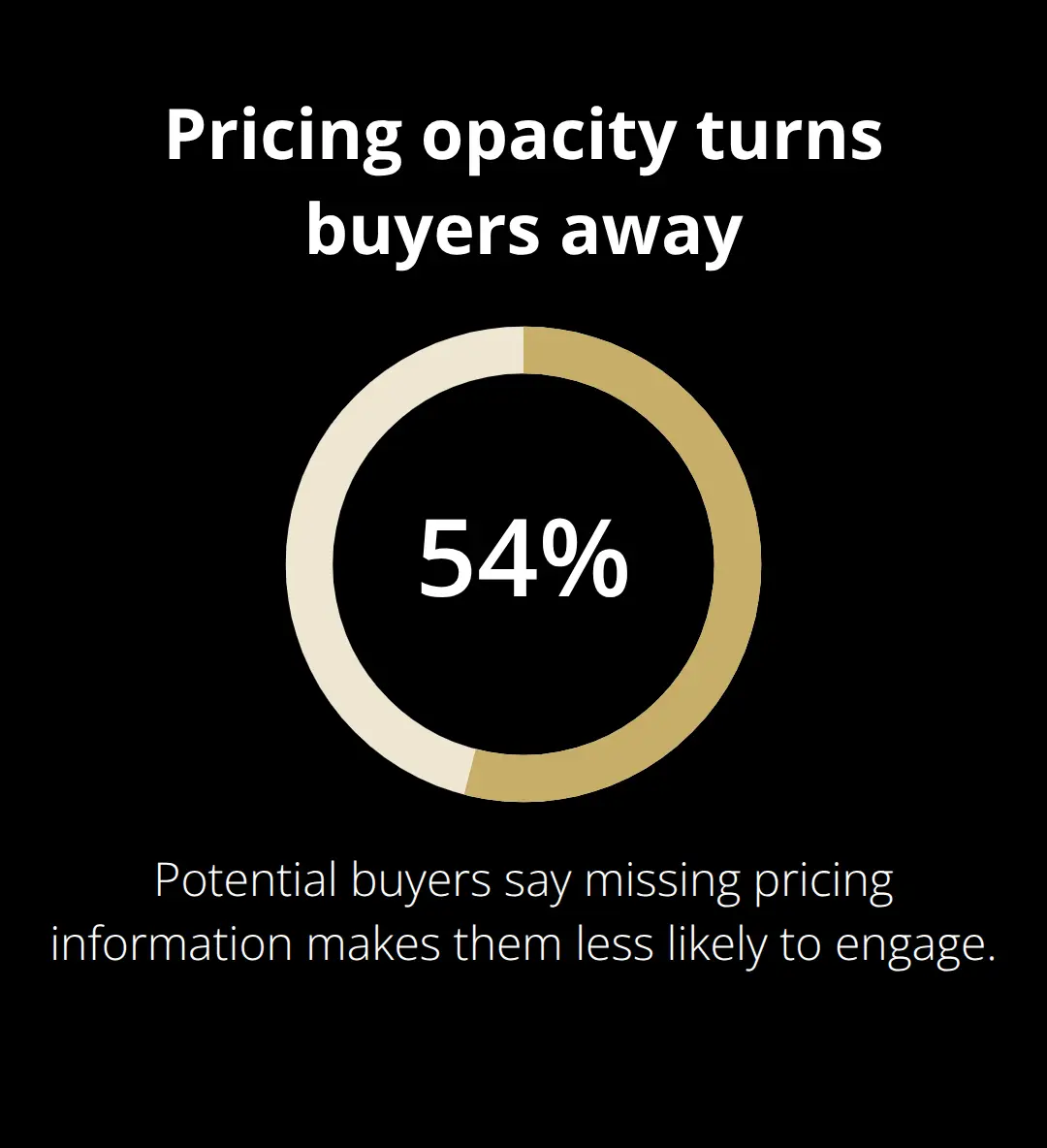
According to LinkedIn’s State of the Sales research, trust ranks as the number-one attribute decision-makers want, yet 54% of potential buyers say missing pricing information makes them less likely to engage. If your broker obscures costs from you, that same opacity often extends to how they present the deal to buyers, signaling weakness rather than confidence.
The Transparency Advantage
Transparent platforms attract better-qualified buyers because serious purchasers want to work with sellers and brokers who operate honestly. When both parties know exactly what they’re paying and why, the transaction moves faster and closes more reliably. The competitive advantage belongs to whoever leads with clarity first.
This shift toward transparency reflects a broader market trend. Buyers increasingly expect upfront pricing and use it to compare service providers. Sellers who work with transparent brokers report higher confidence throughout the process and stronger relationships with their advisors. The next section reveals exactly what to look for when evaluating whether a broker truly operates without hidden costs.
What Transparent Brokers Actually Show You
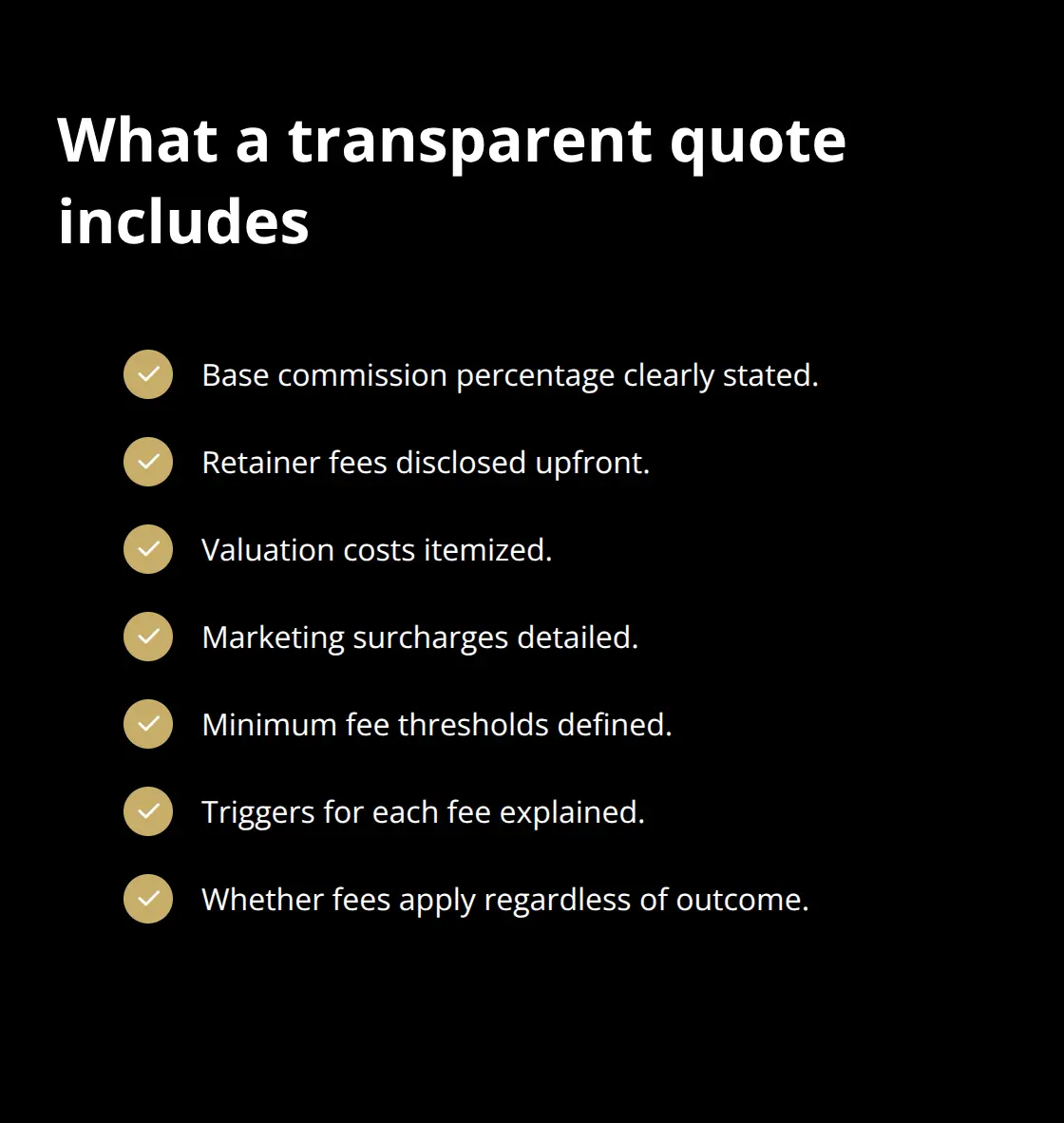
Transparent pricing means you see the full fee structure before you sign anything, not after you discover charges buried in amendments or fee schedules. When you request a quote from a broker claiming transparency, ask for a written breakdown that includes the base commission percentage, any retainer fees, valuation costs, marketing surcharges, and minimum thresholds. The broker should specify what triggers each fee and whether you pay them regardless of outcome. If they hesitate to provide this in writing, that hesitation itself is a red flag.
A truly transparent broker publishes typical pricing ranges on their website so you can self-qualify before reaching out.
Demand a Complete Written Agreement
The agreement must specify every cost tied to the sale, including what happens if the deal falls through. Many traditional brokers charge retainer fees or minimum commissions even when a transaction never closes, which means you lose money despite receiving no result. Your agreement should state whether you owe fees if the broker fails to find a buyer within a set timeframe, or if you withdraw because the asking price isn’t met. Include language that requires the broker to obtain your written approval before charging any fees beyond those listed in the initial quote. The agreement should also clarify what services the base fee covers and what costs extra, so you never pay for work you didn’t authorize. If a broker won’t put these terms in writing, walk away immediately.
Verify How They Calculate and Disclose Commissions
Ask the broker to walk you through a sample calculation using a business sale price close to yours. If you’re selling a $1.2 million business, request they show you exactly how the commission breaks down: the percentage applied, any tiered adjustments, valuation fees, marketing costs, and the final total. They should also explain when you pay each fee. Some brokers take commission from the sale proceeds at closing, while others bill separately. Others use a hybrid model where certain fees come upfront and others at closing (this timing affects your cash flow and net proceeds significantly). Request a written fee schedule that shows this calculation for your specific deal size, not just a general percentage.
Compare Total Costs Across Brokers
Run side-by-side numbers for traditional brokers versus transparent platforms to see total costs and potential net proceeds. An $800,000 sale with a traditional broker charging 10% commission plus a $5,000 retainer totals $85,000 in fees. A transparent platform charging a straightforward 6% success fee, paid only when the business sells, costs $48,000 total-a difference of $37,000 in your pocket. For larger deals, the gap widens even further. Write down every fee each broker mentions, then add them up. The broker with the lowest headline percentage often costs the most when you account for hidden charges. This comparison reveals which advisor actually prioritizes your financial outcome.
Ask About Fee Changes and Contingencies
Request clarity on what happens if the sale price changes, the deal timeline extends, or unforeseen issues arise. Some brokers use these scenarios as justification to charge additional fees, turning a straightforward transaction into a cost spiral. Your written agreement should state that the broker cannot charge extra fees without your explicit written consent. Ask whether the broker charges differently if you sell to a buyer they introduced versus a buyer you brought to the table. Ask whether marketing fees increase if the sale takes longer than expected. These questions expose brokers who structure fees to maximize revenue rather than align with your interests. A transparent broker answers these questions directly and includes the answers in your written agreement.
The next section reveals the specific red flags that signal a broker is hiding costs, and how to protect yourself when you spot them.
Spot the Warning Signs Before You Sign
Vague language like miscellaneous fees, market adjustment costs, or administrative charges signals trouble immediately. When a broker uses these terms without defining them, demand specifics. Ask the broker to list every single cost you might encounter, then ask them to quantify each one. If they can’t or won’t, they’re hiding something intentionally.
A broker who says fees may vary based on market conditions admits they’ll charge whatever they want later. Legitimate brokers provide fixed fees or clearly defined percentage ranges tied to specific sale prices, not open-ended language that lets them bill you for undefined services. When reviewing any fee schedule, look for phrases like upon request, as needed, or estimated-these are escape hatches brokers use to justify surprise charges.
Your agreement should replace every vague phrase with concrete numbers. If a broker resists putting specific fees in writing, that resistance itself proves they plan to exploit flexibility later.
Pressure to Decide Quickly Signals Trouble
Brokers who rush you to sign before you’ve reviewed the full fee structure prevent you from discovering hidden costs intentionally. They’ll say things like we need your signature to start marketing your business or other sellers are moving faster, using artificial urgency to bypass your due diligence.
A legitimate broker welcomes your questions and gives you time to compare their offer against competitors. They know transparent pricing speaks for itself. If a broker becomes defensive when you ask about fees, asks for a retainer upfront before proving they can deliver results, or pressures you to commit before you’ve seen a written breakdown of all costs, that’s a clear warning.
Walk away immediately. The best brokers understand that sellers need time to evaluate whether the fee structure aligns with their financial goals. They provide written quotes, answer follow-up questions without complaint, and let you take 48 hours to decide. Any broker who can’t respect that timeline prioritizes their commission over your interests.
Documentation Gaps Leave You Unprotected
If a broker conducts your entire conversation verbally-discussing fees over the phone without sending written confirmation-you have zero protection if disputes arise later. Verbal agreements pose serious legal risks when disagreements arise or memory fades.
Your only defense is a written contract that spells out every fee, when you pay it, and what you receive in return. Before signing anything, insist on receiving the complete fee schedule at least 24 hours before your signature is required. Read every page carefully.
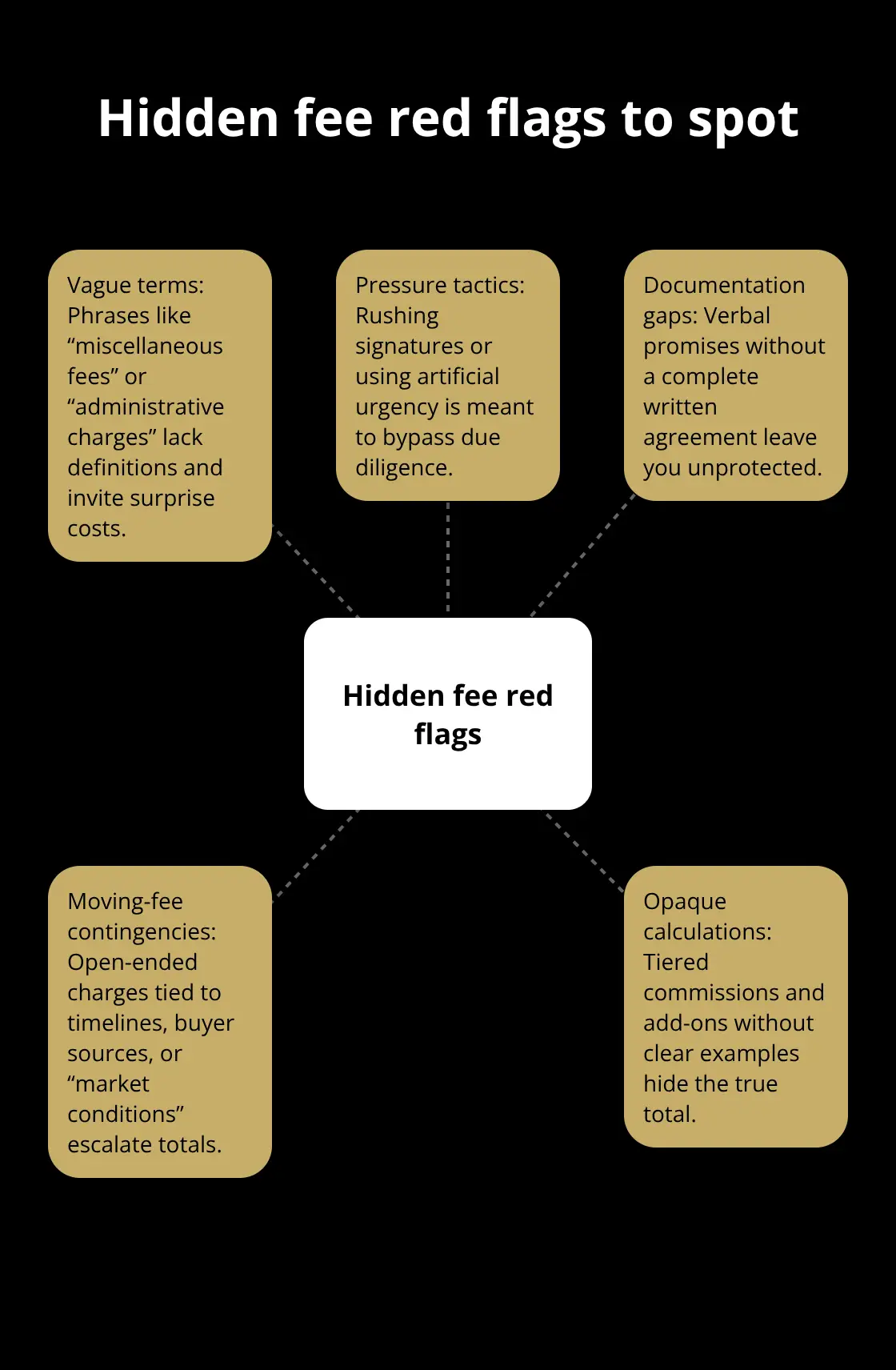
If the broker tries to have you sign multiple documents without time to review, or if they separate fee discussions from the main contract so you don’t see the full picture at once, that’s deliberate obfuscation. A transparent broker delivers one comprehensive agreement that includes all services, all fees, payment timing, and contingencies in a single document. They also provide a summary page that lists total estimated costs so you can see the complete financial picture instantly.
If your broker’s documentation is scattered across email attachments, separate amendments, and verbal side agreements, you’re exposed to manipulation. Consolidate everything into one master document before you sign anything, and have a lawyer review it if the deal size justifies that investment.
Ask About Fee Changes and Contingencies
Request clarity on what happens if the sale price changes, the deal timeline extends, or unforeseen issues arise. Some brokers use these scenarios as justification to charge additional fees, turning a straightforward transaction into a cost spiral.
Your written agreement should state that the broker cannot charge extra fees without your explicit written consent. Ask whether the broker charges differently if you sell to a buyer they introduced versus a buyer you brought to the table. Ask whether marketing fees increase if the sale takes longer than expected. These questions expose brokers who structure fees to maximize revenue rather than align with your interests.
A transparent broker answers these questions directly and includes the answers in your written agreement.
Final Thoughts
Transparent business transactions aren’t a luxury reserved for large deals or sophisticated sellers-they form the foundation of every sale that closes smoothly and leaves both parties satisfied. When you work with a broker who hides fees behind percentages, retainers, and undefined charges, you accept unnecessary risk and stress during one of your life’s biggest decisions. The shift toward no hidden fees sales reflects what serious buyers and sellers already know: clarity builds confidence and protects your financial outcome.
Protecting yourself starts with demanding written documentation before you sign anything. Request a complete fee breakdown that includes base commission, retainers, valuation costs, marketing surcharges, and any minimum thresholds, then compare total costs across multiple brokers rather than focusing on headline percentages. An $800,000 sale with traditional brokerage fees can cost $85,000 or more when you account for hidden charges, while a transparent platform charging a 6% success fee on the same sale totals $48,000, leaving significantly more money in your pocket.
We at Unbroker built our platform around this principle by offering straightforward pricing with no hidden costs. You know exactly what you pay and what you receive in return, whether you choose full-service support or assisted selling.