The business sale market is undergoing rapid transformation. AI, transparency, and integrated tools are reshaping how companies change hands.
At Unbroker, we’re watching this platform evolution unfold in real time. By 2030, the platforms that dominate will be those that put power back into the hands of buyers and sellers.
How AI Is Changing Business Valuations and Buyer Matching
Machine Learning Powers Faster, Objective Valuations
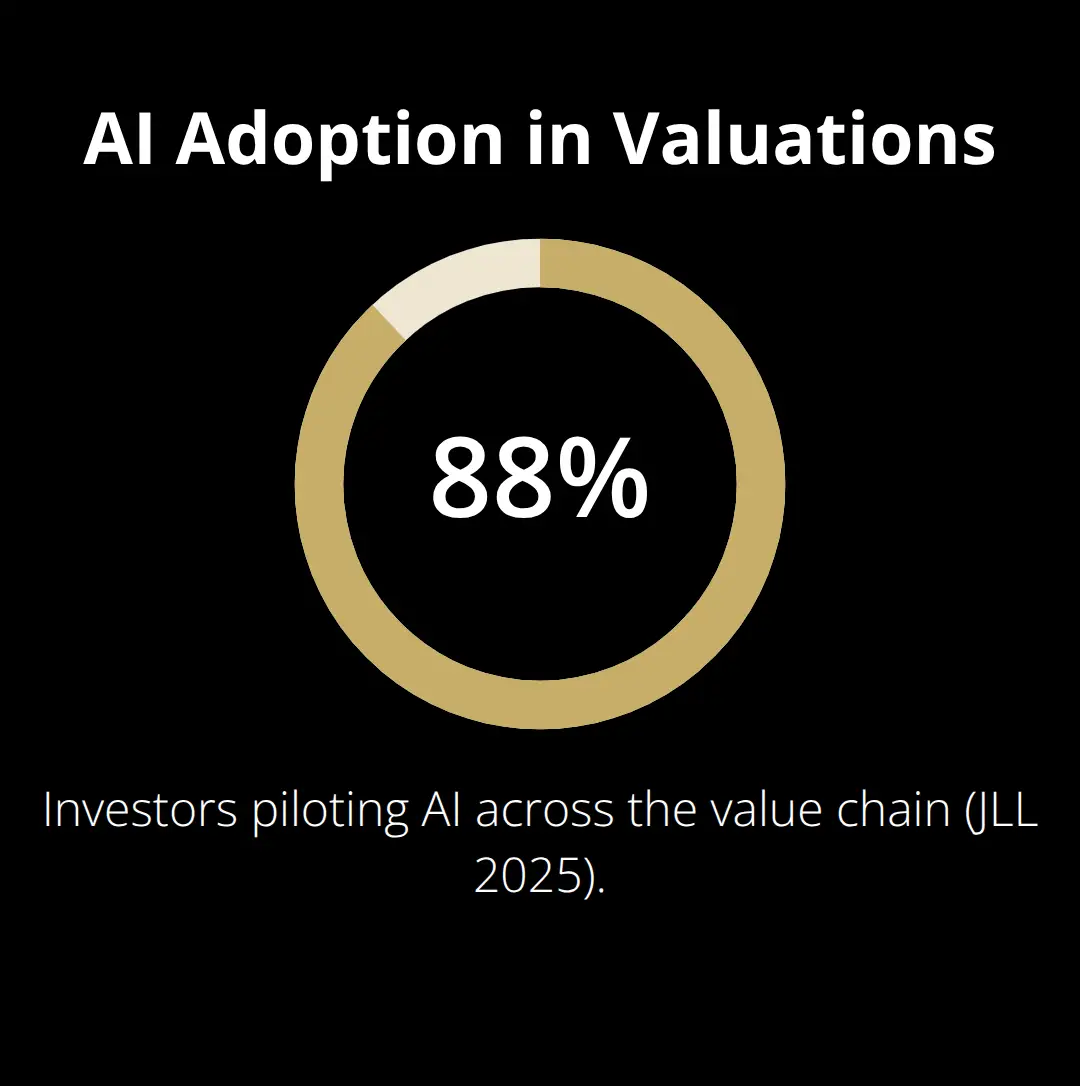
Machine learning models now process real transaction data to value businesses faster and more objectively than traditional methods. AI valuations deliver results in minutes compared to traditional appraisals that take 2-6 weeks. Platforms that integrate automated valuation tools analyze revenue patterns, EBITDA multiples, growth trajectories, and comparable sales to generate estimates in minutes rather than weeks. According to JLL’s Global Real Estate Technology Survey 2025, 88% of investors already pilot AI, with automated valuation models ranking among the top eight AI use cases across the value chain. This shift matters because buyers and sellers historically relied on brokers’ subjective assessments, which created friction and information asymmetry.
When platforms surface data-driven valuations alongside market comparables, sellers gain confidence in asking prices and buyers can benchmark offers against real market signals.
Real-Time Data Levels the Playing Field
Real-time market data feeds pull transaction histories, industry multiples, and seasonal trends into one place, allowing both parties to negotiate from the same factual foundation. Predictive analytics identify which buyers historically close deals in specific industry verticals, revenue ranges, or business models. Platforms that analyze past transactions can flag high-intent buyers before a listing even goes live, reducing time-to-close and matching sellers with acquirers who have genuine strategic fit. This buyer matching intelligence reduces noise from tire-kickers and focuses seller energy on qualified prospects.
Speed and Cost Reduction Drive Adoption
The practical benefit is immediate: platforms that embed these capabilities eliminate the need for external valuation experts or lengthy due-diligence phases, lowering transaction friction for both sides. Agentic AI systems capable of real-time price comparisons and multi-step deal reasoning represent an emerging capability in commerce automation. Business sale platforms should invest in structured data capture, standardized valuation inputs, and API connectivity to external tools so that valuations remain credible and accessible.
Data Quality Determines AI Effectiveness
Document digitization and automated summarization accelerate due diligence by converting lengthy financial records into actionable summaries in hours rather than days. High-quality data infrastructure forms the foundation; platforms that capture revenue, EBITDA, recurring revenue, and growth metrics from day one enable AI systems to generate reliable insights that buyers trust. Without clean, standardized data, even sophisticated AI falls short. Platforms that prioritize data governance early will outpace competitors relying on manual processes or fragmented information sources. This data advantage directly influences which platforms attract serious buyers and sellers-and which ones fade into irrelevance.
Why Hidden Fees Are Disappearing From Business Sales
Transparency Replaces Opacity in Deal Pricing
The traditional broker model thrives on opacity. Sellers accept 8-12% commissions without understanding what they actually pay for, and buyers face surprise costs throughout due diligence and closing. This changes by 2030. Platforms that hide fees behind vague service descriptions will lose sellers to competitors offering transparent, itemized pricing. For business sales, this translates directly: sellers increasingly demand to see exact costs before committing, and buyers want to know precisely what they pay at each stage. Platforms that publish fee structures openly-breaking down costs for listing, buyer matching, due diligence support, and escrow-will capture market share from brokers still operating behind closed doors.
Direct Price Comparison Forces Competitive Pricing
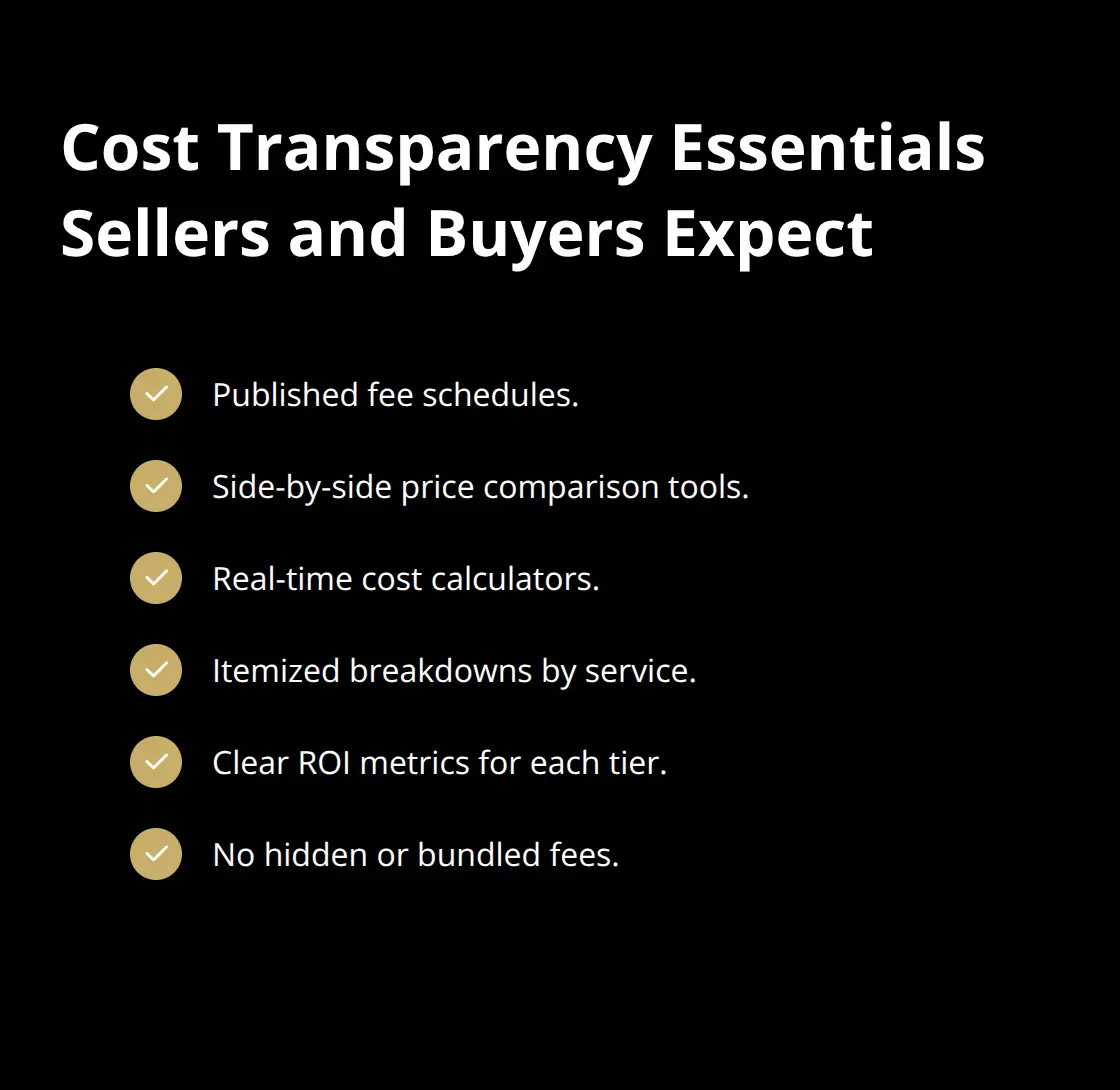
The shift toward direct price comparison between service providers means sellers can instantly benchmark costs across platforms. If one platform charges $5,000 for document automation and another charges $500, that difference becomes visible to every seller researching options. This forces all competitors to justify their pricing or lose deals. Platforms dominating by 2030 will make cost comparison effortless, whether through published fee schedules, side-by-side pricing tools, or real-time cost calculators built into the platform itself. Sellers shopping platforms in 2026-2030 will demand itemized breakdowns, cost comparisons with competitors, and clear ROI metrics showing what they save or gain from each service tier.
Commission Structures Become Non-Negotiable
Commission structures themselves are becoming non-negotiable. The 8-12% standard that brokers defended for decades is crumbling. Sellers now expect options: flat fees for full-service exits, monthly retainers for assisted sales, or hybrid models that align costs with actual value delivered. Business sale platforms applying this logic will unbundle services and let sellers choose what they actually need.
Modular Pricing Wins Market Share
A seller with strong operational data and financial records might only need buyer matching and negotiation support, not full valuation work. Platforms offering modular pricing win these deals. Conversely, first-time sellers managing complex multi-location operations will pay more for comprehensive support-but they’ll know exactly what that support costs and what results to expect. Platforms that refuse to publish fees or claim custom pricing is necessary will appear evasive, and sellers will move on.
What Buyers Expect From Platform Costs
Buyers increasingly expect platforms to itemize their costs too. Rather than absorbing vague “platform fees” into their offers, buyers want to see exactly what they pay for escrow, legal review, and transaction support. This transparency (combined with AI-driven valuation and buyer matching) accelerates deal velocity because both parties negotiate from the same cost foundation. Platforms that hide buyer costs behind seller commissions or bundled pricing will struggle to attract serious acquirers. The next evolution-integration of vertical SaaS solutions-will further reduce costs by automating legal, escrow, and confidentiality functions that platforms currently outsource or charge separately for.
Integration of Vertical SaaS Solutions
Legal Documents Automate in Minutes, Not Days
Platforms that embed legal document automation eliminate the need for external lawyers to draft purchase agreements, NDAs, and closing documents. These tools generate contracts from standardized templates populated with deal-specific data, completing work in hours that traditionally took lawyers days. Sellers and buyers work within a single integrated environment where documents appear instantly, reducing coordination delays and cutting legal costs significantly. The speed advantage matters because every week a deal stalls costs both parties money in opportunity cost and operational overhead.
Escrow and Payment Processing Move On-Platform
Escrow and payment processing built into the platform eliminate intermediary fees and settlement delays. Funds move directly from buyer to seller through secure, automated channels verified by the platform itself, removing the need for external escrow agents. This consolidation addresses the cost problem directly: outsourced services add costs, and coordination delays extend timelines by weeks. Platforms integrating these functions cut costs and accelerate closings without sacrificing security or compliance.
Confidentiality Management Protects Sensitive Data
Confidentiality management systems enforce role-based access to financial records, customer lists, and operational data, ensuring only authorized parties view sensitive information at each deal stage. Sellers gain confidence knowing their data stays encrypted and tracked throughout the transaction. Buyers access only what they need to make informed decisions, reducing exposure of proprietary information. This built-in protection replaces manual confidentiality agreements that sellers and brokers once managed separately.
Integration Creates Competitive Moats
Platforms offering these integrated capabilities become stickier because switching to a competitor means repeating document work, rebuilding escrow arrangements, and resetting data permissions. Sellers comparing platforms in 2026-2030 will expect these tools as baseline features, not premium add-ons. Platforms charging separately for document automation or imposing manual escrow workflows will lose deals to competitors offering seamless integration.
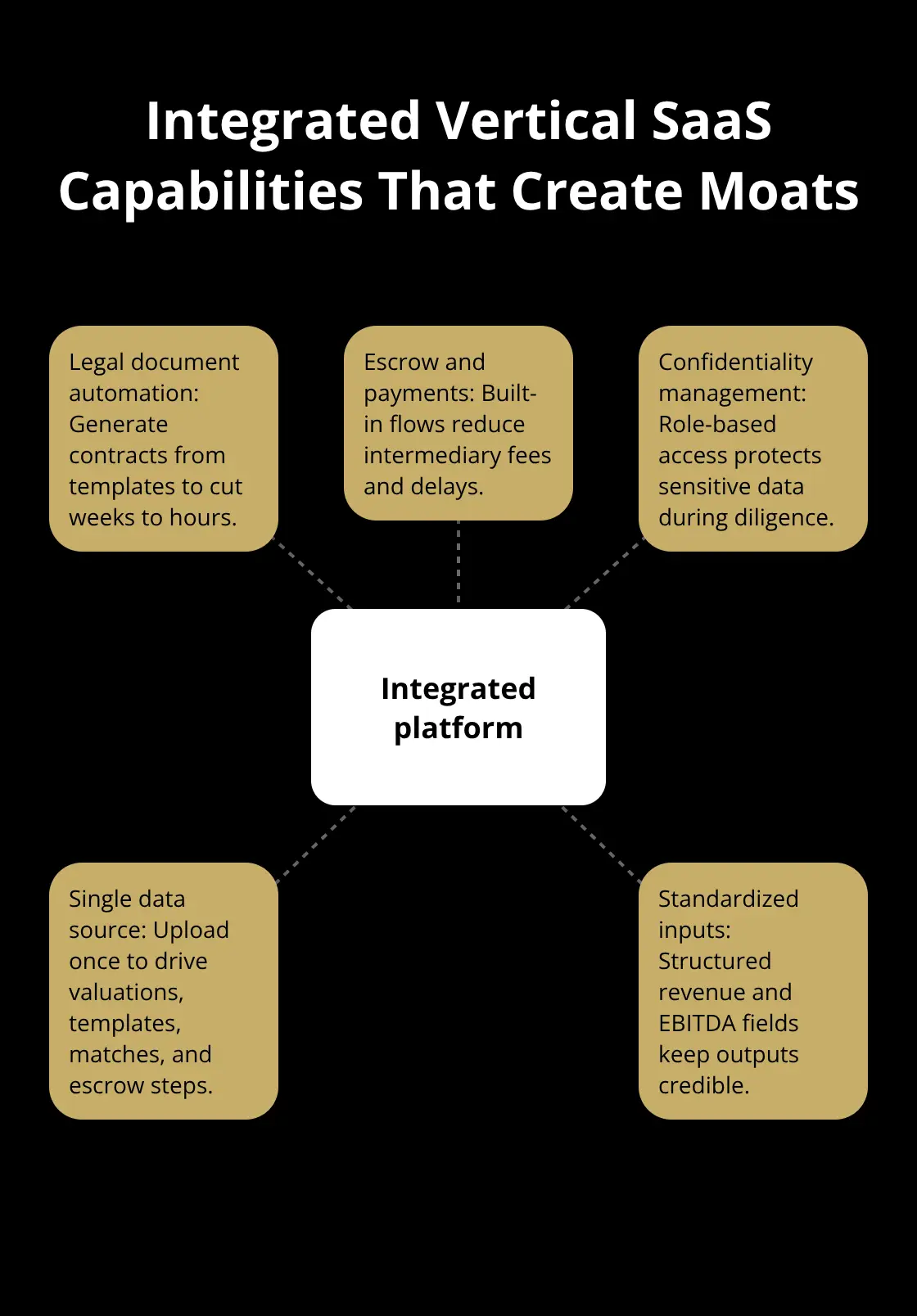
The platforms that dominate will bundle these vertical SaaS solutions into a single user experience, where a seller uploads financial statements once and the platform automatically generates valuations, legal templates, buyer matches, and escrow instructions from that single data source.
Transparency Through Integration Eliminates Hidden Costs
This integration also supports the transparency trend: when all costs flow through the platform, hidden fees disappear. A seller sees exactly what they pay for legal automation, escrow processing, and confidentiality tools. No surprise invoices from external vendors. No guessing about total transaction costs. This clarity, combined with embedded functionality, will determine which platforms capture market share from traditional brokers still operating as coordinators between disconnected service providers.
Final Thoughts
The business sale market transforms fundamentally through three interconnected forces. AI-driven valuations and buyer matching eliminate guesswork from deal pricing and compress time-to-close. Transparent, itemized pricing exposes the commission opacity that brokers have protected for decades. Integrated vertical SaaS solutions automate legal work, escrow, and confidentiality management, slashing costs and coordination delays. Sellers in 2030 will expect all three capabilities working together, and platforms that offer piecemeal solutions or obscure their costs will lose deals to competitors delivering integrated, transparent alternatives.
Buyers gain equally from this platform evolution. They access standardized financial data, real-time market comparables, and AI-matched sellers whose businesses align with their acquisition strategy. The friction that consumed months compresses into weeks because both parties negotiate from the same factual foundation. Sellers with clean, organized financial records in standardized formats will close deals faster and at stronger valuations than those scrambling to assemble information during the sales process.
We at Unbroker build this future today through transparent pricing, AI-driven buyer matching, and integrated tools that eliminate traditional broker friction and cost. Explore how our platform works to see what selling your business without the 8-12% commission overhead looks like. No hidden fees, no surprise costs-just a straightforward path to selling on your terms.