Selling your business means handing over sensitive financial records, customer lists, and operational details to strangers. Most business owners assume the platforms handling this data have strong security in place-but that’s not always true.
At Unbroker, we’ve seen deals fall apart because confidential information leaked to competitors or ended up in the wrong hands. The difference between a secure platform and a risky one often comes down to details buried in privacy policies that most sellers never read.
How Business Sale Platforms Handle Your Data
What Platforms Collect From Your Business
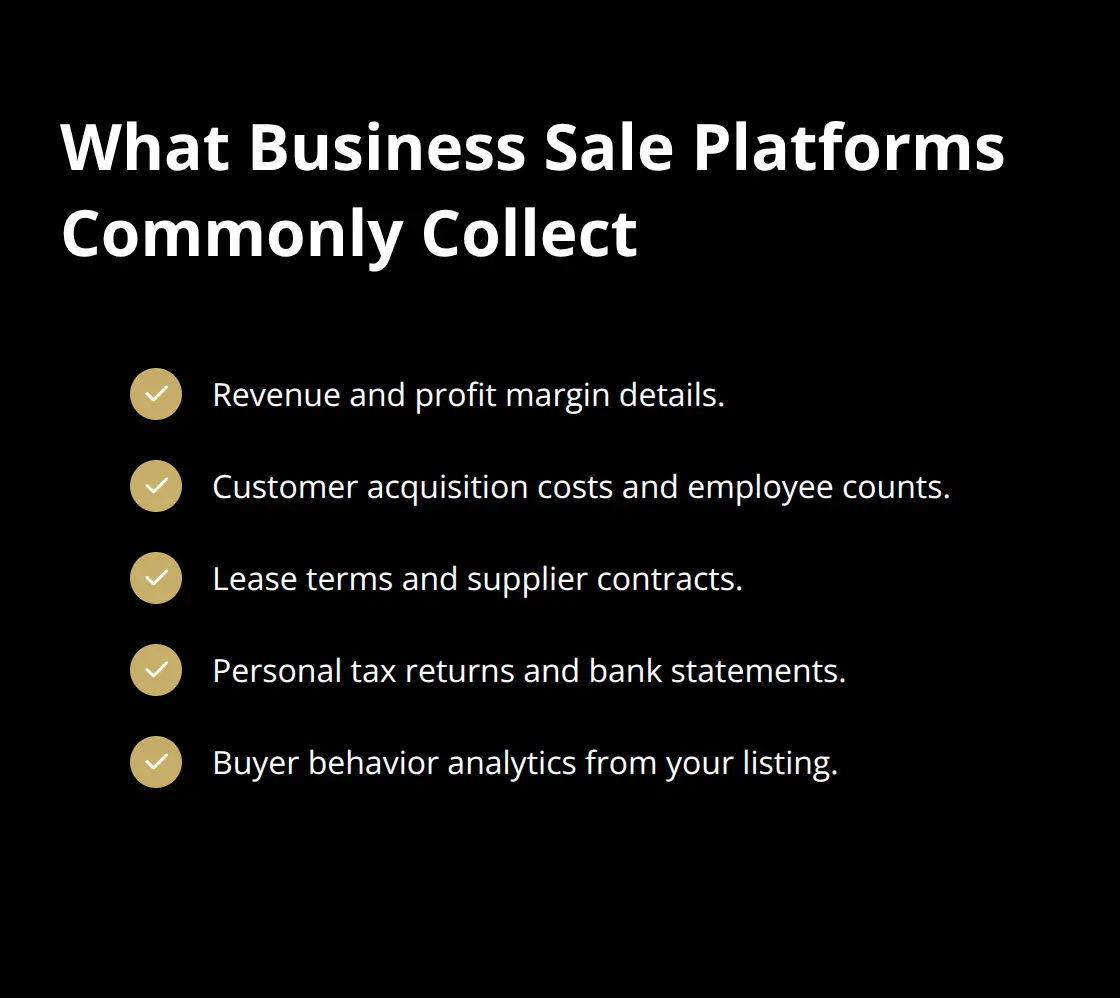
When you list a business for sale, platforms collect far more than financial statements alone. Most platforms gather your company’s revenue, profit margins, customer acquisition costs, employee count, lease terms, and supplier contracts. Many also request your personal tax returns and bank statements. Some platforms track which buyers view your listing, how long they spend reviewing documents, and what questions they ask during diligence. This data footprint expands significantly when you connect accounting software or upload files to a data room. The real problem is that many sellers never learn what happens to this information after the sale closes.
Data Retention and Post-Sale Use
Most platforms retain data indefinitely unless you specifically request deletion. Some sell anonymized datasets to researchers or use the information to improve their matching algorithms. This practice raises serious questions about who benefits from your business information long after your deal ends. You should ask any platform directly: how long do you keep my data, who accesses it after closing, and what happens if I request deletion? Platforms that answer these questions clearly deserve your attention. Those that avoid the topic should raise immediate concerns about their data practices.
The Journey Your Data Takes
Your information typically moves from your computer to the platform’s servers, then into a data room, then to potential buyers’ devices, and potentially to their advisors, lenders, and accountants. Each handoff introduces risk. Industry standards recommend encrypted data rooms with granular access controls, meaning you can specify exactly which documents each buyer sees and revoke access instantly if a deal falls apart. Confidentiality agreements should cover not just the buyer but also their team members-a requirement many platforms fail to enforce. When evaluating a platform, ask specifically who can access your data, whether access logs are audited, and what happens if a buyer breaches the NDA.
Reducing Exposure Through Smart Buyer Matching
Platforms should clearly disclose any data sharing with partner networks or listing sites, since broad distribution increases exposure. The strongest platforms use AI-powered buyer matching to surface only qualified, prequalified buyers rather than broadcasting your listing to thousands of unvetted prospects. This approach reduces the number of people seeing your sensitive information before you’ve even had a conversation. Request a detailed breakdown of the platform’s security features, including bank-level encryption standards, NDA enforcement mechanisms, and what third-party vendors have access to your data room. The answers you receive will tell you whether a platform takes confidentiality seriously or treats it as an afterthought.
Understanding how platforms handle your data is only half the battle. The other half involves knowing what security standards actually protect that information-and which certifications and audits actually matter.
Security Standards That Actually Matter
Encryption: What Actually Protects Your Files
Encryption matters, but most sellers don’t understand what kind of encryption actually protects their business data. Many platforms claim bank-level security without explaining what that means. Real encryption scrambles your files both when traveling to the platform’s servers and while sitting in storage, using AES-256 or similar standards that would take centuries to crack with current technology. The distinction matters because some platforms only encrypt data in transit but leave files unencrypted on their servers-a critical weakness. Ask any platform to specify their encryption standard in writing and whether encryption applies to both data in motion and at rest. Platforms that hesitate or provide vague answers are hiding insufficient security.
Access Controls and Audit Trails
Beyond encryption, access controls determine whether a buyer can see your entire financial history or only specific documents you’ve approved. Granular permissions let you restrict access by document type, revision history, and time period. Some platforms track every action in audit logs, showing exactly who viewed what and when, while others offer no visibility into access patterns. This matters because a buyer’s advisor or accountant shouldn’t automatically see sensitive details you haven’t authorized.
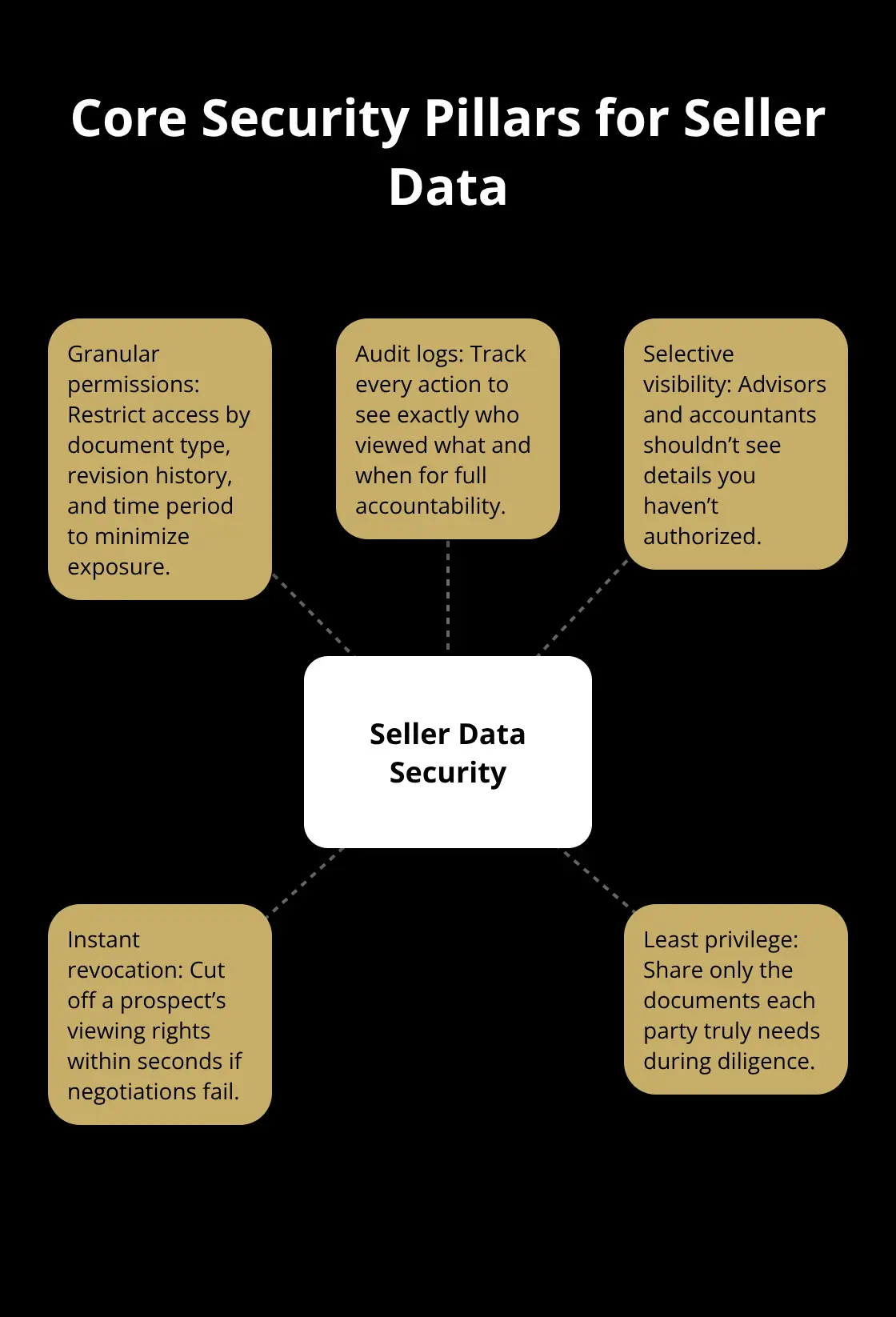
Look for platforms offering instant access revocation, meaning you can cut off a prospect’s viewing rights within seconds if negotiations fail. This feature prevents lingering exposure after deals collapse.
Third-Party Audits and Compliance Certifications
Third-party audits provide independent verification that a platform’s security claims match reality, though many sellers ignore audit reports entirely. SOC 2 Type II certifications from firms like Deloitte or EY demonstrate that a platform has undergone rigorous testing of security controls over at least six months. ISO 27001 certifications verify information security management across the entire organization. These aren’t marketing badges-they require annual revalidation and can be revoked if standards slip. Demand to see recent audit reports with specific findings, not just certification names.
Preventing Buyer List Leaks
Buyer list leaks happen when platforms share prospect information with marketing partners, sell anonymized data to research firms, or fail to prevent breaches. The strongest protection comes from platforms that contractually restrict buyer data sharing and maintain separate databases for seller information and buyer contact details. Some platforms broadcast your listing across partner networks like BizBuySell or industry sites, expanding visibility but also exposure. Platforms using AI-driven matching can reduce this risk by pre-qualifying buyers before they ever see your company information, limiting the number of prospects accessing sensitive details. Verify whether a platform shares data with third-party networks and request explicit written commitments that your buyer list remains confidential. Platforms refusing to provide these commitments should be disqualified immediately.
These security measures form the foundation of data protection, but they only work if platforms actually enforce them. What happens when platforms fail to maintain these standards-or deliberately hide their weaknesses-is where the real danger emerges.
Red Flags in Platform Privacy Policies
Most business owners never read platform privacy policies because they’re deliberately written to obscure problematic practices. Platforms use vague language like “we may share data with partners” or “we use data to improve our services” as cover for selling your information or distributing it across networks without explicit consent. The real danger isn’t always what’s written; it’s what’s carefully hidden in subsections and definitions. Look specifically for sections titled “data sharing,” “third-party vendors,” or “partner networks.” If a platform’s privacy policy doesn’t clearly state whether your buyer list gets shared with other sites, marketed to researchers, or used for algorithm training, that’s a red flag. Request a written addendum specifying exactly which third parties can access your data and under what circumstances.
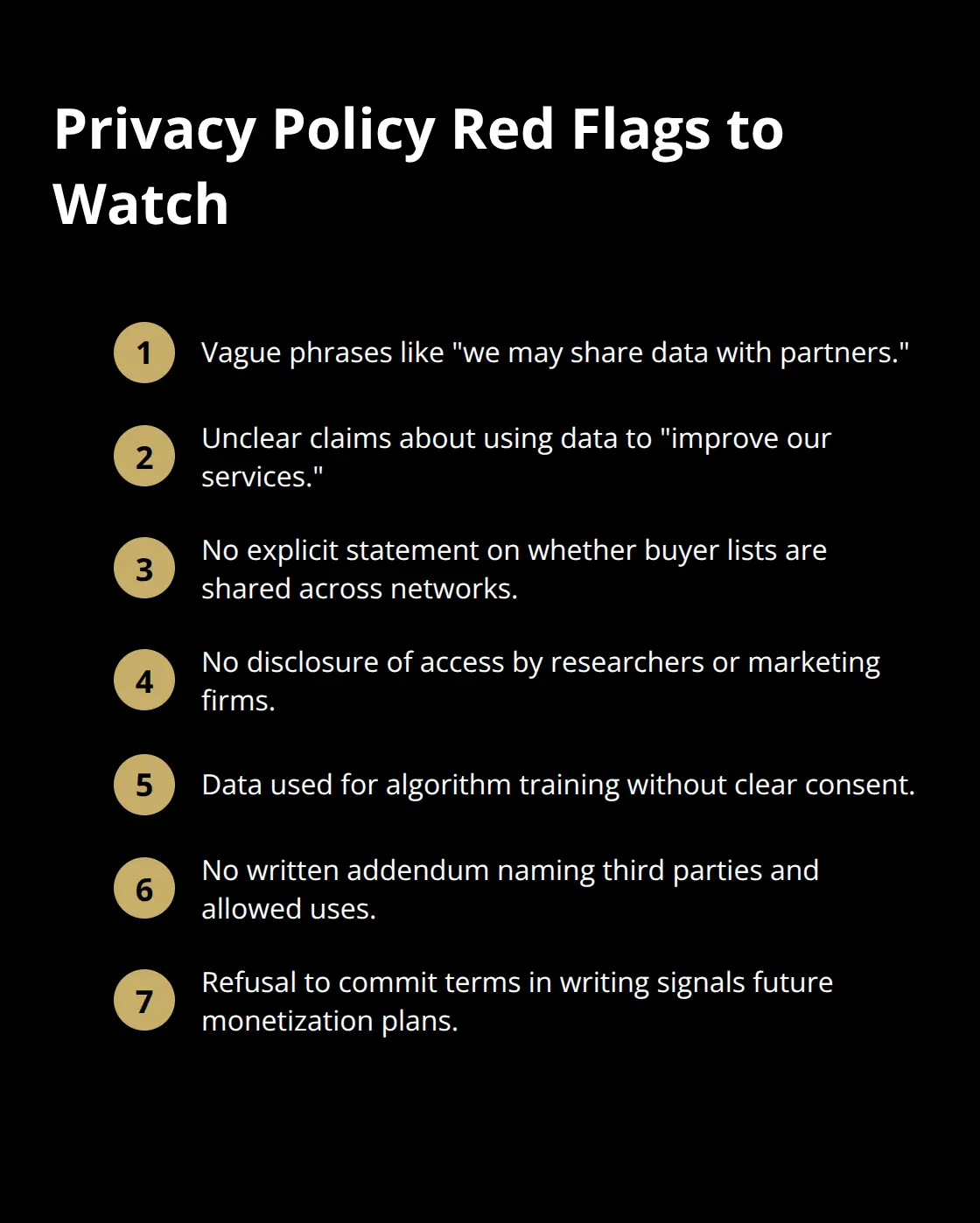
Platforms that refuse to provide this in writing are signaling they want flexibility to monetize your information later.
Hidden Data Sharing Agreements
Many platforms bury data-sharing arrangements in fine print or separate agreements you never see. They share your buyer list with marketing partners, sell anonymized datasets to research firms, or distribute your listing across networks like BizBuySell without explicit permission. Some platforms claim they only share “anonymized” data, but data anonymization techniques alter data across systems so it can’t be traced back to a specific individual, while preserving the data’s format and referential integrity. Ask platforms directly: do you share any information with third parties, and if so, which ones? Do you sell data to researchers or marketing firms? What does “anonymized” actually mean in your case? Platforms that answer vaguely or refuse to commit in writing are hiding something. Demand written confirmation of exactly which third parties access your data and what they can do with it.
Weak Access Control Mechanisms
Many platforms claim to offer secure data rooms but fail to explain what access control actually means in practice. Some platforms grant all advisors automatic viewing rights once a buyer is introduced, meaning your accountant’s contact, the buyer’s legal team, and their lender all see everything without your approval. Others don’t track who accesses what, so you have no audit trail if information leaks. Ask platforms directly: can I approve which specific documents each person views, or do access permissions work on an all-or-nothing basis? Can I revoke access instantly if a deal collapses, or does it take days? The strongest platforms restrict view, print, save, and modify rights for any user down to the document level, then revoke permissions within seconds if negotiations fail.
Insufficient Confidentiality Protections
Weak confidentiality agreements often contain loopholes that let buyers share your information with their team without restriction. Some platforms use generic NDAs that don’t specify breach remedies, meaning a buyer who leaks your customer list faces no real consequences. Others allow buyers to disclose information if legally required, which sounds reasonable until you realize it includes civil litigation discovery. Demand that any NDA explicitly prohibit sharing with advisors, lenders, and partners unless you’ve approved each person by name. Verify that breach remedies include liquidated damages or injunctive relief, not just vague promises to cooperate. If a platform’s standard NDA doesn’t include these protections, negotiate a stronger agreement before listing. Platforms resisting stronger NDAs are prioritizing deal speed over your confidentiality.
Final Thoughts
The platforms you select to sell your business will determine whether your confidential information stays protected or ends up exposed to competitors and bad actors. Before selecting a platform, request written documentation of their encryption standards, access controls, and audit procedures-platforms using AES-256 encryption for data both in transit and at rest, combined with granular permission controls and instant access revocation, demonstrate serious platform security. Demand a complete list of third parties who can access your data and what they’re permitted to do with it, and if a platform refuses to provide this in writing, that signals they want flexibility to monetize your information later.
During your sale, limit document access to only the information each buyer actually needs, and don’t grant blanket permissions to advisors, lenders, or accountants without explicit approval. Track which documents each party views and revoke access immediately if negotiations stall. Use a VPN when uploading sensitive files to mask your location and IP address, reducing your digital footprint on the platform.
We at Unbroker built our platform around the principle that confidentiality and transparency should go hand in hand. Our Full Service and Assisted Business Sale options include secure data rooms with granular access controls, legally binding NDAs, and AI-driven buyer matching that limits exposure to only qualified prospects. We charge transparent, low-cost fees upfront-no hidden charges buried in fine print-so you know exactly what you’re paying for platform security and support.