Business owners selling their companies often pay broker commission rates between 8-12% without questioning if they’re getting fair value. Many traditional brokers hide additional fees that can add thousands to your final bill.
We at Unbroker believe transparency should be standard, not optional. This guide reveals the hidden costs lurking in traditional brokerage agreements and shows you exactly what to watch for.
What Hidden Costs Are Traditional Brokers Charging You?
Traditional business brokers operate with complex fee structures that extend far beyond their advertised commission rates. Most brokers charge the standard 10% commission with the Double Lehman formula, where fees decrease as sale prices increase. This represents only the beginning of your total costs.
Commission Structures Beyond the Basics
Marketing fees typically range from $2,000 to $15,000 for listing preparation, professional photography, and promotional materials. Administrative charges add another $1,500 to $5,000 for document preparation, legal reviews, and transaction coordination. Many brokers also impose minimum commission thresholds between $10,000 to $15,000, which means smaller businesses pay disproportionately high rates compared to their actual sale value.
Upfront Fees Without Performance Guarantees
The most problematic costs are upfront retainers and listing fees that brokers collect regardless of whether your business sells. Retainers for businesses under $25 million commonly range from $5,000 to $15,000, with no guarantee of results. Business valuation fees add another $2,500 to $10,000, often for basic assessments that experienced sellers could handle themselves. These upfront costs create a perverse incentive where brokers profit even from failed sales.
Hidden Administrative and Processing Charges
Traditional brokers frequently add surprise fees throughout the sale process. Document preparation charges can reach $3,000 for standard purchase agreements and disclosure forms. Due diligence coordination fees (often $1,500 to $4,000) cover basic administrative tasks that should be included in standard service. Wire transfer fees, overnight shipping costs, and third-party verification charges accumulate quickly during closing.
The Transparency Problem
Traditional brokers rarely provide itemized breakdowns of their service costs, which makes it impossible to evaluate value for money. Fee schedules often include vague language about additional charges that surface during the sale process. This opacity prevents business owners from comparing services effectively or negotiating fair terms.
Modern alternatives have emerged that challenge this traditional fee structure with transparent pricing models and performance-based compensation.
How Do Modern Brokers Compare to Traditional Ones?
Fee Structure Breakdown Shows Dramatic Differences
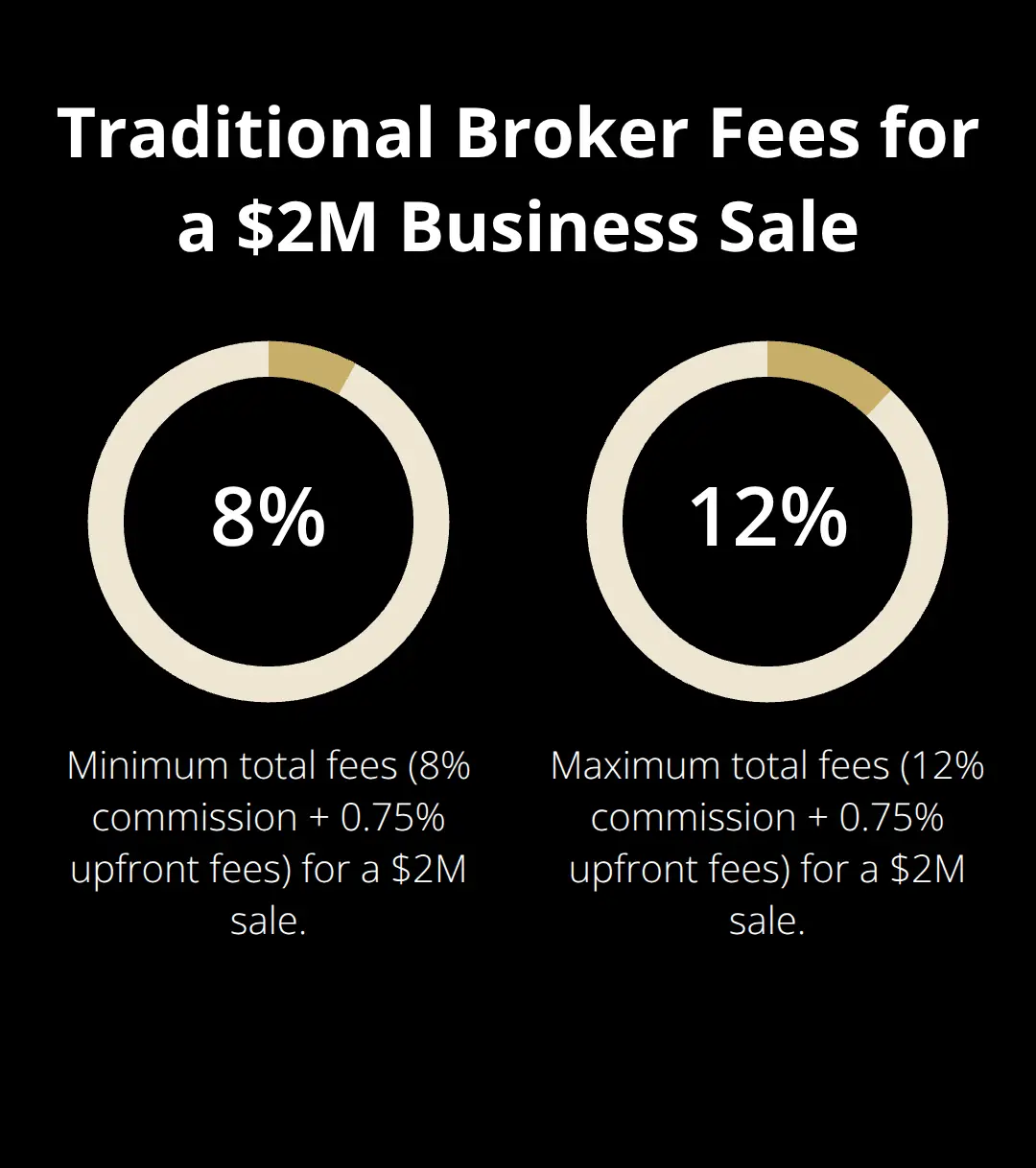
Modern brokers charge lower success fees instead of the steep percentage-based commissions of traditional brokers, which creates real savings for business owners. Traditional brokers collect 8% to 12% commissions plus $5,000 to $15,000 in upfront fees, meaning a $2 million business sale costs approximately $175,000 to $255,000 in total fees. Modern platforms like Unbroker charge a 6% success fee with no upfront costs, meaning the same $2 million sale would cost $120,000 total, paid only when the business actually sells. This lower, aligned success fee still rewards a completed sale without piling on upfront costs, helping sellers avoid the added burden traditional brokers impose before a deal even closes.
Technology Integration Transforms Service Delivery
Traditional brokers rely on manual processes, spreadsheets, and phone calls to manage listings and buyer communications, which creates delays and limits market reach. Modern platforms use AI-driven buyer matching, automated marketing campaigns, and digital document management systems that accelerate sale timelines. Technology connects sellers to vast buyer networks instantly, while traditional brokers depend on limited personal networks and industry contacts. Digital platforms provide real-time analytics on listing performance, buyer interest levels, and market trends, which gives sellers data-driven insights that traditional brokers cannot match.
Service Quality Remains High Despite Lower Costs
Modern brokers maintain professional service standards while they eliminate unnecessary overhead costs. Traditional brokers justify high fees when they claim superior expertise, yet many modern platforms provide comparable legal support, negotiation assistance, and marketing materials at a fraction of the cost. The key difference lies in operational efficiency rather than service quality, as technology handles routine administrative tasks that traditional brokers charge premium fees to perform manually.
Speed Advantages Create Competitive Edge
The efficiency gains translate to faster sales completion times, with modern platforms averaging 6-9 months on average to sell a business. This speed advantage stems from automated processes that eliminate bottlenecks in document preparation, buyer qualification, and communication management.
These stark differences in cost, technology, and efficiency raise important questions about whether your current broker delivers adequate value. Several warning signs can help you identify when you’re paying too much for substandard service.
How Do You Know When Your Broker Is Overcharging?
Upfront Fees That Drain Your Budget
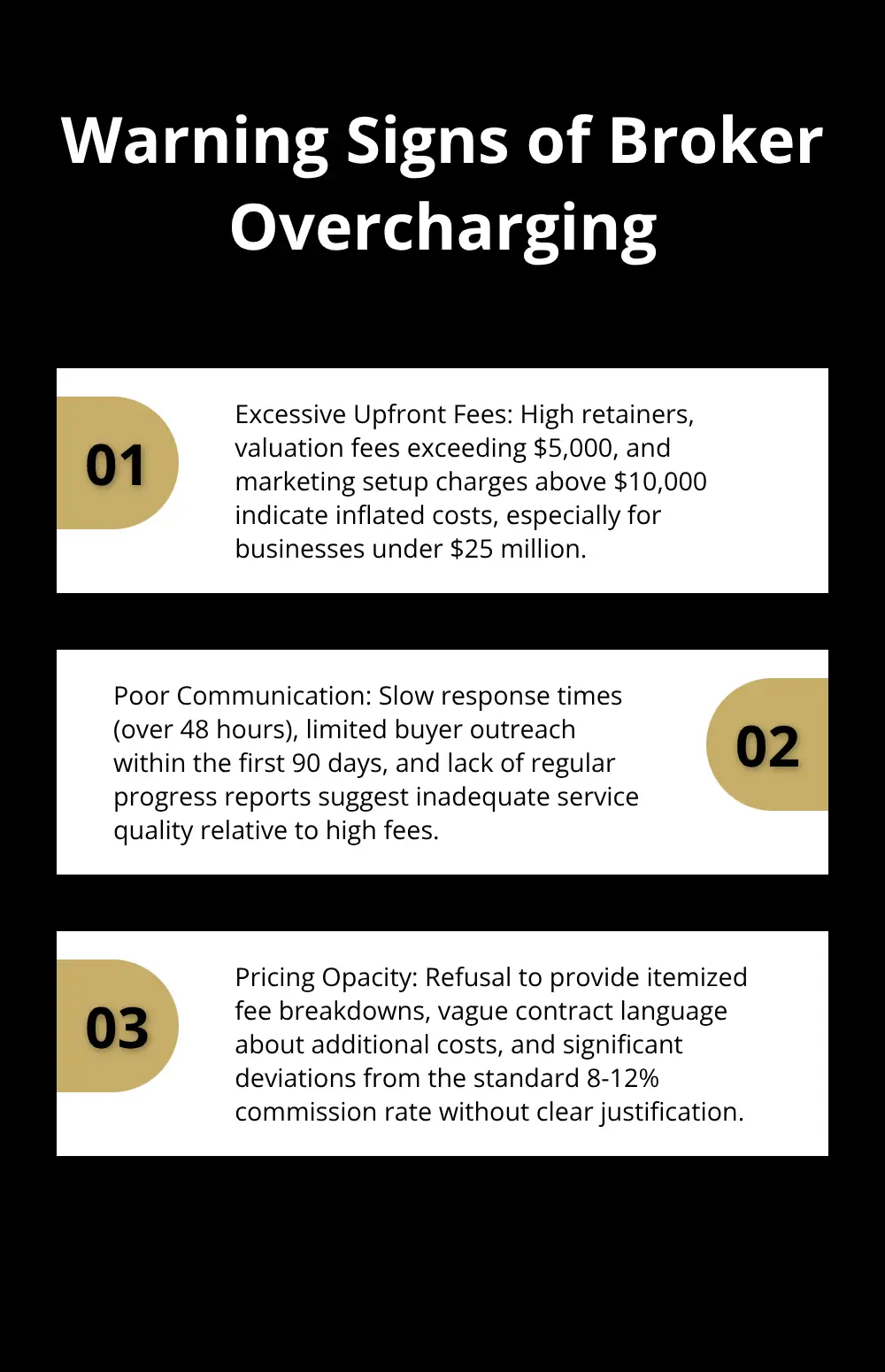
Smart business owners recognize excessive upfront fees as the clearest warning sign of broker overcharging. Traditional business brokers typically charge 8-12% of the sale price for smaller businesses, with 10% common for deals under $2M, making high retainers particularly concerning for businesses under $25 million. Valuation fees that exceed $5,000 signal inflated costs, as accurate business assessments rarely require extensive resources for established companies. Marketing setup charges above $10,000 indicate brokers pad their profits through unnecessary premium services that modern technology handles efficiently at lower costs. Administrative fees for basic document preparation should never exceed $2,000, yet traditional brokers routinely charge $3,000 to $5,000 for standard purchase agreements and disclosure forms.
Communication Gaps That Reveal Poor Service
Brokers who take more than 48 hours to respond to inquiries demonstrate inadequate client prioritization, which often correlates with overpricing relative to service quality. Limited buyer outreach represents another red flag, as effective brokers should showcase your preparation and financial readiness to qualified prospects within the first 90 days of listing. Poor market exposure becomes evident when brokers rely solely on their personal networks instead of leveraging multiple listing platforms and buyer databases (a practice that limits your business’s visibility to potential buyers). Lack of regular progress reports indicates brokers collect fees without delivering measurable results, particularly problematic given the high commission rates they charge.
Pricing Opacity That Hides True Costs
Brokers who refuse to provide itemized fee breakdowns before you sign agreements typically hide additional charges that surface during the sale process. Vague contract language about potential additional costs creates opportunities for surprise billing that can add thousands to your final expenses. Most business brokers charge between 8% and 12% of the final sale price, which is considered the standard business broker fee, making significant deviations without clear justification suggest inflated pricing. Modern platforms like Unbroker offer transparent pricing with no hidden fees, making it easier to compare true costs across different service providers.
Final Thoughts
Business owners who spot excessive upfront fees, poor communication, and pricing opacity can avoid overpaying traditional brokers who charge 8-12% broker commission plus hidden costs. The evidence shows that transparent fee structures eliminate surprise charges and provide predictable costs throughout your sale process. Modern platforms deliver comparable service quality while they reduce total expenses by thousands of dollars.
Success-fee models align a broker’s incentives with the seller’s, since the fee is only paid when the business actually sells. Traditional brokers often add $10,000 to $30,000 in additional fees on top of their commission, while modern alternatives like a straightforward 6% success fee keep costs proportional and transparent. Smart sellers compare total costs rather than focus solely on advertised commission rates.
We at Unbroker provide transparent business sale services with no hidden fees (our Full Service Business Sale charges a 6% success fee, paid only when your business sells). Our AI-driven platform connects you to extensive buyer networks while it maintains confidentiality and provides legal document templates, negotiation assistance, and premium marketing tools with a satisfaction guarantee.