Selling a business is complex, but not every step requires a handshake and a conversation. Some tasks drain time and resources without adding real value to the deal.
At Unbroker, we’ve seen firsthand how sale automation can streamline repetitive work-while certain decisions still demand human judgment. This post breaks down exactly where technology helps and where it falls short.
What Can Technology Actually Handle in a Business Sale
Document Verification Moves Fast
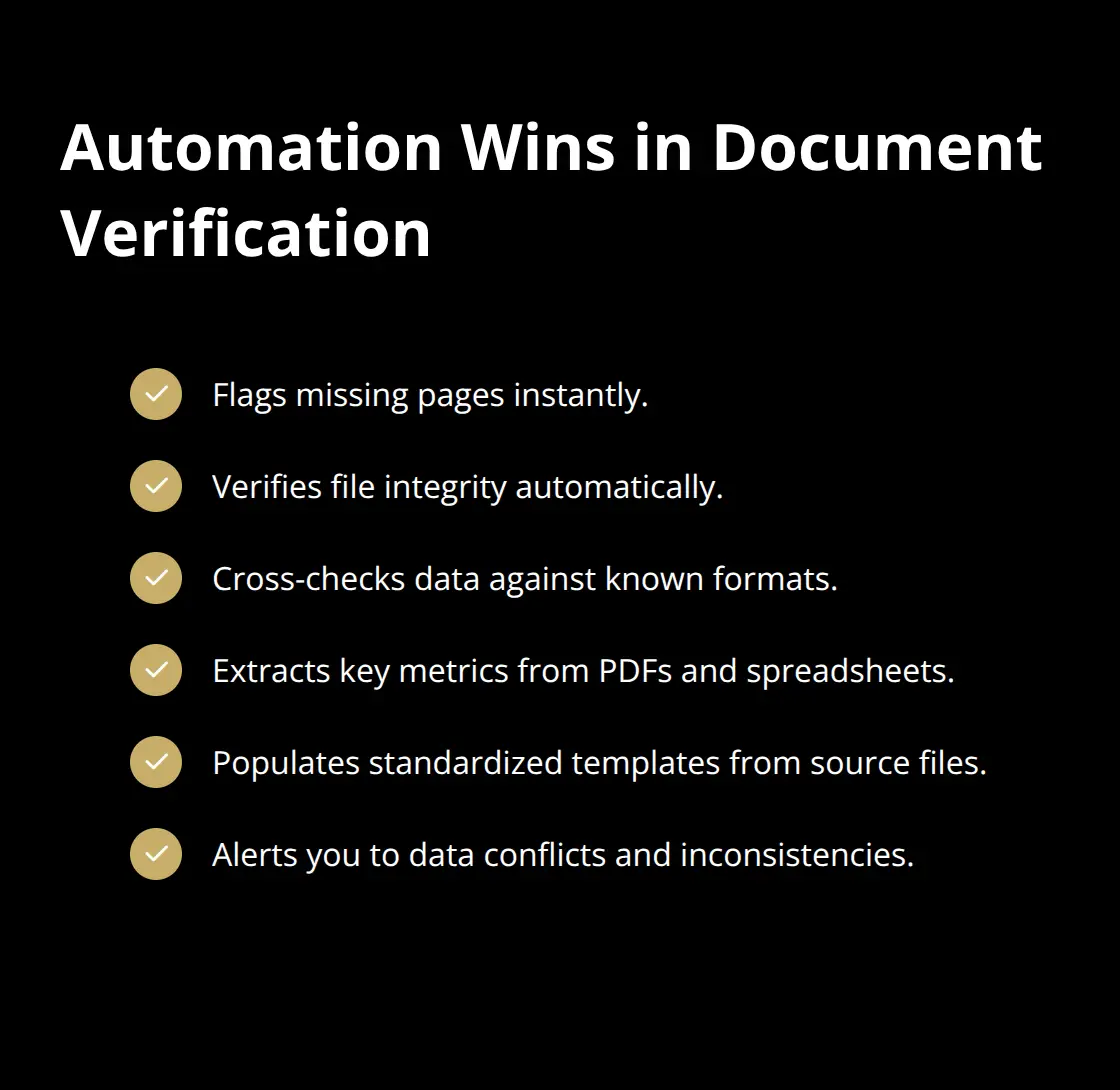
Document verification in business sales stands out as the fastest automation win in business sales. When a buyer submits financial statements, tax returns, or corporate records, automated systems flag missing pages, verify file integrity, and cross-check data against known formats in seconds. This eliminates the back-and-forth emails asking for missing exhibits or corrected schedules. Tools like automated document management platforms extract key metrics from PDFs and spreadsheets, populate them into standardized templates, and alert you when data conflicts arise. What used to take your team three days now takes three hours.
Buyer Matching Works on Clear Criteria
Buyer matching works similarly well because it operates on quantifiable criteria. If you’re selling a software company, automation can instantly filter thousands of potential buyers by revenue size, industry vertical, geographic footprint, and technology stack. These systems compare your business profile against buyer profiles in their database and surface matches ranked by compatibility score. Companies using AI-driven matching find qualified prospects faster than manual research alone.
Valuation Tools Calculate Multiple Approaches
Initial valuation and pricing analysis also responds well to automation because the inputs are mostly objective. Automated valuation tools ingest your financials, comparable company data, and market multiples, then calculate a range of fair values within minutes. You receive multiple valuation approaches-earnings multiples, asset-based, discounted cash flow-all calculated simultaneously. This gives you a defensible starting price before any negotiation begins, rather than guessing or relying on outdated benchmarks.
Why Automation Stops Here
Automation excels where the work is repetitive, data-driven, and rule-based. Verification tasks follow a checklist. Buyer matching applies consistent filters. Valuation plugs numbers into proven formulas. None of these tasks require judgment calls or relationship nuance. What matters most is speed and accuracy, and that’s exactly what technology delivers. The moment you move beyond these mechanical tasks-into understanding why a buyer wants your business, structuring a deal that works for both sides, or navigating unexpected complications-automation hits a wall. That’s where human expertise becomes irreplaceable, and where the real complexity of selling a business emerges.
Where Human Judgment Still Wins
Negotiation Demands Reading People, Not Data
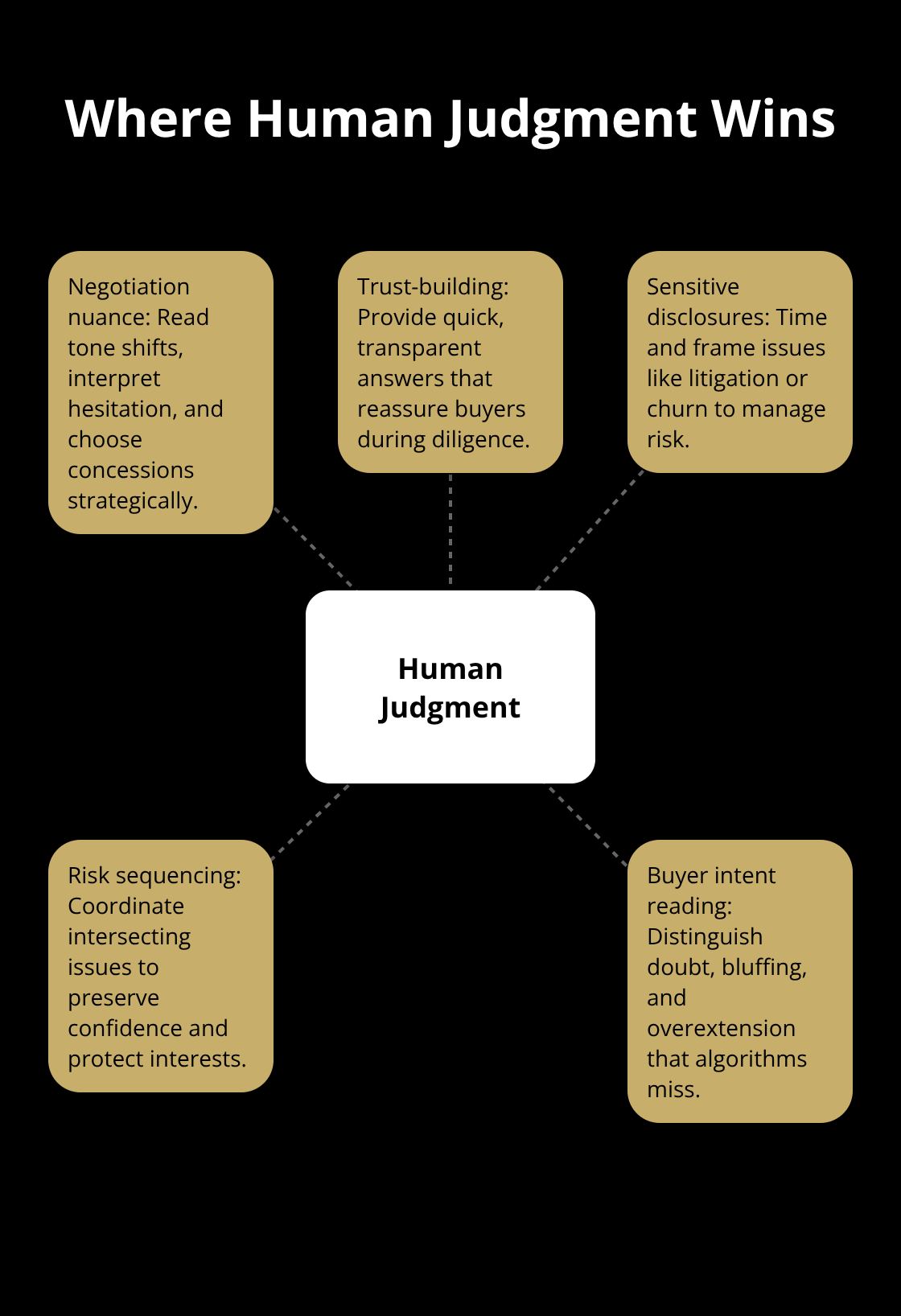
Negotiating a business sale requires reading people, not spreadsheets. A buyer might request an earnout structure because they genuinely doubt your revenue projections, or they might test whether you’ll accept unfavorable terms. An automated system cannot tell the difference. It cannot detect when a buyer overextends financially and might default on payments after closing, nor can it sense when someone bluffs about walking away. During negotiations, small shifts in tone, hesitation on specific clauses, or sudden requests for extended due diligence often signal real concerns that shape deal structure. The best deals happen when both parties feel heard, not when one side forces terms through sheer leverage. This is where experience matters. A skilled negotiator restructures equity, earnouts, and seller financing in ways that address underlying fears rather than just splitting differences down the middle. They know that accepting a lower price with faster closing sometimes beats holding out for more money with six months of uncertainty. Automation can track offer versions and flag inconsistencies, but it cannot make the judgment call about which concession to make or when to hold firm.
Trust Requires Consistent Human Presence
Building trust with a buyer depends fundamentally on consistent, responsive communication over weeks or months. Buyers want to know the person selling them the business understands its operations and can answer hard questions without deflection. They want to sense confidence in the numbers and honesty about what’s broken. An automated email sequence cannot replace a founder who walks a buyer through customer contracts, explains why churn happened last quarter, or addresses concerns about key employee retention after closing. Buyers also need reassurance that the seller will stand behind representations and support the transition. When complications emerge during due diligence, when a customer relationship looks shakier than expected, or when tax documentation raises red flags, a buyer’s decision to move forward often hinges on how the seller responds. Quick, transparent, human answers build confidence. Delayed or evasive responses kill deals.
Sensitive Issues Require Strategic Timing
Handling sensitive issues like pending litigation, employee departures, or revenue concentration demands judgment about what to disclose, when, and to whom. Premature disclosure might spook a buyer unnecessarily. Withholding information until later erodes trust and creates legal exposure. A human advisor understands the timing and framing that turns potential deal-killers into manageable risks that sophisticated buyers can price and accept. This strategic approach to disclosure separates deals that close from those that collapse under the weight of mishandled information. The complexity intensifies when multiple issues intersect-a key customer departure combined with pending litigation, for instance-and require careful sequencing to maintain buyer confidence while protecting your interests.
Human judgment in these areas cannot be replicated by algorithms or templates. The next section explores the tools that do work well and how they complement human expertise rather than replace it.
The Right Tools Make Automation Worth It
AI-Driven Buyer Matching Cuts Research Time Dramatically
Buyer matching platforms filter thousands of potential acquirers by revenue, industry, geography, and technology stack in minutes. Manual research to identify qualified buyers typically consumes 40 to 60 hours per deal. An AI-driven system cuts that to 2 to 3 hours of human review and outreach. The real advantage emerges when you layer in buying intent signals-these systems detect when potential buyers recently received funding, expanded into your industry, or made acquisitions that suggest active appetite.
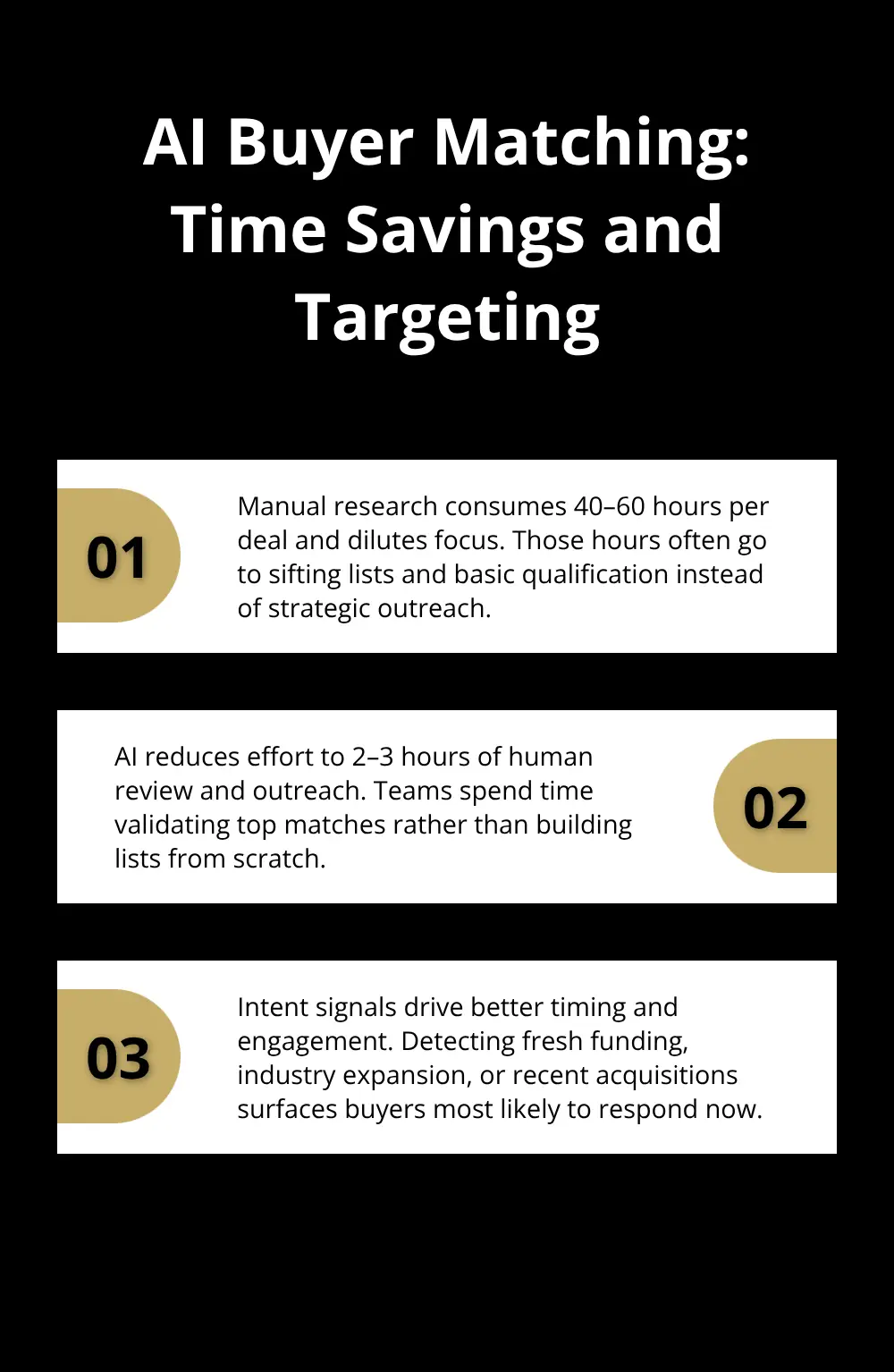
You reach prospects at the moment they’re most likely to engage rather than cold-calling companies that happen to fit a profile.
Automated Document Management Eliminates Back-and-Forth
Document management automation handles the verification work that kills productivity. When a buyer submits 200 pages of financial records, an automated system extracts revenue, expenses, customer lists, and key metrics into standardized templates within hours. It flags missing exhibits, highlights data conflicts between tax returns and financial statements, and alerts you to red flags like unexplained revenue spikes. This eliminates the back-and-forth emails requesting missing schedules or corrected exhibits. What used to consume three days now takes three hours.
Valuation Tools Provide Multiple Defensible Approaches
Valuation tools calculate earnings multiples, asset-based values, and discounted cash flow approaches simultaneously using your actual financials and current market data. This prevents sellers from anchoring on outdated benchmarks or inflated expectations. You enter negotiations with a range supported by multiple methodologies rather than a single number you hope holds up under scrutiny. The tool delivers a defensible starting price before any negotiation begins.
Integration Matters More Than Individual Features
The platforms that work best treat automation as a productivity layer that frees your attention for the judgment calls that actually determine deal success. Tools that integrate smoothly with your existing systems deliver real speed gains rather than adding complexity. When document management, buyer matching, and valuation tools work together (rather than in isolation), you compress weeks of manual work into days while maintaining confidence in your pricing and buyer quality.
Final Thoughts
Sale automation handles the mechanical work so you can focus entirely on the conversations and decisions that actually determine whether a deal closes. Document management systems free your team from chasing missing exhibits, buyer matching platforms surface qualified prospects without weeks of research, and valuation tools give you a defensible starting price before negotiations begin. These tools create space for the human expertise that closes deals, and they work best when they complement rather than replace your judgment about people, timing, and strategy.
The most effective approach combines automation with human insight. A skilled negotiator reads hesitation in a buyer’s voice and restructures terms accordingly, while a trusted advisor addresses concerns with transparency that builds confidence. No algorithm can replicate that judgment or replace the human presence that buyers expect when making a major decision. Sale automation removes the friction from repetitive tasks, but it cannot make the strategic calls that separate deals that close from those that collapse.
We at Unbroker built our platform around this principle-automating the repetitive work while keeping you in control of the relationships and judgment calls that matter. Whether you choose our Full Service Business Sale or the Assisted Business Sale, you get access to AI-driven buyer matching, document management, and valuation tools alongside expert support when you need it. Visit Unbroker to see how the right platform combines automation with human expertise to simplify selling your business.