Selling your business doesn’t have to mean choosing between doing it alone or paying a fortune for full-service help. Assisted sale options give you control over the process while getting expert guidance exactly when you need it.
At Unbroker, we’ve built a model that lets business owners stay in the driver’s seat without the premium price tag. This approach works for founders who want flexibility, transparency, and real support throughout their exit.
How Assisted Sales Work
An assisted sale puts you in control while you access resources that typically cost thousands in broker fees. This model works for business owners who want transparency and flexibility. You handle the day-to-day work of preparing your business, marketing it, and managing buyer conversations. You receive expert support through templates, tools, and guidance when you need it-but you don’t pay someone else to do the heavy lifting. This approach lets you invest in capability rather than pay percentage-based commissions. On a $1 million business sale, a traditional broker commission can range from 8% to 12% of the sale price. An assisted sale keeps far more of that money in your pocket instead of handing it over.
The Tools That Matter
The tools matter more than the price tag alone. Legal document templates handle non-disclosure agreements, letters of intent, and purchase agreements so you don’t start from scratch or pay lawyers for boilerplate work.
Marketing templates designed specifically for selling businesses save weeks of figuring out how to present your operation to buyers. Negotiation guidance comes from people who’ve seen dozens of deals close, so when a buyer makes an offer, you’re not flying blind. A buyer network enhanced by AI-driven matching means your listing reaches qualified prospects rather than sits in a generic marketplace.
What You Pay and When
Monthly subscription structure means no surprise fees appear at closing. You know exactly what you pay upfront, every month, without hidden costs that traditional brokers bury in fine print. This transparency removes the anxiety that comes with percentage-based fees. You control your budget and understand your total investment from day one.
Privacy and Protection
Confidentiality protections remain the same as full-service options, so your business details stay private while you explore a sale. Your operation doesn’t become public knowledge, and sensitive financial information stays protected throughout the process. This matters especially for founders who want to maintain employee confidence and competitive advantage during negotiations.
The control you maintain over your sale process-combined with affordable access to professional resources-creates a fundamentally different experience than traditional brokerage. This flexibility becomes even more valuable when you compare how assisted sales stack up against full-service options.
Comparing Assisted Sales to Full-Service Options
Full-service brokers charge 8% to 12% on the sale price, which on a $1 million business means $80,000 to $120,000 leaving your pocket. Unbroker’s assisted sale gives you hands-on tools without a percentage-based fee, and if you’d rather have Unbroker handle the sale for you, the Full Service option charges just a 6% success fee, paid only when your business sells. On that same $1 million sale, 6% works out to $60,000-so you keep $20,000 to $60,000 more than you would with a traditional broker. But raw savings alone don’t tell the complete story. You also reclaim your time and control over the entire process. Full-service brokers dictate how your business gets marketed, which buyers they approach, and when negotiations happen. With an assisted sale, you make those decisions. You decide which marketing channels matter, which buyer inquiries to pursue, and how aggressively to negotiate. This control matters because business owners often know their operations better than any external broker. You understand which features attract the right buyers, what price point reflects true value, and which prospects align with your exit goals. Full-service brokers optimize for speed and commission size, not necessarily for your best outcome.
Timeline and Speed Shift With Your Involvement
Timeline expectations change when you handle the legwork. Full-service brokers typically close sales in 6 to 12 months because they manage everything sequentially. You wait for them to create marketing materials, then wait for buyer interest, then wait for negotiations. With an assisted sale, you control the pace. If you work efficiently with the templates and tools provided, you can move faster because you avoid bottlenecks created by a single broker’s schedule or caseload. You respond to buyer inquiries immediately instead of waiting for broker callbacks. You refine your marketing message in real time based on feedback rather than requesting broker revisions. The trade-off is effort on your side, but the compressed timeline means faster capital access and reduced uncertainty. Some business owners close in 3 to 4 months using assisted models because they remain personally invested in momentum. Others take longer because they manage this alongside running their business. The point is the timeline stays under your control, not some broker’s workflow.
Direct Buyer Contact Protects Your Interests
Full-service brokers insulate you from buyer conversations, but they also filter information you might need. You don’t see which buyers are serious versus tire-kickers. You don’t hear the actual objections to your asking price. You don’t understand which aspects of your business concern potential acquirers. With an assisted sale, you engage directly with buyers. This direct contact feels riskier at first, but it actually protects you better. You catch red flags immediately. You learn exactly what buyers value in your operation. You address concerns in real time rather than through broker interpretation. Negotiation guidance means you’re not flying solo in these conversations. You access templates for offer responses, frameworks for handling counteroffers, and insights from people who’ve seen similar deals close. The difference is you stay informed and empowered rather than passive and hoping your broker represents your interests well. This matters because brokers sometimes prioritize commission over your satisfaction. You eliminate that misaligned incentive when you control the process directly.
Cost Differences Create Real Wealth Preservation
The financial advantage extends beyond the headline savings. Traditional brokers embed their commission into your expectations, so you factor the loss into your sale price. You might accept a lower offer because you’ve already mentally deducted the 8% to 12% fee. With an assisted sale, you negotiate from a position of keeping what you earn. This psychological shift often results in better outcomes because you fight harder for price and terms. You also avoid the pressure brokers apply to close quickly so they collect their commission. You can walk away from bad deals without a broker pushing you toward acceptance. The monthly fee structure (rather than percentage-based) means your incentives align with yours alone. You want the best price and terms. The platform wants you to succeed so you renew your subscription and recommend the service. This alignment matters more than most business owners realize when they first compare costs.
Control Over Marketing and Buyer Selection
You decide which marketing channels reach your ideal buyers instead of accepting a broker’s standard playbook. You can emphasize different business strengths to different buyer segments. You can test messaging and adjust based on response rates. You can pursue strategic buyers who might pay premiums while also entertaining financial buyers. Full-service brokers typically follow a fixed process that works for most businesses but optimizes for none. With an assisted sale, you tailor your approach to your specific situation and market. You also control which buyer inquiries you pursue seriously and which you dismiss. You might recognize that a particular prospect doesn’t align with your vision for the business, even if they offer a high price. A broker would push you toward that deal because it closes faster and generates commission. You maintain the authority to choose buyers who respect your legacy and employees, not just the highest bidder. This control transforms the sale from a transaction into an outcome that reflects your values. As you prepare to market your business effectively, the tools and templates available through an assisted sale model become your competitive advantage.
Practical Tips for Success with Assisted Sales
Preparing your business for market demands more than cleaning up financials and updating your website. Buyers scrutinize operations, team stability, customer concentration, and revenue predictability. Start by documenting your last three years of clean financial statements-not tax returns, but actual profit and loss statements, balance sheets, and cash flow reports. Buyers want to see trends, not surprises at closing. If your revenue has grown consistently, that narrative matters more than any marketing copy you write.
Document Your Strongest Metrics
Create a one-page executive summary that leads with your strongest metric: recurring revenue percentage, customer retention rate, or gross margin. According to data from Axial, businesses with documented recurring revenue sell for 5x multiples on average, while one-time revenue businesses sell for 3x multiples. That difference matters enormously.
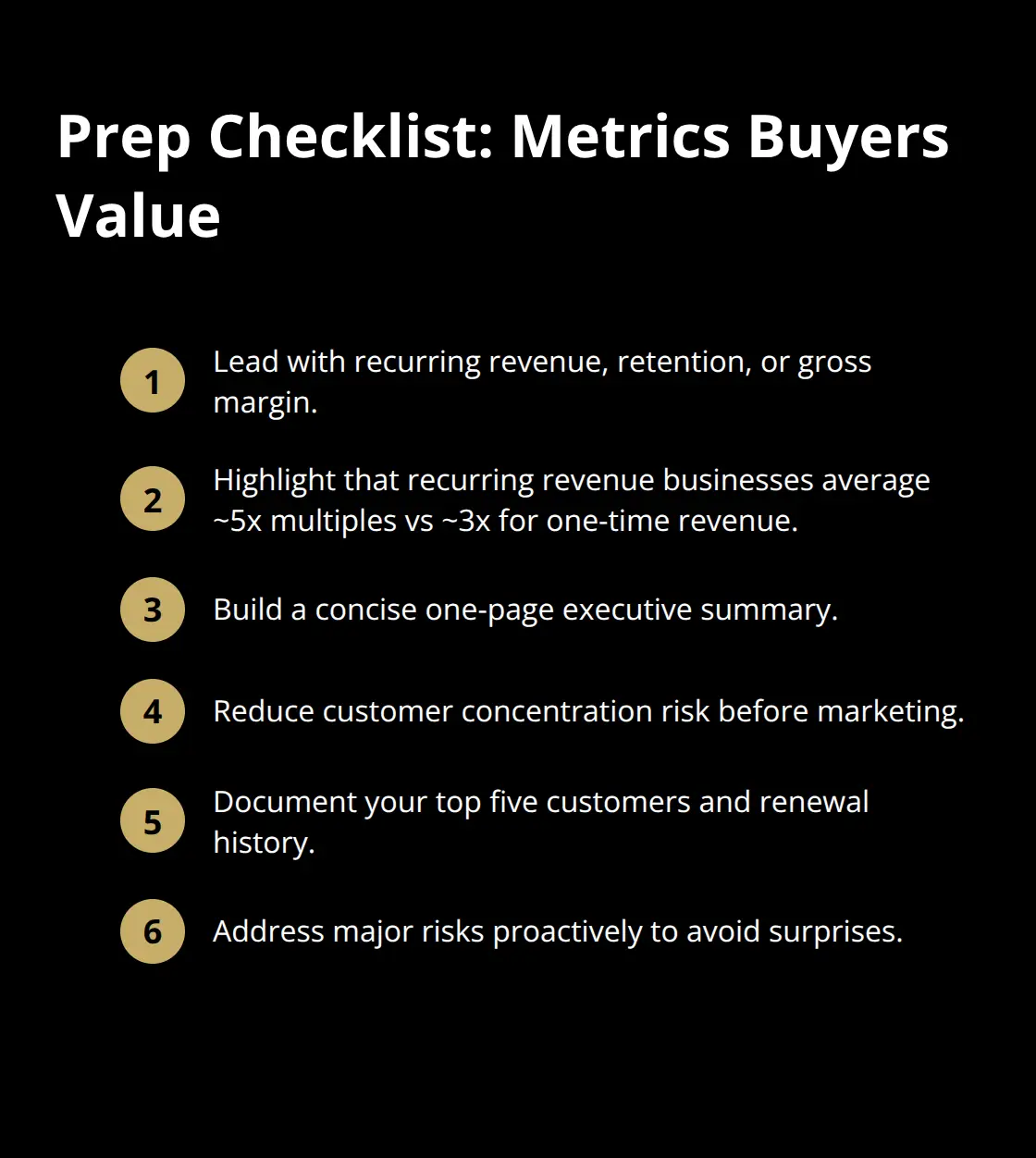
Next, identify and reduce customer concentration risk. Document your top five customers, their contract terms, and renewal history. Address major customer risks before marketing begins rather than hoping buyers overlook them.
Finally, audit your team. Document roles, compensation, and which employees are critical to operations versus replaceable. Buyers want to know if your business depends entirely on you or if it can function with your departure. This documentation becomes your foundation for honest conversations with prospects.
Market Your Business With Precision
Your marketing materials determine which buyers you attract and how seriously they evaluate your business. Write your business description to answer three specific questions: what problem does your business solve, who specifically pays for that solution, and why do customers prefer your approach over alternatives. Vague descriptions like “we provide digital marketing services to small businesses” attract tire-kickers and discount hunters. Specific descriptions like “we help e-commerce brands reduce customer acquisition cost by 30% through performance marketing, serving brands with $500K to $5M annual revenue” attract serious buyers who understand your value.
Test your marketing messaging across different buyer segments. Strategic buyers who might acquire your business for synergies care about different details than financial buyers seeking cash flow. One paragraph should emphasize team talent and operational systems for strategic buyers. Another should emphasize stable recurring revenue and profit margins for financial buyers. Adjust which version you lead with based on who inquires. Track which marketing channels generate the highest-quality leads. If LinkedIn outreach produces serious inquiries while industry forums produce endless low-ball offers, shift your effort accordingly. Most business owners waste time on channels that generate volume rather than qualified interest.
Respond to Offers Strategically
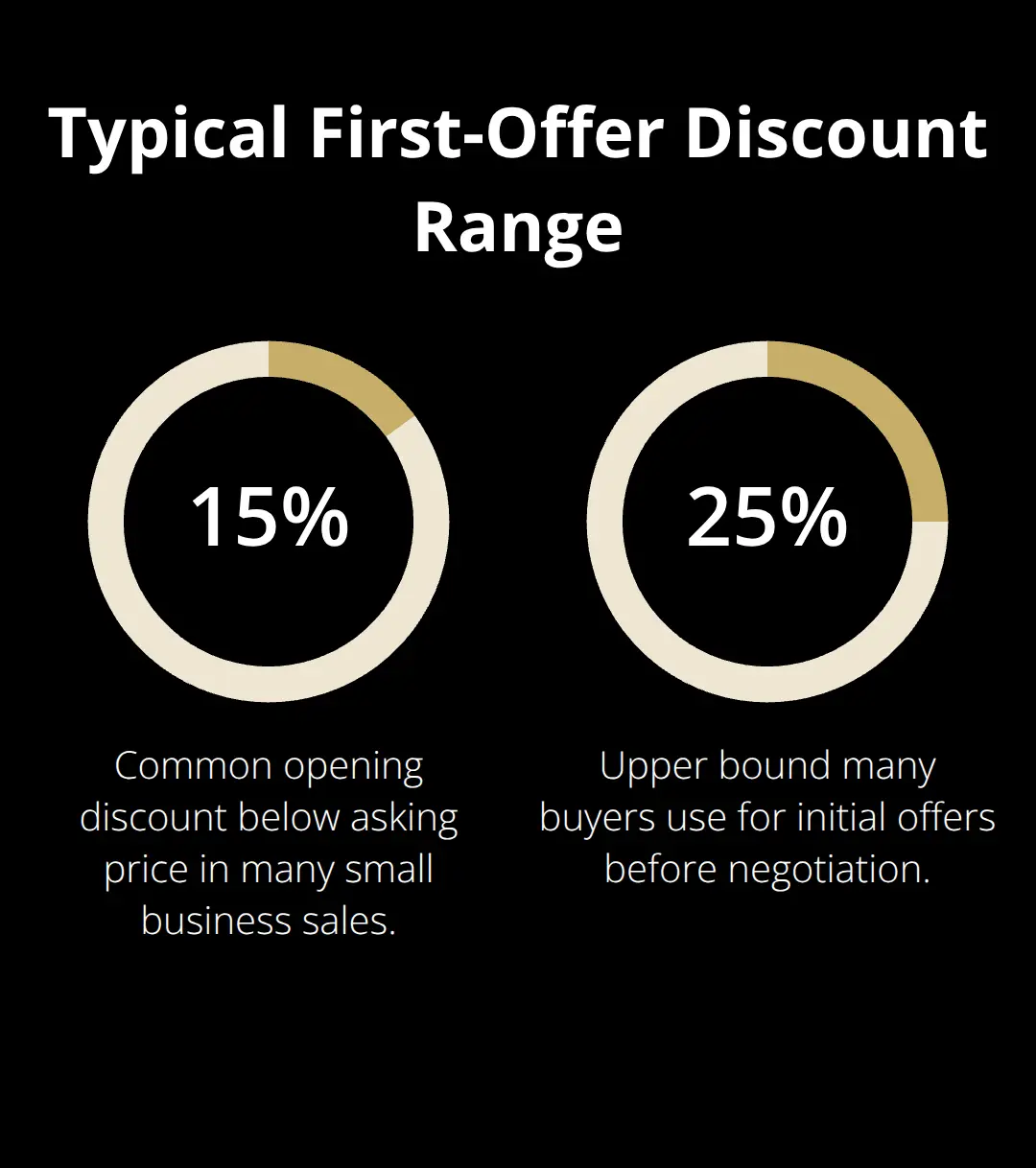
Your first offer will almost certainly be below your asking price-expect 15% to 25% below. This is not an insult; it is the opening position in virtually every business sale.
How you respond determines whether negotiations move toward your target or spiral downward. Create a written response framework before you receive offers so emotion does not drive your reply. When an offer arrives, wait 24 hours before responding. This pause prevents reactive counteroffers that undermine your position.
Your response should address price separately from terms. An offer at $800K with all cash closing in 30 days is dramatically different from an offer at $900K with 40% seller financing over five years. Some owners focus only on headline price and miss that unfavorable terms actually reduce the value you receive. Identify your true walk-away price before negotiations start. This number should reflect your financial needs post-sale, not your emotional attachment to the business. If you need $750K to achieve your post-exit goals and a buyer offers $760K with terms you can accept, that is a win even if you listed for $900K.
Document Contingencies and Terms Clearly
Document any contingencies in writing. If a buyer makes an offer contingent on employee retention, get specific: which employees, for how long, and at what compensation? Vague contingencies create conflicts later. Negotiation frameworks prevent you from accepting unfavorable terms under pressure. The goal is reaching an outcome that reflects your business value and your personal financial objectives (not simply closing a deal). Templates and guidance help you navigate these conversations without leaving money on the table.
Final Thoughts
Assisted sale options work because they match how modern business owners actually operate. You want transparency, control, and fair pricing without the overhead of traditional brokerage. The model removes the friction that makes selling a business feel like a forced choice between doing everything yourself or surrendering control to someone else. The financial advantage is real and substantial-saving $78,000 to $118,000 on a $1 million sale matters, but the actual benefit runs deeper because your incentives stay aligned with yours alone.
You keep more of what you’ve built, move faster without waiting for broker callbacks, and negotiate from strength because you understand your business better than any external party ever could. The flexibility matters equally since you decide which buyers to pursue, how aggressively to market, and when to walk away from bad deals. You access professional-grade templates, negotiation frameworks, and buyer networks without paying percentage-based commissions that reward speed over your satisfaction.
Your business represents years of work, strategic decisions, and personal investment, so the sale should reflect that value and your vision for what comes next. We at Unbroker built a platform specifically for business owners ready to take charge of their exit, offering access to premium marketing tools, legal document templates, negotiation assistance, and a buyer network enhanced by AI-driven matching. Start your journey by exploring how assisted sale options can work for your specific situation.