Selling a business with unrecorded cash sales can be a tricky process. At Unbroker, we often encounter entrepreneurs grappling with this challenge when they decide to sell their cash-heavy businesses.
Unreported income not only poses legal risks but can also significantly impact the sale process and valuation. In this post, we’ll explore strategies to address these issues and ensure a transparent, successful business sale.
The Hidden Costs of Unreported Income
Unreported income in cash-heavy businesses isn’t a minor oversight-it’s a ticking time bomb for sellers. This issue can derail sales and devastate business owners.
The IRS’s Watchful Eye
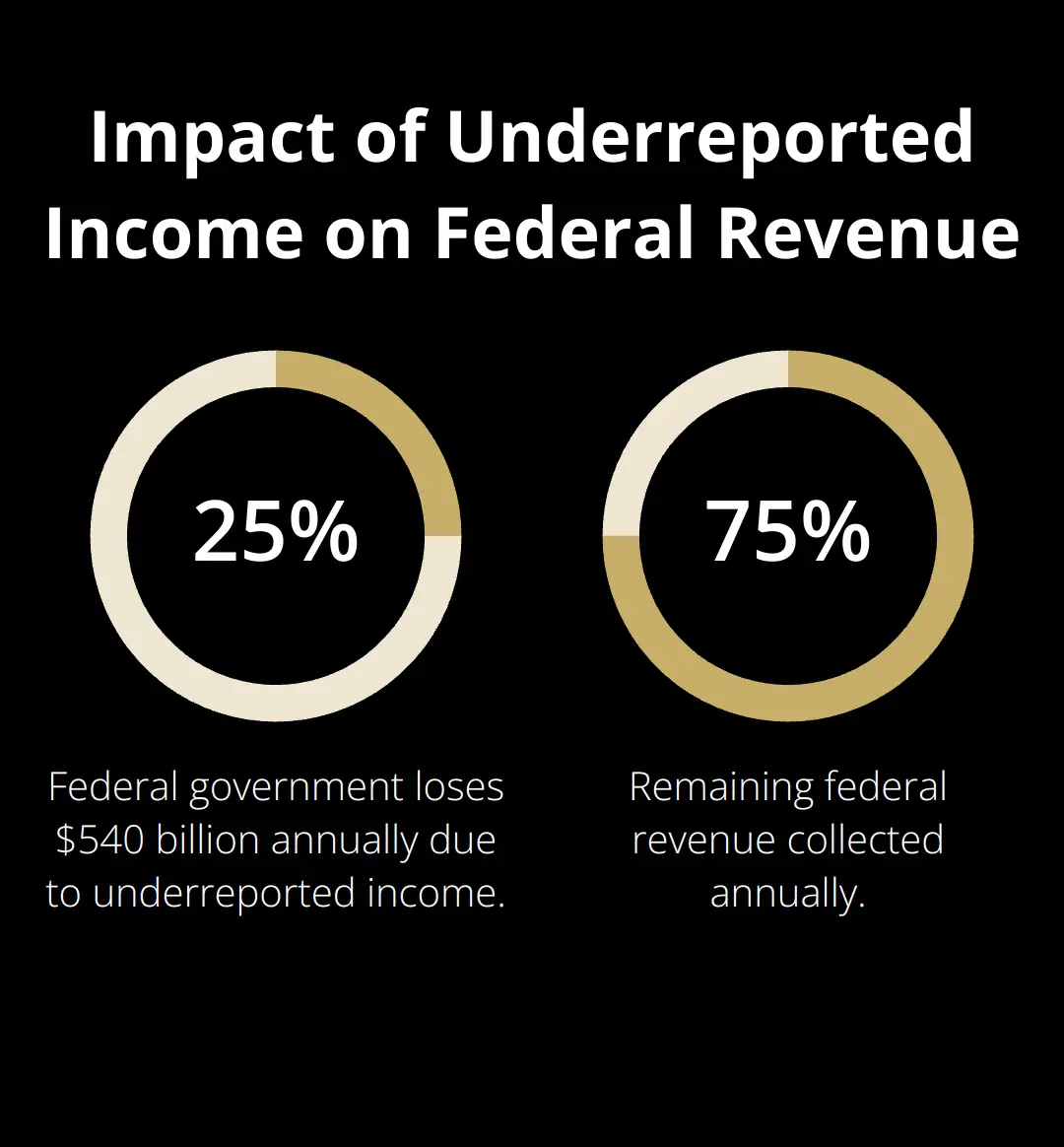
The IRS employs sophisticated methods to detect unreported income. A Treasury Department report revealed that the federal government loses $540 billion annually due to underreported income. This staggering figure has prompted increased scrutiny, especially in cash-intensive sectors like retail and restaurants.
Penalties for caught offenders can be severe. Fines can reach up to 75% of the unpaid tax, plus interest. In extreme cases, business owners face criminal charges, with potential jail time of up to five years.
Valuation Challenges
Unreported income skews a business’s true value, creating difficulties for both sellers and buyers. Without accurate financial records, determining a fair price becomes guesswork. Buyers may lowball offers, assuming the worst about the financials.
Trust Issues with Potential Buyers
Transparency stands as a cornerstone in business sales. When potential buyers uncover unreported income during due diligence, it shatters trust. Many walk away, unwilling to take on the risk of inheriting tax liabilities or dealing with inaccurate financials.
Those who do proceed often demand steep discounts or complex deal structures (to protect themselves). This can lead to protracted negotiations and increased legal costs, eating into sale proceeds.
Long-term Business Reputation
The impact of unreported income extends beyond the immediate sale. It can tarnish a business’s reputation in the long run. Future partnerships, loans, or expansion opportunities may become more difficult to secure if word spreads about past financial irregularities.
As we move forward, it’s clear that addressing unreported income is not just about avoiding penalties-it’s about preserving the value and integrity of your business. In the next section, we’ll explore strategies to tackle this issue head-on and prepare for a transparent, successful sale.
Tackling Unreported Income: Strategies for Transparent Business Sales
The Power of Voluntary Disclosure
The IRS offers voluntary disclosure programs that reduce penalties for unreported income. These programs provide a path to compliance without the risk of criminal prosecution. The Streamlined Filing Compliance Procedures allow taxpayers to provide a truthful, timely, and complete disclosure of their willful noncompliance through designated procedures. This approach can transform the financials of a business before a sale.
Expert Guidance: A Necessity, Not a Luxury
Tax professionals play a vital role when addressing unreported income. These experts navigate complex tax laws and negotiate with the IRS. This expertise minimizes penalties and structures finances for a successful sale.
Robust Accounting Practices: The Foundation of Trust
Modern accounting practices are essential for cash-heavy businesses. Point-of-sale systems automatically record sales data, which can help business owners keep track of sales trends, inventory levels, and other important information. This ensures compliance and provides potential buyers with accurate financial data.
The Impact of Transparency on Business Valuation
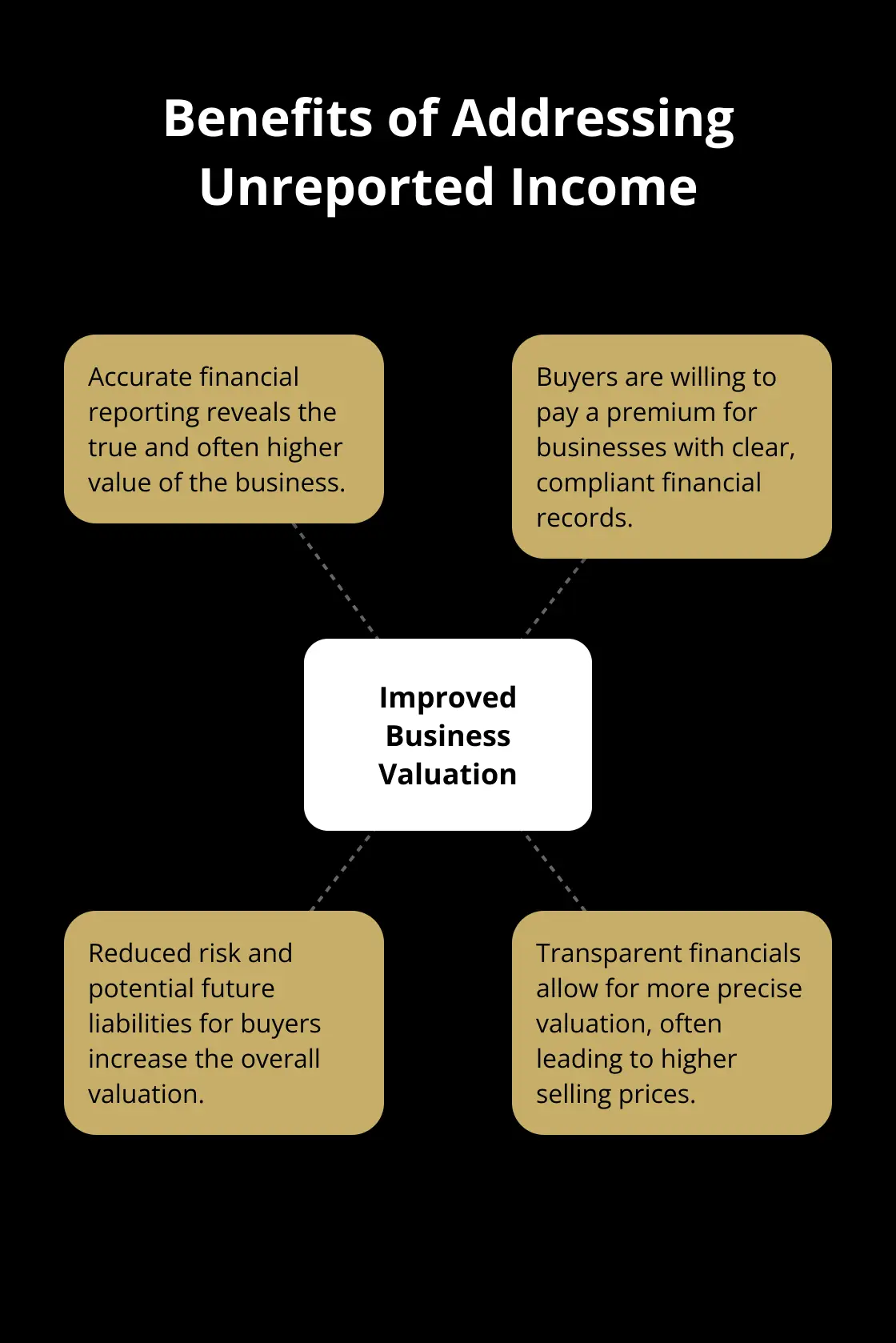
Addressing unreported income often leads to a significant increase in business valuation. This increase stems from two factors: accurate financial reporting and reduced risk for potential buyers. Transparent financials allow for a more precise valuation, often revealing the true (and higher) value of the business. Additionally, buyers are willing to pay a premium for businesses with clear, compliant financial records, as it reduces their risk and potential future liabilities.
Building a Culture of Compliance
The process of addressing unreported income should extend beyond a one-time fix. Business owners must foster a culture of compliance within their organization. This involves training staff, implementing regular audits, and creating clear policies for cash handling and reporting. A culture of compliance not only prepares a business for sale but also sets it up for long-term success and easier transitions in ownership.
As we move forward, we’ll explore how to present a cash-heavy business transparently to potential buyers, ensuring trust and maximizing value in the sale process. When buying a cash flowing business, it’s crucial to perform a thorough cash flow reconciliation to identify any discrepancies that could indicate unreported income.
How to Sell a Cash-Heavy Business with Full Transparency
Implement Robust Financial Tracking Systems
The foundation of a transparent sale is accurate financial records. For cash-heavy businesses, this means going beyond basic bookkeeping. Install a point-of-sale (POS) system that tracks every transaction. The National Restaurant Association reports that restaurants using modern POS systems see an average 4.5% increase in sales due to better tracking and reduced errors.
Use smart safes or cash recyclers. These devices improve accuracy and provide an audit trail for every dollar that enters your business. Retailers benefit significantly from smart safes by improving cash management efficiency, reducing shrinkage, and enhancing security.
Conduct a Third-Party Financial Audit
Before you list your business, invest in a comprehensive third-party audit. This step adds credibility to your financial claims and can uncover areas for improvement. Having a government approved business system helps allow government contractors to gain a true understanding of the internal controls of their systems.
During the audit, provide detailed explanations for any cash flow discrepancies. This might include seasonal fluctuations, one-time large cash transactions, or changes in business operations. The more you substantiate your cash flow, the more confidence buyers will have in your business’s financial health.
Create a Transparent Sales Package
Develop a comprehensive sales package that goes beyond standard financial statements. Include daily cash logs, bank deposit records, and reconciliation reports. If you’ve implemented new financial tracking systems, provide before-and-after comparisons to demonstrate improved accuracy.
Be upfront about any past issues with unreported income. If you’ve participated in voluntary disclosure programs or made efforts to correct past discrepancies, include documentation of these actions. This level of honesty can actually increase buyer trust. VDP provides protection from criminal prosecution and uniform civil penalty structure for taxpayers who voluntarily come forward to report their unreported income.
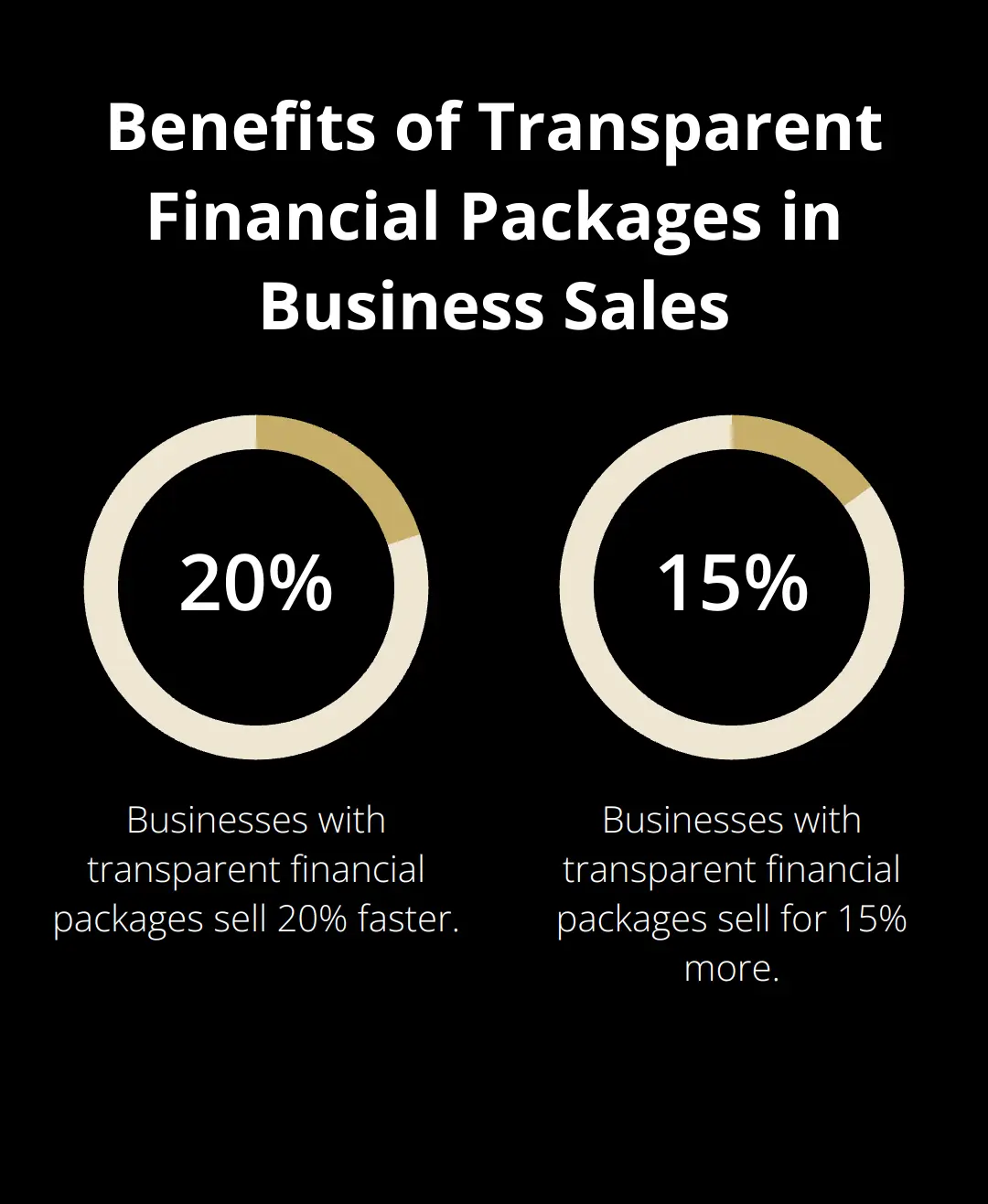
Businesses with transparent financial packages typically sell 20% faster and for 15% more than those with incomplete or unclear financials (according to industry data). Try to create a comprehensive, transparent sales package that attracts serious buyers and streamlines the due diligence process.
Selling a cash-heavy business with full transparency isn’t just about avoiding legal issues-it’s about maximizing your business’s value and ensuring a smooth, successful sale. The implementation of robust financial systems, thorough audits, and a transparent sales package will position your business as a trustworthy, valuable investment opportunity.
Final Thoughts
Selling a business with unrecorded cash sales requires careful planning and execution. Transparency builds trust with potential buyers, streamlines due diligence, and leads to smoother transactions. Addressing unreported income head-on and implementing proper financial tracking systems allows sellers to present their businesses in the best possible light.
The benefits of transparent financial practices extend far beyond the sale of a business. They improve operational efficiency and set the stage for future growth and success. Accurate financial records not only attract serious buyers but also command higher valuations in the marketplace.
At Unbroker, we understand the unique challenges faced by cash-heavy businesses looking to sell. Our platform offers transparent, low-cost options for selling your business without high brokerage fees. We provide the tools and support needed to navigate the complexities of selling a business with confidence and integrity.