Selling a business quickly requires more than just listing it and hoping for the best. The right preparation, marketing strategy, and negotiation approach can compress months off your timeline. At Unbroker, we’ve seen sellers cut their sale duration significantly by following proven tactics. This guide walks you through the exact steps that matter most.
Getting Your Business Ready to Sell
Organize Your Financial Records First
Buyers investigate sellers with extreme scrutiny. Your financial records must be audit-ready before any serious buyer arrives. This means three years of clean tax returns, monthly profit-and-loss statements, balance sheets, and bank reconciliation records. Many sellers underestimate how long this takes-expect four to eight weeks if your records aren’t already organized.
Start by hiring a CPA to review everything for consistency and accuracy. Buyers spot discrepancies immediately, and fixing them during negotiations kills your momentum. A CPA also identifies red flags before buyers do, which gives you time to address them proactively rather than reactively.
Fix Operational Issues Before Listing
Operational issues act as red flags that extend timelines dramatically. If your customer contracts rely on you personally, document how operations continue without you. If key employees might leave after a sale, lock them in with retention bonuses before listing.
Standardize your processes and eliminate one-off arrangements. Show that your business runs on systems, not personalities. This single step can shave weeks off your sale timeline because buyers won’t need to conduct extensive operational audits. When a buyer sees a well-documented, systematized operation, they move faster through their evaluation.
Prepare a Complete Documentation Package
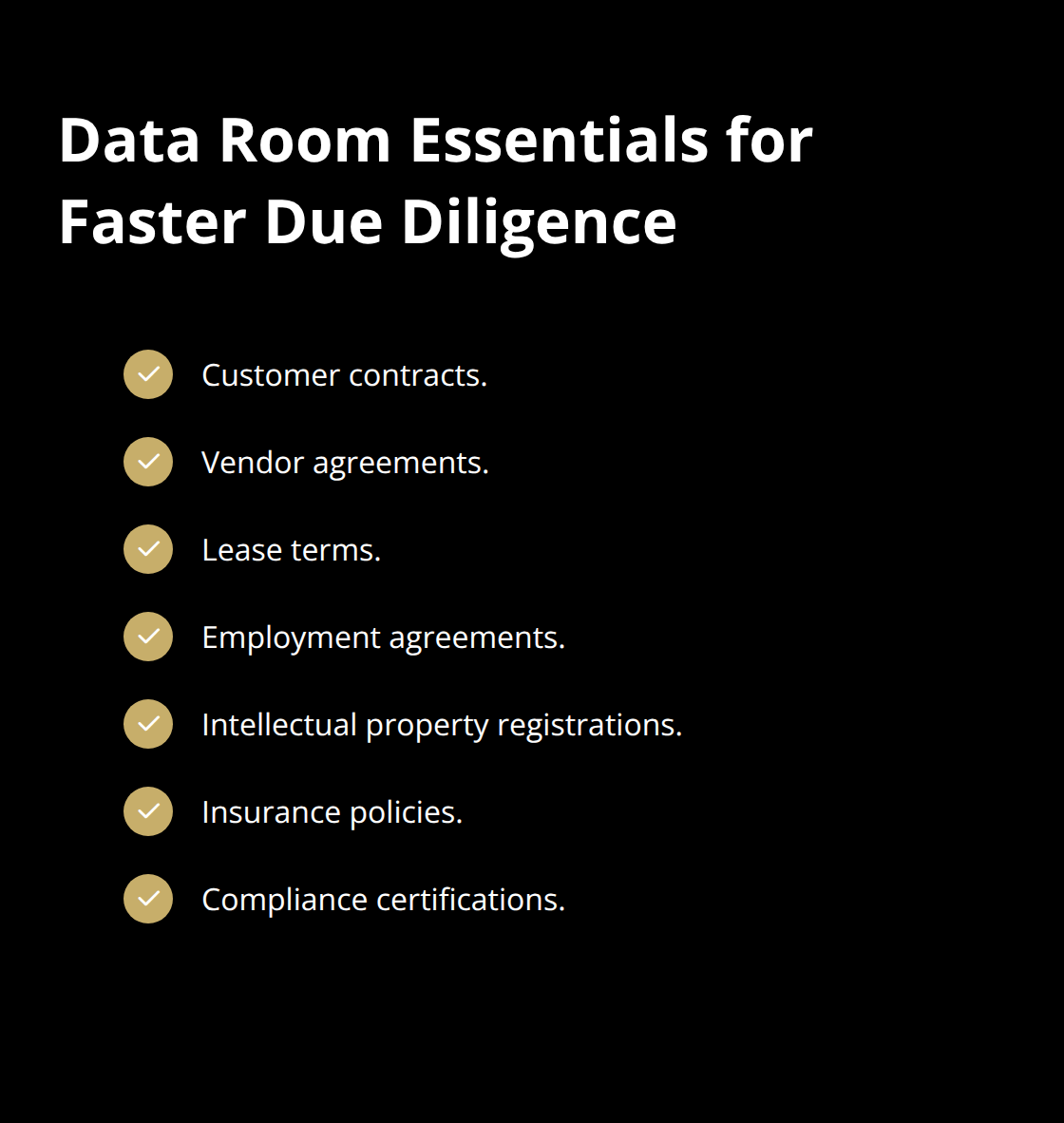
Documentation is where most sellers stumble. Prepare an organized data room containing customer contracts, vendor agreements, lease terms, employment agreements, intellectual property registrations, insurance policies, and compliance certifications before marketing starts. Deals with complete documentation packages close faster than those requiring back-and-forth information requests.
Create a simple spreadsheet listing every document, its location, and its status. When a buyer requests something, you respond within 24 hours-not three days later. This responsiveness signals you’re serious and professional, which accelerates buyer confidence.
Don’t wait for buyers to ask for obscure items; anticipate their needs. If you operate in a regulated industry, gather all compliance records now. If you have pending litigation or regulatory issues, disclose them upfront with resolution plans (transparency builds trust and prevents deals from collapsing during due diligence). The faster you present a complete, organized picture of your business, the faster buyers make decisions. With your foundation solid, you’re ready to market your business effectively and attract qualified buyers who move quickly.
Market Your Business to Attract Fast-Moving Buyers
List Across Multiple Channels Simultaneously
Most sellers make a critical mistake: they list their business in one or two places and wait. This passive approach extends timelines by months. Faster sales happen when businesses appear across multiple channels at the same time. National syndication partners reach different buyer segments, and a business listed on only one platform misses qualified buyers searching elsewhere. Your goal is saturation-getting in front of every serious buyer actively looking in your industry and geography. This requires coordinating across platforms, not uploading once and hoping for results.
Set up alerts on your syndication partners to track when your listing goes live, monitor for errors, and verify that all details match your financial records. Inconsistencies between platforms (different revenue figures, different descriptions, different contact information) raise immediate red flags with sophisticated buyers and slow everything down.
Reach Out Directly to Strategic Buyers
Direct outreach to potential buyers in your industry accelerates results significantly. Compile a list of strategic acquirers, competitors, and private equity firms that fit your business profile. Many sellers dismiss this approach as too aggressive, but direct outreach generates serious inquiries faster than passive marketing alone. A business broker or M&A advisor can help identify these targets and craft personalized outreach that positions your sale as a genuine opportunity, not spam.
Quantify Your Competitive Advantages
Your marketing message must cut through noise by articulating what makes your business genuinely different. Generic descriptions like “profitable business with loyal customers” appear on thousands of listings and get ignored. Instead, quantify your competitive position with concrete metrics. Document your customer retention rate, average customer lifetime value, pricing premium versus competitors, market share in your niche, and any proprietary processes or technology that drive results.
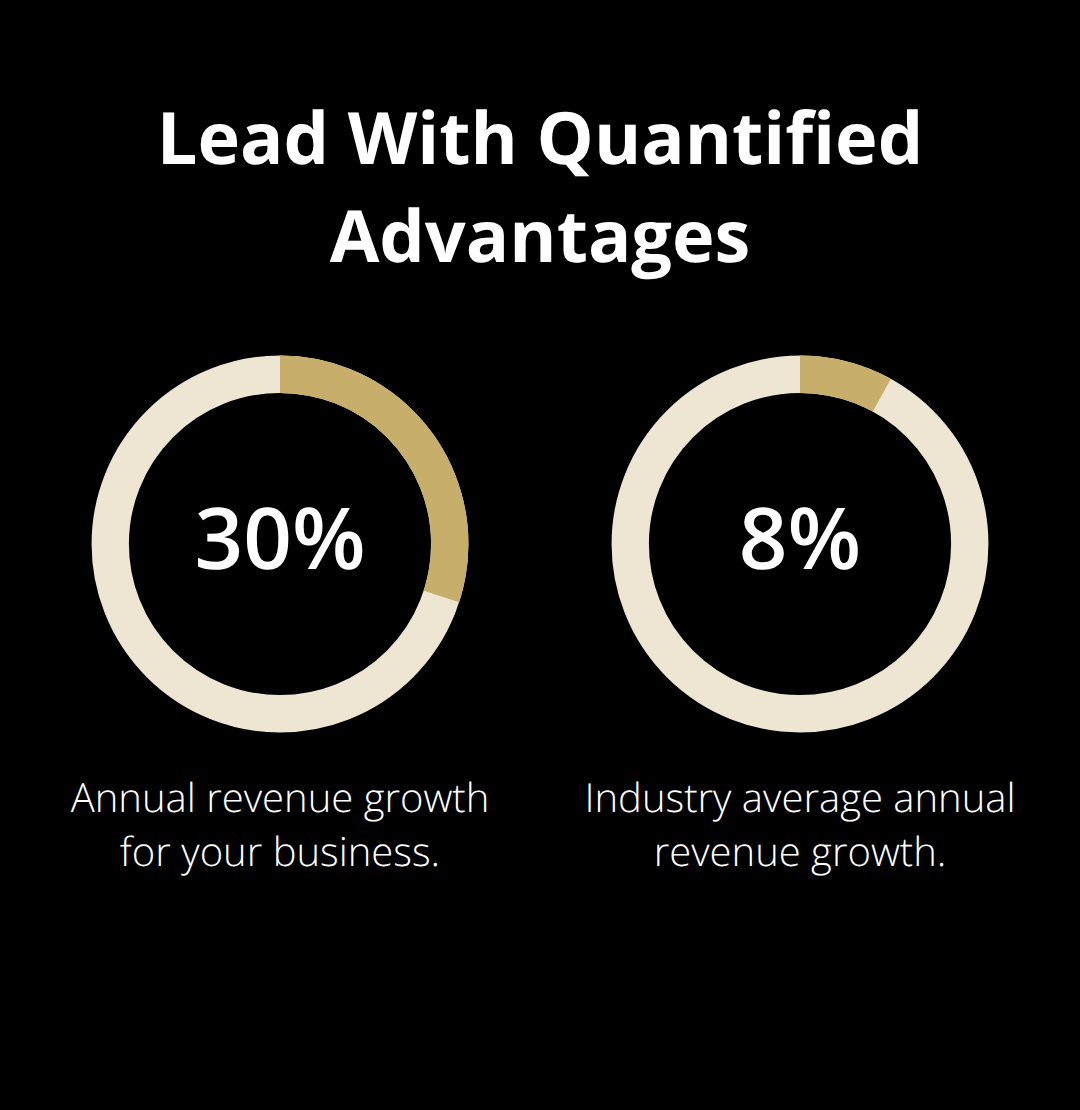
If you’ve grown revenue 30% annually while industry averages sit at 8%, lead with that number. If your gross margins exceed 65% when competitors average 45%, that’s your opening argument.
Buyers evaluate businesses partly on emotion but primarily on economics-show them the economic advantage immediately.
Tell a Specific, Compelling Story
Craft a narrative that explains how your business generates those advantages and why they persist after a sale. The strongest narratives connect your business model to a specific market trend or customer need that continues growing. For example, a staffing business positioned around the shift to remote work or a software company aligned with the expansion of AI adoption tells buyers why their investment will compound. This narrative doesn’t need to be complex; it needs to be true and specific.
Vague positioning extends sale timelines because buyers hesitate when they can’t articulate why the business outperforms its peers. Strong positioning removes that hesitation and accelerates buyer decisions substantially. With your business positioned clearly and marketed across multiple channels, you’re ready to handle the inquiries that follow-and that’s where speed in responding separates quick sales from prolonged negotiations.
Navigate Negotiations and Closing
Respond Within Hours, Not Days
The moment a qualified buyer submits an inquiry, your response time becomes the single biggest predictor of whether that deal closes quickly or stalls. Sellers who respond within four hours see significantly faster progression through negotiations than those waiting a full business day. This isn’t about being aggressive; it’s about signaling that you’re organized and serious. Designate one person as the primary point of contact for all buyer inquiries and establish a system where messages get flagged immediately. If you’re handling this yourself, check your email every two hours during business days.
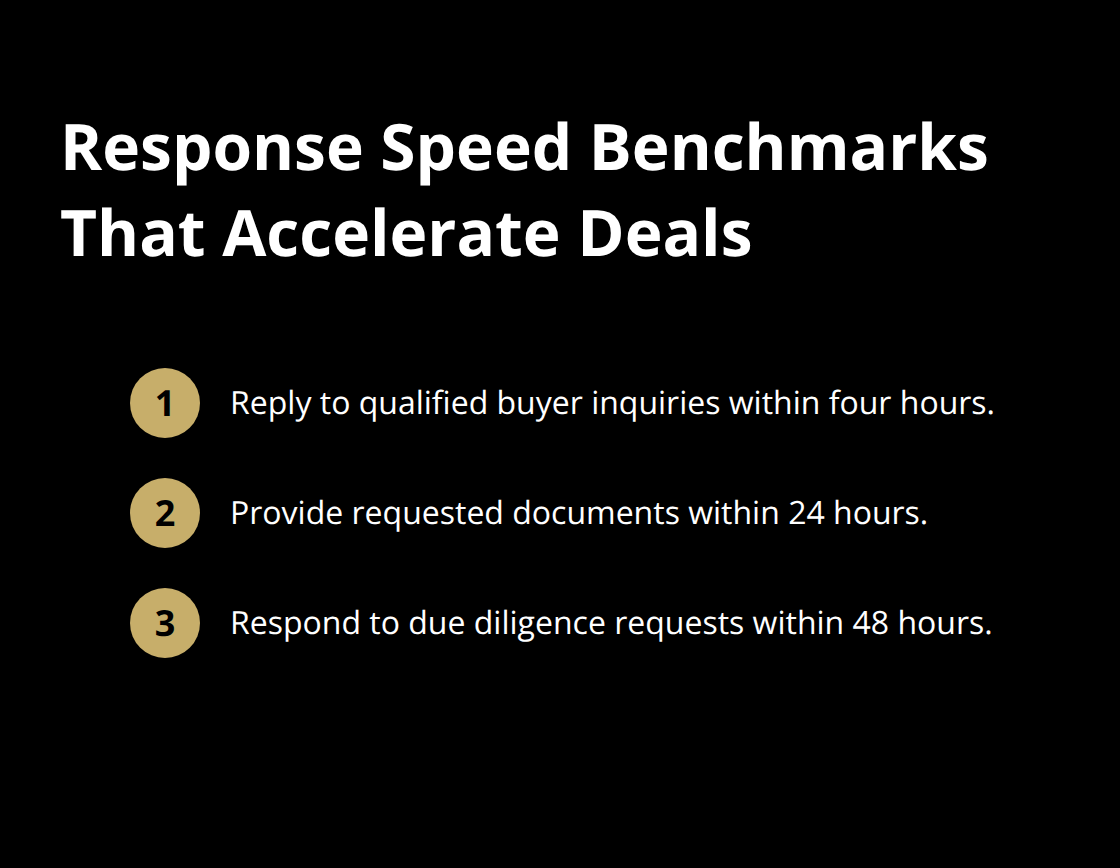
When a buyer asks for information, respond with the exact documents they requested within 24 hours maximum-not with a promise to send them later. This responsiveness creates momentum that accelerates the entire sale process. Many sellers lose deals not because their business lacks merit but because slow communication makes buyers question whether the seller is genuinely committed to selling.
Evaluate Offers with Professional Guidance
Evaluating offers without professional guidance often leads to accepting lower bids or missing hidden deal-killers that emerge later. An M&A advisor or business broker with experience in your industry spots problematic offer terms immediately and negotiates on your behalf, which removes emotion from discussions and keeps conversations moving forward. They understand what adjustments are reasonable and what demands signal a buyer who will create problems during closing. Advisors also handle the technical work of analyzing working capital adjustments, earnouts, and seller financing terms-elements that inexperienced sellers frequently mishandle. When you have an advisor managing these details, you stay focused on running your business rather than getting bogged down in contract language. The cost of quality advisory support typically pays for itself through better deal terms and faster closings.
Streamline Due Diligence Through Organization
Due diligence represents the final hurdle before closing, and most delays happen here because sellers scramble to find documents or explain inconsistencies that should have been resolved during preparation. If your data room is already organized and complete, due diligence compresses dramatically. A buyer who receives everything they request immediately-customer lists with revenue attribution, equipment inventories with maintenance records, employee agreements, tax returns with supporting schedules-completes their investigation weeks faster than a buyer who receives information in dribs and drabs. Assign someone to monitor the buyer’s due diligence requests and respond within 48 hours every single time. When a buyer asks a clarifying question about your financials or operations, answer it directly rather than offering to discuss it in a call. Written answers create a clear record and prevent miscommunication. The legal documents themselves matter too: having templates prepared in advance through a broker or advisor accelerates the closing document phase. Buyers expect the purchase agreement, representations and warranties insurance documentation, and closing disclosures to arrive quickly once you’ve agreed on terms. Slow document turnaround signals disorganization and creates unnecessary friction that delays your closing date by weeks.
Final Thoughts
Selling a business quickly comes down to three fundamentals: preparation, visibility, and responsiveness. Sellers who organize their financials, fix operational issues, and compile complete documentation before marketing starts eliminate the delays that plague most sales. Those who market across multiple channels and articulate their competitive advantages attract serious buyers faster. Those who respond to inquiries within hours rather than days, work with experienced advisors, and streamline due diligence close deals weeks ahead of sellers who handle everything alone.
The tactics in this guide aren’t theoretical-they reflect what we at Unbroker see work repeatedly with sellers who compress their timelines significantly. Preparation takes four to eight weeks upfront but saves months during the actual sale process. Direct outreach to strategic buyers generates qualified inquiries that passive marketing misses entirely. Responding within four hours to buyer inquiries accelerates progression through negotiations measurably.
Your next step is honest assessment of your financial records, operational systems, and documentation package. If you want professional guidance throughout the process, Unbroker combines expert advisors with AI-driven buyer matching and national marketing to help you sell a business quickly. You pay a 6% success fee only when your business sells, with no hidden fees or upfront costs.