A business broker career offers real earning potential and genuine flexibility, but it requires more than just ambition. At Unbroker, we’ve seen firsthand that success in this field depends on specific skills, proper credentials, and a clear understanding of the market.
This guide walks you through the exact educational pathways, certifications, and competencies you need to build a sustainable career in business brokerage. We’ll also show you what income looks like at different career stages and how to position yourself for growth.
What Education and Credentials Do You Actually Need?
Start with the Foundation
A high school diploma or GED is the baseline requirement, and that’s non-negotiable. Most states won’t issue you a broker’s license without it. After that, formal education in business fundamentals and finance becomes essential. Many brokers pursue a bachelor’s degree in business administration, finance, or accounting, though some states allow you to substitute relevant work experience for formal education.
Why Financial Training Matters
Brokers with accounting backgrounds understand balance sheets and cash flow statements that buyers scrutinize during due diligence. If you’re not pursuing a four-year degree, take courses in financial analysis, corporate valuation, and deal structures at your local community college. These aren’t optional add-ons-they form the foundation that separates brokers who understand what they’re selling from those who merely talk about it.
Industry Certifications That Impact Your Income
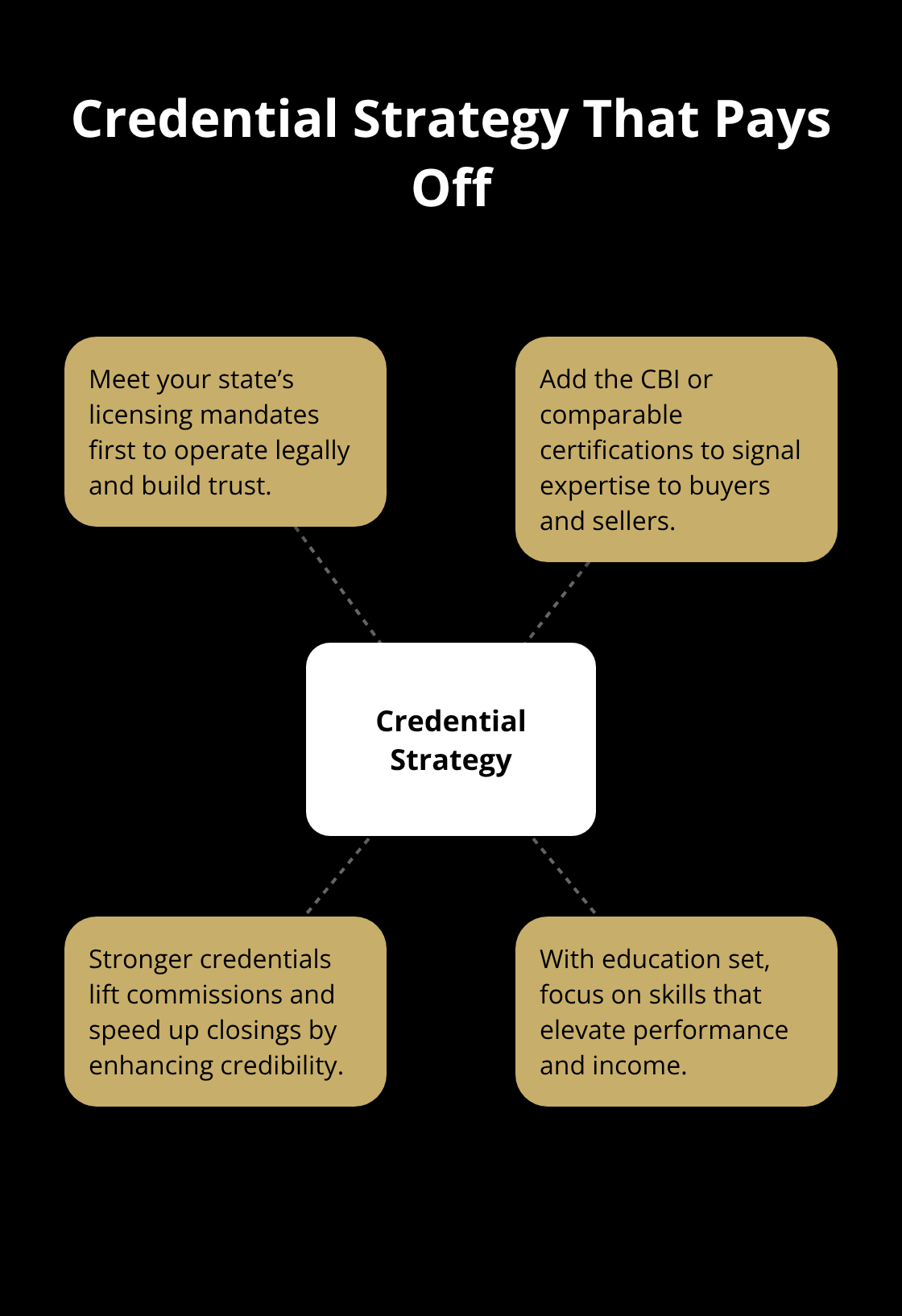
Industry certifications separate serious brokers from part-time players. The Certified Business Intermediary credential, administered by the International Business Brokers Association, requires documented brokerage experience and passing a comprehensive exam. Some states mandate specific broker licensing exams before you can legally facilitate sales. California, Texas, and Florida have particularly strict requirements because they represent massive markets.
Get your state broker licensing requirements before investing time and money. Many brokers also pursue the Accredited Senior Appraiser designation if they focus on valuing established businesses. Credentials cost money upfront, but they directly impact your earning potential and credibility with buyers and sellers-which is what actually generates commissions.
Building Your Credential Strategy
Start with your state’s mandatory requirements, then layer in the CBI or other recognized certifications. This combination makes you credible to buyers and sellers alike. The investment in credentials pays off through higher commissions and faster deal closures. With the right education and certifications in place, you’re ready to develop the specific skills that separate average brokers from top performers.
The Three Skills That Actually Separate Top Brokers from Average Ones
Master Negotiation Through Questions, Not Pressure
Master Negotiation Through Questions, Not Pressure shows that active listening improves negotiation outcomes. Most brokers think negotiation means pushing harder or being aggressive, but that’s wrong. The best brokers ask better questions and listen more than they talk. When a buyer hesitates on price, asking why matters more than countering immediately.
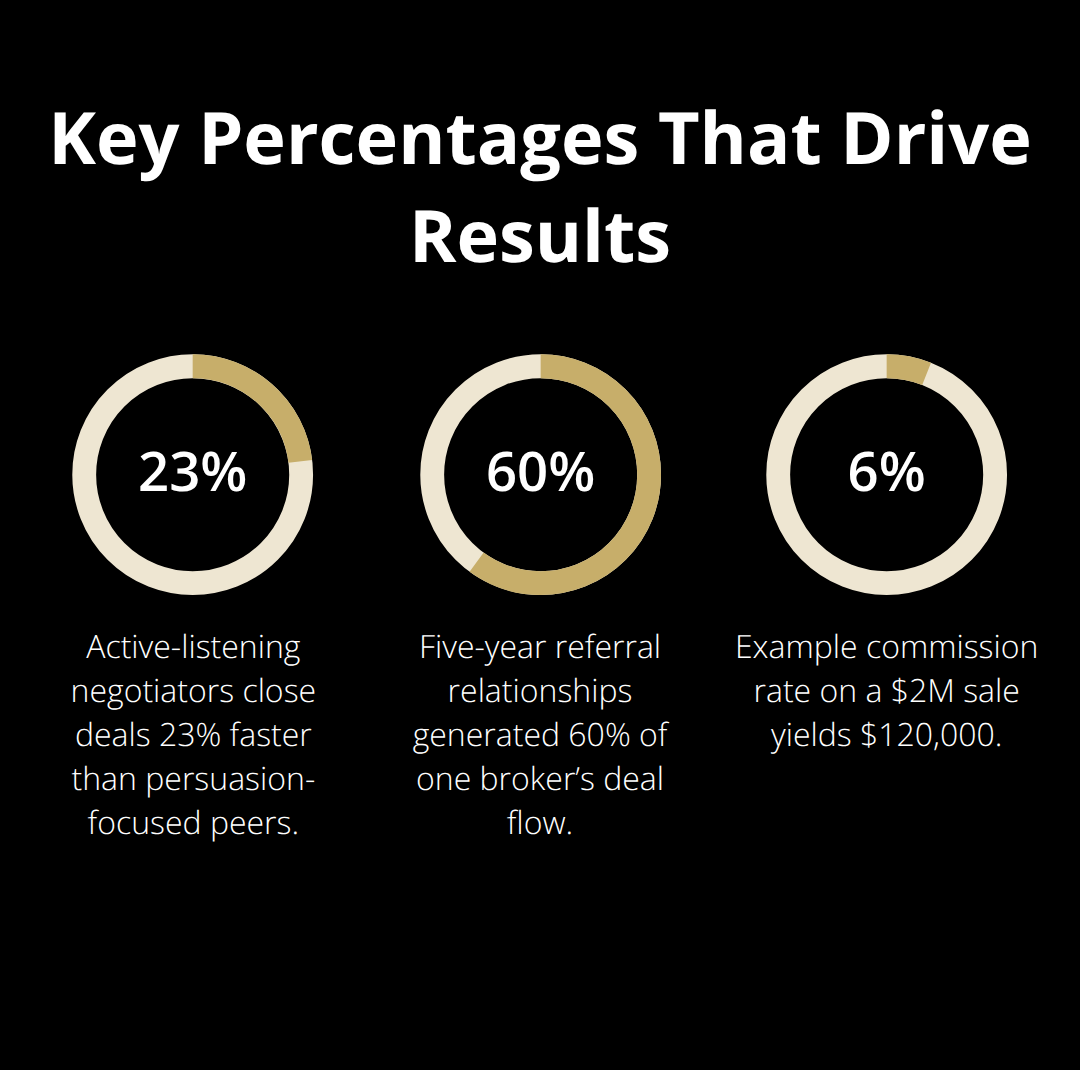
Research from the Harvard Program on Negotiation shows that negotiators who ask open-ended questions and listen actively close deals 23% faster than those who focus on persuasion. Start practicing this now: in your next conversation with anyone, count how many questions you ask versus how many statements you make. Most brokers are stunned when they realize they talk three times more than they listen.
Understand Financial Analysis Like Your Income Depends on It
Financial analysis separates brokers who understand what they’re selling from those who fake it. Buyers and sellers can tell instantly if you know cash flow statements, EBITDA calculations, and working capital requirements. If you can’t explain why a business with 40% gross margins might be worth less than one with 35% margins, you’ll lose credibility fast.
Take courses in business valuation specifically, not just general accounting. The American Society of Appraisers offers resources on valuation methodology that go beyond what most brokers learn. Spend time building spreadsheet models that show how different scenarios impact business value. When you can walk a seller through exactly how a buyer will evaluate their financials, they trust you differently.
Build Relationships That Generate Consistent Deal Flow
Relationship building is where income actually grows. One broker built her entire practice on maintaining relationships with ten past clients who referred her their network contacts. Over five years, those relationships generated 60% of her deal flow. The key is staying visible without being annoying.
Send market updates quarterly to past clients and prospects, not monthly. Share specific articles about their industry, not generic business advice. When you spot a relevant acquisition or market trend, send it to three clients with a two-sentence note explaining why you thought of them. This takes thirty seconds but reminds them you’re thinking about their business.
Track every conversation in a simple spreadsheet noting what matters to each client: their growth plans, family situation, exit timeline. When you follow up, reference these details specifically. People do business with brokers who remember what they said six months ago, not with brokers who treat every conversation like it’s the first one. These three skills form the foundation that determines how much you earn and how quickly you advance in this field.
Career Growth and Income Potential
Entry-Level Earnings and Commission Structure
Entry-level brokers typically start with a base salary between $35,000 and $50,000 annually, though this varies significantly by region and firm size. The real income comes from commissions, which range from 5% to 10% of the total sale price depending on the business size and your brokerage’s fee structure. A broker closing a $2 million sale at 6% commission earns $120,000 on that single deal. Most entry-level brokers close one to three deals annually in their first two years, meaning realistic first-year earnings hover around $60,000 to $90,000 when combining base salary and commissions.
How Deal Flow and Specialization Impact Your Income
The path from entry-level to six figures depends on deal flow, deal size, and your ability to close sales without drama. Brokers who specialize in specific industries or geographic markets build stronger referral networks faster, which accelerates income growth. Someone focusing on SaaS businesses in the Southeast develops deeper buyer relationships and repeat seller referrals than a generalist, directly impacting their earning trajectory.
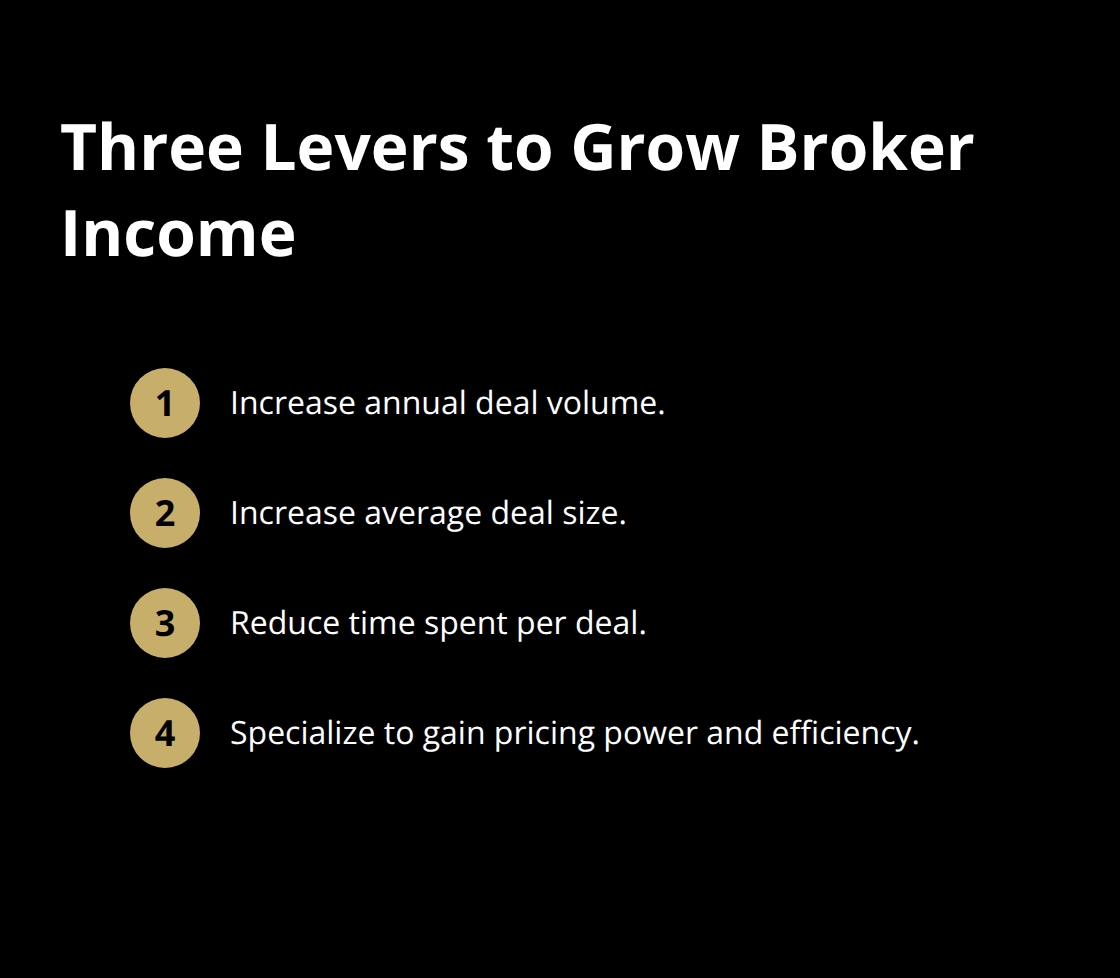
Advancement happens through three concrete mechanisms: increasing deal volume, increasing average deal size, and reducing time spent per deal. A broker handling five deals annually at $1.5 million average value earns significantly more than one handling eight deals at $500,000 average value. This is why specialization matters financially-you develop pricing power and efficiency in specific sectors.
Mid-Career and Principal Roles
Mid-career brokers with five to ten years of experience and strong track records often transition to principal roles within larger firms, taking a percentage of all brokers’ commissions. The top 20% of brokers earn between $300,000 and $500,000 annually, according to data from business brokerage firms. Income potential increases when you master the three skills from the previous section: your negotiation ability directly impacts whether deals close at asking price or below, your financial analysis skills help you identify undervalued businesses that buyers will pay premiums for, and your relationship building generates deal flow without expensive marketing.
Transaction Size and Geographic Advantage
One specific factor separates high earners from average performers: transaction size. A broker earning 6% commission on a $5 million sale makes $300,000 versus $60,000 on a $1 million sale. This means focusing on mid-market businesses rather than micro-businesses creates exponentially higher income potential. Geographic location also impacts earnings-brokers in markets with active mergers and acquisitions activity have access to larger deal flow and higher average transaction values than those in smaller markets.
Final Thoughts
A business broker career demands commitment to three concrete areas: education, skill development, and strategic positioning. Start with your state’s licensing requirements and industry certifications like the CBI credential, as these credentials directly impact your credibility with buyers and sellers and determine your commission income. The skills that separate top earners from average brokers are learnable-master active listening in negotiations, understand financial statements deeply enough to explain valuation to any seller, and build relationships systematically through consistent, personalized contact.
Your earning potential depends on transaction size and deal flow more than anything else. Entry-level brokers earn $60,000 to $90,000 annually when combining base salary and commissions, while mid-career brokers with strong track records reach $300,000 to $500,000 annually by handling larger transactions and building specialized expertise. Geographic location and market focus matter significantly, as brokers in active M&A markets with access to mid-market businesses earn substantially more than generalists in smaller markets.
If you’re selling a business yourself, Unbroker connects you with qualified buyers through expert advisors, AI-driven matching, and national marketing. Focus on the fundamentals-education, negotiation ability, financial expertise, and relationship building-as these factors determine your long-term success and income potential in a business broker career.