Business brokerage is one of the fastest-growing advisory careers, with the market expanding as more entrepreneurs seek guidance on buying and selling companies. At Unbroker, we’ve seen firsthand how brokers who understand valuation, negotiation, and client relationship-building command premium fees and build thriving practices.
If you’re ready to become a business broker, this guide walks you through the licensing requirements, certifications, and practical steps to launch your career in this lucrative field.
What Business Brokers Actually Do
Business brokers match entrepreneurs with buyers and handle everything from financial analysis to closing negotiations. The work demands active involvement in valuation meetings, buyer calls, and contract reviews. According to the U.S. Bureau of Labor Statistics, the median salary for business and financial operations occupations reached $68,380 in 2023, but brokers who build their own practices earn substantially more through commissions. Most income comes from deal completion, not hourly billing. A broker who closes three to four deals annually at standard commission rates can easily exceed six figures, which is why many experienced brokers operate independently rather than join larger firms.
The Market Reality for New Brokers
The business brokerage market is expanding. The small business market in the United States includes roughly 5.6 million firms, and an estimated 10% of business owners plan to sell within the next five years according to the National Federation of Independent Business. This creates consistent deal flow, but competition among brokers intensifies. You’ll compete against established firms, real estate agents moving into business sales, and platforms offering lower-cost alternatives. Success requires specialization-brokers who focus on specific industries or price ranges outperform generalists. A broker who specializes in tech startups or manufacturing businesses commands higher fees because they bring genuine expertise that sellers value.
How You Spend Your Time
Your day-to-day work involves sourcing buyers, conducting business valuations using methods like income capitalization or comparable sales analysis, managing due diligence, and navigating complex negotiations. Most brokers allocate 40-50% of their time to business development and client acquisition, 30-40% to deal management, and 10-20% to administrative tasks. This distribution reveals where successful brokers focus their energy-client acquisition and deal closure drive revenue, while administrative work remains secondary.
Commission Structures Shape Your Income
Business brokers typically earn between 5% and 10% commission on the sale price, though this varies significantly by deal size and region. Smaller transactions under $500,000 often command higher commission rates around 8-10%, while larger deals drop to 5-6% due to the higher absolute payout. You’ll also encounter deals structured with retainer fees or hourly rates for valuation work, but transaction-based commissions remain the industry standard. Most brokers split commissions with their buyer’s brokers, meaning you typically keep 50% of the agreed commission. A $2 million business sale at 6% generates $120,000, of which you receive $60,000 after the buyer’s broker split-before taxes and office expenses (which typically run 20-30% of gross revenue for independent brokers).
Building Sustainable Deal Flow
This commission-based model means your income directly correlates with your ability to close deals and negotiate higher valuations for sellers. Sustainable practices require consistent deal flow, which explains why established brokers invest heavily in networking, referral relationships, and marketing. Your next step involves understanding the licensing and certification requirements that position you to operate legally and build credibility with clients.
Getting Licensed and Building Credibility
State Licensing Requirements Vary Dramatically
Becoming a business broker requires you to navigate licensing laws that differ significantly by state, so your first step involves determining what applies where you operate. Most states don’t require a specific business broker license, but many states classify business brokers under real estate licensing laws, meaning you need a real estate license to legally facilitate deals. States like California, Florida, and Texas treat business opportunity sales as real estate transactions, requiring you to obtain a real estate broker’s license through the state real estate commission. Other states like New York and Illinois have separate business broker regulations with their own licensing pathways. Obtaining a real estate license typically takes 60–120 hours of coursework followed by a state exam, with licensing fees ranging from $100 to $500 depending on your state. Before you invest time and money, contact your state’s real estate commission or business regulatory board to confirm exact requirements for your location. Many brokers overlook this step and face legal complications later, so verify requirements before you launch.
Professional Certifications Separate Credible Brokers from Amateurs
Professional certifications directly impact your ability to command higher fees and build client trust. The International Business Brokers Association offers the Certified Business Intermediary designation, which requires 5+ years of brokerage experience, 120+ hours of approved education, and passing a comprehensive exam. The American Society of Appraisers provides valuation credentials like the Accredited Senior Appraiser designation, which strengthens your ability to justify valuations to skeptical sellers. Mergers & Acquisitions Source offers the M&A advisor certification, focusing specifically on deal structures and transaction management. Sellers consistently cite accurate valuations as their primary concern when selecting brokers, so prioritize valuation expertise above all else. Credibility comes from demonstrating expertise and transparency in your processes.
Master Three Valuation Methods
You need working knowledge of three valuation methods to present credible analyses to clients. The income approach uses EBITDA multiples to value businesses based on cash flow generation. The market approach compares comparable sales of similar businesses in your target industry. The asset-based approach works best for asset-heavy businesses where tangible assets represent significant value. Most brokers spend 200–300 hours studying valuation before they can confidently present analyses to clients. This investment separates you from competitors who lack technical depth and allows you to justify premium fees when you identify hidden value that other brokers miss.
Negotiation Skills Accelerate Through Formal Training
Negotiation skills develop through deal experience, but formal training accelerates your development significantly. Programs like the Harvard Negotiation Project or Karrass workshops teach you frameworks for structuring offers, handling objections, and closing deals at higher valuations. These skills directly translate to larger commissions because a broker who negotiates a $2.1 million sale instead of $2 million generates an additional $6,000 in personal income (assuming a 6% commission split). The cost of certifications and training typically ranges from $2,000 to $8,000 annually, but this investment pays back quickly through higher deal valuations and increased client trust. With your licensing and credentials in place, you can now focus on the practical work of building your client base and establishing your market presence.
How to Build Your First Client Base
Referrals and Professional Networks Drive Early Deals
Your licensing and credentials open doors, but they don’t generate clients. You need a deliberate strategy to source sellers, and the most effective approach combines referral relationships with targeted outreach to specific industries. Most successful brokers report that referrals are their top source of new business, which means your early months should focus on building relationships with accountants, tax attorneys, and business consultants who regularly interact with business owners considering sales. These professionals see sellers before brokers do, and a referral from a trusted advisor carries far more weight than cold outreach.
Start with identifying 20-30 accountants and attorneys in your target market, then schedule coffee meetings to explain your services and offer them a standard referral fee structure (typically 10-15% of your commission). Document these conversations and follow up monthly with deal flow updates. Simultaneously, join local chambers of commerce and business networking groups where owners congregate. Your presence at these gatherings positions you for early-stage conversations. Within your first year, try to close 2-3 deals through these channels, which establishes your track record and generates referrals from satisfied clients.
Specialization Beats Generalist Marketing
Marketing your brokerage requires specificity rather than broad visibility. Generalist brokers who market to all business owners compete on price and visibility, while specialized brokers who focus on specific industries command premium positioning. Create a niche by selecting an industry where you have genuine knowledge or connections-manufacturing, professional services, e-commerce, or healthcare practices all have active buyer interest. Build a simple website showcasing 3-5 recent transactions in your niche, emphasizing the sale prices and your role in maximizing valuations.
Industry-specific content matters more than generic business advice; publish articles on valuation trends in your chosen sector, common buyer concerns, and deal structure options that appeal to sellers in that space. LinkedIn outreach to business owners in your niche generates qualified leads because the platform surfaces your profile to decision-makers actively seeking advisors. Send 10-15 personalized connection requests weekly to owners matching your target profile, and include a brief note explaining your specialization.
Digital Tools Amplify Your Outreach
LinkedIn Sales Navigator (priced at $65 monthly) allows you to filter prospects by industry and company size, dramatically improving your targeting precision. CRM software like Pipedrive (costs $14-$99 monthly depending on features) tracks your outreach, follow-ups, and deal pipeline so you maintain consistent contact without losing leads. These platforms transform your prospecting from scattered efforts into systematic processes that compound over time.
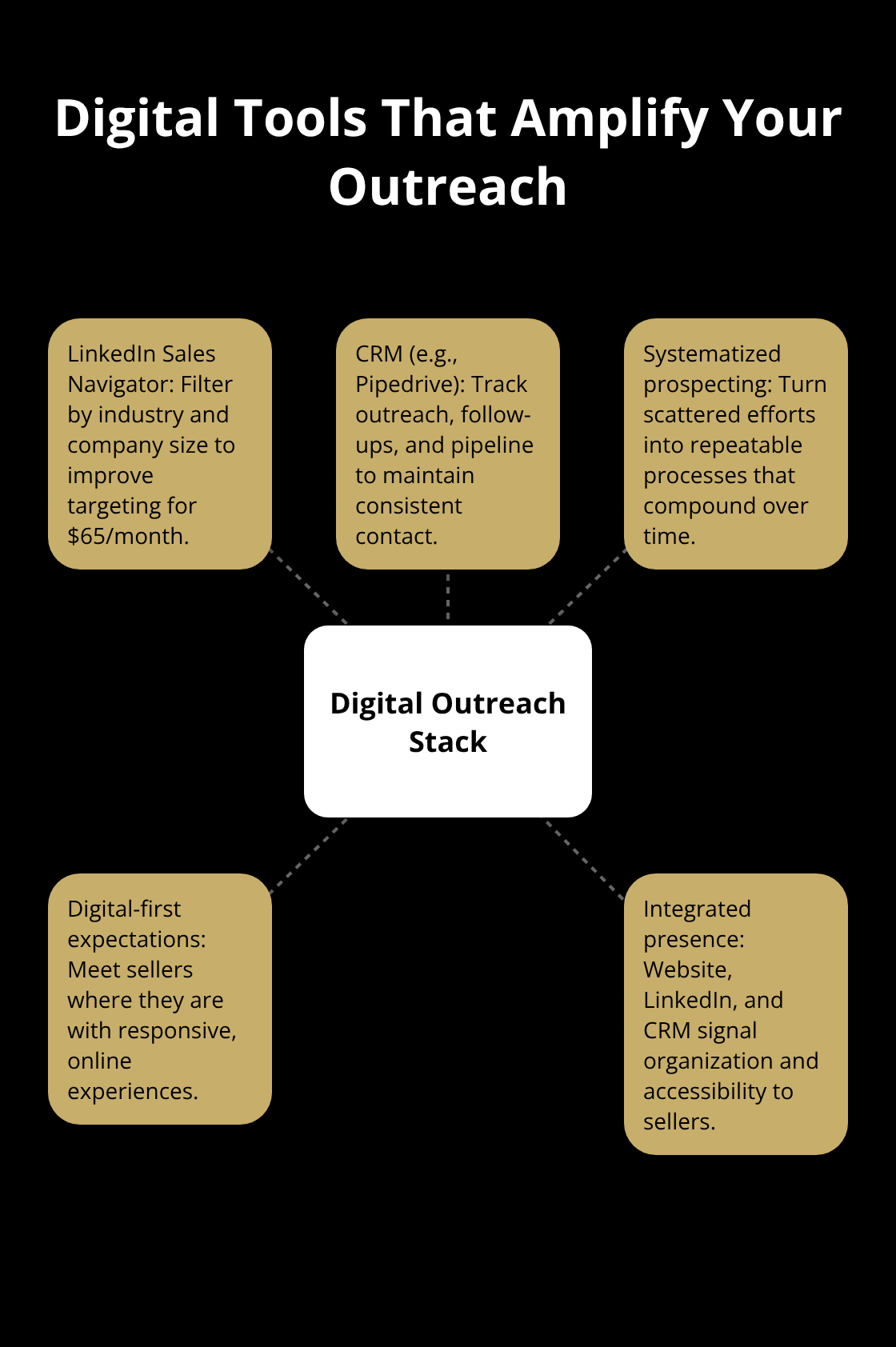
Sellers increasingly expect digital-first experiences, which is why your online presence and responsiveness matter more than traditional networking alone. Combine old-school relationship building with modern digital outreach, and you’ll generate sustainable deal flow without relying on expensive advertising or brand recognition you haven’t yet earned. Your website, LinkedIn profile, and CRM system work together to position you as accessible and organized-qualities that build confidence with sellers evaluating brokers for the first time.
Final Thoughts
Launching your business brokerage career requires three concrete actions: verify your state’s licensing requirements and complete the necessary coursework and exams before you facilitate any deals, pursue at least one professional certification in valuation or deal structuring to establish credibility with sellers, and build your initial client base through referral relationships with accountants and attorneys rather than expensive marketing campaigns. These steps take 6–12 months to execute properly, but they position you to operate legally and close deals confidently. The business brokerage industry offers genuine long-term growth because business ownership transitions will accelerate over the next decade, with an estimated 10% of business owners planning to sell within five years.
Brokers who specialize in specific industries and build strong referral networks consistently outperform generalists, so your early focus on niche positioning pays dividends throughout your career. Income scales directly with your deal volume and negotiation ability, meaning experienced brokers who close 4–6 deals annually regularly exceed six figures. Join the International Business Brokers Association to access ongoing education, stay current with valuation trends, and build relationships with peers facing similar challenges.
We at Unbroker combine expert advisors with modern technology to streamline the sales process for business owners. Whether you operate independently or partner with established firms, your success depends on delivering genuine value to sellers navigating one of their most important financial decisions. Explore how our platform supports brokers and sellers throughout the transaction journey.