Selling a business is one of the biggest financial decisions you’ll make. The platform you choose determines how quickly you find buyers, how transparent the process is, and whether you get real support when you need it.
At Unbroker, we’ve seen that the best business sale platforms share three critical traits: honest pricing, smart buyer matching, and hands-on guidance. This post breaks down exactly what separates platforms that close deals fast from those that drag on.
Transparent Pricing Structures That Protect Your Bottom Line
Hidden Fees Drain Your Sale Proceeds
Most business sellers face unexpected charges that appear only after they sign agreements. Platform fees, legal review costs, marketing expenses, and administrative charges accumulate quickly, reducing what you actually receive when the sale closes. This approach wastes your time and money. The platforms that close deals fastest charge straightforward success-based fees, where you pay only when your business actually sells. This alignment matters because it forces the platform to work harder on your behalf rather than collecting fees regardless of outcomes.
Success-Based Fees Create Real Incentive Alignment
A success-based fee structure means the platform profits when you profit, creating genuine incentive alignment. You should demand full transparency about every cost upfront, including what happens if the sale falls through, what legal documents cost, and whether marketing expenses get added to your final bill. Too many sellers discover unexpected charges after committing months to a platform, leaving them trapped with costs they never anticipated.
Verify Fee Structures in Writing Before You Commit
The real test of transparency isn’t what platforms claim-it’s what their contracts actually say. Request the full fee schedule in writing before starting, and have someone review it if you’re unsure about terms. Ask specific questions: Are there charges for syndication to partner networks? What happens if negotiations stall? Do you pay for legal templates or access to advisors?
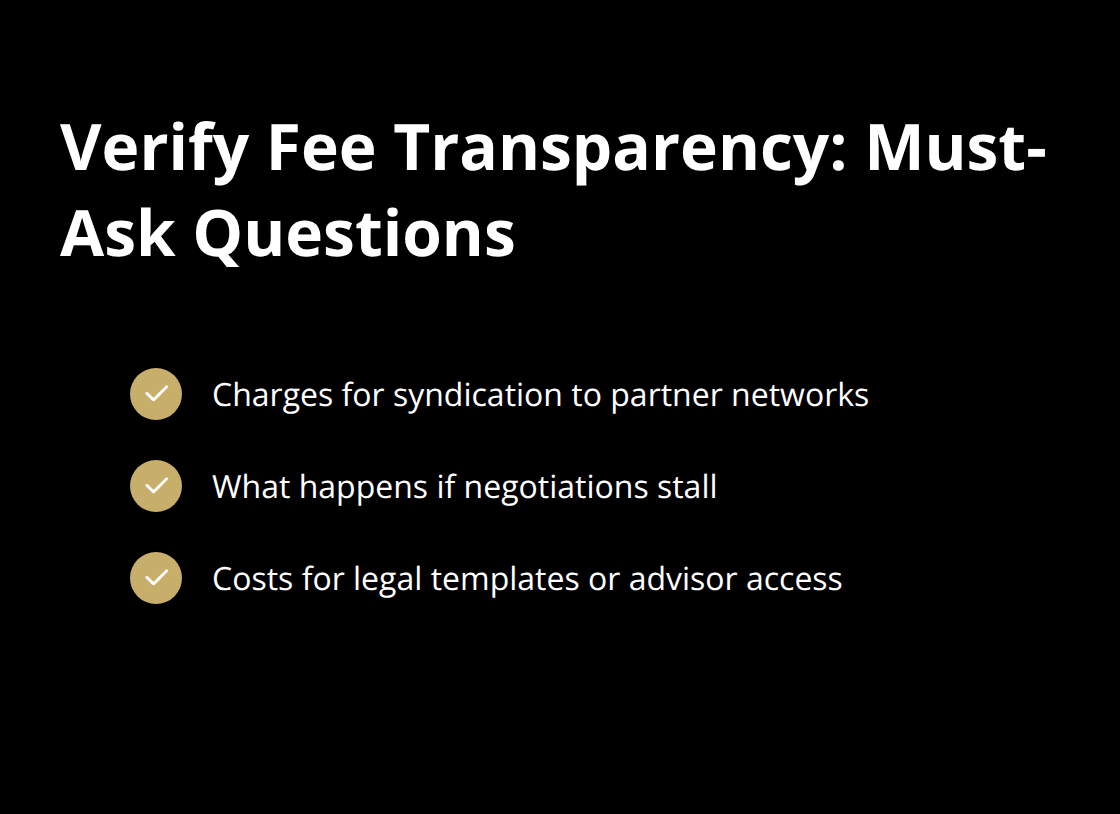
Platforms that hide answers to these questions signal that surprises await you.
When you evaluate platforms, compare their actual written agreements, not their marketing language. The platform charging one clear success fee typically closes deals faster because both parties want the same outcome: getting your business sold at the best price in the shortest timeframe. This straightforward approach eliminates the complexity that breeds distrust between sellers and platforms.
What Buyer Matching Means for Your Timeline
Beyond pricing transparency, the speed at which a platform connects you with qualified buyers determines how quickly your sale progresses. The next section covers how intelligent matching systems and national marketing reach accelerate the entire process.
How Buyer Matching Speed Determines Your Sale Timeline
The difference between a business that sells in three months versus nine months often comes down to one factor: how quickly the platform connects you with genuinely qualified buyers. Most business sale platforms cast wide nets, listing your business on multiple sites and hoping someone interested shows up. Intelligent buyer matching systems analyze buyer profiles, industry preferences, acquisition history, and financial capacity to identify prospects who actually want what you’re selling. This specificity matters because unqualified inquiries waste weeks of your time through conversations that go nowhere. When a platform sends you five serious offers from buyers with real purchase intent, you close faster than platforms generating fifty tire-kicker inquiries.
Quality Matching Beats Quantity of Contacts
National syndication through partner networks reaches thousands of verified buyers across multiple industries and regions, but the real advantage comes from filtering for genuine fit before connecting you. An AI layer identifies prospects most likely to move forward, not just anyone who might theoretically be interested. This approach reflects what the market shows: speed comes from quality matching, not quantity of contacts. Unqualified leads consume your energy and extend your timeline unnecessarily.
Where Serious Buyers Actually Look
Serious buyers looking for businesses don’t browse random marketplace listings. They work with acquisition consultants, scan industry-specific networks, and monitor deals within their target sectors. Premium platforms invest in reaching these sophisticated buyers through channels where they actually spend time. Syndication across partner networks, targeted advertising to acquisition firms, and industry-specific marketing channels accelerate visibility among decision-makers. When your business appears in front of acquisition consultants and corporate development teams actively seeking companies in your space, you compress the timeline from initial interest to serious offer.
Timing Creates Competitive Momentum
The moment between when a qualified buyer first sees your business and when they contact you matters more than most sellers realize. If your listing sits passively on a platform waiting for inbound inquiries, you lose momentum and competitive advantage. Active buyer matching means the platform identifies prospects and facilitates introductions while interest is highest. When multiple qualified buyers discover your business around the same time through coordinated marketing and syndication, competitive tension naturally accelerates negotiations and increases offer quality.
The platforms that close deals fastest treat marketing as targeted outreach to qualified buyer personas, not mass-market advertising. This distinction separates months of waiting from rapid deal momentum. What happens next in your sale depends heavily on the support you receive once serious buyers enter the picture.
Support and Guidance Throughout the Sale Process
Advisors Protect Your Financial Outcome
Selling a business without guidance costs you money. The complexity emerges quickly: structuring earnouts, managing contingencies, protecting yourself from post-sale liability claims, and understanding tax implications require expertise most business owners lack. When you work with advisors throughout the sale, they handle negotiations while you focus on operations. This separation matters because emotional detachment improves deal outcomes.
Advisors who have closed dozens of business sales recognize negotiation patterns and know which demands are negotiable versus which ones signal serious buyers. They also catch structural problems before they derail deals. Legal document templates accelerate timelines compared to custom contracts, but templates alone cannot replace guidance on what terms actually protect you. The advisor role extends beyond paperwork-they interpret buyer requests, flag unreasonable contingencies, and explain why certain terms matter to your final proceeds.
Deal Structure Determines Your Real Payoff
The difference between earning your asking price and earning significantly less often comes down to deal structure, not price alone. A buyer offering $5 million with 40% held in earnout contingent on hitting revenue targets creates risk you cannot control after closing. A buyer offering $4.8 million with 100% cash at closing might deliver more actual value.
The number 100% seems to be not appropriate for this chart. Please use a different chart type. Advisors quantify these tradeoffs by modeling scenarios: if earnout conditions fail, what do you actually receive? How likely are those conditions to be met based on historical performance? What happens if the buyer interprets success metrics differently?
Negotiation support means having someone explain why seller financing or extended payment terms benefit buyers more than you, and when to push back. Deal structuring also includes protecting yourself through representations and warranties insurance, which protects against post-closing claims from buyers that drain your proceeds years after you have exited. Experienced advisors build these protections into deal structure rather than discovering the need for them too late.
Why Unqualified Guidance Fails You
Not all advisors operate at the same level. Some platforms offer template documents without real negotiation support, leaving you to interpret complex terms on your own. Others assign advisors stretched across hundreds of concurrent sales, limiting the attention your deal receives. The advisors who move deals forward fast have bandwidth to focus on your specific situation, understand your industry dynamics, and push back on buyer demands that don’t serve your interests.
When you select a platform, ask how many active sales each advisor manages simultaneously. Advisors handling more than 20-30 concurrent deals cannot provide the attention your sale requires. The platforms that close deals fastest pair you with advisors who have capacity to negotiate aggressively on your behalf, not advisors who simply process paperwork.
Final Thoughts
The three features that separate fast exits from prolonged sales are straightforward: transparent pricing that aligns incentives, intelligent buyer matching that reaches qualified prospects, and expert guidance that protects your financial outcome. When all three work together, your business sells faster and you receive more of what you’re owed. Platform selection directly impacts your timeline because a best business sale platform eliminates hidden fees, connects you with serious buyers through AI-driven matching, and provides advisors with real bandwidth to negotiate on your behalf.
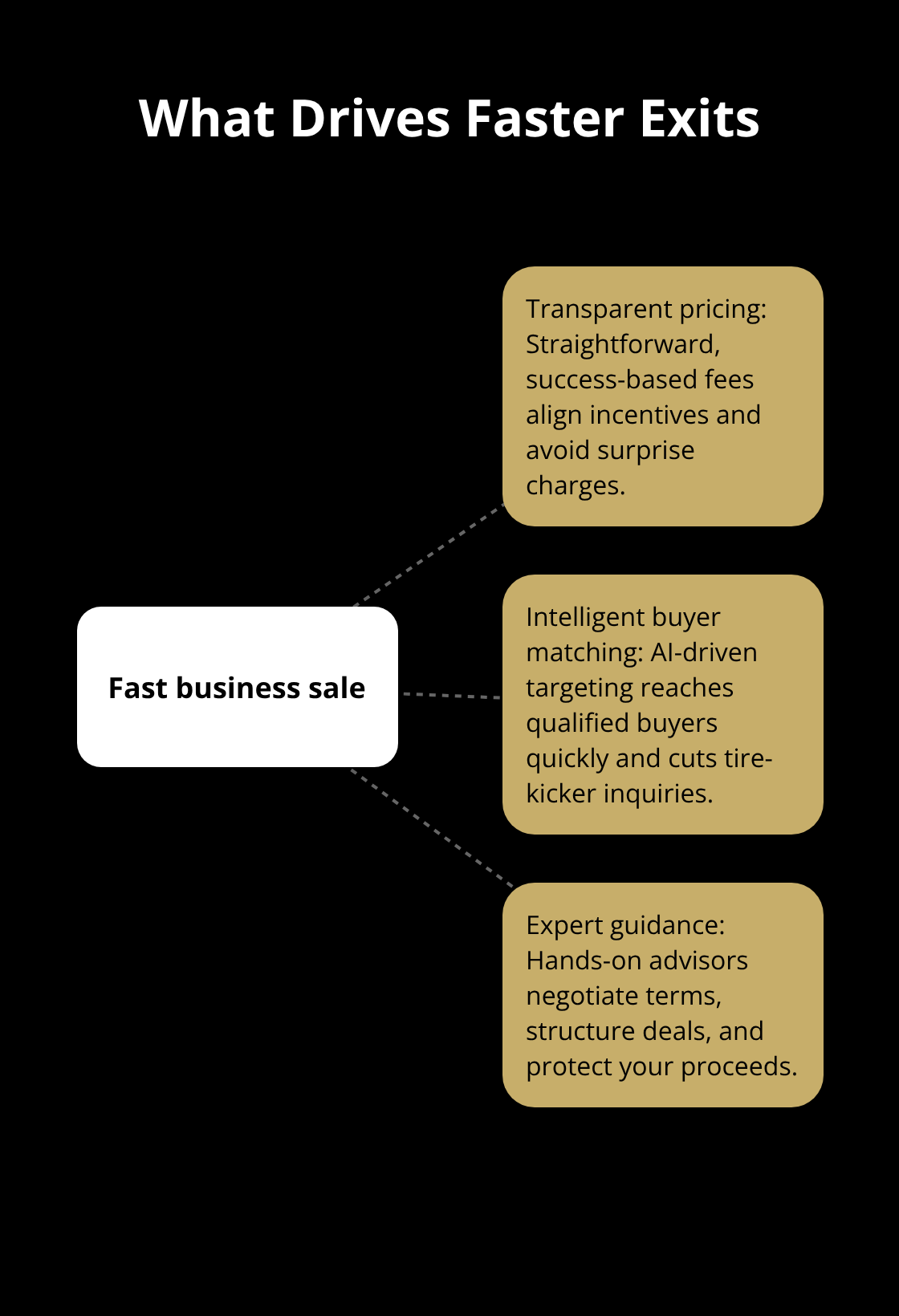
The wrong platform wastes your time through unqualified leads, surprises you with unexpected charges, and leaves you negotiating complex deal structures alone. The right platform treats your sale as a priority, invests in reaching acquisition professionals actively seeking companies like yours, and keeps your interests protected throughout negotiations. We at Unbroker built our platform around these three principles, combining AI-driven buyer matching with national syndication to reach qualified prospects while pairing you with advisors who have capacity to focus on your specific deal.
Visit Unbroker to see how the right platform accelerates your exit and protects your proceeds.