Selling your business is one of the biggest financial decisions you’ll make. Without a clear exit planning roadmap, you risk leaving money on the table or facing unexpected complications.
We at Unbroker have helped countless business owners navigate this process successfully. This guide walks you through each stage, from assessing your business to closing the deal with confidence.
Assess Your Business and Set Clear Exit Goals
Most business owners have no idea what their company is actually worth. They operate on gut feeling or compare themselves to a competitor who sold years ago. The first step is getting real numbers on the table.
Evaluate Your Financial Position
Start by pulling your last three years of tax returns, profit and loss statements, and balance sheets. Sit down and understand what each line means. Look at your EBITDA (earnings before interest, taxes, depreciation, and amortization) because this is what buyers actually care about. If your business generated $500,000 in EBITDA last year, that’s your foundation for valuation.
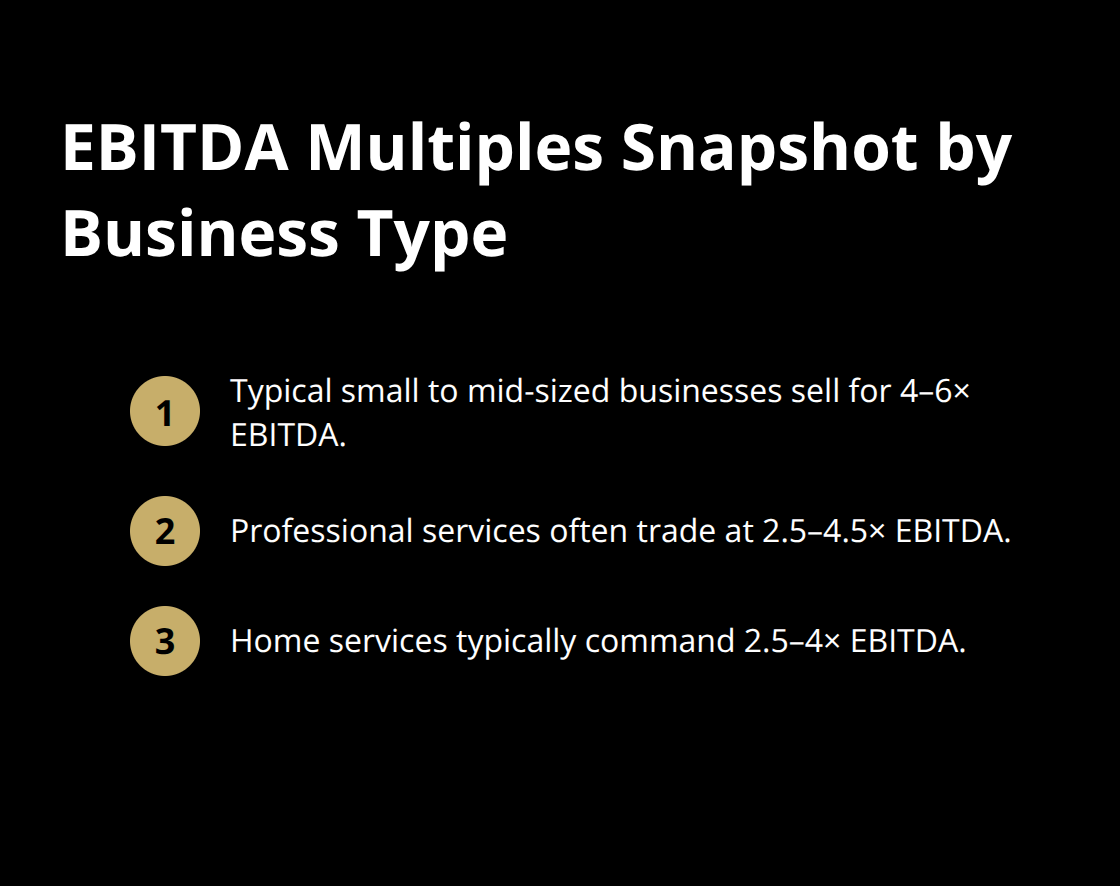
Most small to mid-sized businesses sell for 4-6 times EBITDA, though this varies by industry. EBITDA multiples for business valuation range from 2.5× to 4.5× for professional services like consulting firms and marketing agencies, while home services typically command 2.5× to 4×. Calculate your likely valuation range right now. If your numbers are messy or inconsistent, this is your biggest red flag. Buyers run financial audits, and they will find discrepancies. Clean this up before you list, not during negotiations.
Set Your Timeline
Decide how long you actually want this process to take. A realistic exit typically runs 6-12 months from initial listing to closing. If you need cash in 90 days, you’ll leave money on the table because buyers sense urgency. If you’re willing to wait two years, you can be selective and potentially increase your asking price.
Write down your target date. Be honest about whether you’re truly ready to step away or if you’re testing the market. Serious buyers ask this question directly, and they can tell when you’re not committed.
Define Your Non-Negotiables
Success isn’t just about the highest price. Some owners care more about their employees staying employed. Others want the buyer to keep the business name or location. Some need earnouts in business sales (payments over time) rather than cash at closing.
Write down your three non-negotiable priorities and your three areas where you’re flexible. This clarity prevents you from accepting a lowball offer that hits your price target but destroys everything else you care about. With your financial position clear and your goals defined, you’re ready to prepare your business for the market.
Prepare Your Business for Sale
Buyers examine far more than your financials. They scrutinize your accounting systems, customer contracts, operational processes, and whether the business functions independently of you. Most business owners skip this preparation phase and lose 15-25% of their potential sale price as a result. Spend the next 3-6 months transforming your business into a standalone operation that runs without your constant involvement.
Organize Financial Records and Documentation
Buyers want to see three years of clean tax returns, monthly profit and loss statements for the past year, balance sheets, and a detailed list of assets. They also demand explanations for any inconsistencies. If your revenue jumped 40% one year then dropped 20% the next, document why. Did you lose a major client? Did you change your pricing? Vague answers kill deals.
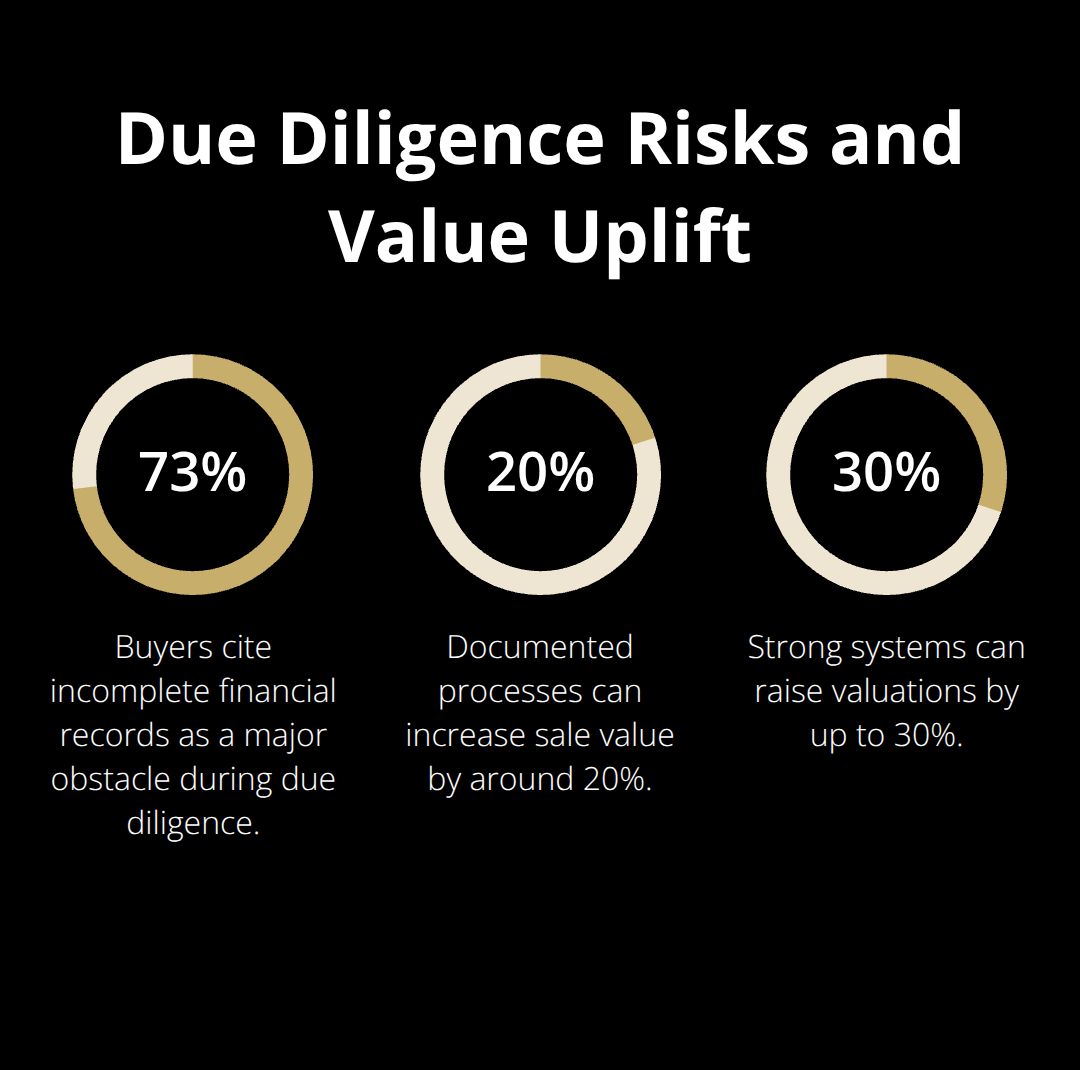
Create a data room using a secure platform where you can grant access to verified buyers. Include tax returns, customer contracts, employee agreements, equipment leases, and insurance policies. A Deloitte survey found that 73% of business buyers cite incomplete financial records as a major obstacle during due diligence. Organize everything now rather than scrambling during negotiations.
Strengthen Operations and Address Vulnerabilities
Fix operational weaknesses before buyers identify them. If three key customers represent 60% of your revenue, this massive red flag reduces your valuation significantly. Work to diversify your customer base or lock in long-term contracts with these clients to reduce perceived risk.
Operations that depend on your personal relationships, technical expertise, or specific sales skills are worth substantially less because a new owner cannot replicate your role immediately. Build systems and processes that function without you. Document standard operating procedures for every critical function and train your team to execute these independently. If you remain the only person who understands your manufacturing process or client relationships, you have built a job, not a business. Buyers discount accordingly. Businesses with documented processes and systems sell for 20-30% more than those without them.
Build a Strong Management Team
Buyers want to see a leadership structure that survives the transition. If you serve as owner, operations manager, sales director, and accountant simultaneously, you have not built a business you can sell. Hire or promote a general manager who can run the company independently and understands the business deeply.
This person needs to commit to staying through the transition period (most purchase agreements require 6-12 months of employment from key managers to maintain continuity). If you lack this structure, start building it now. Developing trust and proving that your team can handle operations without you takes time. This step is not optional if you want a serious valuation.
With your financial records organized, your operations strengthened, and your management team in place, your business is ready for the market. The next phase involves developing a compelling narrative and connecting with qualified buyers who recognize your company’s true value.
Market Your Business and Connect with Qualified Buyers
Most business owners make a critical mistake when selling: they treat their business like a commodity and list it on generic marketplaces. This approach attracts tire-kickers, price shoppers, and buyers who don’t understand your business’s actual value. Strategic positioning and selective buyer targeting change everything.
Craft a Compelling Business Profile
Start with a business profile that tells your company’s story in concrete terms. Instead of generic descriptions, highlight specific achievements. If you operate a staffing firm that places 200 employees annually with a 94% client retention rate, state that. If your SaaS platform serves 450 customers across five industries, include those numbers. Buyers respond to specificity because it reduces perceived risk.
A Harvard Business School study found that businesses with detailed operational narratives sell 23% faster and command 15-18% higher valuations than those with vague descriptions. Your profile should address the exact concerns that make buyers nervous: customer concentration, key person dependencies, revenue stability, and growth trajectory. If your business lost a major client last year, acknowledge it and explain how you’ve since diversified your customer base. Transparency here builds credibility far more than hiding problems.
Reach Qualified Buyers Through Multiple Channels
Distribution matters more than most sellers realize. Posting on a single marketplace reaches only the buyers actively searching that week. Multiple syndication partners combined with targeted outreach connect your business with qualified prospects who actively seek companies like yours. Beyond broad distribution, you need targeted outreach to specific buyer types.
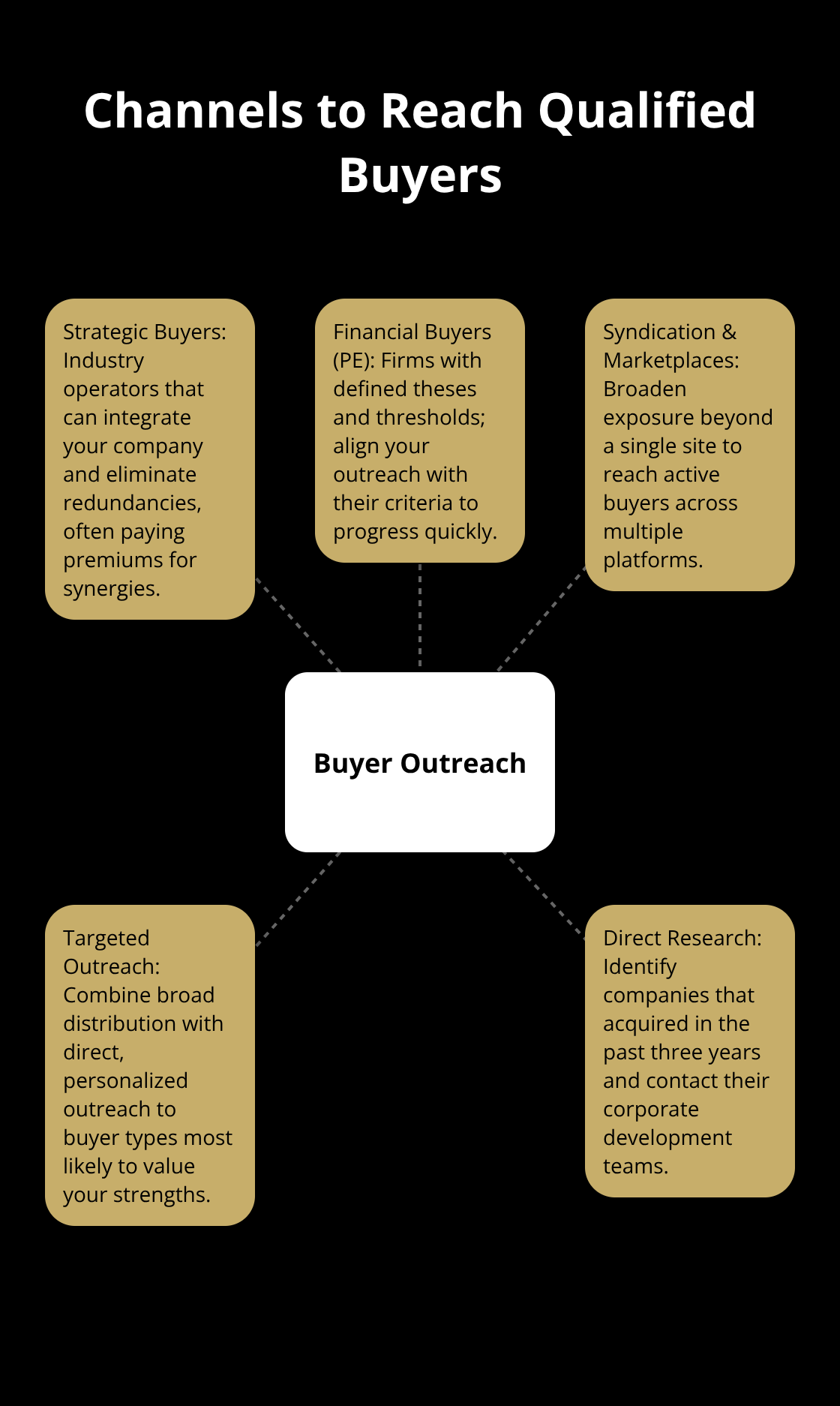
Strategic buyers in your industry often pay premiums because they can integrate your operations and eliminate redundancies. A logistics company acquiring a smaller competitor can consolidate headquarters, eliminate duplicate management, and immediately cross-sell services. This creates value beyond what a financial buyer can achieve. Research companies in your space that have made acquisitions in the past three years and reach out directly to their development teams.
Financial buyers like private equity firms have specific criteria and investment thresholds. Check the websites of regional PE firms and understand their investment thesis before approaching them.
Screen Buyers Ruthlessly
The screening process separates serious buyers from looky-loos. Require confidentiality agreements before sharing detailed financial information. Request proof of funds or financing pre-approval before progressing to serious negotiations. Ask about their timeline and acquisition experience.
Buyers who’ve completed multiple acquisitions move faster and understand the process. Those attempting their first acquisition often get cold feet or make unrealistic demands. A buyer who claims they can close in 30 days but has never purchased a business before is a red flag. Real acquisitions require 90-120 days minimum for due diligence, financing, and legal work. Qualify ruthlessly on these criteria before investing time in conversations that won’t progress to a sale.
Final Thoughts
You’ve now walked through a complete exit planning roadmap, from understanding your business’s true value to connecting with serious buyers. The difference between a successful sale and a mediocre one comes down to preparation and strategy. Owners who skip the financial cleanup phase or fail to build operational independence consistently leave 15-25% of their potential proceeds on the table.
The three phases matter equally: assessing your business and setting clear goals prevents you from chasing the wrong buyers or accepting offers that don’t align with your priorities, preparing your business for sale removes the red flags that tank valuations, and marketing strategically with ruthless screening ensures you negotiate with qualified buyers who understand your company’s actual worth. Your next step depends on where you are in this process-if you’re still evaluating whether to sell, spend time on financial analysis and timeline clarity; if your business is already prepared, focus on positioning and buyer outreach; if you’re actively marketing, concentrate on qualifying prospects and moving serious conversations forward.
We at Unbroker have guided business owners through every stage of this journey, and our platform combines expert advisors with AI-driven buyer matching and national marketing to connect you with qualified purchasers. You pay only a 6% success fee when your business sells, with no hidden costs, so explore Unbroker to see how we can support your exit planning roadmap and help you achieve the sale you deserve.