Selling your business doesn’t mean abandoning your values. More entrepreneurs are choosing nonprofit-aligned sales to create real impact while securing financial returns.
At Unbroker, we’ve seen firsthand how this approach transforms exits from purely transactional events into meaningful legacy moments. The numbers back it up: impact-minded sellers are reshaping how businesses change hands.
Why Nonprofit-Aligned Sales Matter More Than Ever
Nonprofit-aligned sales have moved beyond niche territory. They now represent a legitimate exit strategy for sellers who want financial returns without compromising their values. The data confirms this shift is real and substantial. According to research from the Global Impact Investing Network, impact investing reached $1.164 trillion in assets under management across the US, Europe, Canada, Australia, and Japan in 2020, with that figure growing consistently each year. Business sales with social or environmental missions embedded into their structure attract serious capital from mission-driven buyers and investment groups. For you, this means straightforward opportunity: actual demand exists for businesses that have built purpose into their operations, and buyers will pay for that alignment.
The Tax Advantages Are Substantial
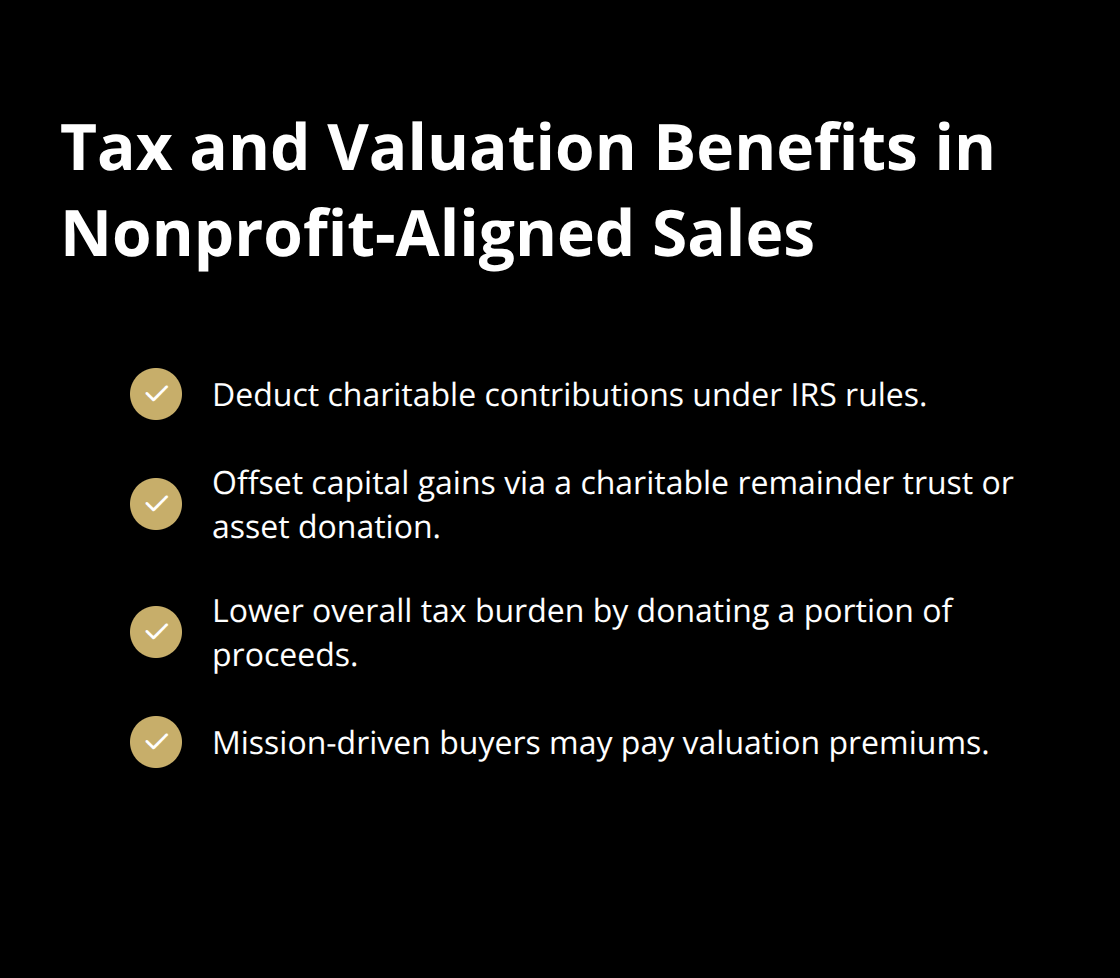
The tax benefits of nonprofit-aligned sales often surprise sellers. When you structure a sale to benefit a qualified nonprofit organization, you may qualify for significant tax deductions on the portion of proceeds directed to charitable purposes. The IRS allows donors to deduct charitable contributions, and when you structure a business sale through a charitable remainder trust or donate appreciated business assets to a nonprofit, those deductions can offset capital gains taxes substantially. A seller who donates a percentage of sale proceeds to a nonprofit can reduce their overall tax burden through strategic structuring (depending on the structure and their tax bracket). Beyond taxes, many mission-driven buyers offer premium valuations for businesses with established social impact metrics.
They will pay more because the business already operates with mission-aligned practices, reducing transition risk and integration costs. You don’t sacrifice valuation to do good.
Your Legacy Becomes a Competitive Asset
Selling to a nonprofit or structuring your exit with nonprofit involvement creates tangible legacy value that pure financial exits cannot match. Your business continues operating under your values, your employees maintain their roles within a mission-driven organization, and your customers see continuity in the values they supported. This matters more than abstract legacy concepts. A founder who sells to a nonprofit partner can point to specific ongoing impact: the nonprofit continues operating the business, serving the same community, employing the same team. That represents real legacy, not symbolic gestures. The emotional and reputational value matters too. Founders who execute nonprofit-aligned sales often strengthen community relationships, enhance personal brand reputation, and gain genuine fulfillment from knowing their life’s work continues advancing a cause they believe in (rather than simply ending). This approach transforms the exit from an ending into a transition that amplifies your impact.
Finding the Right Partner Requires Strategy
The success of a nonprofit-aligned sale depends entirely on alignment between your business values and your nonprofit partner’s mission. A nonprofit that operates in a completely different sector or holds conflicting values will create friction during integration and undermine the legacy you want to build. You need to research potential partners thoroughly, examining their track record, financial health, and actual operational practices (not just their stated mission). Mission-driven buyers exist across industries, but they won’t appear without intentional effort on your part. Book a call early to discuss your nonprofit-aligned exit strategy and gain clarity on your options. The next step involves identifying which nonprofits genuinely match your business and values, then evaluating whether they can actually execute the acquisition successfully.
Finding Your Nonprofit Partner
Research Nonprofits in Your Industry
Identifying the right nonprofit requires active research, not passive browsing of charity websites. Start by mapping nonprofits already operating in your industry or adjacent sectors. If you run a sustainable fashion brand, look at environmental nonprofits that have acquired or operated similar businesses. Search the National Council of Nonprofits database and GuideStar for organizations working in your space. Then narrow your list to nonprofits with actual operational capacity-many organizations excel at fundraising but lack the infrastructure to run a business.
Call their executive directors directly. Ask specific questions: Have they acquired businesses before? Do they have accounting systems capable of managing commercial operations? What’s their revenue and reserve ratio? Many nonprofits report that they have less than three months of operating reserves on hand. That matters immensely when you entrust your business to them. A nonprofit with insufficient reserves may struggle to weather integration challenges or unexpected business fluctuations after acquisition.
Evaluate Financial Health and Track Record
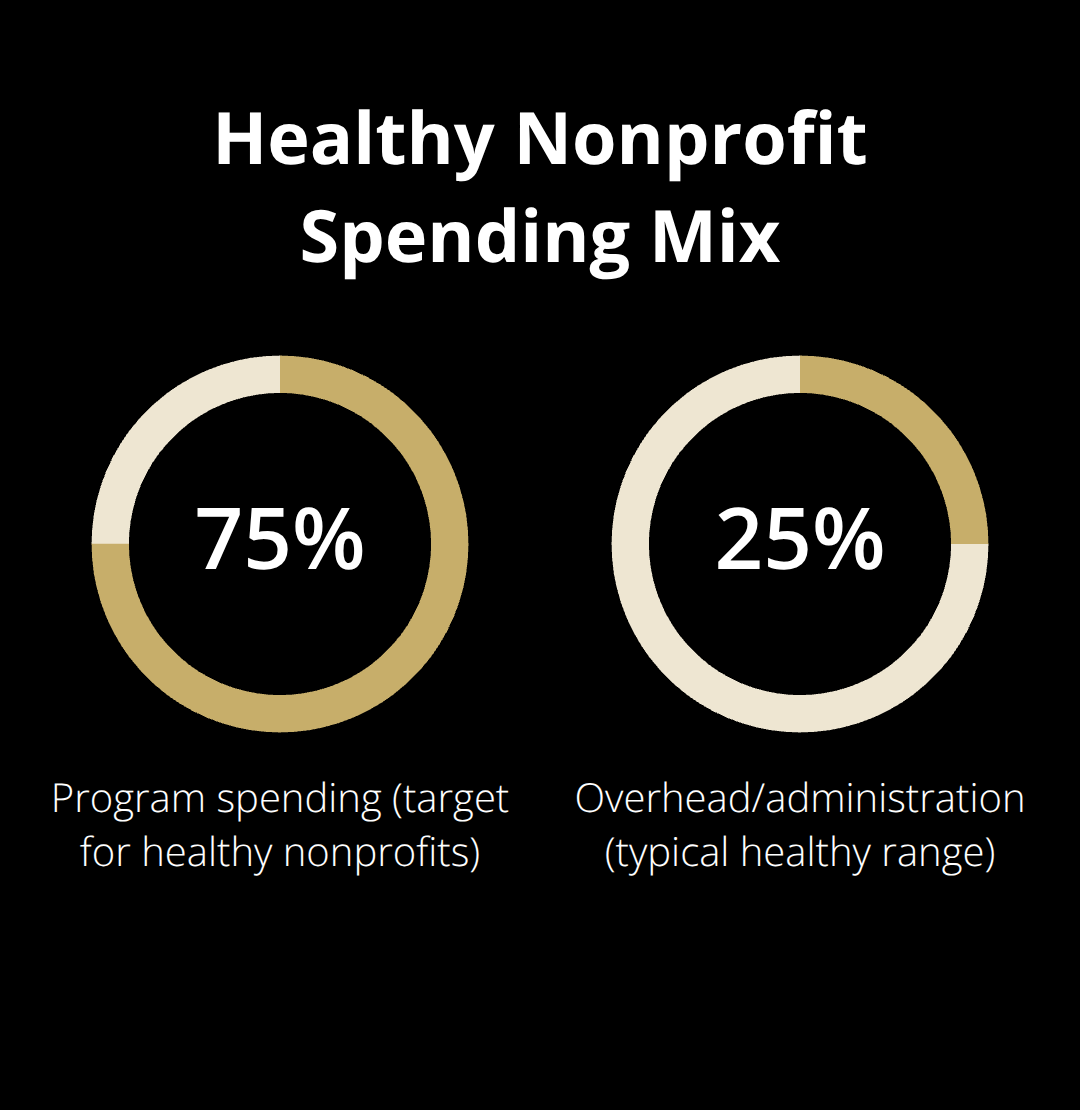
Evaluate credibility through financial documentation, not reputation alone. Request their most recent Form 990 tax filing from the IRS, available free through ProPublica’s Nonprofit Explorer. Look at their overhead ratio-what percentage goes to programs versus administration? A ratio around 75% program spending and 25% overhead indicates health. Anything above 40% overhead raises flags about operational efficiency.
Check whether the nonprofit has successfully managed similar acquisitions. Ask for references from previous business partners or acquired organizations. A nonprofit with a proven track record of business operations will handle your sale far more effectively than one attempting its first acquisition.
Structure Deals for Mutual Investment
Structure the deal so both parties benefit genuinely. Many failed nonprofit acquisitions happen because the nonprofit receives the business as a gift but lacks capital for necessary improvements or working capital. Consider a hybrid approach: donate a portion of proceeds to the nonprofit (securing your tax benefits) while the nonprofit purchases the remainder at fair market value using financing or grants. This keeps the nonprofit invested in success rather than burdened by debt they cannot service.
The deal works best when the nonprofit has skin in the game-financial commitment to the purchase itself, not just stewardship of a gift. A nonprofit that contributes financially to the acquisition demonstrates serious intent and maintains motivation to operate the business successfully. This alignment of interests protects your legacy and increases the likelihood that your business thrives under nonprofit ownership.
With the right partner identified and a fair deal structure in place, the execution phase determines whether your nonprofit-aligned sale actually delivers the impact you envision. The legal and financial mechanics of the transaction require careful attention to protect both your interests and the nonprofit’s operational capacity.
Executing Your Nonprofit-Aligned Sale Successfully
Hire Advisors Who Understand Nonprofit Transactions
The legal structure of your nonprofit-aligned sale determines whether the transaction closes smoothly or stalls in complexity. Most sellers underestimate how different these deals are from standard business sales. A traditional sale involves one buyer, straightforward payment, and minimal post-close involvement. A nonprofit-aligned sale involves multiple parties, potential tax structures like charitable remainder trusts, and ongoing relationships with mission-driven organizations that scrutinize operations differently than private equity firms.
Hire a tax advisor and attorney experienced specifically in nonprofit transactions, not general business sales. Many lawyers handle M&A for corporations but lack nonprofit expertise. Your advisor needs to understand how to structure the charitable contribution component, navigate nonprofit governance requirements, and manage the mechanics of transferring business ownership to a tax-exempt entity. Nonprofit acquisitions of for-profit businesses have increased significantly in recent years, yet many still encounter preventable legal complications because advisors approach them as standard sales.
Expect to invest $15,000 to $35,000 in legal and tax advisory fees for a nonprofit-aligned sale-significantly more than a basic business sale but justified by the complexity and tax implications. This investment protects you from structural mistakes that could invalidate your charitable deductions or create liability issues post-close.
Market Your Business to Impact Buyers Differently
When you market your business to impact buyers, you face a different buyer pool than traditional acquisition firms. Mission-driven organizations and social enterprises prioritize mission fit and operational continuity over maximum purchase price. This requires different marketing messaging entirely.
Highlight your business’s social or environmental impact metrics specifically: employee retention rates, community benefit data, environmental footprint reductions, or social outcomes your business generates. If your company employs 45 people in an economically distressed area, that’s concrete impact data. If your product reduces plastic waste by 12 tons annually, quantify it.
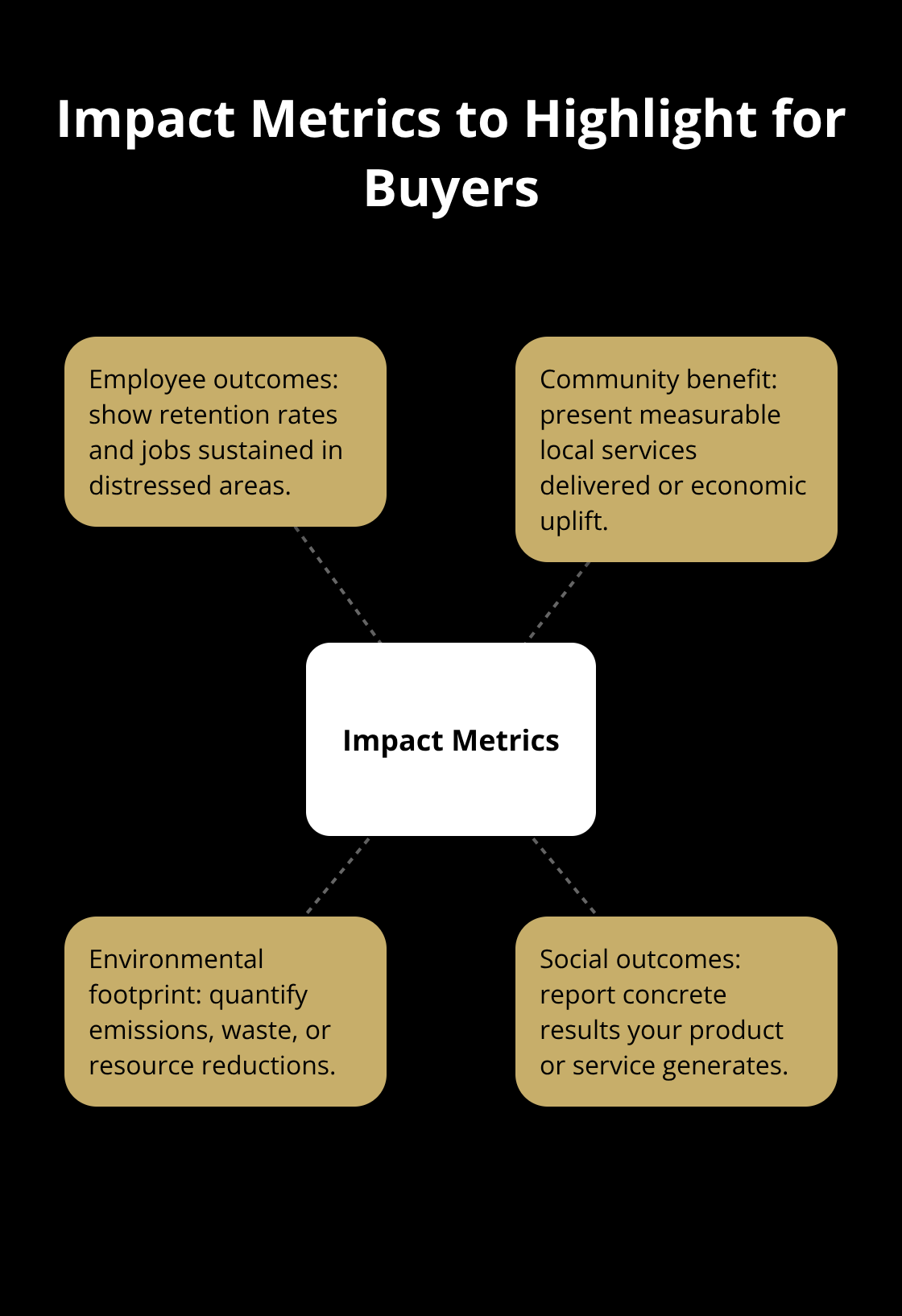
Nonprofits and impact buyers evaluate these metrics seriously because they directly affect the organization’s ability to maintain mission alignment post-acquisition.
Use platforms like ImpactBase and the Global Impact Investing Network directory to identify impact-focused buyers actively seeking acquisitions. These platforms connect mission-driven capital with businesses seeking aligned exits. Standard business listing sites like BizBuySell attract mostly financial buyers focused on ROI, not mission. Position your business as a platform for mission delivery, not merely a revenue generator.
Prepare Financial Documentation for Nonprofit Scrutiny
Due diligence with mission-driven organizations moves slower than traditional acquisitions but requires different documentation. Nonprofits typically conduct deeper operational audits because they’re evaluating whether they can actually run your business while maintaining mission. Prepare detailed documentation on your operations, supply chain, customer relationships, and employee compensation structure. Many nonprofits operate with smaller management teams and tighter budgets than private buyers, so they need absolute clarity on what the business requires to function.
Have your financial records audit-ready before engagement begins. Incomplete financial documentation or misaligned expectations about operational requirements frequently derail nonprofit business acquisitions. Provide three years of audited or reviewed financial statements, not just tax returns. Include detailed customer contracts, key employee agreements, and vendor relationships.
If your business depends on specific individuals or relationships, document that dependency explicitly so the nonprofit can plan succession or transition strategies. The nonprofit will likely request references from your key employees and customers, and they’ll want to meet your management team early. This indicates serious diligence. Facilitate these conversations openly rather than treating them as confidentiality violations. The faster the nonprofit develops confidence in your business operations, the faster you move toward close.
Final Thoughts
Nonprofit-aligned sales represent a fundamental shift in how business owners approach exits. You no longer choose between financial success and values alignment-the market now rewards both simultaneously, with mission-driven buyers paying competitive prices for businesses built on purpose. Impact investing reached $1.164 trillion in assets under management across major markets, and that capital actively seeks acquisition opportunities in nonprofit-aligned sales.
Your path forward requires three concrete actions. First, identify nonprofits operating in your industry with proven operational capacity and financial health by requesting their Form 990 filings and asking directly about previous business acquisitions. Second, structure your deal so both parties invest financially in success-a hybrid approach where you donate a portion while the nonprofit purchases the remainder creates genuine alignment and protects your legacy. Third, hire advisors experienced specifically in nonprofit transactions, not general business sales, since the legal and tax mechanics differ substantially from traditional acquisitions.
More nonprofits are building operational capacity to acquire and run businesses, and more founders recognize that their exit can amplify their impact rather than end it. We at Unbroker support sellers pursuing every exit path, including nonprofit-aligned sales, and our platform connects you with buyers aligned to your values while keeping costs transparent and fees low. Your exit should reflect your values, and the infrastructure to make that happen exists now.